Reviewed · GUIDED
Guided Car Tour in Geyongju with a Local Guide
This tour feels interesting because it strings together the big Gyeongju hits in one smooth half day, with a local guide and an eco electric car that keeps you comfortable. I love the door-to-door pickup setup and the ease of being chauffeured between sites.
I also like how guides such as Sang Jong share personal stories and practical context, not just dates on a wall. If you get along with their style, you’ll come away with a clearer sense of how these places fit together.
One possible drawback is a language gap, since the guide may rely on a translation app like Google Translate or Papago. That can still work great, but it can make conversations a bit slower during the car rides.
Key highlights
- UNESCO duo in 2 focused stops: Bulguksa Temple and Seokguram Cave Temple are both World Heritage sites and visit well back-to-back.
- Eco electric car comfort: an air conditioned electric car means less hassle in hot or rainy weather.
- Small group size: maximum of 3 travelers, which helps the guide keep the pace manageable.
- Free admission at each listed stop: all five stops show free admission on the tour details.
- Local storytelling you can use later: you get personal anecdotes and often a short list of what to see next.
- Photo help when you want it: the guide helps with photos, even when the conversation uses translation tools.
Why a 4-hour car loop works so well in Gyeongju
Gyeongju rewards people who see patterns. A guided car tour like this helps you do that by connecting several Silla era landmarks, then finishing with museum context so the morning is not just pretty, it’s understandable too.
This is a true half-day plan, about 4 hours. That matters in Gyeongju, because the city has a lot of “this and that” sights spread around, and travel time can eat your energy fast.
You also start at 10:00 am, which is a smart time to balance crowds and daylight for photos. If you like your sightseeing in steady chunks rather than all day wandering, this format fits.
A few more Gyeongju days side by side
- Busan: Gyeongju Guided Day Trip to Three Kingdoms Capital
★ 4.8 · 1,925 reviews - From Busan: Gyeongju UNESCO World Heritage Guided Day Tour
★ 4.8 · 1,250 reviews - Gyeongju UNESCO World Heritage Guided Day Tour from Busan
★ 5.0 · 660 reviews
Electric car pickup and the small-group rhythm
You’ll ride in an eco-conscious electric car with air conditioning. It is not just comfort, it is practical: you waste less time hauling your legs between far apart stops, and you arrive less cranky at the temples.
Pickup is offered, and the meeting start is listed in the Noseo-dong area. End point stays in the Gyeongju-si area, and the tour notes that you can use the meeting location map to coordinate. In practice, I’d plan to confirm the exact pickup spot the day before so you are not waiting with luggage or food plans.
The group size is capped at 3 travelers. That small number is one of the biggest value factors here. You are not competing for attention, and you can ask your guide questions while you move.
If you travel alone, you might effectively get a private-feeling experience inside a guided format. Several people specifically noted the comfort of having a one-on-one or very small group setup.
Stop 1 Bulguksa Temple: UNESCO design you can actually notice
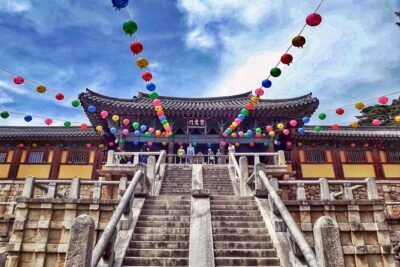
Bulguksa Temple is one of Korea’s most important Buddhist sites, and it is UNESCO World Heritage. You get about 1 hour here, which is enough time to see the main architectural features without turning it into a museum tour that never ends.
What I like about Bulguksa is that it is visually organized. Even if you do not read Korean, you can still track the composition and understand why this temple matters. Your guide’s job is to point out what to look for and what the details symbolize.
A helpful tip for your visit: give yourself a moment before you start moving to slow down and look across the complex. Then, when your guide points out key structures, you will recognize them faster and your photos will come out more intentional.
If weather is rough, temples can still be wonderful, but your time and footing may change. Because the tour notes it requires good weather, you should expect the operator to be cautious about conditions around that 10:00 am start.
Stop 2 Seokguram: the cave temple stop that often steals the day
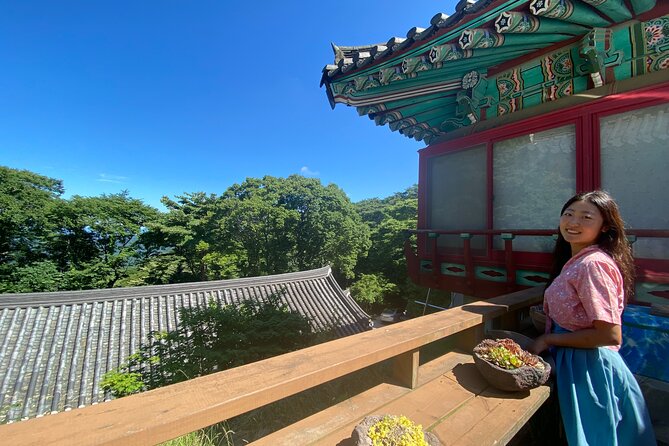
Seokguram is an ancient Buddhist cave temple and also UNESCO World Heritage. It sits near Bulguksa, which is why this combo works so well as a single guided route.
You get about 1 hour at Seokguram. That timing is important because a cave temple has a different pace than an open-air site. You want time to enter, adjust, and take in the indoor feeling, then still have enough minutes for questions and photos.
Many visitors treat Seokguram as the highlight, and I can see why. It feels more focused and atmospheric than many temple visits. If your guide has stories to share about the site, you will feel the value of being on a tour rather than showing up alone with just a map.
Practical consideration: cave spaces can feel cool or dim depending on conditions. Wear comfortable shoes, and take your time when moving through tighter areas.
Different day, same base:
- Old Korea Thousand History Tour of Gyeongju from Busan
★ 5.0 · 518 reviews - Gyeongju UNESCO sites Private tour with licensed tour guide
★ 5.0 · 275 reviews - Private Gyeongju Tour – Explore Gyeongju UNESCO Sites
★ 5.0 · 272 reviews - Gyeongju: UNESCO Highlights Tour with Guide and Ticket
★ 4.9 · 166 reviews
Stop 3 Bomun Lake: a lighter breather between monuments
After two UNESCO temple stops, Bomun Lake is a nice palate cleanser. It is a picturesque artificial lake in Gyeongju’s Bomun Tourist Complex area. The tour allocates about 30 minutes, which is just enough for a walk, photos, and a reset.
Because it is artificial and planned as a tourist complex, Bomun Lake also gives you a different side of the city. It is not about ancient stonework this time. It is about how modern Gyeongju relaxes people, with lakeside space and a view you can enjoy without needing historical background.
If you want the short stop to feel meaningful, use those 30 minutes to spot where your other destinations are in relation to each other. A quick orientation makes the next stop and the museum visit click.
One more thing: the tour can be flexible. If your priority is different, you may be able to ask about swapping this stop, as some visitors reported changes between the lake visit and the bridge visit.
Stop 4 Woljeonggyo stepping stones: old bridge, fast visit
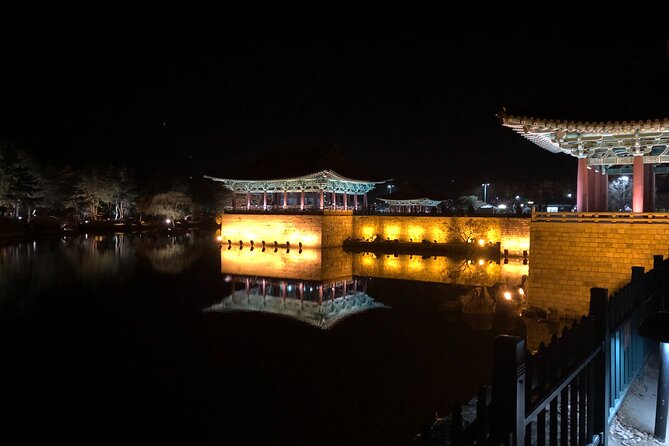
Woljeonggyo Stepping Stones are connected to Weoljeong Bridge, one of the oldest surviving bridges in Korea. This stop is also about 30 minutes.
I like this part of the route because it moves you out of temple interiors and into a piece of engineering history. A stone bridge is easier to “read” at a glance than some architectural details. You can still photograph it well, and you can often spot the structure from multiple angles.
The stepping stones element can be fun, but do not assume it is always comfortable in wet conditions. If it is slick out, keep it sensible and prioritize safety over wading around for the perfect shot.
Like Bomun Lake, this is short on purpose. The goal is to keep your half-day energetic, then land you at the museum with enough time to make sense of everything you just saw.
Stop 5 Gyeongju National Museum: the context stop that ties it together
Gyeongju National Museum is where your morning can become clearer. It is about 1 hour here, and the tour notes the collection includes over 160,000 artifacts, making it one of the major collections tied to the city’s long past.
If temples are the visuals, the museum is the why. Even if you only skim highlights, a museum stop helps you connect what you saw outdoors to what the Silla Kingdom was producing and valuing.
This is especially useful when you are traveling with translation support. A guide can explain key points quickly, and you can then match those explanations to objects inside. That turns the museum into more than a building full of display cases.
A practical strategy: pick a few themes before you go in. For example, focus on items linked to Buddhism or Silla royal culture, then let your guide’s comments reinforce what you see. If you try to see everything, you will miss the chance to learn the most important connections.
What your local guide adds, even through translation
The tour’s strongest recurring feature is the guide. You get a local from Gyeongju who understands historical significance and shares personal stories, plus practical suggestions for local cuisine.
Communication often runs through a translation app. People have used Google Translate and Papago to make it work smoothly, even when English is limited. That is not a deal breaker at all. In fact, it can make the tour more interactive, because you are both using the same tool and laughing off little gaps.
I also like that the guide can adjust pace. Small-group tours tend to feel hurried when the guide tries to hit everything no matter what. Here, the tour is designed around four hours, and the guide can still slow down when someone wants to linger on a photo or ask a deeper question.
If you want to get the most out of it, do one simple prep step: download a translation app before you meet. Having it ready lets you focus on the sights rather than fiddling with your phone.
Also, ask your guide for a quick “what to do next” list at the end. Several people noted that the guide offered suggestions for what to see after the tour, which helps you use the rest of your day more efficiently.
Value for $70.70: what you get for your money
At $70.70 per person for about 4 hours, the big value question is this: are you paying for transportation and guidance, or for entry fees?
The nice part is that the tour details list free admission for all five stops. So you are mainly paying for:
- the local guide’s explanations and pacing,
- door-to-door convenience,
- and the eco electric car with air conditioning,
- plus a tight route that reduces wasted time.
If you tried to replicate this alone, you would still pay for rides or taxis between multiple sites, then spend extra time figuring out logistics. This tour packages that into a single morning with a driver who already knows how to link the stops in a realistic order.
The small maximum group size is another value point. A higher-capacity group would force the guide to talk faster and move you along more. Here, you’re more likely to ask questions and get answers that feel personal.
In short, if you want the highlights of Gyeongju without turning your day into a transit puzzle, the price is reasonable.
Timing, weather, and traffic: the stuff that can change your day
This experience requires good weather. That does not mean every day is perfect, but it does mean you should plan your schedule with a little flexibility.
Also, traffic can be a factor. One visitor mentioned holiday traffic tied to Chuseok, and the guide still tried to fit in as much as possible. Translation and timing both depend on real road conditions, so if you are traveling during major Korean holidays, keep your expectations flexible.
Because the tour runs roughly 4 hours, start-time discipline matters. Be ready at your pickup spot a few minutes early. If you are running late, it becomes harder for the guide to keep the route on time.
Who this tour is best for
This tour is a great fit if you:
- want a first trip into Gyeongju and you want the key UNESCO sites without stress,
- prefer a guided flow over public transit hopping,
- like learning context while you’re still standing in front of the monuments,
- and do not want to spend the day wrestling with logistics.
It also suits people who travel with mixed comfort levels around language. If you are okay using a translation app, the guide experience can still feel warm and conversational.
If you are a temple superfan who wants long, slow contemplation at one place, you might feel slightly time-pressed by the one-hour temple limits. In that case, you could still enjoy it for orientation, then return on your own to the site you loved most.
Should you book this Gyeongju guided car tour?
I’d book it if you want an efficient, high-impact first visit and you like the idea of pairing UNESCO sites with museum context in one half day. The free admission at every listed stop is a real plus, and the electric car reduces the usual friction of city hopping.
I would hesitate only if you are extremely time-flexible and you need a fully English-only guide, because translation tools are part of how the experience works. Even then, many people have made it work smoothly, and the guide style seems to keep the conversation going.
If you book, do two small things to make it smoother: have your translation app ready, and come with 2 or 3 questions you care about, like how the temples relate to Silla culture or what to see next after the tour.
FAQ
How long is the Gyeongju guided car tour?
The tour is approximately 4 hours.
What stops are included in the tour?
The tour includes Bulguksa Temple, Seokguram, Bomun Lake, Woljeonggyo Stepping Stones (Weoljeong Bridge), and Gyeongju National Museum.
Are admission tickets included?
Admission is listed as free for each of the stops on the tour details.
Is pickup offered?
Yes, pickup is offered. The meeting point is in the Noseo-dong area, and the start time is 10:00 am.
Do I need a ticket on my phone?
You’ll use a mobile ticket.
What kind of vehicle is used?
The guide uses an eco-conscious electric car with air conditioning.
How many people are on the tour?
The tour has a maximum of 3 travelers.
Is the tour weather dependent?
Yes, the experience requires good weather. If it is canceled due to poor weather, you will be offered a different date or a full refund.
What if I need to cancel?
You can cancel for a full refund if you cancel at least 24 hours before the experience’s start time. If you cancel less than 24 hours before, the amount paid is not refunded.
Is the guide language an issue?
The tour info does not specify languages. In practice, communication has been handled using translation apps, so bringing a translation app can help.
Recently reviewed in Gyeongju
- Gyeongju private tour with an official tour guide (Unesco)★ 4.5 · 4 reviews
- 7 days Flexible Tour for Major Cities(Seoul,Busan,Gyeongju etc)★ 5.0 · 5 reviews
- Gyeongju UNESCO Sites Tour by KTX train; The Museum Without walls★ 4.5 · 11 reviews
- Small Group 7D Korea package Tour with Seoul Gyeongju Busan Jeju★ 4.5 · 13 reviews
- 3-Days 2-Nights Gyeongju UNESCO Sites & Busan City [Private Tour from Seoul]★ 4.5 · 11 reviews
- Gyeongju UNESCO sites Private tour with licensed tour guide★ 5.0 · 275 reviews
- Korail Day Trip to Gyeongju’s Unesco World Heritage Sites from Seoul★ 4.5 · 3 reviews
- Private Gyeongju Tour – Explore Gyeongju UNESCO Sites★ 5.0 · 272 reviews
Guided, compared.
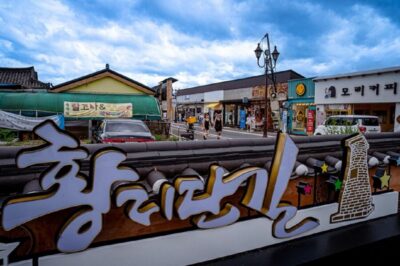
Gyeongju Guided Day Trip to Three Kingdoms Capital
Read our review →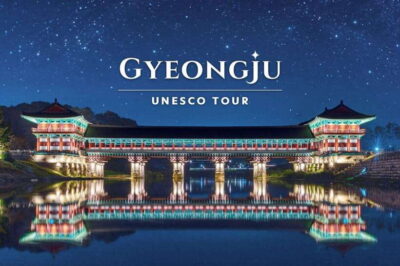
Gyeongju UNESCO World Heritage Guided Day Tour
Read our review →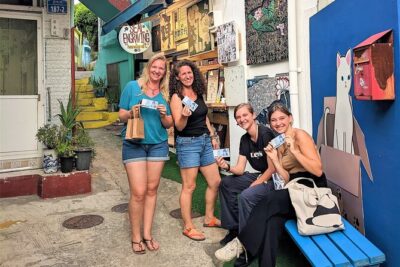
Busan Private Tour with licensed tour guide + private vehicle
Read our review →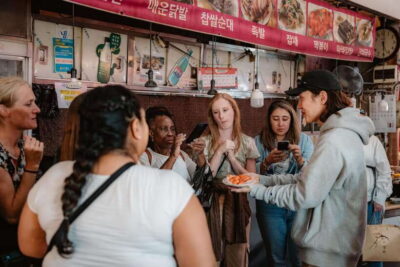
DMZ Guided Tour with Suspension Bridge / Gondola from Seoul
Read our review →
Palace, Temple and Market Guided Foodie Tour at Night
Read our review →