
Reviewed · HISTORICAL TOURS
Seoul History Walking Tour
Seoul’s history is usually stuck in plaques. This tour makes it physical, turning major landmarks into a step-by-step story of how Korea changed over about 630 years. You move through the historical center with an Australian guide named Eric, so questions stay right in the flow.
I especially like two things. First, the pace and size, with a maximum of 8 travelers, makes it easy to ask follow-ups and actually hear the answers. Second, the value adds up fast, because so many key stops have free admission, plus you get traditional snacks and an informative memento.
The main thing to consider is simply stamina. At about 3 hours 30 minutes, you are on your feet for a lot of the time, and bottled water is not included, so plan for that.
Key highlights before you go
- Bells, streams, and palaces as your timeline: every stop answers a specific history question.
- Small group size (max 8): easier conversation, fewer people blocking photos.
- Mostly free entries: admission is listed as free at each stop.
- Traditional snacks plus a memento: included touches that feel useful, not just extra.
- A focused route through major eras: Joseon to modern Korea, plus the push-and-pull of foreign pressure.
- Ends near where you start: fewer logistics headaches at the finish.
Why a 3.5-hour Seoul history walk is better than piecing it together
This is the kind of tour that helps you get your bearings fast. You’re not just looking at famous sites, you’re learning what each place is supposed to make you notice. The route is designed like a timeline you can walk, with stops that cover Joseon Dynasty history, turning points around the 20th century, and the push toward modern civic life.
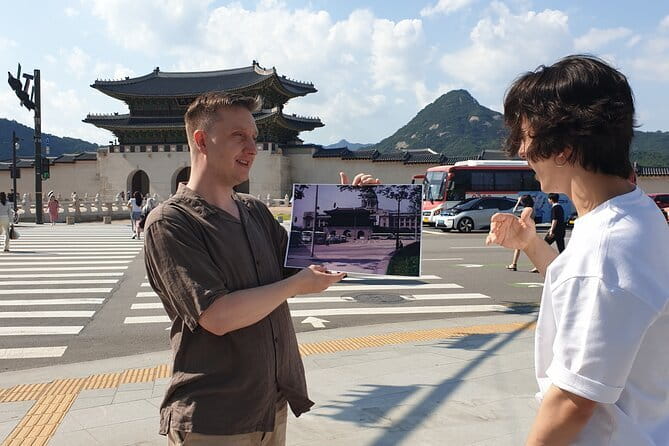
I also like that you get structure without feeling trapped. With 15 minutes to 40 minutes at most places, you have time to read, ask, and glance around, without it turning into a long lecture. And because the group is small, Eric can tailor explanations when something clicks or when you ask a more specific question.
One more quiet value point: the tour uses a mobile ticket and you’re dealing with simple logistics. It starts at Bosingak Bell Pavilion at 2:30 pm, then finishes at Jogyesa Temple. With the end location close to the start area, you’re not stuck figuring out how to get back after you’re done.
More Historical Tours in Seoul
- Seoul: Evening Dark History, Folklore & Ghost Story Walking Tour
★ 5.0 · 593 reviews - Hanbok Photoshoot and History Tour at Gyeongbokgung Palace
★ 5.0 · 276 reviews - Seoul: City Highlights and Historical Experience No Shopping
★ 5.0 · 74 reviews
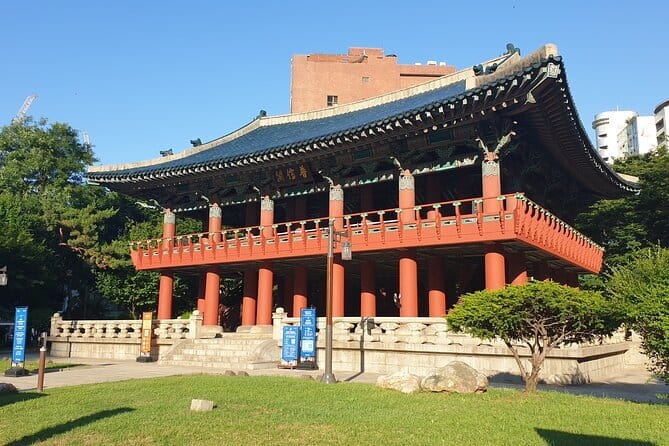
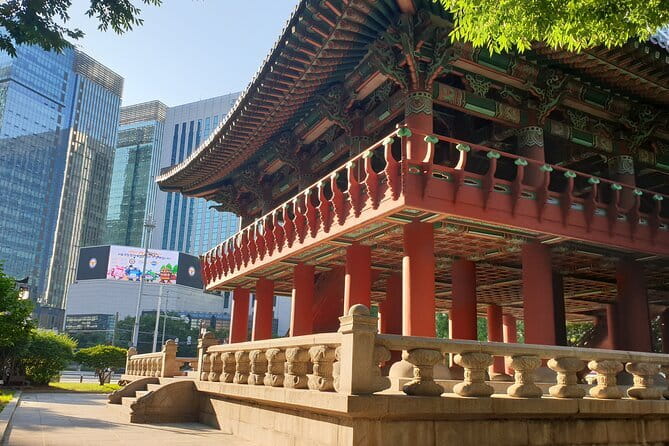
Bosingak Bell Pavilion, where the city tells time
You kick things off at Bosingak Bell Pavilion on Jong-ro, in Jongno District. The hook here is simple and memorable: why the city bells ring 28 times at night and 33 times in the morning.
That sounds like trivia until you connect it to how cities used to run on public signals. You’re learning to read the rhythm of Seoul, not just the buildings. It’s also a great first stop because it sets the tone for the whole walk: history isn’t abstract, it’s built into routines and public spaces.
Practical tip: because this stop is about 15 minutes, arrive ready to focus. It’s long enough to understand the story and get a few photos, but not so long that you lose the thread.
Cheonggyecheon Stream, a timeline you can walk beside
Next you head to Cheonggyecheon Stream, a 40-minute stop that ties the stream to multiple eras: it provided Seoul during the Joseon Dynasty, through the Korean War, and into modern times.
This is where walking tours can either feel like random photo stops or feel like a real lesson. Here, the stream works like a spine for the narrative. You get to see how water, infrastructure, and city planning can keep showing up in different forms even when the political era changes.
I like this stop because it balances emotion and practicality. It’s not only about what happened, it’s about how a city keeps using a space even when history shifts around it. It’s a reminder that places can survive changes in government and still matter day to day.
Drawback to watch for: this is a longer stop than a few of the later halls. If you hate lingering in open-air areas, pace yourself and use breaks to reset.
Seoul City Hall and Seoul Plaza, how modern civic life shows up in stone
You get a short, high-signal pair here. Seoul City Hall is an architectural stop, with a quick look at how it works both inside and out. Then you move to Seoul Plaza, with a question aimed right at the emotional side of public space: how a plaza reflects the hearts of modern citizens.
Even with a very brief 5 minutes at City Hall and about 10 minutes at Seoul Plaza, you’re not doing nothing. These stops are for learning how governance and civic identity get expressed in the physical layout of a city center.
I also like that the tour keeps flipping between the “big story” and “what you can see.” You get to connect modern institutions to the longer historical arc, instead of treating today as separate from yesterday.
Different day, same base:
- Best DMZ Tour Korea from Seoul (Red Suspension Bridge Optional)
★ 5.0 · 41,422 reviews - DMZ Tour: 3rd Tunnel, Option(Suspension Bridge, Boat) from Seoul
★ 5.0 · 21,373 reviews - DMZ tour south Korea from Seoul (NK experience hall, defector)
★ 5.0 · 20,599 reviews - Seoul: The Best DMZ Tour with Optional Suspension Bridge
★ 4.7 · 4,978 reviews
Jeongdong Observatory to Deoksugung Doldam-gil, when views meet folklore

Then the tour changes texture with viewpoints and a little legend.
At Jeongdong Observatory (about 10 minutes), the key question is how much of the palace and cityscape reveals itself from this perch. This is your chance to zoom out. Walking a historical route can make you forget how the city is arranged, so a viewpoint stop matters.
Next is Deoksugung Doldam-gil (about 10 minutes). The prompt is quirky on purpose: why Koreans say that if you walk along this stone wall with your spouse, you will soon be divorced.
Take it as folklore, not a prediction. But I enjoy how a tour like this uses everyday sayings to keep history human. A serious topic can still come with a wink, and that makes the whole afternoon more memorable.
Practical note: because this is a walking segment along a path, wear shoes that handle uneven stone comfortably. The tour is designed for walking, so don’t go with your only “nice pair.”
Jungmyeongjeon Hall, Imperial Japan, and the cost of independence
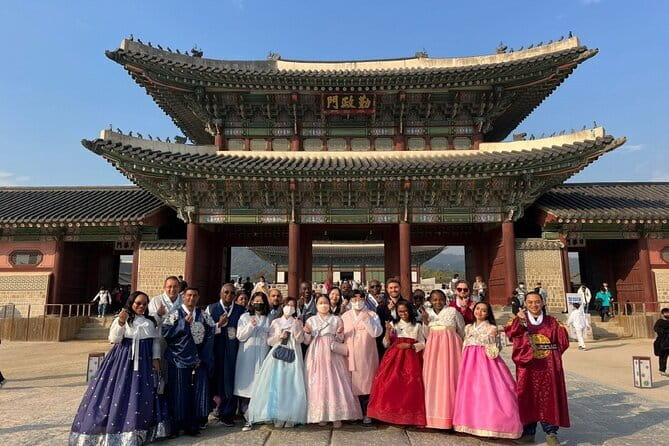
You move into heavier territory at Jungmyeongjeon Hall (about 10 minutes). The big question here is how Imperial Japan forced Korea to surrender its independence.
This stop is short, which means the guide’s explanation carries the weight. The value is in how the tour connects this moment to the broader story of struggle. The overview frames South Korea’s fight for democracy against dictatorship, and this kind of site helps you understand why modern civic life matters.
I appreciate tours that don’t skip the difficult parts. Even if you do not leave with a timeline memorized, you come away with context for how the later themes of democracy and protests make sense.
Potential drawback: if you prefer lighter themes only, this stop might feel intense. It is still only about ten minutes, but it shifts the emotional tone.
Ewha Museum and the story of women’s education
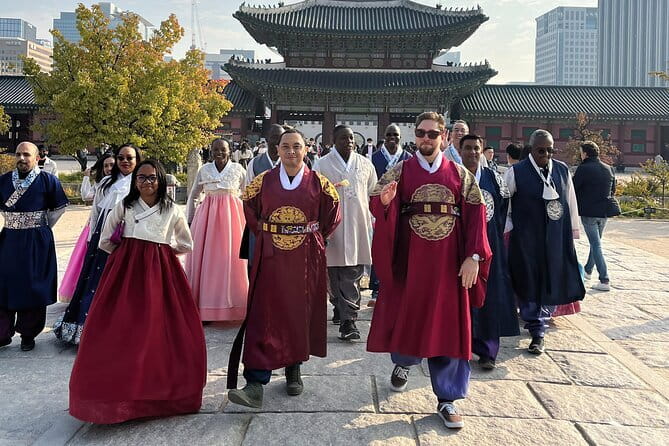
At Ewha Museum (about 10 minutes), the tour focuses on Korea’s first school for girls and how it changed societal views on women’s roles.
This is one of those stops that can reframe how you look at a modern city. Education history isn’t just about schools. It’s about who gets allowed to dream bigger, and how ideas spread when institutions change.
You’ll likely leave with more than a landmark photo. You’ll have a more grounded understanding of how social change can be built in steps, not just triggered by one event.
Former Russian Legation, a royal escape with a long stay
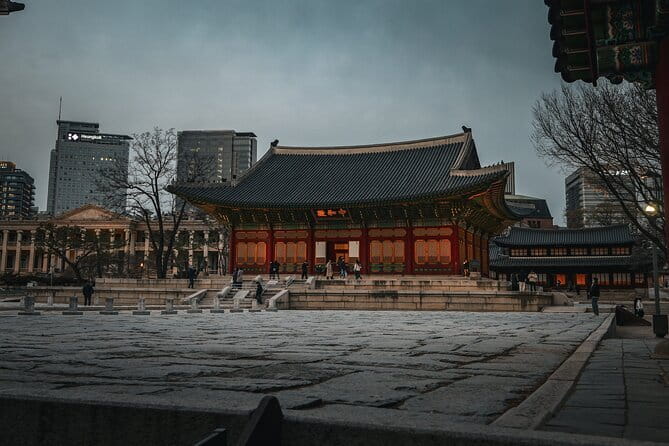
Next is the Former Russian Legation (about 20 minutes). The question is dramatic: why Korea’s penultimate monarch fled his palace in the middle of the night and stayed here for a year.
That story has built-in tension, and it gives you a way to hold multiple ideas at once: uncertainty, foreign presence, and the way politics can push people into unexpected choices. A longer stop here makes sense because the building and the situation both deserve attention.
I like that the tour gives this site more time than some of the hall stops. It helps you slow down when the topic is complicated.
Admiral Yi Sun-sin and King Sejong, statues that point to national identity
Two stops then switch to public monuments that summarize huge eras.
First is the Statue of Admiral Yi Sun-sin (about 10 minutes). The tour’s framing is bold: how this general saved Korea and changed the course of world history. Even if you take the wording as a push to pay attention, it works. You cannot ignore that the city is proud of this figure, and a statue is a clear signal of what a nation wants to remember.
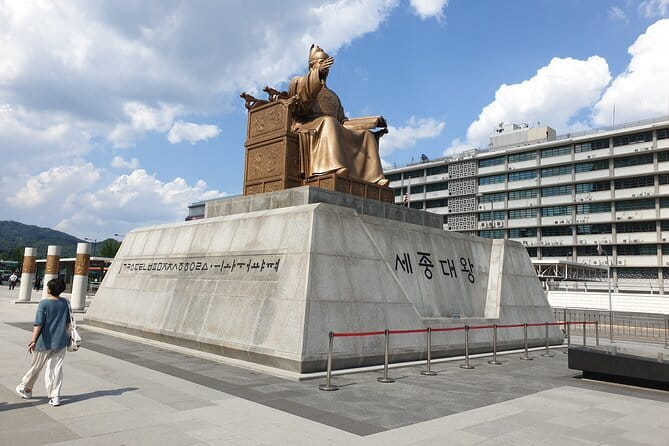
Then you move to the Statue of Sejong the Great (about 10 minutes). Here the question is why Sejong is considered the greatest king of the Joseon Dynasty.
These monuments are quick, but they function like “anchor points.” You see them, you learn why they matter, and then you move on with the confidence of knowing you’re not floating through random locations.
Photo tip: because these are short stops, plan your shots early. Don’t waste time switching positions after you already feel the explanation is ending.
Gwanghwamun Square, democracy and protest in the same breath
At Gwanghwamun Square (about 25 minutes), you get a stop focused on democracy in real-world terms. The prompt is pointed: how many protests does it take to change a democracy.
This is where the tour connects historical struggle to present civic identity. You’ve already covered the pressure on independence, plus the broader theme of dictatorship versus democracy. So when you stand in a major public square and talk about protests, it stops being abstract.
In a practical sense, this is also a good place for a breather. You have enough time to gather yourself, watch the space, and ask questions if you want more detail about the story you’ve been walking through.
National Museum of Korean Contemporary History, a rooftop view for perspective
Next is the National Museum of Korean Contemporary History (about 15 minutes). The guide’s framing is about viewpoint: how much history you can see from the rooftop.
This kind of stop works because it slows you down just enough to re-attach your learning to the city around you. Instead of only looking at the past “inside,” you see how the present sits on top of it.
You might find the rooftop stop especially helpful if you tend to forget details after too many landmarks. A view gives your brain a new organizing frame.
Embassy of Japan and Jogyesa Temple, protest and bells
You finish with two stops that balance civic pressure and spiritual atmosphere.
The Embassy of Japan stop (about 10 minutes) is tied to a surprising idea: why this is the site of the world’s longest running protest. That alone makes you pay attention to the meaning of public demonstrations in a city’s memory.
Then comes Jogyesa Temple (about 10 minutes). The prompt connects the ringing of bells with something bigger than the building itself: how the ringing of bells connects us with the universe. The point is not mystical fog. It’s about sound, routine, and meaning in daily life.
The tour ends at Jogyesa Temple, and since the walk finishes directly up the street from the starting area, you can keep exploring without a big transit shuffle.
Price and value: is $26.60 a fair deal for this route?
At $26.60 per person, this tour sits in the affordable-to-mid range for a guided Seoul walk. The value is strongest because:
- Many stops are marked free admission, so you are not constantly adding entry fees.
- You get traditional Korean snacks included, which can make a half-day feel more like a proper outing.
- You receive an informative memento, which is useful if you like remembering facts rather than just pictures.
- The group size stays small (max 8 travelers), which is often where value shows up, because it makes the guide’s attention less diluted.
- It uses a mobile ticket, so you are not stuck with extra printed paperwork.
What to keep in mind: bottled water is not included. I’d plan to buy water before you start, especially since you’ll likely be walking and stopping repeatedly across different areas.
Also, demand looks real. It’s commonly booked about 81 days in advance, so if your dates are fixed, don’t wait too long.
Who this Seoul history tour is best for
This tour is a strong fit if you want history that feels like city navigation. You’ll enjoy it most if you like learning while moving, and you want a clear story across major sites.
It’s also a good match for:
- Couples who want an outing with a few light moments, like the folklore tied to Deoksugung Doldam-gil.
- History-minded travelers who still prefer short stops over long museum sessions.
- People who want to ask questions and get answers, since a small group helps.
- Visitors who want a structured orientation to central Seoul in just half a day.
If you need very long breaks or you dislike walking for 3.5 hours, you might find the pace challenging. You can still do it, but you’ll want to set expectations about standing time.
Should you book this Seoul History Walking Tour?
Yes, if you want a compact, story-driven way to understand Seoul from Joseon-era roots to modern life, without paying a stack of admission fees. The biggest reasons to book are the small group size, the free-entry stop mix, and the fact that it’s guided in a question-and-answer style, led by Eric.
I’d skip it only if you prefer self-guided wandering with no set sequence, or if 3.5 hours of walking feels too long. Otherwise, this is a smart value way to spend an afternoon in Seoul’s historical center.
FAQ
Where does the tour start, and what time is it?
The tour starts at Bosingak Bell Pavilion, 54 Jong-ro, Jongno District, Seoul. The start time is 2:30 pm.
How long is the Seoul History Walking Tour?
The tour lasts about 3 hours 30 minutes.
How much does it cost, and what’s included?
It costs $26.60 per person. Included are traditional Korean snacks and an informative memento. A mobile ticket is used.
Are admission tickets included for the stops?
Each stop listed is marked with admission ticket free.
Is bottled water included?
No. Bottled water is not included.
What is the group size?
The tour has a maximum of 8 travelers.
What is the cancellation policy?
You can cancel for a full refund if you cancel up to 24 hours in advance of the experience’s start time. If you cancel less than 24 hours before, the amount paid will not be refunded.
More Walking Tours in Seoul
- Seoul moonlight walking tour with local historian
★ 5.0 · 940 reviews - Seoul: Nighttime Hidden Gems Walking Tour
★ 5.0 · 775 reviews - Seoul: Dark Side of the City and Ghost Stories Walking Tour
★ 4.8 · 484 reviews - Gangnam Walking Tour on Youth and Society in Seoul Korea
★ 5.0 · 401 reviews
Recently reviewed in Seoul
- Seoul City Private Tour (Optional layover)★ 5.0 · 3 reviews
- Korean Folk Village & Suwon Hwaseong Fortress Private Tour★ 5.0 · 3 reviews
- 5D4N Korea Cultural Heritage immersion Private Tour★ 5.0 · 3 reviews
- War Memorial, Jogyesa Temple & Tapgol Park Tour in Seoul★ 4.5 · 3 reviews
- Full Day Private Seoul Tour for foodies★ 5.0 · 3 reviews
- Private Tour : Royal Palace & Traditional Villages wearing Hanbok★ 5.0 · 3 reviews
- Nami Island & Nearby Attractions : Charter Van Tour With Driver★ 4.0 · 3 reviews
- K-Pop Tour★ 3.5 · 3 reviews
Historical Tours, compared.
Gyeongju UNESCO World Heritage Guided Day Tour
Read our review →
Gyeongju UNESCO World Heritage Guided Day Tour from Busan
Read our review →
Evening Dark History, Folklore & Ghost Story Walking Tour
Read our review →
Old Korea Thousand History Tour of Gyeongju from Busan
Read our review →
Hanbok Photoshoot and History Tour at Gyeongbokgung Palace
Read our review →
Gyeongju UNESCO World Heritage Sites and History Full-Day Tour with Lunch
Read our review →
UNESCO Heritage Tour Including Bulguksa Temple
Read our review →Browse the lists this tour appears in