
Reviewed · HISTORICAL TOURS
5D4N Korea Cultural Heritage immersion Private Tour
What makes this 5-day Korea Cultural Heritage private tour interesting is the way it mixes UNESCO cultural sites with everyday Korean life, from folk villages to a Joseon-era fortress. You stay on a calm schedule with a private car and an English-speaking driver, so you are not sprinting between stops. You’ll also get ticketed time at major cultural experiences like the Andong Hahoe Mask Dance.
Two things I especially like: you get a genuinely private experience at each site, with time to ask questions and move at your pace. And you also get breakfast each morning from your 4-star hotel stay, which makes long days feel easier.
One consideration before you book: the price is premium at $1,834.62 per person, and lunch and dinner are not included. If you like eating out every meal, budget for that up front.
Key things to know before you go
- UNESCO folk culture with a ticketed show at Andong Hahoe, including the Mask Dance performance
- 4-star hotel comfort with daily breakfast built into the price for 4 nights
- A Busan temple choice, not a rushed checklist, with either Beomeosa or Haedong Yonggungsa
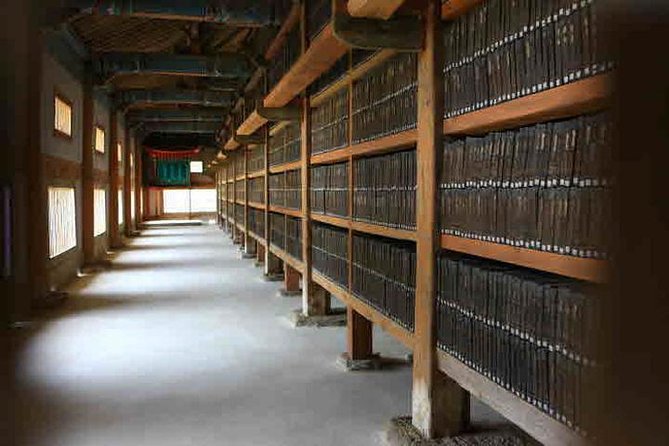
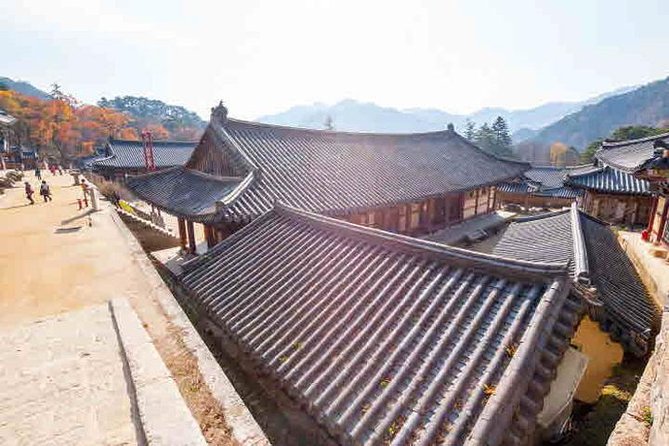
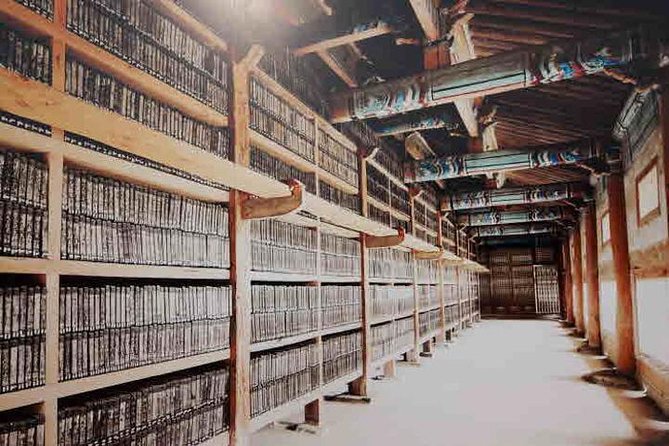
- Haeinsa Temple’s woodblock collection is a standout stop before Jeonju’s hanok lanes
- Hwaseong Fortress engineering details like brickwork techniques and crane use
- English-speaking driver plus hotel pickup and drop-off, so you spend less time figuring out transit
A Seoul-Based Heritage Route With a Calmer Pace Than You Expect
This trip works because it is built around the idea that heritage is not just a photo stop. You go beyond the quick look, especially at the UNESCO sites that most first-time plans skip or reduce to a 20-minute walk-through. The private format matters. In a private setup, you can adjust when you want more time at a courtyard, less time at a shop street, and you can ask simple questions without feeling like you are holding everyone back.
The route also makes sense geographically and culturally. You start in the Andong area, then move through Korea’s older Confucian and Buddhist cultural zones, before shifting to Busan and finishing with Jeonju and Suwon Hwaseong. That flow helps you connect the story lines, instead of treating each stop like a separate planet.
One small practical detail to keep in mind: the start time is 8:00 am, and most listed site segments are around 30 minutes. That does not mean the day feels short, but it does mean you should come ready to take in what matters quickly, then enjoy the car rides and breaks between places.
More Historical Tours in Seoul
- Seoul: Evening Dark History, Folklore & Ghost Story Walking Tour
★ 5.0 · 593 reviews - Hanbok Photoshoot and History Tour at Gyeongbokgung Palace
★ 5.0 · 276 reviews - Seoul: City Highlights and Historical Experience No Shopping
★ 5.0 · 74 reviews
Private Transportation and English-Speaking Driver, So You Actually Enjoy the Stops
The biggest day-to-day win here is simple: you get hotel pickup and drop-off plus a private vehicle with an English-speaking driver. In Korea, where signage and transit systems can be very different from what you know, having someone handle the driving and logistics is a big stress reducer.
I also like the way this kind of private tour usually gives you room for small adjustments. If you want a bathroom break, a photo detour, or you need the timing shifted because you want to linger near a temple courtyard, a good guide can do that. In the operator’s orbit, names like Yan have shown up as quick responders when questions came up, and guides such as Irene and Jae-hun are known for being friendly and cooperative, with the flexibility to make changes when needed.
Budget note: because lunch and dinner are not included, the driver can be helpful for pointing you toward practical meal options near where you are that day. You still pay for food yourself, but you avoid the awkward hunt for something open and easy.
UNESCO in Andong: Hahoe Folk Village and the Mask Dance Time Slot
Day one centers on Andong Hahoe Folk Village, a UNESCO Cultural Heritage site. This is the kind of place where the setting helps the story. The village atmosphere gives the Mask Dance more meaning than it would in a theater alone.
The standout experience is the Hahoe Mask Dance Performance, with humorous masks representing characters such as a nobleman, a Buddhist monk, a bride, farmers, a cow slaughterer, and a sarcastic lad. The performance uses farce and satire to criticize hypocrisy in the aristocratic class and Buddhism. In plain terms, you are not just watching costumes. You are seeing social commentary performed in a way that feels almost like street theater, just with centuries behind it.
A practical heads-up: the provided schedule shows about 30 minutes here. That is enough time to understand what you are seeing and catch the main beats, but it is not enough for an all-day deep wander. If you are the type who always wants to read every plaque, plan to take your time between activities, not during the performance slot.
If you like cultural traditions that are understandable without specialist study, this is a great start.
Yangdong Folk Village and the Gyeongju Thread You Can Feel in the Details
Day two focuses on Yangdong Folk Village, another key UNESCO Cultural Heritage setting for Korea’s older traditions. Folk villages can sometimes feel like living museums, and some quick tours treat them like background. The private format is what keeps it from feeling like that.
Even more importantly, the way your guide frames the day matters. This program ties the cultural context to Gyeongju, the capital of the Silla Kingdom. The idea is that Buddhism played a major role in royal authority and in unifying people, which helped make Gyeongju the home of major Buddhist art treasures. People also describe Gyeongju as the Museum Without Walls, largely because there is so much heritage spread across the city.
So what do you do with that as a traveler? You pay attention to symbols and craftsmanship. In places like Yangdong, you start noticing how architecture, social structure, and spiritual life support each other. You are not just walking through old houses. You are learning how the culture worked.
Keep expectations realistic: your time on each named stop is around 30 minutes on this schedule. You will get the essence, not a full semester of Korean studies. That is still fine. The win here is momentum and clarity, plus time to ask questions in plain English.
Different day, same base:
- Best DMZ Tour Korea from Seoul (Red Suspension Bridge Optional)
★ 5.0 · 41,422 reviews - DMZ Tour: 3rd Tunnel, Option(Suspension Bridge, Boat) from Seoul
★ 5.0 · 21,373 reviews - DMZ tour south Korea from Seoul (NK experience hall, defector)
★ 5.0 · 20,599 reviews - Seoul: The Best DMZ Tour with Optional Suspension Bridge
★ 4.7 · 4,978 reviews
Busan Temple Day: Choose Between Beomeosa and Haedong Yonggungsa
On day three, you shift to Busan, Korea’s second-largest city and its major port city. The goal is a change of pace. You get that coastal energy plus time for markets and food culture while keeping the heritage focus.
For temples, the program offers a choice: you will visit either Beomeosa Temple or Haedong Yonggungsa Temple. That matters because you are not trying to cram both in. It also helps your day feel more coherent.
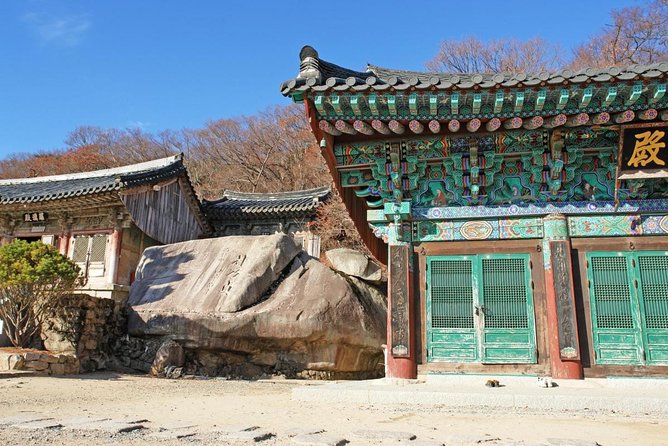
- Beomeosa Temple sits on the slopes of Geumjeong mountain, and its name means the temple of the Nirvana fish.
- Haedong Yonggungsa Temple is the Dragon palace temple and is known for a more distinctive setting near the coast.
Both options are special in different ways. If you prefer a mountain-temple mood, Beomeosa is the choice. If you like the idea of temple scenery near the sea, Haedong Yonggungsa is the one.
One more practical point: temples tend to mean more walking on uneven paths and more quiet time than you might expect. It is not hard walking, but it is slower than a museum floor. Come with comfortable shoes and expect to move at a calm rhythm.
Haeinsa Temple and Jeonju Hanok Village: Woodblocks and Narrow Lanes
Day four is one of the most culture-heavy days in a very good way. You visit Haeinsa Temple, then head into Jeonju Hanok Village.
Haeinsa is famous for housing the most complete collection of Buddhist texts engraved on 80,000 woodblocks between 1237 and 1248. It was recognized in 1995 for its cultural importance and historical remains. In real-world terms, this is the kind of UNESCO site where you learn how ideas traveled before printing machines and how people protected knowledge over centuries.
After Haeinsa, you explore Jeonju Hanok Village before hotel check-in in Jeonju. The description here is clear: there are over 800 traditional houses in narrow alleys. While the rest of the city has industrialized, the hanok village keeps its historical charms and traditions.
This is the day where the private guide really helps. In a busy group tour, you might only see the most photogenic street. In a private format, you can spend a few minutes longer in the lanes where the buildings feel more lived-in. You can also ask what is practical in the area, since Jeonju is one of those places where tradition meets modern food culture.
One drawback to note: the stop timing for each named segment is around 30 minutes. That means you should have your priorities ready. If you care most about woodblocks, lean into Haeinsa. If you care most about atmosphere and alleys, plan to slow down in Jeonju with your guide.
Suwon Hwaseong Fortress: Joseon Defense Built for Trade Too
Your final day ends with Hwaseong Fortress in Suwon, a UNESCO Cultural Heritage site. This is one of those places where the engineering story is part of the sightseeing.
The fortress was established in 1796 as a temporary palace for Jeong-jo, the 22nd King of the Joseon dynasty. The modernized city at that time was surrounded by the fortress. That double purpose is important: it was built to protect against enemies and to serve as a center of commerce.
What I love about Hwaseong is that the construction techniques are described as a blend of Western and Oriental architectural approaches. The schedule text even calls out specific methods such as using cranes and bricks instead of stone and earth. Whether or not you know architecture terms, you can still feel that the builders were solving real problems in a practical way, not just building a wall for looks.
Because this is the last day, it works well to pick a slower pace here. The fortress can have long views from certain angles, and the story sticks more when you are not rushing to the next door.
Price and What You Get for $1,834.62 per Person
At $1,834.62 per person for about 5 days, this is not a cheap tour. You are paying for a private setup across multiple regions, not just a couple of city stops.
Here is what the price includes, based on the tour details:
- 4 nights in a 4-star hotel with breakfast
- English-speaking driver
- Private vehicle transport
- Hotel pickup and drop-off
- Admission fees
- Breakfast for 4 days
Lunch and dinner are not included, so you will want to budget meals separately. That is not a deal-breaker, but it is part of the real math.
Value-wise, the pricing starts to make sense if you want to avoid the common pain points of independent travel over multiple UNESCO sites: the time spent finding transit, managing tickets, and dealing with language barriers at each site. If you are also the kind of person who wants a guide to explain what you are looking at, the private format is doing real work.
Rooming is also flexible. The hotels are booked for twin, double, or triple sharing based on party size. If you need a single room, it is available for an extra $240 per person.
If your priority is maximum control and less hassle, this tour fits. If your priority is spending as little as possible, it probably does not.
Who This Korea Cultural Heritage Private Tour Suits Best
This tour is best for you if you want Korean heritage with structure, but not a rigid group feel. You’ll enjoy it most if you:
- Care about UNESCO sites and want real context, not just quick snapshots
- Prefer private transportation over train-bus-taxi juggling
- Like the rhythm of cultural stops plus comfort at a 4-star hotel
- Want daily planning handled for you, including pickup and admissions
It is also a good match for families with older kids, since the minimum age is 8. The pace is unhurried by design, and breakfast included reduces one daily decision.
If you are very picky about meal timing, bring a plan. Since lunch and dinner are not included, you may want to ask your guide for good nearby options when you stop for food.
Finally, there is a practical luggage note. You are allowed up to 1 suitcase and 1 carry-on bag. If you have something oversized, like sports gear, it may have restrictions, so ask the operator ahead of time.
Should You Book This Private 5-Day Korea Cultural Heritage Tour?
I would book it if your idea of a great trip is clear cultural storytelling plus comfort, with less time spent coordinating logistics. The combination of Andong Hahoe Mask Dance, Haeinsa’s woodblocks, Jeonju’s hanok lanes, and Hwaseong Fortress gives you a strong mix of performance, religion, daily life, and engineering. The private format is what turns those stops from checkboxes into a connected experience.
I would skip it if you want the cheapest possible way to see Korea, or if you dislike tours with set time slots around each attraction. The schedule is not built for wandering endlessly.
Also, one easy confidence point: the trip has free cancellation up to 24 hours before the start time for a full refund, so you have breathing room if your plans are still changing.
If you want a well-paced heritage tour that respects your time and keeps you comfortable, this one is a solid choice.
FAQ
What is the duration of the tour?
The tour runs for 5 days (approx.), starting in Seoul at 8:00 am.
Does the tour include hotel pickup and drop-off?
Yes. The tour includes hotel pickup and drop-off as well as transport by private vehicle.
Is this a private tour?
Yes. It is private, meaning only your group participates.
What is included in the price?
The price includes 4 nights of 4-star hotel accommodation with breakfast, an English-speaking driver, private vehicle transport, hotel pickup and drop-off, admission fees, and breakfast for 4 days.
Are lunch and dinner included?
No. Lunch and dinner are not included.
Can I book a single room?
Yes. A single room is available for an additional USD 240 per person.
Is there a luggage limit?
Yes. Each traveler is allowed up to 1 suitcase and 1 carry-on bag. Oversized or excessive luggage may have restrictions, so it is best to ask the operator ahead of time.
Recently reviewed in Seoul
- Korean Folk Village & Suwon Hwaseong Fortress Private Tour★ 5.0 · 3 reviews
- Seoul City Private Tour (Optional layover)★ 5.0 · 3 reviews
- War Memorial, Jogyesa Temple & Tapgol Park Tour in Seoul★ 4.5 · 3 reviews
- Private Tour : Royal Palace & Traditional Villages wearing Hanbok★ 5.0 · 3 reviews
- Full Day Private Seoul Tour for foodies★ 5.0 · 3 reviews
- Nami Island & Nearby Attractions : Charter Van Tour With Driver★ 4.0 · 3 reviews
- K-Pop Tour★ 3.5 · 3 reviews
- 3D Private Seoul Highlight tours with DMZ & Korean Folk Village★ 5.0 · 3 reviews
Historical Tours, compared.
Gyeongju UNESCO World Heritage Guided Day Tour
Read our review →
Gyeongju UNESCO World Heritage Guided Day Tour from Busan
Read our review →
Evening Dark History, Folklore & Ghost Story Walking Tour
Read our review →
Old Korea Thousand History Tour of Gyeongju from Busan
Read our review →
Hanbok Photoshoot and History Tour at Gyeongbokgung Palace
Read our review →
Gyeongju UNESCO World Heritage Sites and History Full-Day Tour with Lunch
Read our review →
UNESCO Heritage Tour Including Bulguksa Temple
Read our review →Browse the lists this tour appears in