
Reviewed · GYEONGJU
Korean UNESCO World Heritage Tour including Gyeongju, Andong and Daegu(2N3D)
A Korean UNESCO World Heritage Tour that moves fast, but not stressful, is a rare thing. This 3-day route strings together big-name sites like Seokguram and Haeinsa Temple, plus classic Korean heritage culture in Gyeongju and Andong, all with a driver who handles the transit so you can focus on what you came to see.
I like two things most. First, the private guide format means explanations land in a way that helps you actually connect the dots across kingdoms and traditions. Second, the hotel pickup and drop-off removes the daily headache of meeting points, buses, and timing.
One drawback to consider is cost plus the fact that lunch and Daegu accommodation for two nights are not included, so you’ll still want to plan where and how you’ll eat and sleep.
Key things to know before you go
- Private, guided UNESCO route: You get one group, one plan, and uninterrupted guide attention.
- Hotel pickup and drop-off: You start the day without hunting for a meeting point.
- Wi-Fi on board: Useful for maps, translations, and keeping everyone sane in transit.
- Admission tickets are included for most stops: Major sites are handled, and you spend less time queuing.
- A real mix of sacred sites and daily life: Temples plus folk culture plus a traditional market.
- Taste included in Andong: You visit the Andong Soju Museum, then sample the local liquor.
A private UNESCO route that saves you from Korean logistics
If you want UNESCO World Heritage sites without spending half your trip figuring out buses, this style of tour makes a lot of sense. The core advantage is simple: you travel in an air-conditioned minivan with a driver, and you have a professional guide to translate and connect what you’re seeing to the wider story.
You also avoid the most common first-timer problem in South Korea: the language barrier. Temple names, museum labels, and cultural context can be tough when you’re relying on random translations. With a guide, you get the short version that actually helps you understand why a site matters, not just what it looks like.
And yes, it’s a private tour, meaning your group is the only group participating. You can expect a calmer pace than you’d get on a big coach tour, and you’re less likely to feel like you’re sprinting between stops.
Practical detail: you start at 8:00 am. That early start is a big deal for temples and popular museums, because it gives you more time before crowds and heat build.
More Historical Tours in Busan
- From Busan: Gyeongju UNESCO World Heritage Guided Day Tour
★ 4.8 · 1,250 reviews - Gyeongju UNESCO World Heritage Guided Day Tour from Busan
★ 5.0 · 660 reviews - Old Korea Thousand History Tour of Gyeongju from Busan
★ 5.0 · 518 reviews
Day 1 in Gyeongju: Seokguram views, Bulguksa relics, and Shilla treasures
Day 1 is built around Gyeongju, one of Korea’s best places to see how the country went from ancient kingdoms to modern life. You’ll move through four major stops, with admission included and a smooth flow between them.
Seokguram, the seaside hermitage with famous stone sculptures
Your first stop is Seokguram, described as a hermitage part of Bulguksa Temple, with a grotto overlooking the East Sea. The setting is the hook here. Even before you reach the main sights, the idea that you’re looking out toward open water while standing in a sacred rock grotto sets the tone.
This stop runs about 1 hour, and admission is included. If you’re the kind of person who likes a place that feels cinematic but also quiet, Seokguram is the kind of start that makes the rest of the day feel meaningful.
Bulguksa Temple: Dabotap and Seokgatap, plus Shilla-era relics
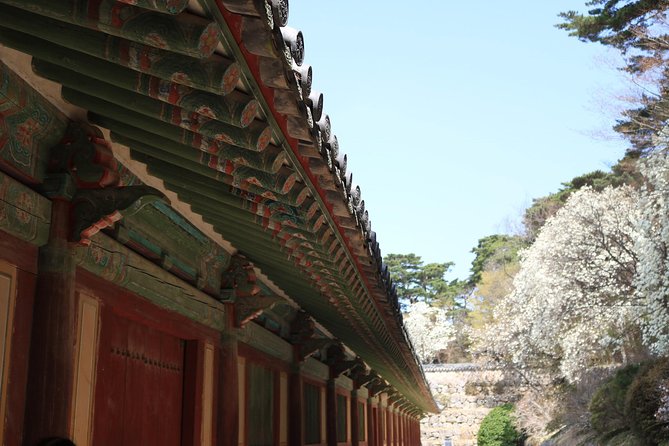
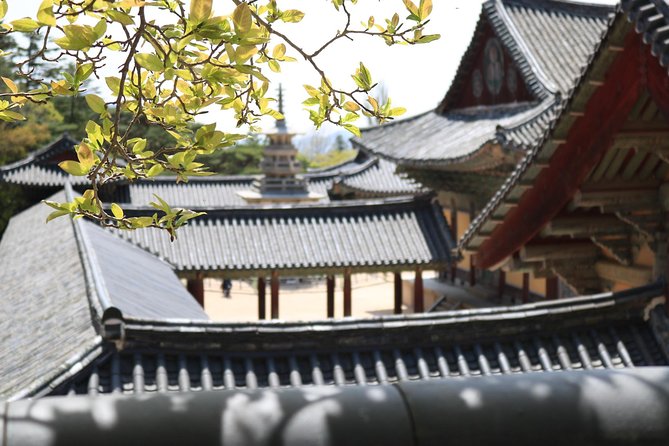
Next comes Bulguksa Temple, often called the most famous Buddhist temple in Korea. It’s the place where the story deepens. The tour explains Bulguksa through its Shilla Kingdom relics, including the famous stone pagodas Dabotap and Seokgatap.
You’ll get around 1 hour 10 minutes here, with admission included. The pagodas are the kind of thing you can stare at for a while, because they’re simple, strong forms with meaning behind them. A guide helps you notice what to look for instead of just walking through.
More of Andong:
- Andong Hahoe Folk Village Day Tour From Busan
★ 5.0 · 4 reviews - Andong Hahoe Village [UNESCO site] Premium Private Tour from Seoul
★ 5.0 · 24 reviews - Andong Hahoe Folk Village [UNESCO World Heritage] Private Tour from Seoul
★ 4.0 · 7 reviews - Andong: UNESCO Sites, Mask Dance, and Secret Garden & Bridge
★ 5.0 · 5 reviews
Cheonmachong Tomb: the heavenly horse discovery from 1973
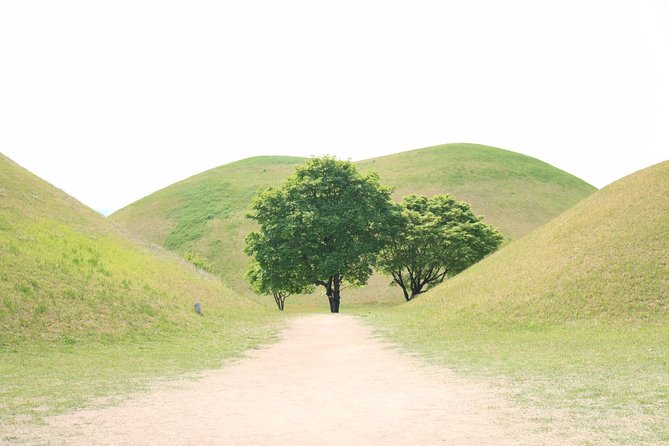
After the temple sights, you shift to archaeology at Cheonmachong Tomb. The name translates as heavenly horse tomb, and the tour connects it to a painting of a heavenly horse found during the tomb’s excavation in 1973.
This stop takes about 1 hour 10 minutes, with admission included. One reason this works in a tight schedule is that it gives your brain a different angle on history: not just buildings and art, but evidence of royal life and symbolism tied to a Shilla king. The note that the king was unknown makes the whole thing feel more mysterious and human.
Gyeongju National Museum: about 3,000 Shilla relics in one place
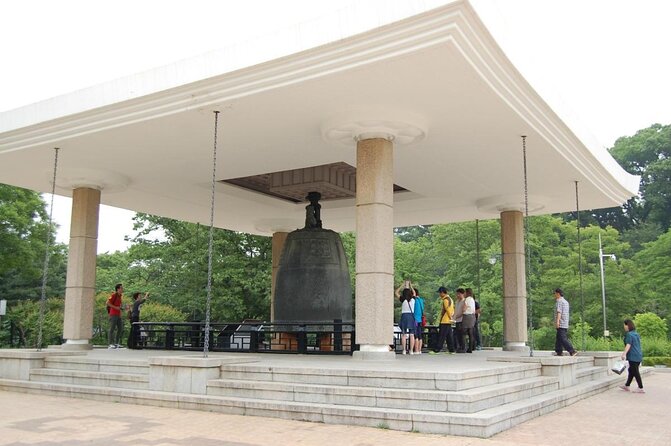
To finish Day 1, you head to Gyeongju National Museum for roughly 1 hour 20 minutes. The big payoff is scale: the museum houses about 3,000 relics from the Shilla dynasty, including King Seongdeok’s Bell, also known as the Emille Bell, plus National Treasure No. 29.
This is where a guide earns their keep. Museums are great, but only if the information makes you care. With an expert explanation, you’re more likely to leave saying, I get what I just saw and why it matters.
A real consideration for Day 1
Day 1 is packed, and if you’re sensitive to lots of indoor and outdoor walking, you’ll want to pace yourself inside temples and give your feet a few smart breaks. This itinerary is designed to be efficient, but it is still three heritage-heavy stops in one day.
Day 2 in Andong: Hahoe village folk culture, museum stops, and a soju tasting
Day 2 slows down just enough to feel like you’re not only viewing history, you’re living around it.
Andong Hahoe Folk Village: preserved traditional houses and family lines
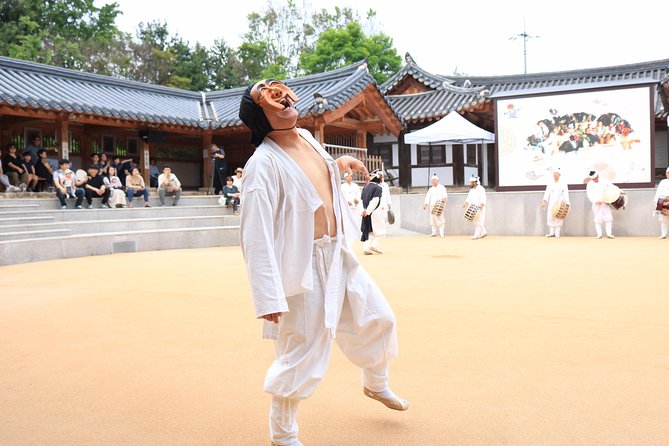
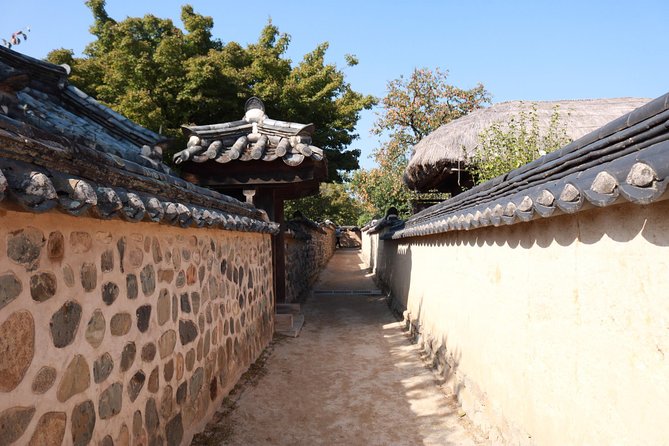
You start with Andong Hahoe Folk Village, a UNESCO World Heritage site. The village is especially known for being well preserved, with traditional houses and a living link to history through the descendants of the Pungsan Ryu clan.
You’ll have about 3 hours here, with admission included. Three hours is a good amount of time because you’re not rushed. You can look at architecture, stroll through the layout, and then come back to the parts you want to study more.
Andong Folk Museum: Confucian culture in everyday details
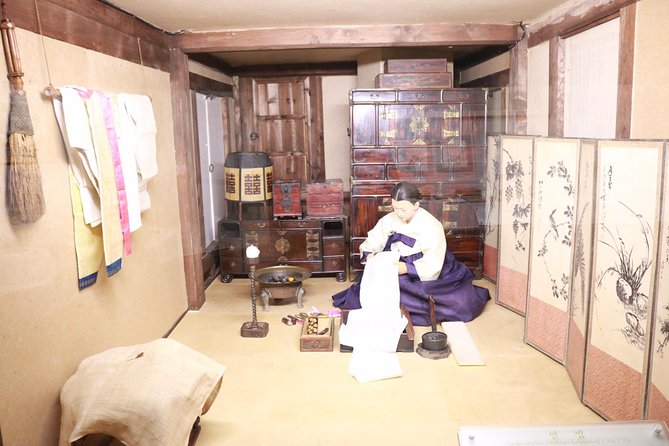
Next is Andong Folk Museum for about 1 hour, admission included. Here the focus is Confucian culture, including what life looked like in the past and how important cultural ceremonies were carried out.
This stop works well if you want context that goes beyond buildings. Temples and tombs are big statements, but folk culture shows you daily rhythm, social values, and how people lived with rules and traditions.
Andong Soju Museum: learn, then taste
The final stop of the day is Andong Soju Museum for around 30 minutes. It focuses on Andong Soju, a traditional local liquor. You learn how traditional soju is made and then you can taste it, plus you’ll see information tied to local food.
A quick practical note: keep your drinking expectations light if you’re doing more walking later. You’ll still be touring, not just sampling in a relaxed tasting room.
Day 3 Haeinsa and Daegu: the Koreana Tripitaka and Seomun Market
Day 3 is a blend of major spiritual heritage and a down-to-earth city stop where you can feel Daegu’s everyday energy.
Haeinsa Temple: Koreana Tripitaka, the Goryeo Daejanggyeong
You begin at Haeinsa Temple, located in Gaya Mt. It’s one of Korea’s Three Jewel Temple of Korea, and it’s especially famous as the home of the Goryeo Daejanggyeong, called the Koreana Tripitaka.
This visit runs about 1 hour 30 minutes, with admission included. The big idea you’ll want to walk away with is why this collection matters. It’s not just a temple. It’s a preservation project tied to religious texts and careful record-keeping, and that perspective helps you understand why the site is so respected.
If you’ve ever wondered why East Asian temples often feel more than simple places of worship, Haeinsa is the kind of stop that answers that question.
Daegu Yangnyeongsi Herbal Medicine Festival: learning about traditional care
Next is Daegu Yangnyeongsi Herbal Medicine Festival for about 40 minutes. The tour frames it as a place tied to oriental medical science. As you walk around, you can see various herbs, then you visit an area where you can learn about traditional medical care.
This stop is shorter by design, and that’s good. It adds variety to a schedule already heavy with temples and museums.
Seomun Market: food and shopping without extra tickets
Finally, you get Seomun Market for around 50 minutes. Admission is free. The tour highlights it as one of the biggest and lively markets in Korea, with delicious local foods and good quality clothing and fashion items.
This is a perfect end-of-tour stop because it gives you something to do that isn’t only sightseeing. You can take a quick break, try something local if you want, and pick up a clothing item or small souvenirs without planning a whole separate outing.
Price and value: what you’re really paying for at $988.49 per person
At $988.49 per person, this tour is not a bargain. But it also isn’t a mystery spend. You’re paying for three big value drivers that matter when you travel with limited planning time or limited language comfort.
First, you’re buying transportation between cities and sites. You’re in a private AC vehicle with a driver. That means no puzzle-solving around train schedules, bus routes, or airport-style transfers.
Second, you’re paying for a professional guide with undivided attention. A guide helps you understand what you’re seeing at each stop, especially at places where the signage and context could otherwise feel abstract.
Third, many of the heritage visits have admission tickets included. That lowers your stress level and keeps the day moving.
Now, the trade-offs. Lunch is not included, and accommodation in Daegu for two nights is also not included. That means the final cost of your trip will be more than the tour price alone, because you still need meals and a place to stay.
Also, the tour is designed as a private 3-day flow. If you want long unscheduled free time or you prefer to roam on your own every afternoon, a fixed itinerary might feel limiting.
One more logistics note that can help: the tour information says you might start from Gyeongju or another city near Busan, so it can fit different trip styles.
Tips to make this UNESCO tour feel effortless
Here are the practical things that help you get the most out of this kind of private heritage itinerary.
- Use the 8:00 am start to your advantage. Start early, take in the sites while the day is cooler, and you’ll feel less rushed.
- Wear comfortable shoes. Temples and museums mean lots of walking, and the schedule does not include long recovery gaps.
- If you need a vegetarian option, tell the operator when booking. It’s listed as available.
- Plan cash or card for lunch and for shopping at Seomun Market. Food is a big part of that final stop.
- Expect that admission is mostly handled. Your time goes into seeing, not waiting in lines.
- Bring a charged phone or small translator aid. Even with guide support, your own device helps with personal notes and later reminders.
If you’re lucky with timing, this kind of tour can also land you in the right mood for temples. One past family experience highlighted Haeinsa as especially beautiful on a misty Sunday morning, which tells you the setting can feel extra special when the weather cooperates. You can’t guarantee mist, but you can show up ready to appreciate it.
Should you book this UNESCO World Heritage tour?
Book it if you want a stress-free first visit to major UNESCO World Heritage sites in South Korea without the language and transit stress. This is especially a smart match if you care about understanding what you’re looking at, not just checking off landmarks. The private format also tends to work well for families, because everyone gets the same guided explanations without getting split up.
Skip it, or rethink it, if you’re on a tight budget and comfortable organizing your own transport and tickets. You’ll also want to consider that lunch and Daegu accommodation are extra, and the schedule is built for efficiency, not long wandering time.
If you’re deciding between DIY and guided, ask yourself one question: do you want your limited vacation hours spent on travel friction, or on sites like Seokguram, Bulguksa, Andong Hahoe Folk Village, Haeinsa, and a final market stop in Seomun? If you choose the second option, this tour is built for that.
FAQ
What is the tour duration?
The tour runs for 3 days (approx.).
What time does the tour start?
The start time is 8:00 am.
Is hotel pickup and drop-off included?
Yes. Daily hotel pickup and drop-off are included.
Is Wi-Fi included during the tour?
Yes. Wi-Fi is provided on board.
Are admissions included?
Admission tickets are included for the listed sites (for example Seokguram, Bulguksa, Cheonmachong Tomb, and others). Seomun Market is listed as free.
Is lunch included?
No, lunch is not included.
Is accommodation included?
No. Accommodation in Daegu for two nights is not included.
Is there a vegetarian option?
Yes. A vegetarian option is available if you advise at booking.
What is the cancellation policy?
You can cancel for a full refund up to 24 hours before the experience’s start time. If you cancel less than 24 hours before, the amount paid will not be refunded.
More UNESCO Sites around Busan
- UNESCO Tongdosa Temple + Gourmet Eonyang Style Bulgogi Lunch
★ 5.0 · 7 reviews - Full Day Private car tour to UNESCO Gyeongju&Yangdong village
★ 5.0 · 5 reviews - Gyeongju private tour with an official tour guide (Unesco)
★ 4.5 · 4 reviews - Jeju: Eastern Jeju UNESCO Spots Day Tour
★ 4.9 · 1,148 reviews
More of Gyeongju
- Busan: Gyeongju Guided Day Trip to Three Kingdoms Capital
★ 4.8 · 1,925 reviews - From Busan: Echoes of Silla Gyeongju Historical Day Tour
★ 4.8 · 55 reviews - Gyeongju Small Group photo Tour (Max 6 Pax)
★ 5.0 · 38 reviews - Gyeongju Historic Areas Day Tour with Sky Capsule from Busan
★ 5.0 · 18 reviews
Recently reviewed in Busan
- Gyeongju private tour with an official tour guide (Unesco)★ 4.5 · 4 reviews
- Small Group Discover Busan Tour with hotel pickup and dropoff★ 5.0 · 111 reviews
- A Well-Rounded Small-Group Busan Tour with Hotel Pickup Service★ 5.0 · 157 reviews
- Real Busan Walking Experience★ 5.0 · 27 reviews
- Full Day Private car tour to UNESCO Gyeongju&Yangdong village★ 5.0 · 5 reviews
- Busan Seafood Tour : Oyster village Tour with Oyster cuisines★ 5.0 · 3 reviews
- Enchanting Oedo Island Day Tour from Busan with Windy Hill★ 4.5 · 59 reviews
- Suncheon one day tour from Seoul, Busan or Suncheon★ 5.0 · 3 reviews
Gyeongju, compared.
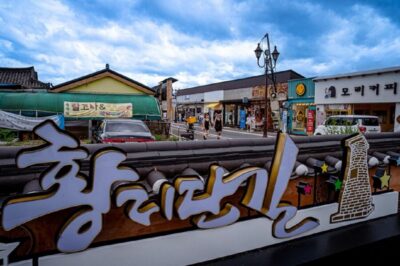
Gyeongju Guided Day Trip to Three Kingdoms Capital
Read our review →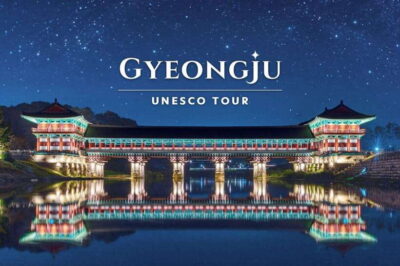
Gyeongju UNESCO World Heritage Guided Day Tour
Read our review →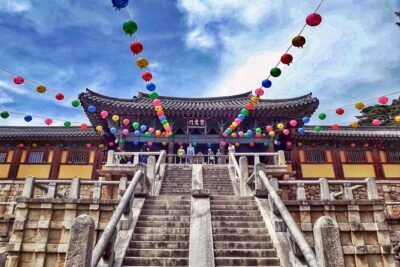
Gyeongju UNESCO World Heritage Guided Day Tour from Busan
Read our review →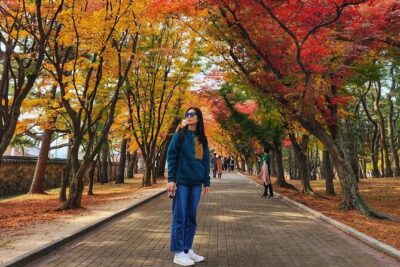
Old Korea Thousand History Tour of Gyeongju from Busan
Read our review →
Gyeongju UNESCO sites Private tour with licensed tour guide
Read our review →
Private Gyeongju Tour – Explore Gyeongju UNESCO Sites
Read our review →
UNESCO Heritage Tour Including Bulguksa Temple
Read our review →Browse the lists this tour appears in