
Reviewed · GYEONGJU
Full Day Private car tour to UNESCO Gyeongju&Yangdong village
Gyeongju plus Yangdong is a strong combo because you get UNESCO sites from the Silla kingdom in one direction, then you step into a living Joseon village in the other. This is interesting if you want to control pacing, not follow a fixed bus route.
I like the private car flexibility most. You can shape the day around your group and still hit major stops like Bulguksa Temple, Daereungwon tombs, Cheomseongdae, and Yangdong Folk Village. I also like the built-in driver and guidance support, with practical help for what to see, plus food recommendations when you get a break on Hwangridan-gil.
One consideration: you can cram a lot into about 9 hours, so you still need to choose. And while many sites are listed as free or included, you will pay admission fees and lunch yourself at the stops that require it.
Key highlights worth planning for
- Your own air-conditioned private car, up to 8 people per group
- Driver guidance that includes local eats and timing, useful with kids or older relatives
- UNESCO-heavy day with classic Gyeongju anchors like Bulguksa, Cheomseongdae, and the tomb complex
- Yangdong Folk Village details like 500-year-old thatched cottages and homes preserved for centuries
- Some admissions are free or included, but you still budget for the paid ones
- Hwangridan-gil free time for photos, shopping, and lunch in hanok-style lanes
Why This Gyeongju and Yangdong Private Day Works
If you like history but hate feeling rushed, this tour format is a good fit. You are not waiting on a big group to finish pictures. You are not stuck seeing only what fits into someone else’s order. The private car means you can move with less friction, then slow down when a place grabs your attention.
The route also has a natural flow. You start with major Silla-era landmarks and UNESCO context in Gyeongju, then you end at Yangdong, where the setting turns from stone relics into everyday older-world Korea. That shift matters. It helps the day feel varied, not like you are watching the same type of attraction back to back.
Finally, the driver role is practical. In this kind of day, the biggest difference between a good tour and a great one is timing, what you choose to prioritize, and where you stop for food. The tour is set up so the driving guide can help with all three.
More Full-Day Tours in Busan
- Small Group Full Day Busan Tour (Max 6 Pax)
★ 5.0 · 1,464 reviews - Authentic Busan Full-Day City Highlights Tour
★ 5.0 · 272 reviews - Full-Day Tour Unmissable things to do in Busan
★ 5.0 · 195 reviews
Price and Value, Plus What You Pay For
The price is $430 per group, for up to 8 people, for about 9 hours. That sounds pricey until you break it down by group size and remember what is included.
You are paying for:
- fuel, parking, and toll fees
- an air-conditioned private vehicle
- a licensed driving guide who assists you
- pickup and drop-off to preferred places
- all fees and taxes
What you do not pay in the package:
- meals
- personal expenses
- attraction admission fees
Here is the practical value angle. Many of the listed stops are marked free or included, so your money is not eaten up by admissions at every single stop. Still, not everything is free, and Yangdong Folk Village is listed as not included for admission. So I treat this as a “transport plus guidance” package, and I budget separately for admissions and lunch.
If your group is 2 to 6 people, this can still be a strong value compared with piecing together a private driver and tickets on your own. If your group is only 1 person, the price-to-seat ratio is less friendly, and you might compare it to other local options.
Picking Your Day Plan, and How the Timing Usually Feels
The day is built around about 9 hours, but it is described as customizable. In other words, you are not trapped in a rigid “see everything” plan. Most outings can land at around 6 sites when you include travel time and meal breaks.
That number is useful. It tells you this is not a stamp-collection sprint. You get enough time to actually look around, especially at the big anchors.
A good way to plan is to choose one “must-do” from each half:
- Silla and UNESCO core: Bulguksa Temple and/or the Daereungwon tomb complex
- Traditional village core: Yangdong Folk Village
Then pick 1 to 2 lighter stops in between, like Cheomseongdae, Gyochon Village, or a quick bridge stop. This keeps you from standing in line for one more thing when you really wanted to sit, rest, and enjoy.
Bulguksa Temple: UNESCO Temple Time, Built for Slower Looking
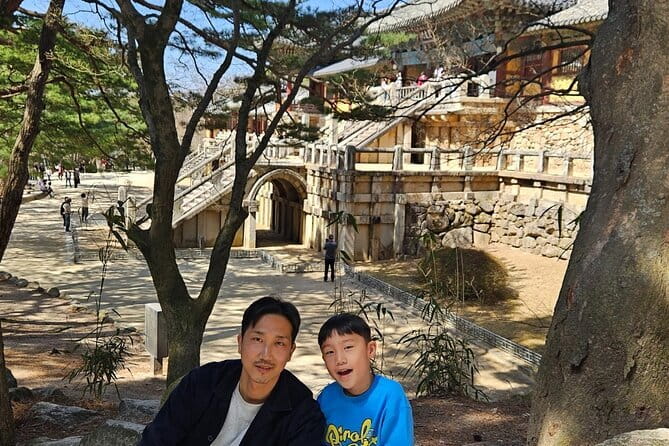
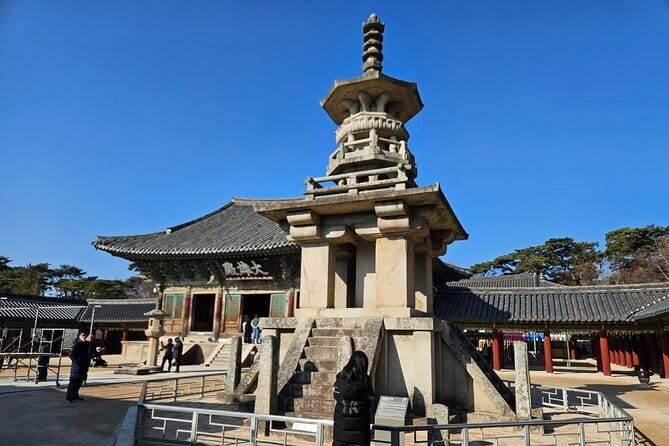
Bulguksa Temple is the kind of stop where timing helps your mood. You are dealing with a major Buddhist relic tied to the Silla kingdom, and you will want time to move slowly through the grounds rather than rush in and out.
A few details that make it worth your attention:
- It is described as a representative relic of Silla Buddhist culture.
- The temple was built during the reign of King Beopheung, around 514 to 540.
- It has ongoing restoration that started in 1920.
- It holds seven national treasures, plus other important heritage items.
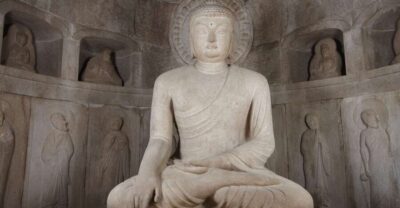
- UNESCO recognized Bulguksa together with the nearby Seokguram Grotto in December 1995.
There is also a seasonal note worth taking seriously: it is said to be good for a maple leaves tour. If you are traveling in autumn, you may want to prioritize this early, before daylight gets tight.
Potential drawback: temples can be physically demanding depending on weather and how much you walk between viewpoints. Wear comfortable shoes and plan for a steady pace. The good news is the tour is private, so you can pause more easily than on a bus.
More of Gyeongju:
- Busan: Gyeongju Guided Day Trip to Three Kingdoms Capital
★ 4.8 · 1,925 reviews - From Busan: Gyeongju UNESCO World Heritage Guided Day Tour
★ 4.8 · 1,250 reviews - Gyeongju UNESCO World Heritage Guided Day Tour from Busan
★ 5.0 · 660 reviews - Old Korea Thousand History Tour of Gyeongju from Busan
★ 5.0 · 518 reviews
Daereungwon Tomb Complex and Cheonmachong Tomb: Where the Gold Crown Story Comes Alive
If Bulguksa is the faith site, Daereungwon is the power site. The Daereungwon Tomb Complex is thought to date from the late 5th century into the early 6th century. This is where you start to understand why Silla history matters in modern Korea.
Key points that make this stop feel concrete:
- Artifacts from excavations include items like a gold crown, gold cap, gold waist belt, gold diadem, and gilt-bronze shoes.
- The gold crown is specifically known for being the largest and most elaborate of the gold crowns unearthed in Korea.
Cheonmachong Tomb adds a different angle. It was excavated in 1973 and is described as 12.7 meters high with a 50-meter diameter. Even better for your visit planning, Cheonmachong Tomb is the only tomb in the Daereungwon Ancient Tombs that is opened to the public.
Potential drawback: tomb sites can feel abstract if you only glance at them quickly. To get more out of it, slow down and let your driver’s explanations guide what to focus on, especially how the artifacts connect to the burial status of the person remembered here.
Cheomseongdae Observatory and the Gyochon Village Contrast
Two of the lighter stops on the plan still carry weight.
Cheomseongdae Observatory:
- It is thought to have been built during the reign of Queen Seondeok, around 632 to 647.
- It was for observation of heavenly bodies.
- It is widely regarded as the oldest astronomical observatory in Asia.
This is the kind of stop that works well for a half-hour, because it gives you a quick win. You get a strong story about technology, not just stone and ceremony.
Gyeongju Gyochon Traditional Village:
- It is another traditional village of old hanok houses, similar in concept to Yangdong.
- A notable site here is Gyeongju Hyanggyo, a Confucian academy and shrine.
- It’s linked to Korea’s first state-operated educational institute called Gukhak, established in 682.
Why this pairing works: Cheomseongdae is about scientific observation. Gyochon is about learning and social values. Together they show Silla-era and Joseon-era thinking in two different lenses.
Potential drawback: “traditional village time” can be either your favorite part or just a scenic break. If you want the most impact, aim to take your time on at least one village stop, not all of them.
Donggung Palace and Wolji Pond: The Secondary Palace You Should Not Skip
Donggung Palace and Wolji Pond are described as secondary palace sites in Gyeongju. The palace, with other secondary palaces, was used as the eastern palace where the prince lived, and for banquets during important events and guest welcomes.
Wolji Pond matters because it is not just an attractive backdrop. It is tied to the function of the palace area. It is the kind of place where you can stand back, take a breath, and connect the physical layout to the role it played.
The tour lists Donggung and Wolji as included, with about 1 hour. That inclusion is a small but real value boost, because it reduces the admissions and decision fatigue.
Potential drawback: if your day timing is off, pond and palace views can feel shorter than expected. If possible, plan to spend your full hour here instead of using it as a quick photo stop.
Woljeonggyo Bridge and Hwangridan-gil: Quick Stops Plus Lunch Fuel
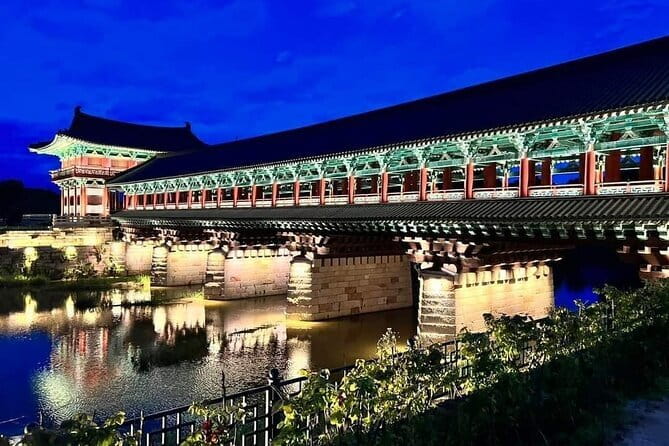
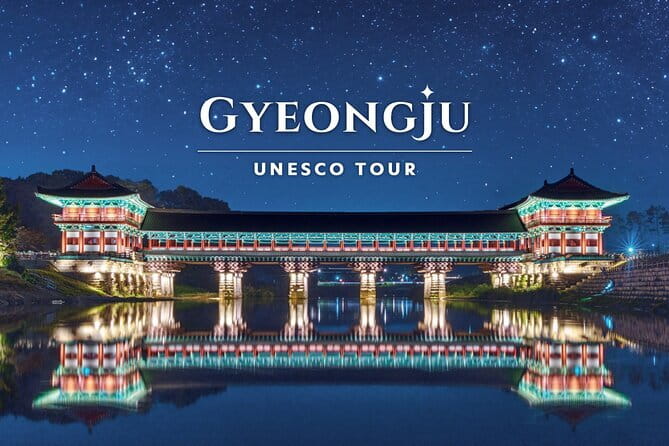
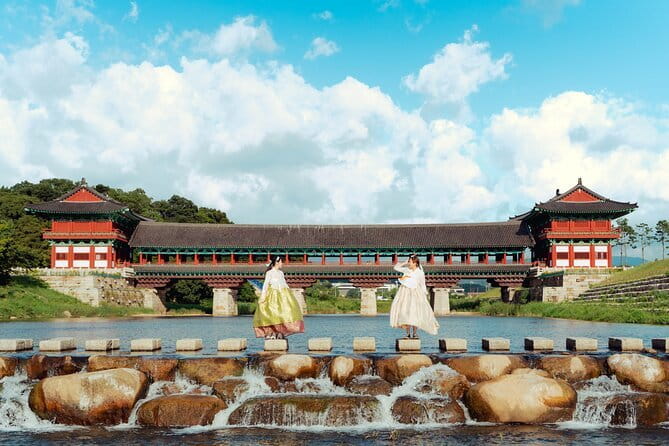
Woljeonggyo Bridge:
- It is located in Gyo-dong in Gyeongju.
- It was built during the Unified Silla period, 676 to 935.
- It burned down during the Joseon dynasty.
- It was rebuilt in April 2018.
- It is described as the largest wooden bridge in Korea.
This works as a “movement break” in the day. You get a short stop that still feels meaningful, especially because the bridge story includes destruction and rebuilding.
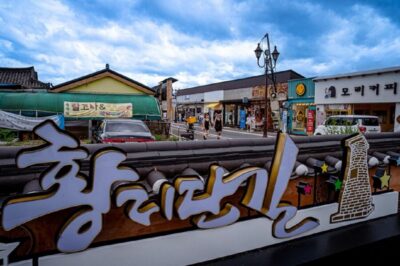
Then there is Hwangnidan-gil, the food and photo lane.
- It has restaurants, cafes, photo studios, and shops housed in hanok buildings.
- It is popular with younger generations.
- It is also described as having newtro aesthetics, from old and worn buildings from the 1960s and 1970s.
This is where the tour’s meal approach makes sense. You get free time for meals here, or the driver can recommend Korean food to match your taste. The plan also mentions you can try a famous food place in Gyeongju, which is exactly the kind of thing you benefit from a local guide for.
Potential drawback: this is also where you can lose time if you stop too often for snacks and photos. Treat lunch as the main event here, and save extra wandering for after the tour if you have energy.
Yangdong Folk Village: The Joseon Daydream With Real House Details
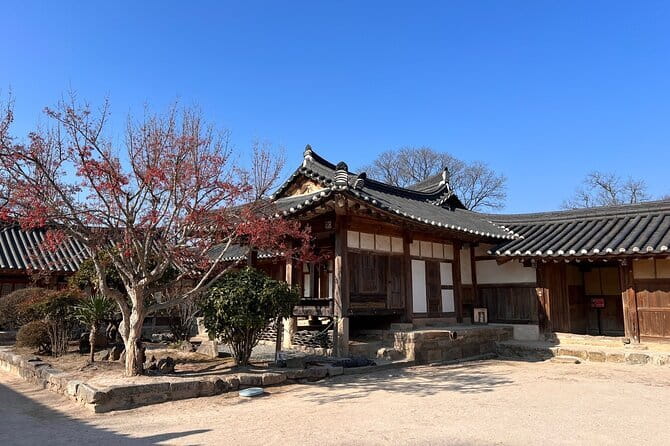
Yangdong Folk Village is the “why you came” stop for many people. It is described as Korea’s largest traditional village, showing Joseon dynasty culture with natural surroundings.
The specifics are what make this place feel real:
- The village has many cultural heritages, including treasures, national treasures, and folklore materials, and the whole area is designated as a cultural heritage site.
- You can see Seolchangsan Mountain and its four spines of mountains beyond the village.
- There are about 160 old houses and 500-year-old thatched-roof cottages.
- Fifty-four of the homes are over 200 years old and preserved in their original state.
- King Charles III visited the village in 1993.
If you are trying to decide between Yangdong and other village-style stops, focus on preservation and the scale of what you will see. Yangdong is not just a pretty street. It is a large preserved settlement.
Potential drawback: because the admission is not included, your budget matters. Also, village terrain can include walking on uneven ground. If someone in your group has mobility limitations, you will want to keep the pace gentle and ask the driver to adjust around footpaths and comfort.
When Your Driver Makes the Day: Names You Might Recognize
A private day lives or dies on the person behind the wheel. In this case, the driving guide support seems to be a standout.
I’ve seen names like Kei, Ted, and Mr. Park Jinh Youck associated with these kinds of tours. The common threads you can plan around are:
- punctual, careful handling at attractions
- recommendations that help you match stops to your group’s needs
- local eats suggestions, including where to eat near the sites
- good communication, sometimes via WhatsApp or LINE
If you have a mixed group, like a couple of elderly relatives plus kids, this matters even more. Air-conditioned driving is only half the comfort. The other half is someone timing stops so you are not stuck waiting around while everyone shuffles their energy.
One practical tip: ask your driver early which two sites are the priorities. Then, ask what they would drop if the schedule feels tight. A good guide will help you choose without making it feel like you are cutting your own day short.
What to Bring and How to Get the Most From 9 Hours
This tour lists moderate physical fitness as a target level. That sounds vague, but you can translate it into plain travel prep: expect some walking, stairs in temple or village areas, and the usual uneven surfaces.
Here is what I’d bring:
- comfortable, grippy shoes
- water for breaks between stops
- a light layer, since temple and outdoor sites can feel cooler or windier
- a simple plan for lunch, because Hwangridan-gil free time is your main meal window
Also, check your interest level in museums versus outdoors. The plan includes Gyeongju National Museum with about 1 hour. If you love indoor exhibits, great. If you prefer just views and walking, you might shorten that and put time into the villages or the tomb area.
Should You Book This Private Car Tour to Gyeongju and Yangdong?
Book it if:
- you want UNESCO plus a traditional village in one day
- your group values comfort and fewer logistics headaches
- you like having a driver who can steer you toward good meal options and efficient timing
- you want flexibility, not a fixed itinerary
Skip or rethink it if:
- you hate paying separate entrance fees and want everything bundled
- you want a very relaxed day with lots of free time at each single stop, because the schedule is designed to cover several anchors in about 9 hours
- your group needs mostly flat, minimal walking, since temples and villages usually involve uneven ground
My practical take: if you plan your priorities (Bulguksa and Daereungwon in one half, Yangdong as your traditional core in the other), this tour format gives you a lot of Korea in a single, sensible loop. You end the day with both the grand UNESCO story and the quieter, lived-in feel of Joseon-era houses.
FAQ
What is the duration of the tour?
The tour runs about 9 hours (approx.), with time allocations for each stop.
How many people can join the private tour?
It is private, and the price is per group up to 8 people.
What does the $430 price include?
It includes fuel, parking, toll fees, a licensed driving guide, air-conditioned vehicle, pickup and drop-off to preferred places, and all fees and taxes.
Are meals included?
No. Meals are not included, but you will have free time for meals at Hwangridan-gil or your driver can recommend Korean food.
Are entrance fees included?
No. Attraction entrance fees are not included, though some specific sites are listed as free or included in the tour plan.
Where does the tour start from?
The tour can depart from Busan or Gyeongju, with flexibility for round-trip or one-way tours.
Is pickup available?
Yes. Pickup and drop-off to preferred places is included.
Do I need an entrance ticket or mobile ticket?
You get a mobile ticket, and pickup is offered.
How soon will I know if the booking is confirmed?
Confirmation is received within 48 hours of booking, subject to availability.
What is the cancellation policy?
Free cancellation is offered if you cancel up to 24 hours in advance for a full refund.
More UNESCO Sites around Busan
- UNESCO Tongdosa Temple + Gourmet Eonyang Style Bulgogi Lunch
★ 5.0 · 7 reviews - Gyeongju private tour with an official tour guide (Unesco)
★ 4.5 · 4 reviews - Korean UNESCO World Heritage Tour including Gyeongju, Andong and Daegu(2N3D)
★ 5.0 · 3 reviews - Jeju: Eastern Jeju UNESCO Spots Day Tour
★ 4.9 · 1,148 reviews
Recently reviewed in Busan
- Gyeongju private tour with an official tour guide (Unesco)★ 4.5 · 4 reviews
- Small Group Discover Busan Tour with hotel pickup and dropoff★ 5.0 · 111 reviews
- A Well-Rounded Small-Group Busan Tour with Hotel Pickup Service★ 5.0 · 157 reviews
- Real Busan Walking Experience★ 5.0 · 27 reviews
- Busan Seafood Tour : Oyster village Tour with Oyster cuisines★ 5.0 · 3 reviews
- Enchanting Oedo Island Day Tour from Busan with Windy Hill★ 4.5 · 59 reviews
- Suncheon one day tour from Seoul, Busan or Suncheon★ 5.0 · 3 reviews
- Visit Busan night market and enjoy the night view of Busan harbor★ 5.0 · 6 reviews
Gyeongju, compared.
Gyeongju Guided Day Trip to Three Kingdoms Capital
Read our review →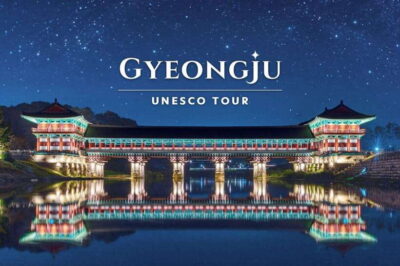
Gyeongju UNESCO World Heritage Guided Day Tour
Read our review →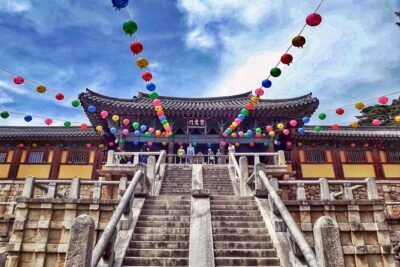
Gyeongju UNESCO World Heritage Guided Day Tour from Busan
Read our review →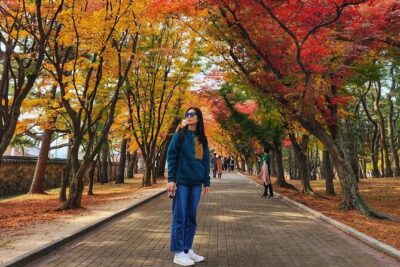
Old Korea Thousand History Tour of Gyeongju from Busan
Read our review →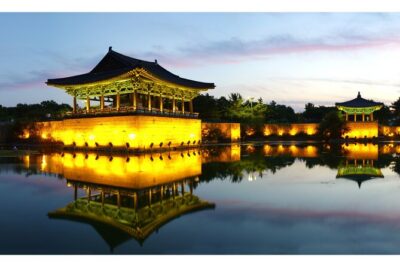
Gyeongju UNESCO sites Private tour with licensed tour guide
Read our review →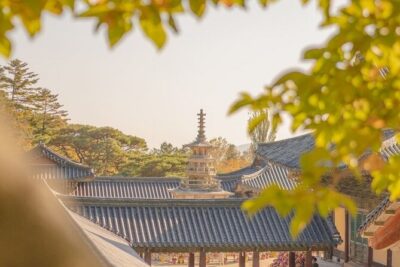
Private Gyeongju Tour – Explore Gyeongju UNESCO Sites
Read our review →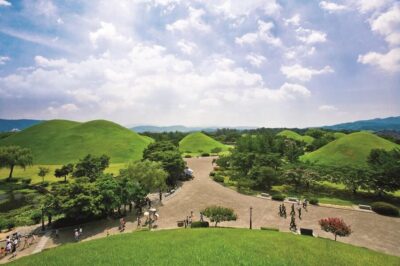
UNESCO Heritage Tour Including Bulguksa Temple
Read our review →Browse the lists this tour appears in