
Reviewed · HISTORICAL TOURS
Buam dong Walking Tour Art, History and Parasite in Seoul
Buam-dong is one of those parts of Seoul that feels calmer the second you start climbing. This 2.5-hour guided walk threads together Hanok culture, city-wall history, and art stops with mountain views you do not expect this close to central Seoul.
I especially like the way the tour mixes big themes with small details, like the Cheongun Literature Library in its traditional setting and the stories tied to Seoul’s defense landmarks. I also like the humor and energy your guide brings, including the way Jon’s explanations make Korean history stick fast without turning into a lecture.
One consideration: the route involves hillside walking, so bring moderate fitness and comfortable shoes, even though the pace is guided and the small group size helps you stay together.
Key highlights worth knowing before you go
- Buam-dong on foot, with mountain-view moments and a quieter side of Seoul
- Cheongun Literature Library, Seoul’s first Hanok library, for a calm pause
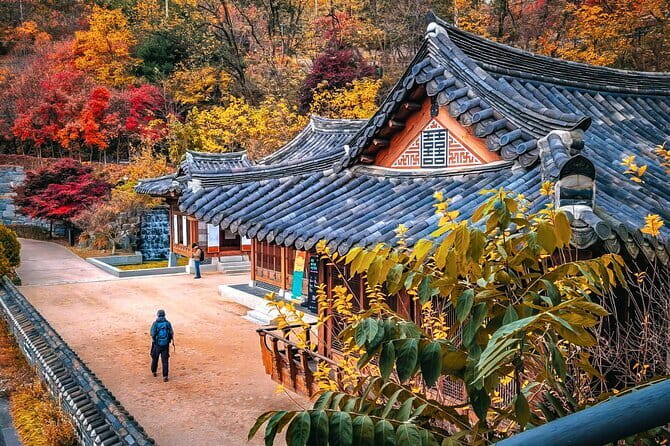
- Seoul City Wall and Changuimun Gate, built for defense and still meaningful today
- Cold War context, woven into what you see on the ground
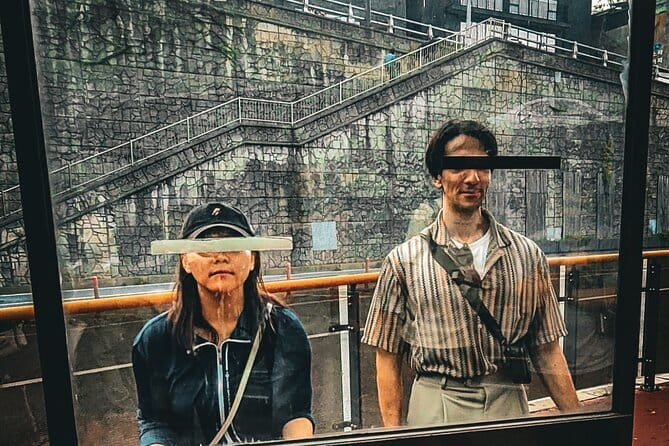
- Parasite filming location, plus Hill of Poet Yoon Dong-ju sights along the route
- Mugyewon Hanok cultural space to end the tour in a traditional setting
Why Buam-dong Walks Feel Different From Typical Seoul Sightseeing
Most Seoul walking routes hit the same kind of highlights: a palace here, a market there, then photos on repeat. Buam-dong is different because the neighborhood itself is the attraction. You trade crowds for steep streets, artful corners, and viewpoints that open up over the hills.
This tour is also built around contrast. You start with everyday neighborhood texture, then you shift into places with a strong sense of purpose, like a literature library that is designed for quiet focus. Later you move into landmark territory with Seoul’s wall and gate, where the past is not just an idea, it is part of the city’s physical structure.
And yes, the Parasite filming location adds an extra layer of fun. It is not about chasing movie trivia. It is more like seeing how real streets and architecture shape scenes, even long after the cameras stop rolling.
More Historical Tours in Seoul
- Seoul: Evening Dark History, Folklore & Ghost Story Walking Tour
★ 5.0 · 593 reviews - Hanbok Photoshoot and History Tour at Gyeongbokgung Palace
★ 5.0 · 276 reviews - Seoul: City Highlights and Historical Experience No Shopping
★ 5.0 · 74 reviews
Meeting Point, Timing, and How the 2.5-Hour Route Flows
The walk starts at 시민약국 106-3 in Jeokseon-dong, Jongno District, with a start time of 2:00 pm. Plan for about 2 hours 30 minutes total, including a short transfer by bus.
Here is the rhythm you can expect:
- You take a 10-minute bus ride to Buam-dong, which is where your guide sets context for the area.
- From there, the tour becomes a steady walking pattern with several focused stops.
- The day ends back at the meeting point.
Group size matters here. With a maximum of 15 travelers, you get space to hear the guide, and you are less likely to get stretched out in tight lanes. If you like guided walks where you can actually ask questions, this format is a strong fit.
Also, this is booked fairly often, with an average of 19 days in advance. If you have fixed dates, I would not wait until the last week to reserve.
The 10-Minute Bus Ride That Sets Up the Whole Neighborhood
That brief bus ride is not filler. It is your warm-up, and it matters because Buam-dong reads differently once you know what to notice. You are essentially getting a map of the neighborhood before you step out onto the hillside streets.
You also learn why Buam-dong is special within Seoul’s bigger story. That matters because the stops later on connect to themes like cultural spaces, defense history, and the way different eras left their mark on the area. Without that setup, you might treat the tour as a set of photo stops. With it, you start seeing patterns.
Tip: use this time to settle your footing. If you come straight from transit, loosen your shoes and get comfortable, because the walking starts after you arrive.
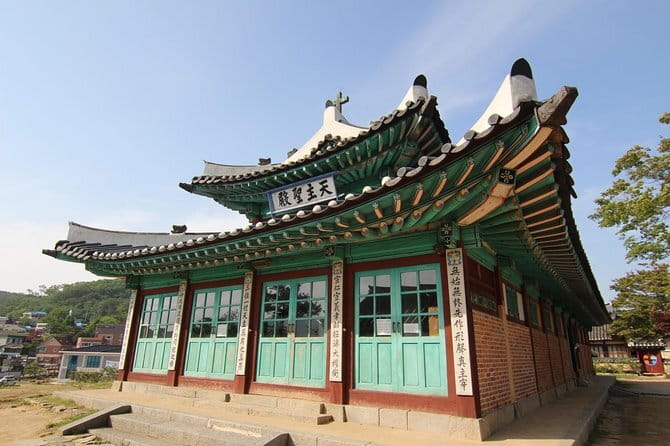
Cheongun Literature Library, Seoul’s First Hanok Library
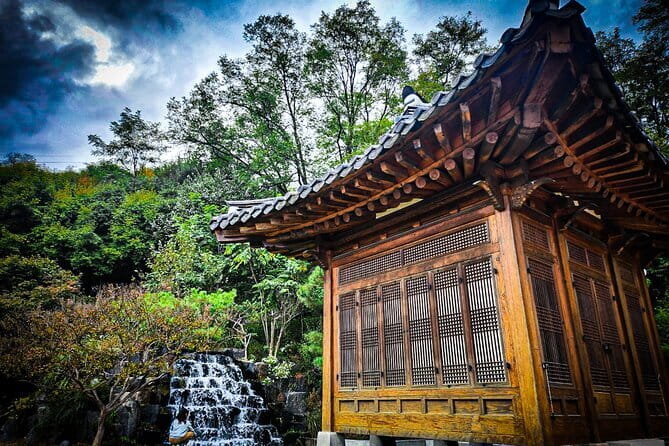
One of the most satisfying stops is the Cheongun Literature Library. You are stepping into a hanok environment built for reading and reflection, and it is surrounded by traditional architecture that naturally slows your pace.
This stop is also a reset button. After moving through streets and viewpoints, you get a small pocket of calm, which is perfect for getting your bearings. The setting helps you notice details you might skip outside of a cultural space, like the way the building layout supports quiet and how the atmosphere changes just by being inside.
And it is not just a building. Your guide frames it as part of Seoul’s artistic side, so you are not only looking, you are understanding why this kind of place exists and how it fits into the neighborhood identity.
If you love architecture, literature-adjacent culture, or you simply want a breather during a city walk, this is the kind of stop you will be glad you did.
Different day, same base:
- Best DMZ Tour Korea from Seoul (Red Suspension Bridge Optional)
★ 5.0 · 41,422 reviews - DMZ Tour: 3rd Tunnel, Option(Suspension Bridge, Boat) from Seoul
★ 5.0 · 21,373 reviews - DMZ tour south Korea from Seoul (NK experience hall, defector)
★ 5.0 · 20,599 reviews - Seoul: The Best DMZ Tour with Optional Suspension Bridge
★ 4.7 · 4,978 reviews
Seoul City Wall and Changuimun Gate: Defense History You Can Walk Around
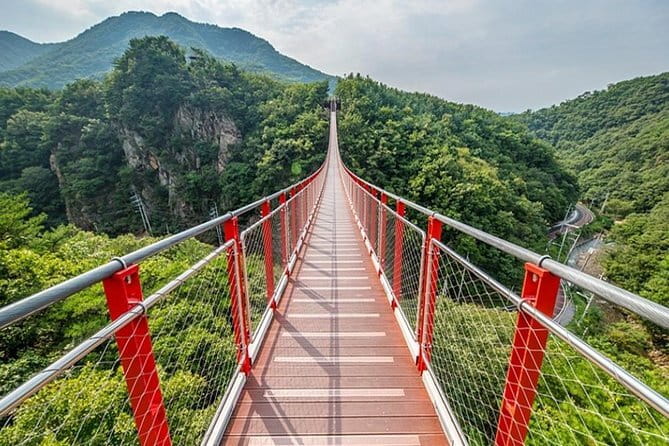
When you reach the Seoul City Wall and Changuimun Gate, the tour shifts from neighborhood character to something bigger. These landmarks relate to defense and heritage, and your guide explains how these structures mattered to protecting the city.
What makes this stop work on foot is that you are not just staring at a monument. You are walking within the same general geography that once shaped movement, security, and boundaries. Even if you have seen photos of the wall before, seeing the gate and surrounding stretches during an actual walking route gives it scale.
Changuimun Gate, also known as Jahamun Gate, is a key named moment. The tour takes time for you to explore and understand why this gate is important. You are left with a clear mental picture of how Seoul’s defense system was not one wall in isolation, it was part of a linked network.
Practical note: gate-and-wall areas can include uneven ground. Take it slow when you pause for photos so you do not trip while reading signage and listening.
Cold War Stories in a Quiet Neighborhood: The Past Isn’t Only at Palaces
A standout part of this tour is the inclusion of Cold War history. Instead of confining major historical themes to formal museum settings, the guide ties the era to what you see in the neighborhood.
That approach is valuable for you because it changes how you interpret Seoul. You start connecting Seoul’s physical geography to political reality, and you notice how layers of time can sit side by side in ordinary streets.
It also keeps the tour from feeling one-note. Some Seoul walks are either fully historical or fully cultural. This one keeps switching angles, which is why it holds attention through the full 2.5 hours.
If you like history that lives outside glass cases, this is the right kind of storytelling.
Hill of Poet Yoon Dong-ju and Parasite Filming Locations for a Fun, Sharp Angle
One reason I recommend this tour to people who already know the headline sights of Seoul is because it offers a sharper, more specific kind of fun.
As you continue through Buam-dong, you get to see:
- The Hill of Poet Yoon Dong-ju
- A Parasite filming location
These moments work best when you treat them as context, not trivia. The hill ties literature and identity to place. The Parasite location ties film to real architecture, showing you how filmmakers use the feel of a street and the shape of a neighborhood to tell stories.
You also get mountain-view moments along the way, with sightlines toward Bugaksan, Inwangsan, and Bukhansan. Even if you are not an ultra-hiker, these viewpoints give you that Seoul edge, the one where the city feels close to nature without turning into a full day outdoors.
Photo tip: bring a charged phone, and do not rely on one angle. In hillside neighborhoods, the best view can come from a slightly different turn.
Mugyewon: Ending at a Hanok Cultural Space Once Connected to Grand Prince Anpyeong
You finish at Mugyewon, a traditional Korean house that once served as the villa of Grand Prince Anpyeong. That ending point is a smart choice because it brings your tour back into hanok culture after all the street-level history and viewpoint walking.
Mugyewon also gives you a sense of what old-world elegance looks like when it is preserved and used as a cultural space. You are not leaving with just images of gates and walls. You are ending with a living piece of architecture that has its own atmosphere.
This finish is particularly nice if you are trying to balance your Seoul day. Instead of ending with a train ride and a snack scramble, you end with a place designed for cultural appreciation.
If you have energy left, stick close to the stop and take a few extra minutes to look around. The value is in the slower pacing, not in rushing to the next landmark.
Price and Value: Why $38.50 Makes Sense for This Mix
The price is $38.50 per person for about 2 hours 30 minutes, and the tour includes mobile ticket delivery and group discounts. That already signals a fairly practical setup.
Here is what makes the value feel fair:
- You get multiple major sight types in one loop: hanok culture, city-wall landmarks, and viewpoint territory.
- The tour includes stops with admission tickets listed as free.
- The group is capped at 15, which usually means less waiting and more guide interaction.
- You also get specific storytelling angles, like Cold War history and the connection to Parasite locations, not just general Seoul facts.
In other words, you are paying for guided context. The cost is not only for walking next to famous places. It is for understanding why these places matter and how they connect into one coherent neighborhood story.
If you like tours where you leave feeling you understood the area, not just saw it, this price is easier to justify.
What to Wear and Do Before You Set Out
This is a moderate walking experience, so plan like a hillside neighborhood day. Wear comfortable walking shoes with grip, and keep your socks in good condition. Bring a light layer if you get chilly in the shade, since hillside streets can shift wind and temperature quickly.
Also, pack in a way that helps you move. Small crossbody bags or daypacks work well. If you have a bigger bag, you might find it annoying in narrow lanes.
Service animals are allowed, and the tour is near public transportation. That means you can usually build this into your day without complicated logistics once you know the meeting point.
One more tip: arrive a few minutes early so you can meet your group and get settled before the bus ride begins.
Who This Tour Suits Best (and Who Might Skip It)
This walk is a great match if you:
- Want to explore Buam-dong instead of only the main-drag routes
- Like art and culture settings like hanok libraries and cultural houses
- Enjoy neighborhood history where the past is connected to streets and buildings
- Care about views toward Bugaksan, Inwangsan, and Bukhansan without committing to a full hike
It might be less ideal if you:
- Want a fully flat route, because the area is hillside and walking is part of the point
- Prefer long museum time over short, guided stops
If you are an independent traveler, this tour is still useful because it guides you to specific places and explains what to notice while you are moving through the neighborhood.
Book It or Skip It: My Practical Take
Book this tour if you want a focused, 2.5-hour window that shows you a quieter Seoul side with real structure in the storytelling. The standout reason is the combination of places plus the way the guide keeps history clear and engaging, including Jon’s humorous, approachable style.
Skip it if you only want famous, high-speed, landmark hopping with minimal walking. This one is about slow attention, hanok atmosphere, and the sense of place in Buam-dong.
For many people, this becomes the “I finally understood Seoul beyond the postcard sites” day. If that is what you want, reserve your spot.
FAQ
How long is the Buam-dong walking tour?
The tour lasts about 2 hours 30 minutes.
How much does the tour cost?
It costs $38.50 per person.
Where do you meet for the tour, and where do you end?
The tour starts at 시민약국 106-3 Jeokseon-dong, Jongno District, Seoul, South Korea, and it ends back at the meeting point.
Is the tour admission included for the stops?
The tour lists admission tickets for the stops as free.
How big is the group?
The tour has a maximum of 15 travelers.
Can I cancel, and how much notice is needed for a full refund?
Free cancellation is available. You can cancel up to 24 hours in advance of the experience for a full refund. If you cancel less than 24 hours before the start time, the amount paid will not be refunded.
More Walking Tours in Seoul
- Seoul moonlight walking tour with local historian
★ 5.0 · 940 reviews - Seoul: Nighttime Hidden Gems Walking Tour
★ 5.0 · 775 reviews - Seoul: Dark Side of the City and Ghost Stories Walking Tour
★ 4.8 · 484 reviews - Gangnam Walking Tour on Youth and Society in Seoul Korea
★ 5.0 · 401 reviews
Recently reviewed in Seoul
- Seoul City Private Tour (Optional layover)★ 5.0 · 3 reviews
- Korean Folk Village & Suwon Hwaseong Fortress Private Tour★ 5.0 · 3 reviews
- 5D4N Korea Cultural Heritage immersion Private Tour★ 5.0 · 3 reviews
- War Memorial, Jogyesa Temple & Tapgol Park Tour in Seoul★ 4.5 · 3 reviews
- Full Day Private Seoul Tour for foodies★ 5.0 · 3 reviews
- Private Tour : Royal Palace & Traditional Villages wearing Hanbok★ 5.0 · 3 reviews
- Nami Island & Nearby Attractions : Charter Van Tour With Driver★ 4.0 · 3 reviews
- K-Pop Tour★ 3.5 · 3 reviews
Historical Tours, compared.

Gyeongju UNESCO World Heritage Guided Day Tour
Read our review →
Gyeongju UNESCO World Heritage Guided Day Tour from Busan
Read our review →
Evening Dark History, Folklore & Ghost Story Walking Tour
Read our review →
Old Korea Thousand History Tour of Gyeongju from Busan
Read our review →
Hanbok Photoshoot and History Tour at Gyeongbokgung Palace
Read our review →
Gyeongju UNESCO World Heritage Sites and History Full-Day Tour with Lunch
Read our review →
UNESCO Heritage Tour Including Bulguksa Temple
Read our review →Browse the lists this tour appears in