

Reviewed · FOOD & DRINK
Vegan Korean Food Cooking Class: Gimbap, Sundubu Jjigae, and more
This hands-on vegan Korean cooking workshop in Itaewon is interesting because you get an entire meal in one sitting, and you learn how to build it with tofu, not as a substitute, but as the star. I love the small-group setup, capped at 4 travelers, so you get real help while you roll and cook. I also love that the menu is practical and varied, including Sundubu-jjigae and gimbap, plus two other dishes that show how far tofu and plant-based ingredients can go. One possible drawback: the meeting space is on the 3rd floor with no elevator, so plan for stairs.
You start at 11:00 am and spend about 2 hours 30 minutes cooking, assembling, and shaping. This is not a passive tasting. It is work. The good news is that the format fits both repeat Korean-food fans and people who just want a satisfying, fully vegan dinner they can actually make again.
Key things that make this workshop worth your time
- Small group attention (max 4 travelers), which makes step-by-step cooking feel manageable
- A full vegan Korean meal built around tofu, not a couple of bites
- Soomin’s clear, step-by-step teaching style, with ingredient and tradition explanations
- Edible flowers plus tofu-based cooking, including Hwa-jeon with seasonal flowers
- Hands-on practice across multiple textures, from stew to pancakes to dough shaping
Why a vegan Korean cooking class in Itaewon feels different

Itaewon is a smart choice for a class like this. It is where you can mix into everyday Seoul life and still find the kind of food education that helps you eat better after the class. The workshop is tied to the World Food Street area, so you are not just learning recipes in a vacuum. You are learning with a local neighborhood in the background.
The format matters. With a maximum of 4 travelers, you are unlikely to feel like you are in a cattle-line demo. You can ask questions, get adjustments, and actually finish what you start. That small-group size also keeps the pace realistic for two and a half hours of active cooking.
More Workshops in Seoul
- Local Home Korean Cooking Class & Market Adventure in Seoul
★ 5.0 · 1,024 reviews - Seoul: Korean Cooking Class at a Local Home and Market Tour
★ 5.0 · 348 reviews - Yongpyong Ski Resort from Seoul with Optional Lesson and Packages
★ 5.0 · 217 reviews
The 2.5-hour plan: what you’ll cook, shape, and serve
This class runs about 2 hours 30 minutes and starts at 11:00 am. You will meet in Itaewon-dong, Yongsan District, Seoul. The activity ends back at the meeting point, so you are not stuck figuring out a second location.
Here is what the session includes, in the order you’ll work through it:
Gimbap, from assembly to rolling
You will assemble and roll gimbap yourself. That is key. Gimbap is one of those foods that sounds simple until you try it, because the texture and structure matter. You are not just tasting. You are building.
If you want a win you can take home, this is a strong choice. Learning to roll and form it is the kind of skill that stays with you. Also, the effort makes the final result feel like yours, not a takeout box you happened to buy.
Sundubu-jjigae, cooked from scratch
Next, you cook Sundubu-jjigae from scratch. This is the comfort-food part of the class, and it is where the tofu approach becomes the lesson. You get to practice making a warm bowl meal rather than relying on a pre-made base.
This segment tends to be popular because it gives you a whole cooking mindset. You learn how to move through a cooking process, not only how to plate or garnish.
More Cooking Classes in Seoul
- Master Korean traditional cooking with a Kimchi chef
★ 5.0 · 385 reviews - Seoul: Korean Cooking at Seoul Cooking Club!
★ 5.0 · 311 reviews - Korean Cooking at Seoul Cooking Club
★ 5.0 · 220 reviews - Experience Korean Cooking in Modern Hanok Kitchen
★ 5.0 · 118 reviews
Biji-jeon, soy pulp pancakes in your hands
Then you prepare and cook Biji-jeon, soy pulp pancakes. These are a different kind of challenge than rolling or simmering. Pancakes require attention to texture and timing, and this class has you doing the cooking yourself.
It is also a great “why tofu matters” lesson. If your only mental model is tofu in cubes, Biji-jeon helps you see tofu-based ingredients in a new format, as something that can become crisp, pan-friendly food.
Hwa-jeon, shaping glutinous rice dough with seasonal edible flowers
To finish, you shape and cook glutinous rice dough for Hwa-jeon and decorate it with seasonal edible flowers. This part is visually fun, but the useful takeaway is technique and presentation discipline.
Edible flowers can sound fancy and fragile, but here you get to treat them as part of the cooking, not just decoration. That makes it easier to imagine recreating the idea later, even if you swap in whatever edible flowers are available in your local market.
The tofu-focused teaching that actually helps you cook later

The workshop’s main promise is tofu versatility, and it delivers through repetition across multiple dishes. You are not only learning a recipe name. You are learning how tofu-based ingredients behave across different cooking styles, from stovetop warmth to pan cooking and dough shaping.
I like that the class stays practical. You will get step-by-step instruction, and you also get explanations about ingredients and traditions. That combo is what turns a one-time class into something you can transfer. If you understand why a step matters, you can adjust next time when your kitchen setup or ingredient brands differ.
And you are not learning in a language barrier cloud. The instructor, Soomin, is described as friendly and clear, with instructions that are easy to follow. In a small group, that clarity matters even more, because you can ask the small questions that prevent big mistakes.
Soomin as your guide: why the class feels supportive
A lot of cooking classes claim to be friendly. This one backs it up with how instruction is delivered. Soomin’s teaching style is repeatedly described as warm, clear, and detailed. You get step-by-step guidance while you cook, plus ingredient and tradition context so you know what you are doing, not just what to do.
Another smart part: you get tips on vegan food in Seoul. That is valuable because the class is only a slice of your trip. Once you leave the kitchen, you still need meals that fit your diet. A few practical recommendations can save you from expensive trial and error at restaurants.
Sundubu-jjigae: comfort food with a plant-based foundation
Sundubu-jjigae from scratch is one of the most satisfying ways to spend part of your time in a cooking class. You get to learn a full process meal, not just a quick roll or snack.
In this workshop, the tofu connection is central. You are using tofu as the base for the dish and learning how that shapes the final bowl. For me, the real value is learning the workflow: prepping, cooking, and finishing with confidence.
If you’re vegan, this is also a morale boost. It shows you what vegan Korean comfort food can feel like when someone teaches you the method, step by step.
Gimbap rolling: a skill you can repeat at home
Gimbap in this class is hands-on, meaning you assemble and roll it yourself. That is the part that makes this more than a recipe swap.
Rolling teaches a few cooking fundamentals at once: pacing, pressure, and consistency. If your first attempt looks imperfect, that is normal. The whole point is that you practice with guidance, then walk away knowing how to improve.
Also, gimbap is the kind of food that is naturally portable, so it can fit real-life schedules after your trip. You can turn what you learned into lunch plans instead of keeping it as a souvenir meal.
Biji-jeon and Hwa-jeon: why the menu goes beyond basics
Two dishes on this menu do the best job of widening your Korean-food mental menu: Biji-jeon and Hwa-jeon.
Biji-jeon shows you soy pulp pancakes as a savory option you can actually cook. It is a different texture experience than stew or rolled food, and it builds your confidence in pan cooking.
Hwa-jeon is the showpiece. You shape and cook glutinous rice dough and top it with seasonal edible flowers. It is fun, but it also teaches you how to treat decorative elements as part of the cooking process. If you have ever struggled to make your food look as good as it tastes, this is an intentional fix.
Price and value: is $75 fair for 2.5 hours?
At $75 per person for about 2 hours 30 minutes, this class is priced like an instructor-led workshop, not like a casual street food stop. The value comes from how much you do during that time.
You cook multiple dishes: gimbap, Sundubu-jjigae, Biji-jeon, and Hwa-jeon. That is a full meal worth of work and output. You are also in a group of 4 or fewer, which makes the instruction feel more personal than large-group cooking events.
If you are the kind of traveler who wants a practical takeaway for the next meal you cook at home, this price makes more sense than a one-bite tasting. You are paying for skill transfer plus a full, vegan Korean menu you can eat right after cooking.
A small note on demand: it is commonly booked about 41 days in advance on average, which suggests it stays popular. If you have fixed travel dates, booking earlier tends to keep your options open.
Practical details that affect your day
Location and how you’ll get there
You meet in Itaewon-dong, Yongsan District, Seoul, and it’s near public transportation. That helps you plug it into the rest of your day without long transfers.
Timing
Start time is 11:00 am, and the class runs about 2 hours 30 minutes. If you are hungry, good. The class experience includes making a full meal. One handy tip from people who have done it is to either bring a box for leftovers or go into it hungry enough to enjoy everything you cook.
Ticketing
You get a mobile ticket. So you can plan to keep your phone handy and avoid paper chaos.
Stairs and access
There is no elevator, and the space is on the 3rd floor. If stairs are an issue for you, this is the part to plan for before you book.
Diet and special requests
This is a vegan Korean cooking workshop, and it is described as Muslim-friendly. Gluten-free is available on request. If gluten-free matters to you, message ahead so the kitchen can plan.
Animals
Service animals are allowed.
Who should book this class (and who might skip it)
You should book if you want a hands-on vegan Korean meal, not just samples. This works well if you like structured cooking and you want to learn core techniques like rolling, pan cooking, and shaping dough.
It is also a good fit if you want useful vegan food guidance for Seoul beyond the class. Learning how to eat well in the city matters, especially if you find it harder to find plant-based options on your own.
You might skip if you cannot do stairs, since it is on the 3rd floor with no elevator. And if you are looking for a very relaxed, non-cooking food tour, this one is more active by design.
Should you book this Vegan Korean Food Cooking Class?
If you want an authentic, skill-based Korean food experience with a fully vegan menu, I think this is a strong bet. The cooking is hands-on across multiple dishes, so you leave with more than memories. You leave with repeatable techniques.
The biggest reason to book is the combination of small group size and clear instruction from Soomin. That turns the whole session into something you can actually follow, even if you are new to Korean cooking. Add tofu versatility, seasonal edible flowers, and a full meal outcome, and the value holds up well against the $75 price.
FAQ
How long is the vegan Korean cooking class?
The class lasts about 2 hours 30 minutes.
What time does the class start?
It starts at 11:00 am.
Where is the meeting point?
The meeting point is Itaewon-dong, Yongsan District, Seoul, South Korea.
How many people are in the group?
The experience has a maximum of 4 travelers.
What dishes will you make?
You will make gimbap and Sundubu-jjigae, and also prepare and cook Biji-jeon and Hwa-jeon.
Is the class fully vegan?
Yes, it is described as a vegan Korean cooking workshop.
Can I request gluten-free options?
Gluten-free is available on request.
Is there an elevator at the location?
No. The space is on the 3rd floor and there is no elevator.
Can I use a mobile ticket?
Yes. It is listed as having a mobile ticket.
What is the cancellation refund window?
You can cancel for a full refund up to 24 hours before the experience starts.
If you’d like, tell me your dates and whether you need gluten-free, and I can help you judge if this class fits your Seoul schedule.
More Food & Drink in Seoul
- Seoul Street Food Market Tour
★ 5.0 · 1,226 reviews - Seoul: Night Market Food Tour with Local Guide
★ 4.9 · 943 reviews - Downtown Seoul Guided Food & Market Tour with 8+ Local Tastings
★ 5.0 · 580 reviews - Small-Group Night Food Tour in Seoul with Korean BBQ
★ 5.0 · 304 reviews
Recently reviewed in Seoul
- Korean Folk Village & Suwon Hwaseong Fortress Private Tour★ 5.0 · 3 reviews
- Seoul City Private Tour (Optional layover)★ 5.0 · 3 reviews
- 5D4N Korea Cultural Heritage immersion Private Tour★ 5.0 · 3 reviews
- War Memorial, Jogyesa Temple & Tapgol Park Tour in Seoul★ 4.5 · 3 reviews
- Private Tour : Royal Palace & Traditional Villages wearing Hanbok★ 5.0 · 3 reviews
- Full Day Private Seoul Tour for foodies★ 5.0 · 3 reviews
- Nami Island & Nearby Attractions : Charter Van Tour With Driver★ 4.0 · 3 reviews
- K-Pop Tour★ 3.5 · 3 reviews
Food & Drink, compared.
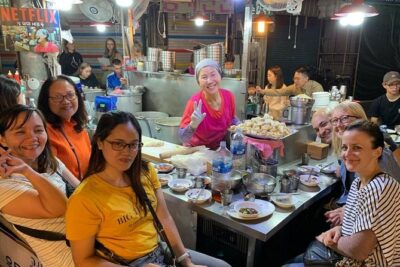
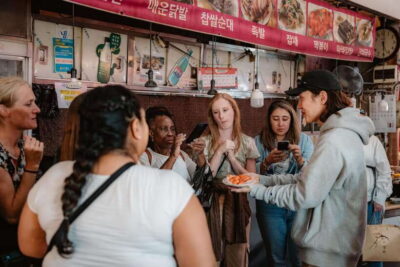
Downtown Seoul Guided Food & Market Tour with 8+ Local Tastings
Read our review →
Seoul Night Palace & Market Food Tour with Vehicle
Read our review →
Seoul Fun Food Tour: 12 different food tastings
Read our review →
The Award-Winning PRIVATE Food Tour of Seoul: The 10 Tastings
Read our review →
Jasmil Baseball Stadium Game Ticket with Dinner/Beer
Read our review →Browse the lists this tour appears in