
Reviewed · MARKETS
Seoul: Korean Cooking Class at a Local Home and Market Tour
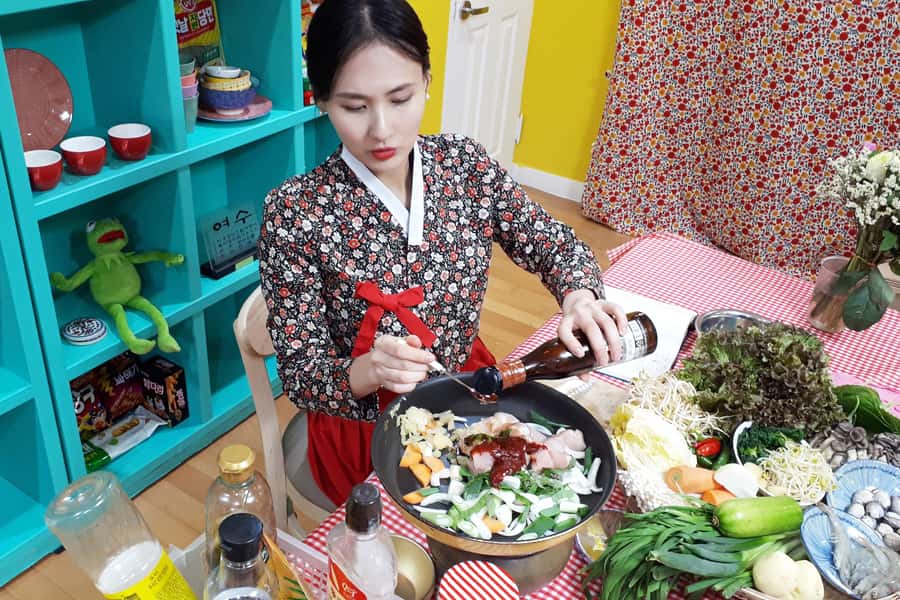
This Korean Cooking Class in Seoul is interesting because you start at a local market and finish in a real home, learning how Korean food fits daily life. I love the market tour with street-food tastings, and I love the Hanjeongsik style meal with 10+ sides. The main drawback to plan around is that the schedule moves quickly, so you should arrive ready to walk and cook.
The cooking happens in a local home in Gyeonggi Province, and there is no elevator, so stairs are part of the experience. Also, there is no hotel pickup, so you need to get yourself to Mangwon Station, exit 2 (outside).
Key Highlights You Should Care About
- Market tour first, including fresh ingredient shopping and street-food samples
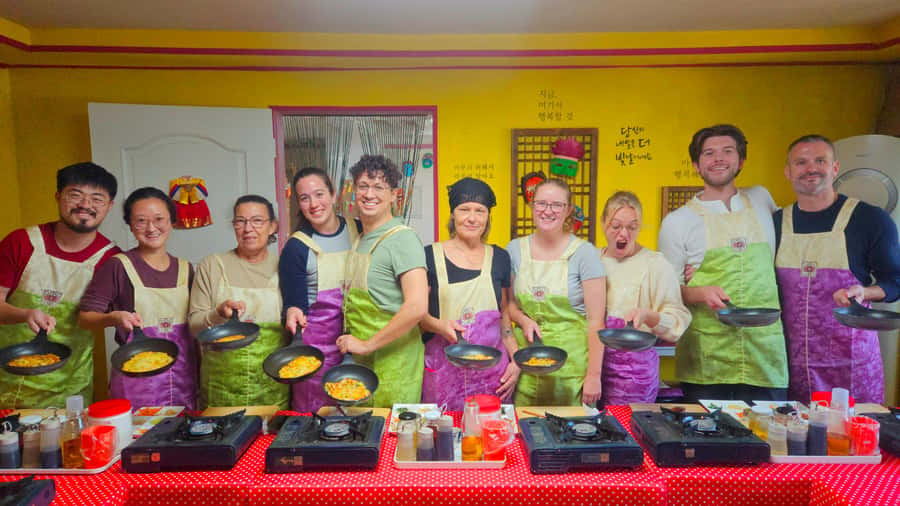
- Cook 4 core dishes: bibimbap, dakgalbi, haemul-pajeon, and doenjang-jjigae
- Quick Korean phrases you can use during the meal
- Hanjeongsik dinner format with 10+ side dishes, seasonal fruit, and rice wine
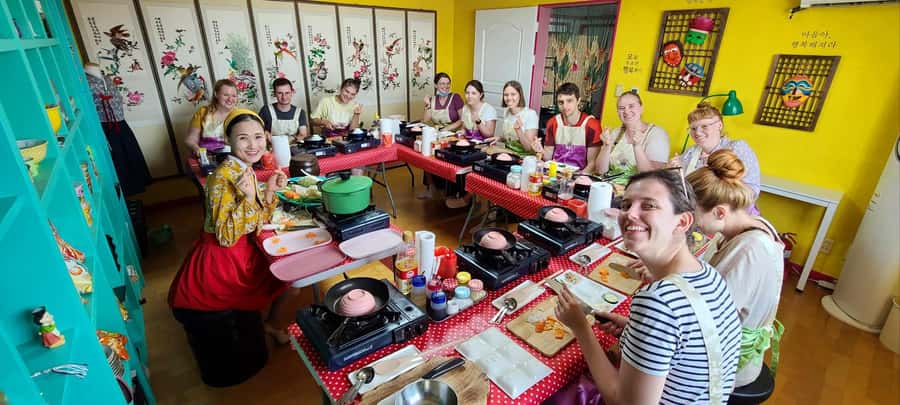
- Small group (max 10) and hands-on cooking with clear guidance
- Photo and video service, plus recipes to take home
Why This Market-to-Home Cooking Class Works in Seoul
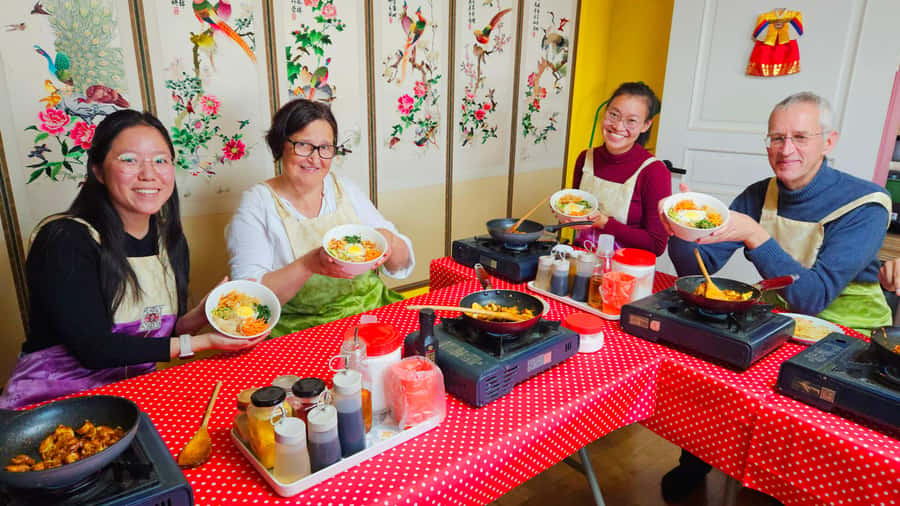
If your Seoul plan is all palaces and photos, this class adds something more personal: food is a language here. You do not just learn recipes, you see how people shop, snack, and eat together. The whole flow, market to kitchen to table, makes the dishes feel practical, not like museum pieces.
I especially like that you cook four recognizable Korean favorites. Bibimbap teaches balance. Dakgalbi teaches heat and timing. Haemul-pajeon teaches batter texture and flipping nerves. Doenjang-jjigae teaches what fermented flavor really tastes like. Then you sit down to a proper Hanjeongsik meal with a stack of side dishes, so you taste how the meal comes together as a system.
One more smart point: the group stays small, limited to 10 people. That matters when you are learning technique and not just watching someone else cook.
More Workshops in Seoul
- Local Home Korean Cooking Class & Market Adventure in Seoul
★ 5.0 · 1,024 reviews - Yongpyong Ski Resort from Seoul with Optional Lesson and Packages
★ 5.0 · 217 reviews - Korean Cooking Class with Grocery Shopping at Seoul Local Market
★ 5.0 · 107 reviews
Mangwon Station Meeting Point and Getting There Smoothly
The tour starts at Mangwon Station, exit 2 (outside). There is no hotel pickup or drop-off, so your best move is to plan your own transport in advance and keep it simple.
Because the home you visit has no elevator, wear shoes you can handle on stairs. This is not a big deal if you travel with comfortable walking footwear, but it is a deal-breaker if you normally avoid stairs.
Also note that the instructor works in English and Korean. That is useful for you if your Korean is limited, and it helps the chef-guide explain ingredients and steps without leaving you behind.
The Market Tour: Shopping Like a Local (Not a Tourist)
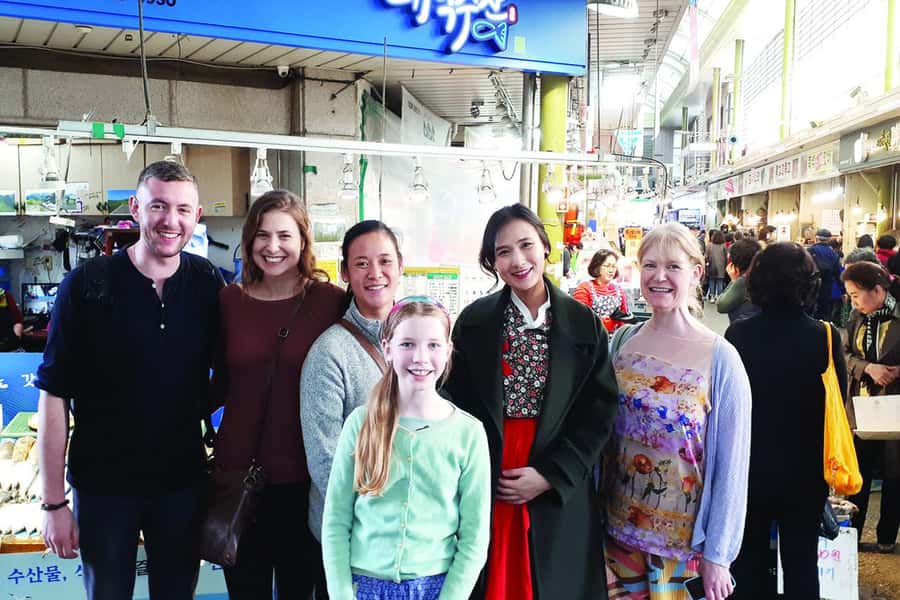
You begin with a walk through a local market in Seoul to pick up fresh ingredients for your class. What makes this valuable is that you learn to identify the parts of Korean cooking that are hard to “guess” later at home.
Your guide helps you spot what you need, explains what it does in the dish, and you get street-food samples along the way. The samples matter because they connect the ingredients to flavor right away. You start the class with your taste buds already switched on, not cold and confused.
A practical tip: markets reward curiosity. Bring a little patience for walking, smells, and crowded aisles. And if you have dietary restrictions, tell the host ahead of time. The class notes that you should contact the local host for allergies and dietary restrictions, so you are not stuck figuring it out once you’re in the home kitchen.
Welcome Tea, Korean Phrases, and Settling In
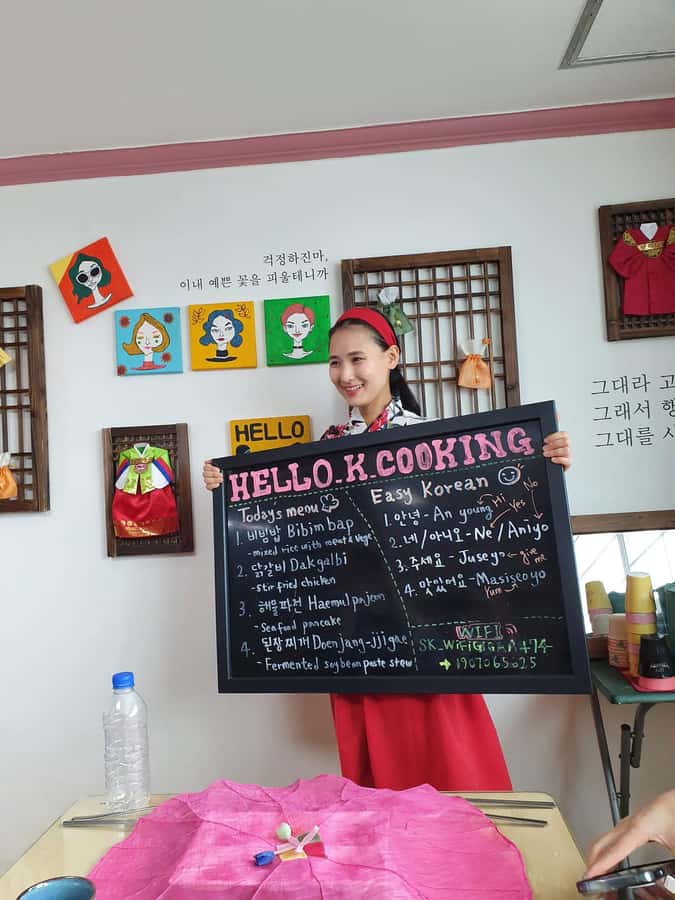
After the market, you head to the class venue. There is a welcome tea and time to learn a few Korean phrases. This part sounds small, but it changes your experience. You can actually use the phrases during the cooking and meal, and it turns the day from a hands-on workshop into a real cultural exchange.
This is also when the chef-guide sets expectations. With a small group, you are more likely to get personal attention, and the guide can explain what you should watch for with each dish, from seasoning to texture.
More Cooking Classes in Seoul
- Master Korean traditional cooking with a Kimchi chef
★ 5.0 · 385 reviews - Seoul: Korean Cooking at Seoul Cooking Club!
★ 5.0 · 311 reviews - Korean Cooking at Seoul Cooking Club
★ 5.0 · 220 reviews - Experience Korean Cooking in Modern Hanok Kitchen
★ 5.0 · 118 reviews
Hands-On Cooking: How the 4 Main Dishes Build a Real Korean Meal
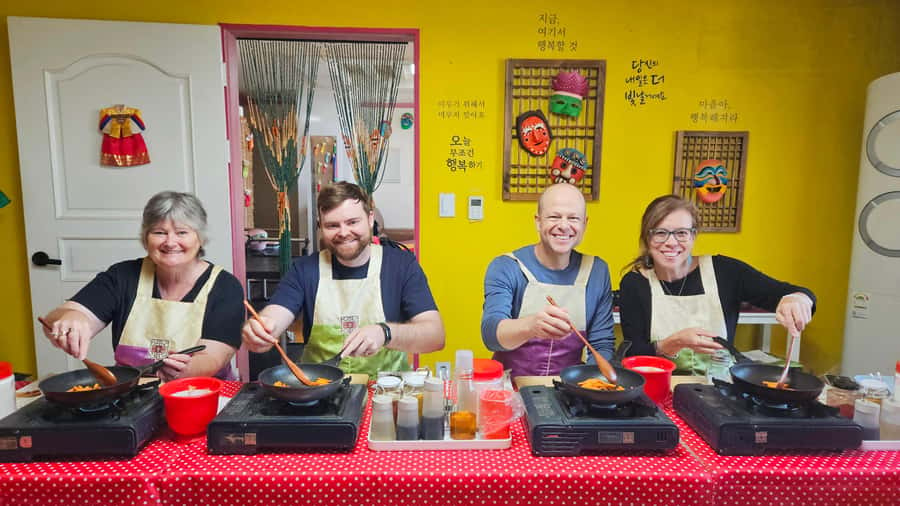
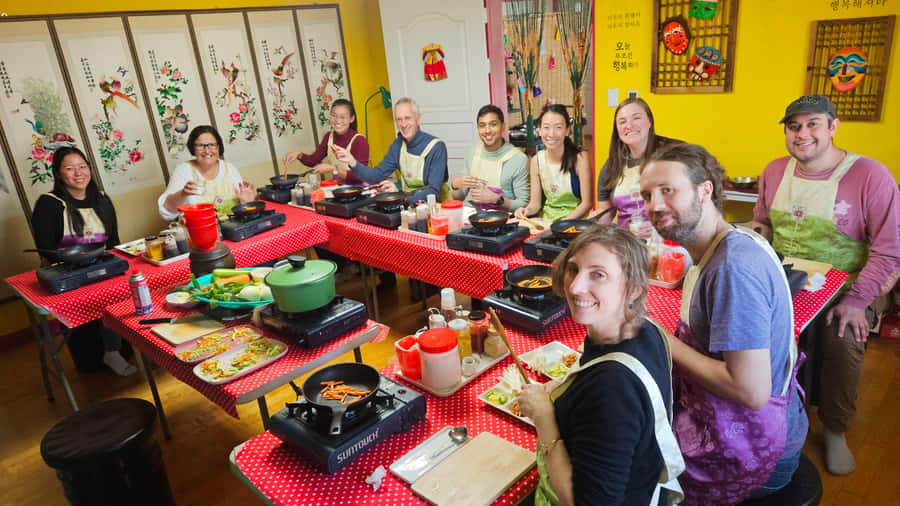
You will prepare 3 Korean main dishes and 1 stew with the chef-guide. The dishes are clearly defined, which helps you focus on what you are learning rather than bouncing around with random recipes.
Bibimbap: Mixing, Topping, and Finding Balance
Bibimbap is mixed rice with meat and vegetables. The key lesson is balance. You want cooked rice and toppings that taste good on their own and then even better together.
In a home-class setting like this, you are not just assembling. You learn how components fit into the overall flavor. It is the classic “why Korean meals don’t rely on one sauce only” lesson.
Dakgalbi: Stir-Fried Chicken With Bold Heat
Dakgalbi is stir-fried chicken. The skill here is controlling heat and timing while keeping the chicken tender and the sauce coated. Stir-frying rewards focus, and the chef-guide style described in the experience is hands-on and encouraging, especially for beginners.
If you like food that tastes lively and savory, you will get a lot out of this one.
Haemul-Pajeon: Seafood and Green Onion Pancake (Yes, You Flip)
Haemul-pajeon is a seafood and green onion pancake. This is one of those dishes that sounds simple until you try it, because pancake success depends on batter consistency and cooking temperature.
You learn how to portion and cook it so it holds together. And if your brain always says pancakes should be easy, this class politely disagrees.
Doenjang-Jjigae: The Comfort of Fermented Soybean Paste Stew
Doenjang-jjigae is a fermented soybean paste stew. This is where you get the deeper Korean flavor profile: savory, tangy, and warm. You learn how doenjang becomes the heart of the soup, and how other ingredients support it.
Even if you are not a “stew person,” this one tends to make sense because it is both satisfying and practical for home cooking.
The Chef-Guide Factor: Clear Instructions and Shared Workstations
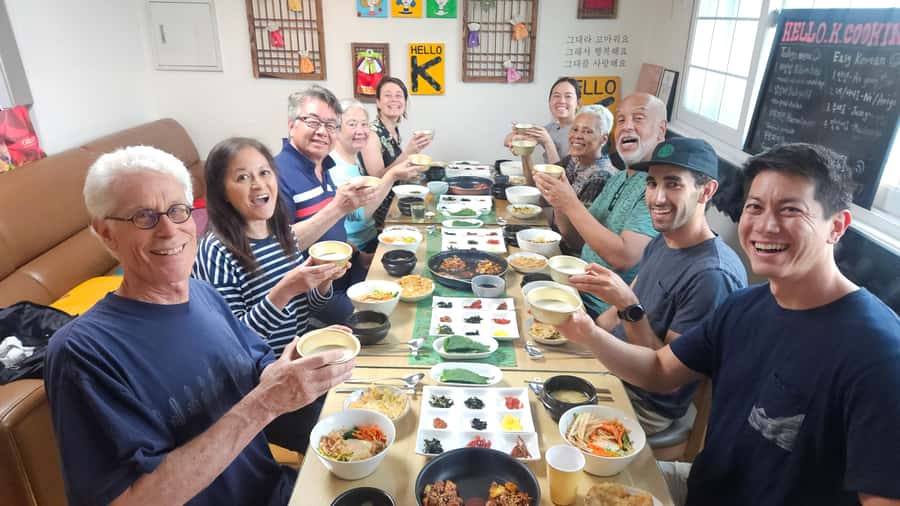
This class is designed around an experienced native Korean chef-guide. The approach is hands-on and interactive, with enough structure that you can follow steps even if it’s your first cooking class.
A detail I really value: everyone likely has their own cooking space. That reduces the common problem of “standing around while someone else does the work.” You end up with real participation, from chopping and assembling to cooking and plating.
And because the group is limited to 10, the chef-guide can adjust as you go. That is the difference between a fun class and a confusing one.
The Hanjeongsik Meal: More Than 10 Side Dishes at Your Table
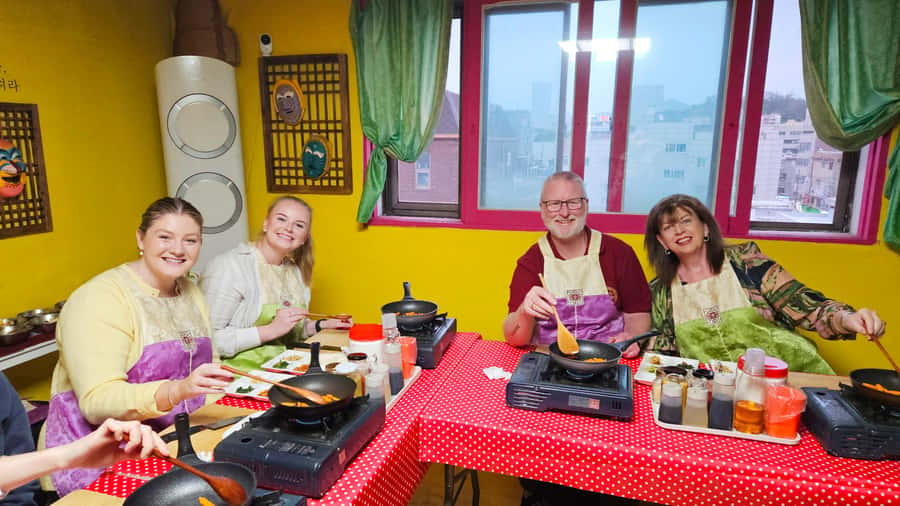
After cooking, you sit down to eat. This is not a light snack. The meal follows Hanjeongsik, a traditional Korean course format with more than 10 side dishes. You also get seasonal fruit and rice wine.
This is one of the most worth-it parts of the experience. When you make food yourself, you already understand ingredients. But Hanjeongsik teaches the last step: how Koreans build a meal around many small flavors instead of one heavy centerpiece.
Practical advice for enjoying it: take small tastes of several sides first, then return to the main dishes. You will start noticing how flavors bounce off each other, especially the way fermented or savory elements set up the rice and fresh vegetables.
Also, rice wine is included, along with water, so you can keep hydrated during the active half-day.
Tal Mask and Korean Heritage at Festival Time
One of the listed highlights is trying on an artful Tal mask. Tal masks are associated with Korean heritage festivals, and this is a fun add-on that breaks up the day from purely food-focused learning.
It’s also a good reminder that Korean culture shows up in everyday things, not only in performances. In a cooking class format, this kind of cultural prop makes the experience feel more rounded and memorable.
You do not need to be an expert in Korean traditions to enjoy this part. It is interactive, lighthearted, and tied directly to a real cultural practice.
What You Take Home: Recipes, Photos, and Skills That Stick
The class includes recipes, photo and video service, and water throughout the day. That combination is smart.
Recipes matter because you want to reproduce the dishes after you’re back home. Photo and video matter because cooking is hard to remember later unless you can see what “done” looked like. The kitchen work also teaches technique, not just memorization.
If you’re cooking at home already, this class gives you Korean-specific guidance on flavor balance and cooking order. If you are new to cooking, you still come away with confidence because the dishes are popular and the steps are structured.
Price and Value for a 3.5-Hour Chef-Led Class
The price is $98 per person for about 3.5 hours. That sounds straightforward, but the real question is what you actually get.
You are paying for:
- A market tour and street-food samples
- Ingredient shopping and cooking equipment
- A chef-guide with English and Korean support
- Hands-on instruction for four full dishes
- A Hanjeongsik meal with 10+ sides, seasonal fruit, and rice wine
- Recipes plus photo and video service
For Seoul, this is closer to a culture-and-food workshop than a “single dish” cooking demo. The value is strongest if you want both the street-level market experience and the home meal finish, not just time in a kitchen.
It may feel less worth it if you only want one dish or you hate walking around markets. But if you enjoy food shopping, cooking with guidance, and then eating what you made, this is a good use of a half-day.
Who Should Book This Class in Seoul
This fits best if you:
- Want an authentic-feeling day that includes market culture, not just a kitchen setting
- Like hands-on cooking and want structured help
- Are curious about Hanjeongsik and want to taste how Korean meals are built
- Enjoy interactive group activities in a small setting
You might consider another option if:
- You strongly prefer step-free venues due to the no elevator note
- You do not want market walking or you have complex dietary needs that require advanced planning
- You prefer cooking lessons that focus on only one dish style
Should You Book It? My Practical Take
I think this is a book-it kind of experience if your goal is to understand Korean food in a way that you can actually repeat later. The day has a clear arc, market shopping, cooking four signature dishes, then eating a full Hanjeongsik spread. That combination is what makes it more than a one-time meal.
Two final decisions points before you book:
- If stairs are an issue for you, plan carefully since there is no elevator at the home.
- If you have allergies or dietary restrictions, contact the host first so the class can plan for you.
FAQ
FAQ
How long is the Korean cooking class?
The class runs about 3.5 hours.
Where do I meet the guide?
Meet your guide at Mangwon Station, exit 2 (outside).
Is there hotel pickup or drop-off?
No. You are responsible for getting to and from the meeting point.
What dishes will I cook?
You will prepare bibimbap, dakgalbi, haemul-pajeon, and doenjang-jjigae.
Does the tour include a market visit?
Yes. You start with a market tour where you buy ingredients and sample street food.
Is there a traditional Korean meal included?
Yes. After cooking, you have a Hanjeongsik meal with more than 10 side dishes, seasonal fruits, and rice wine.
What does the class include besides cooking?
Included items are market tour, cooking with a professional chef, ingredients and equipment, street food samples, welcome tea, meals with side dishes, rice wine, water, photo and video service, and recipes.
How big is the group?
It is a small group limited to 10 participants.
What languages are spoken during the class?
The instructor works in English and Korean.
Is the home accessible by elevator?
No elevator is available to get up to the local home, so stairs are involved.
Can I cancel for a refund?
Free cancellation is available up to 24 hours in advance for a full refund.
More Shopping Tours in Seoul
- Private DMZ Tour (No Shopping): 3rd Tunnel & Suspension Bridge
★ 5.0 · 607 reviews - Seoul Night Palace & Market Food Tour with Vehicle
★ 5.0 · 275 reviews - Cook 3 Authentic Korean Dishes with Local Market Tour
★ 5.0 · 231 reviews - Korean Palace and Market Tour in Seoul Including Insadong and Gyeongbokgung Palace
★ 4.0 · 174 reviews
More Market Tours in Seoul
- Seoul Street Food Market Tour
★ 5.0 · 1,226 reviews - Seoul: Night Market Food Tour with Local Guide
★ 4.9 · 943 reviews - Seoul: Palace, Temple and Market Guided Foodie Tour at Night
★ 4.9 · 750 reviews - Downtown Seoul Guided Food & Market Tour with 8+ Local Tastings
★ 5.0 · 580 reviews
Recently reviewed in Seoul
- Seoul City Private Tour (Optional layover)★ 5.0 · 3 reviews
- Korean Folk Village & Suwon Hwaseong Fortress Private Tour★ 5.0 · 3 reviews
- 5D4N Korea Cultural Heritage immersion Private Tour★ 5.0 · 3 reviews
- War Memorial, Jogyesa Temple & Tapgol Park Tour in Seoul★ 4.5 · 3 reviews
- Full Day Private Seoul Tour for foodies★ 5.0 · 3 reviews
- Private Tour : Royal Palace & Traditional Villages wearing Hanbok★ 5.0 · 3 reviews
- Nami Island & Nearby Attractions : Charter Van Tour With Driver★ 4.0 · 3 reviews
- K-Pop Tour★ 3.5 · 3 reviews
Markets, compared.
Local Home Korean Cooking Class & Market Adventure in Seoul
Read our review →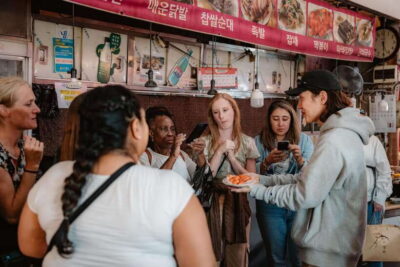
Palace, Temple and Market Guided Foodie Tour at Night
Read our review →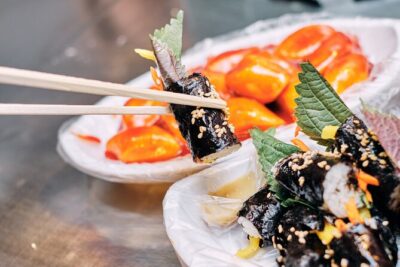
Downtown Seoul Guided Food & Market Tour with 8+ Local Tastings
Read our review →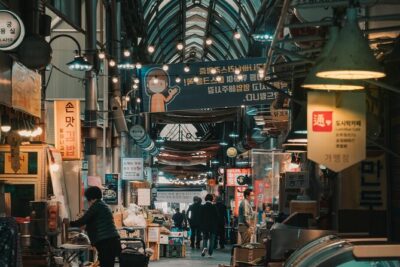
Seoul Night Palace & Market Food Tour with Vehicle
Read our review →
Cook 3 Authentic Korean Dishes with Local Market Tour
Read our review →
Korean Palace and Market Tour in Seoul Including Insadong and Gyeongbokgung Palace
Read our review →Browse the lists this tour appears in