Reviewed · SEOUL TOURS
Traditional Korean Bookbinding Experience in Seoul, Hongdae
Traditional Korean bookbinding is one of those crafts that sounds simple until you see the materials and the care that goes into it. In Seoul, this class lets you work with Hanji and silk and leave with a notebook you can use right away, not just a demo.
I particularly like the hands-on format. You get to make choices, from picking the silk pattern to selecting the norigae ornaments and thread colors. The pacing is also practical, step by step, so you always know what you are doing and what comes next.
One consideration: this is a focused 2-hour workshop, and it is not a slow, sit-and-watch museum stop. If you want maximum sitting time or you are traveling with very strict timing, you will likely feel a bit rushed.
Key points to know before you go
Hanji with UNESCO credibility: You work with traditional Korean handmade paper tied to major Joseon-era records.
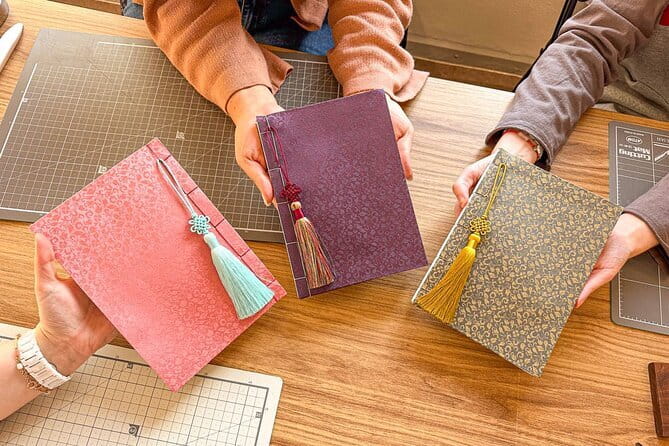
Silk cover choices: Pick from 22 traditional Korean silk patterns for your cover.
Norigae knot finishing: You add a classic Korean knot ornament, using tools and threads provided.
Small class size: The group is capped at 12 people, with only your reserved group allowed into the studio.
Designed for a take-home keepsake: Your finished notebook comes packed in gift-ready packaging.
Step inside Danchoodan in Hongdae
This is a classic studio-style craft class in Seoul’s Mapo-gu area, with the start point listed as Danchoodan in Daeheung-ro, Mapo-gu, Daeheung-dong (100, 3rd floor). The session starts at 10:30 am and ends back at the meeting point.
The biggest advantage of this setup is mental. You are not hopping between far-flung sites, and you are not trying to translate five things at once. You arrive, get oriented, and spend your time making something real.
Also, location wise, it is described as near public transportation. That matters more than you might think in Korea, where you often have to “last mile” your way from the subway or bus stop. If you are coming from Hongdae, this kind of neighborhood access usually saves you time and energy.
A few more Seoul days side by side
- Best DMZ Tour Korea from Seoul (Red Suspension Bridge Optional)
★ 5.0 · 41,422 reviews - DMZ Tour: 3rd Tunnel, Option(Suspension Bridge, Boat) from Seoul
★ 5.0 · 21,373 reviews - DMZ tour south Korea from Seoul (NK experience hall, defector)
★ 5.0 · 20,599 reviews
Why Hanji paper and silk covers matter more than the craft itself
People love Korean crafts for the look, and yes, the final notebook is beautiful. But the more useful part is understanding why the materials are treated like the main character.
Hanji is traditional Korean handmade paper, and it is connected to major Joseon-era historical writing. In particular, Hanji used for the Annals of the Joseon Dynasty is listed on UNESCO’s Memory of the World register. That is not just trivia. It helps explain why the paper is valued for writing and note-taking across generations, not only as a decorative product.
Then there’s the silk cover. Your class uses silk with Korean traditional woven patterns, and you get to pick the cover from 22 options. I like that you are not stuck with one look. Your notebook’s personality becomes your choice, and that makes the take-home souvenir feel personal, not generic.
A small but meaningful detail: the class points out the longevity comparison often shared for these materials, where silk is said to last about 500 years and Hanji about 1,000 years. Even if you treat that as a cultural saying rather than a guarantee, it signals the intent. This is craft as preservation.
The 6-part process: what you do, what you learn, and why it’s satisfying
This workshop is structured so you keep building toward the final notebook. You are not just “learning bookbinding.” You are assembling a real object, one decision at a time.
1) Choose your silk cover pattern
You start by selecting your silk cover from 22 silk patterns with traditional Korean designs. This is your first moment to shape the finished look.
If you are the type who buys postcards for the art but never turns that into an actual object, this is where it changes. The cover you choose sets the mood for everything that comes after, including the ornament and thread colors.
One practical tip: pick something that feels like you. If you want a clean, calmer look, choose a pattern with fewer visual elements. If you like bold, festival energy, choose something more detailed. You are the one living with the notebook after the class.
Different day, same base:
- Seoul: The Best DMZ Tour with Optional Suspension Bridge
★ 4.7 · 4,978 reviews - Signature DMZ Tour: Exclusive Defector Talk & Suspension Bridge
★ 5.0 · 4,459 reviews - Thrilling Korean DMZ 3rd Tunnel Tour from Seoul + Red Bridge Rush
★ 5.0 · 3,097 reviews - Seoul: DMZ Tour & Suspension Bridge (Option English/Spanish)
★ 4.9 · 2,628 reviews
2) Select Norigae and thread colors
Next you choose your norigae and the thread color. Norigae are traditional Korean ornaments, and the class gives you a lot of colorful options, including dozens of threads and silk choices.
This step is fun, but it also makes your notebook feel distinctly yours. If you are traveling with someone else, you can end up with two notebooks that look like they belong to the same cultural world, but different personal styles.
3) Learn about Hanji and why it’s special
Then you get a lesson on Hanji. The class frames it as special because it is traditional Korean handmade paper used historically by the Joseon royal family and Korean Confucian scholars for diaries and notes.
I like that you learn this while you still have the materials in front of you. It keeps the craft from becoming abstract. You see the paper, then you understand the cultural role it played, and that makes your choices feel more meaningful.
4) Make the notebook using traditional binding
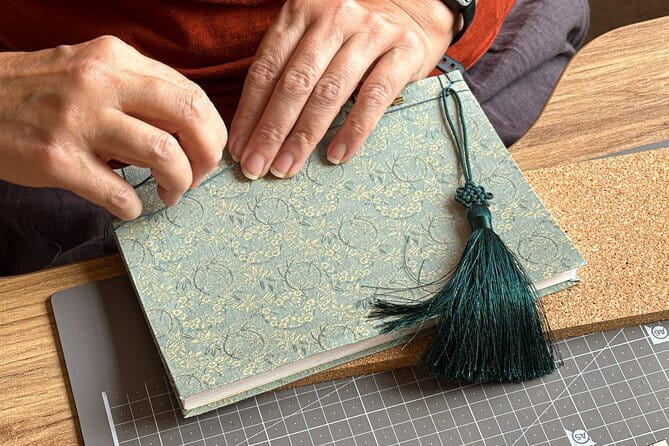
Now you move into the core craft. You bind the cover and the Hanji pages using Korean traditional binding methods. Tools and materials are included, and a licensed guide runs the session.
This is the part that turns a souvenir into a project. Bookbinding is not like assembling a flat-pack. There is tension, alignment, and rhythm. You will likely find yourself paying attention in a good way, the way you do when someone teaches you a skill you can use again later.
A practical consideration: because it is a real binding process, you should plan for a hands-on, focused session. This is not a casual craft where you can half-watch while you scroll on your phone.
5) Decorate with a traditional norigae knot
After the binding, you decorate the notebook and tie in the finishing detail: the norigae knot. The class is explicit that you can make it and take it home right away.
This is a major “wow” moment, because knots are both simple and symbolic. You are not adding a sticker. You are tying a traditional element as part of the construction.
If you care about details, this step will reward you. If you usually skip decorative extras, you might still like this one because it is functional in the sense that it completes the design and honors the tradition behind it.
6) Pack your creation in gift-ready packaging
Finally, you pack your notebook. The class includes gift-ready packaging so you can store it neatly or hand it to someone later.
I like this because you do not have to figure out how to protect the paper and silk on the way home. Packaged craft souvenirs are underrated. They reduce stress, especially when you are moving around a few neighborhoods in the days before departure.
What the class is really like: pace, attention, and small-group focus
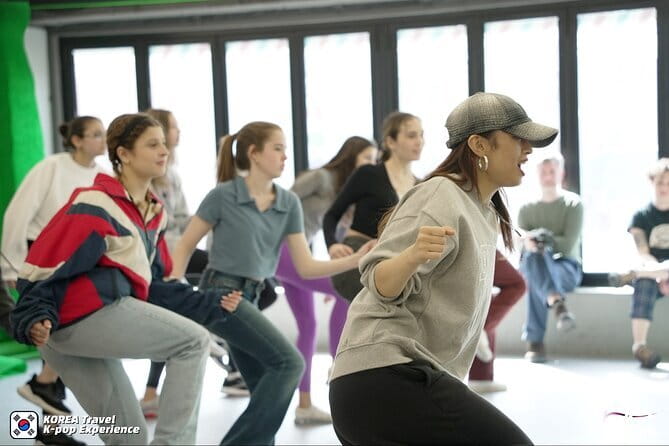
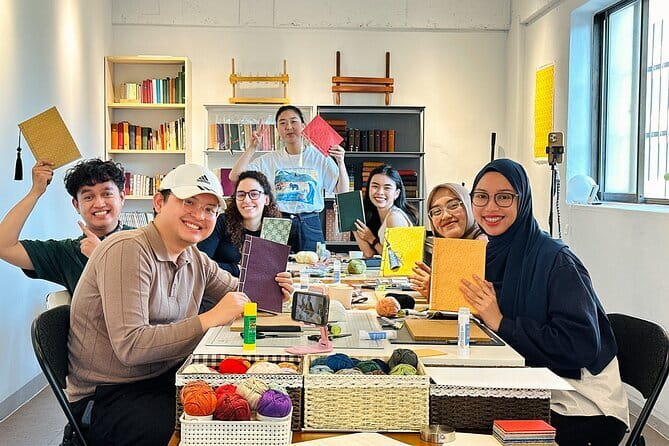
The workshop is capped at 12 travelers, and only the people who made reservations can enter the studio. That setup typically helps with focus and reduces the chaos you sometimes see in bigger craft classes.
Also, the session is about 2 hours. That length is a sweet spot for two reasons. You get enough time to create something sturdy and complete. At the same time, you are still free to enjoy Seoul afterward without sacrificing an entire day.
I also appreciate the class provides binding tools and materials, plus a licensed guide. That matters for value, because it means you are not paying for a concept and then buying supplies elsewhere.
One small logistics note from the description: an air-conditioned vehicle is not included. In practical terms, it usually means your transportation to and from the studio is on you. Still, the meeting point is near public transportation, so you should be able to manage it without a private ride.
Price and value: is $49 fair for what you get?
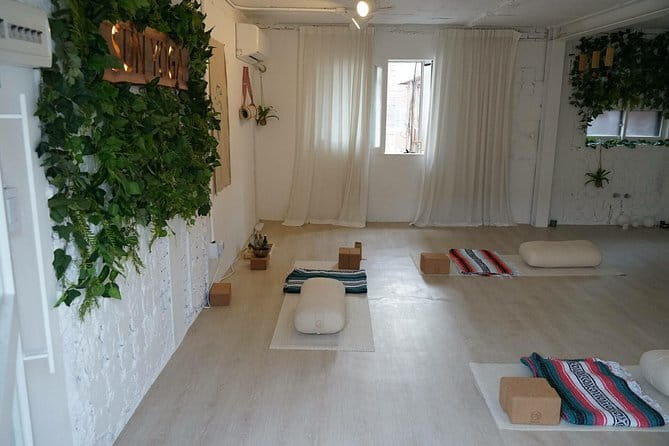
At $49 per person for an approximately 2-hour workshop, the price makes sense when you look at what is included: materials (Hanji and silk), binding tools, a licensed guide, and gift-ready packaging.
Craft classes can be expensive when you mainly watch and do a tiny finishing step. This is different. You are building the notebook, choosing major design elements, and ending with a usable item you can take home immediately.
The value also depends on your travel style. If you love hands-on cultural activities and you like bringing back fewer, higher-quality items, this fits perfectly. If you are mostly into quick photo ops, you might find it slower than you want.
Still, if you want a keepsake that connects to Korean culture in a tangible way, $49 feels like a reasonable trade.
Who should book this Hanji bookbinding class in Seoul
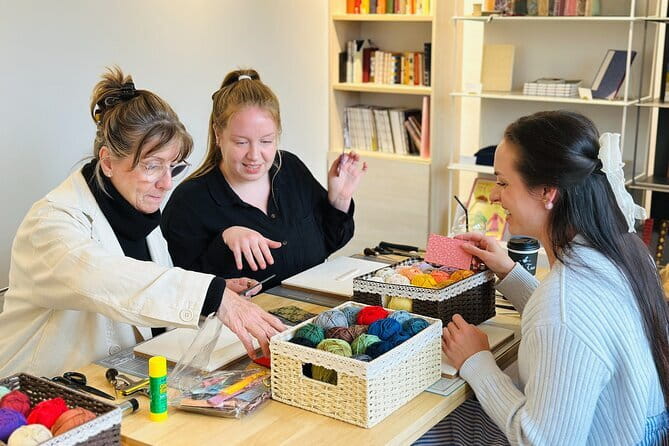
This is a great match if you:
- Want an authentic craft that connects to Joseon-era writing culture and paper traditions
- Enjoy choosing materials, like silk pattern and thread colors
- Like taking home something that looks good on a shelf but is also practical to use
- Prefer a small group activity with a clear step-by-step structure
It may not be ideal if you:
- Need a fully low-effort activity with minimal hand work
- Have very limited time and need a faster stop
- Are traveling as a very large group and want separate individualized attention beyond the small-group limit
One more fit note: reservations require you to be 17 or older. Service animals are allowed, and most people can participate, so the barrier to joining looks straightforward.
Final verdict: should you book it?

If your goal is a hands-on Korean souvenir that feels grounded in real craft, I would book this. The strongest part is the combination of Hanji, silk selection, and the norigae knot finishing detail. You are not just getting a pretty notebook. You are making one step by step, with enough structure to finish confidently in about 2 hours.
The biggest reason to choose it over a generic craft stop is that the materials are the message. Hanji is tied to major Joseon-era writing, and the class ties that context directly to what you are doing.
If you can handle a focused, crafts-in-your-hands session, this is one of the more satisfying cultural activities you can squeeze into Seoul.
FAQ

FAQ
How long is the Korean bookbinding experience?
It takes about 2 hours.
What does the class cost?
The price is $49.00 per person.
Where does the experience take place?
The meeting point is Danchoodan in Seoul, Mapo-gu, Daeheung-dong, Daeheung-ro 100, on the 3rd floor.
What time does the experience start?
The start time is 10:30 am.
What’s included in the price?
Binding tools and materials are included, along with a licensed guide.
What do I make during the class?
You create a notebook using Hanji paper and a silk cover, and you add a traditional norigae knot decoration. You take the notebook home right away.
Do I get a mobile ticket?
Yes, the experience includes a mobile ticket.
How big is the group?
The activity has a maximum of 12 people, and only the number of people who reserved can enter the studio.
What is the age requirement to join?
You need to be 17 years old or older to participate.
Is cancellation free?
Yes, free cancellation is available up to 24 hours in advance for a full refund.
Recently reviewed in Seoul
- Korean Folk Village & Suwon Hwaseong Fortress Private Tour★ 5.0 · 3 reviews
- Seoul City Private Tour (Optional layover)★ 5.0 · 3 reviews
- 5D4N Korea Cultural Heritage immersion Private Tour★ 5.0 · 3 reviews
- War Memorial, Jogyesa Temple & Tapgol Park Tour in Seoul★ 4.5 · 3 reviews
- Private Tour : Royal Palace & Traditional Villages wearing Hanbok★ 5.0 · 3 reviews
- Full Day Private Seoul Tour for foodies★ 5.0 · 3 reviews
- K-Pop Tour★ 3.5 · 3 reviews
- 3D Private Seoul Highlight tours with DMZ & Korean Folk Village★ 5.0 · 3 reviews
Seoul Tours, compared.
Best DMZ Tour Korea from Seoul (Red Suspension Bridge Optional)
Read our review →
DMZ Tour: 3rd Tunnel, Option(Suspension Bridge, Boat) from Seoul
Read our review →
The Best DMZ Tour with Optional Suspension Bridge
Read our review →

Thrilling Korean DMZ 3rd Tunnel Tour from Seoul + Red Bridge Rush
Read our review →
DMZ Tour & Suspension Bridge (Option English/Spanish)
Read our review →
DMZ Past and Present: Korean Demilitarized Zone Tour from Seoul
Read our review →