
Reviewed · GYEONGJU
One Day Private tour to World Heritage GyeongJu from Busan
Gyeongju is one of those places where the past feels close up, not behind glass. This private day trip packs in key Silla-era landmarks so you can connect the dots between Buddhism, royal power, and the science of the era.
I particularly like that it is a private outing for up to five people with pickup from Busan, so your schedule can actually feel human. I also love the mix of big UNESCO names (Bulguksa and Seokguram) plus hands-on stops like the Cheonmachong tomb and Cheomseongdae observatory, with most admissions listed as free.
The main drawback to consider is that two of the stops list admission as not included, so you will want to budget for those entry fees and still plan for meals on your own.
Key highlights you will feel on the ground
- Private, up to 5 people, with pickup from Busan and an air-conditioned ride
- UNESCO Unified Silla masterpieces at Bulguksa Temple and Seokguram Grotto (both free on this route)
- Daereungwon Tomb Park walk, including Cheonmachong, the only tomb open to the general public in that complex
- Cheomseongdae Observatory, often called the oldest observatory in Asia, with exact stone dimensions
- Hwangnidan-gil street time, about 700 meters of shops, cafes, murals, and photo spots
- Guide Changwoo stories stand out, including patience during hard rain and a friendly way to keep teens engaged
A Private Gyeongju Day From Busan: Why This Format Works
If you are visiting Busan and want a “greatest hits” day that still feels personal, this private Gyeongju tour makes sense. You get an 8-hour run time (about 8 hours to 8 hours 10 minutes) and only your group rides in the vehicle. That matters, because Gyeongju sites can be spread out and walking adds up fast.
Price is $499 per group for up to five people. If you divide that up at full group size, it lands around $100 per person, and much of the major sightseeing on the route is listed with free admission. That makes the overall value stronger than many private day trips where you pay for everything entry-related.
The other value lever here is pacing. In past experiences like this, guide Changwoo has been praised for not rushing and for keeping things fun and informative, even when the weather went sideways with heavy rain. In plain terms, that means you are less likely to feel like you are sprinting between temples while your brain is still trying to wake up.
More Day Trips in Busan
- Busan: Gyeongju Guided Day Trip to Three Kingdoms Capital
★ 4.8 · 1,925 reviews - 1-Day Busan Shore Excursion – City Highlights for Cruise Guests
★ 4.5 · 36 reviews - Busan: Day Trip with Gamcheon Culture Village and Sky Walk
★ 4.8 · 32 reviews
Price and Logistics: What You Must Plan For
Before you fall in love with the itinerary, check the practicals.
- Included: bottled water, an air-conditioned vehicle, private transportation, parking fees, and toll and gas costs.
- Not included: foods and drinks, plus admission fees for the sites that list tickets as not included.
Most stops are marked as free (Bulguksa, Seokguram, Daereungwon Tomb Complex, Cheomseongdae, Hwangnidan-gil, and Gyeongju National Museum). The two spots that specifically note admission as not included are Cheonmachong Tomb and Donggung Palace and Wolji Pond. You will also want to plan lunch on your own, or see what your guide recommends nearby.
If you are sensitive to stairs or long walks, keep in mind the tour asks for a moderate physical fitness level. You are walking through temple grounds and especially a tomb park, so comfortable shoes are not optional. Also, the experience requires good weather, and poor weather can trigger a different date or a full refund.
Stop 1, Bulguksa Temple: Unified Silla Buddhism in Stone and Proportion
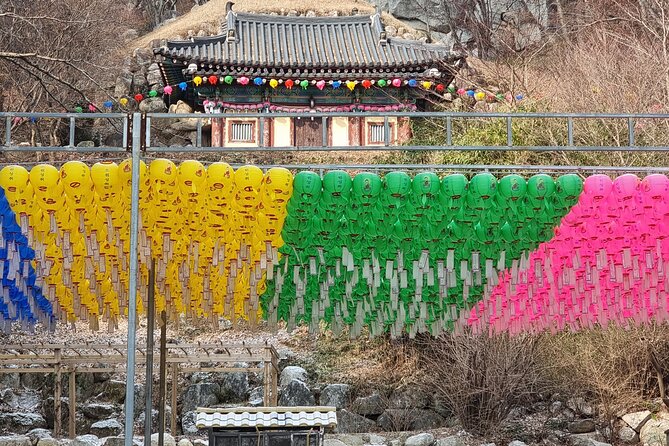
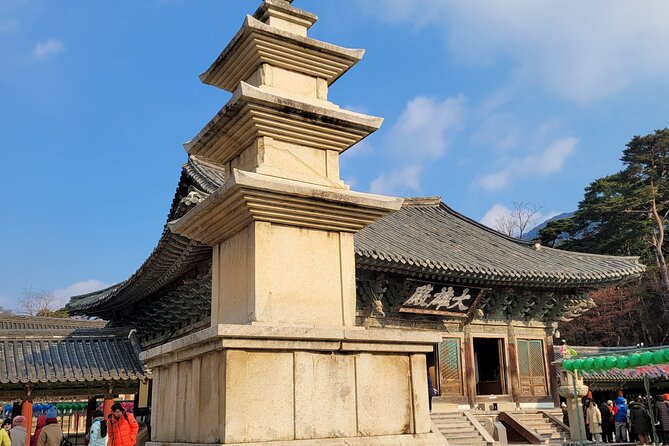
Bulguksa Temple is one of those places where the big idea is in the details. The setting is southwest of Tohamsan Mountain, and the temple expresses the idea of a Buddhist nation through harmony and balance. On this route, you will have about 1 hour, and admission is listed as free.
What I like about Bulguksa is how it gives you a clear starting point for the day. You are not just looking at old buildings, you are meeting a design language that connects art to beliefs. The temple is described as a masterpiece of Unified Silla Buddhist architecture, tied to the era’s aesthetics and what the Silla people considered scientific thinking.
The story angle is useful too. Bulguksa is noted as being established in 751 by Kim Dae-seong for his parents, during the reign year connected to King Gyeongdeok. That family-focused origin gives the site emotional weight beyond dates and titles, and it helps you understand why these temples were more than monuments.
Practical tip: plan to walk at a steady, slow pace for the first hour. Bulguksa is your mental warm-up, so give yourself time to settle in.
Stop 2, Seokguram Grotto: The Stone Dome Buddha and Its Craft
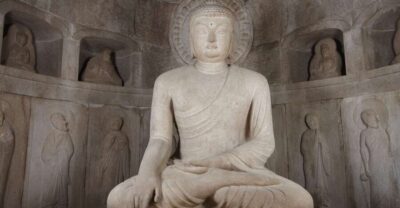
Next up is Seokguram Grotto, a stone temple originally built under the name Seokbulsa Temple, with construction completed under King Hyegong in 774. Admission is listed as free, and you get about 1 hour.
This stop is famous for the form. The grotto was built by piling stones into a domelike structure, then covering it with dirt to make it look like a cave. The effect is part architecture, part illusion, and part engineering. If you like seeing how people solved problems long before modern tools, you will appreciate the logic in the build.
There is also an art story you can feel. The description points to delicate and beautiful Buddha features as a unique aspect of Unified Silla Buddhist art, and it even frames the grotto as a blend of science and artistic spirit. Whether you are an art person or not, that wording is getting at the same thing you experience in person, craft that feels intentional.
Practical tip: if it is rainy, expect it to be slick. Keep your steps careful. With heavy rain conditions, guide Changwoo has been praised for staying patient and adjusting the pace, which is exactly what you want in places like this.
More Historical Tours in Busan
- From Busan: Gyeongju UNESCO World Heritage Guided Day Tour
★ 4.8 · 1,250 reviews - Gyeongju UNESCO World Heritage Guided Day Tour from Busan
★ 5.0 · 660 reviews - Old Korea Thousand History Tour of Gyeongju from Busan
★ 5.0 · 518 reviews - Busan history and market food tour with local chef
★ 5.0 · 58 reviews
Stop 3, Daereungwon Tomb Complex: A Relaxing Park Walk Through Power
Daereungwon Tomb Complex is the large tomb site area, and it is designed to be walked like a park. It contains 30 ancient tombs, including Cheonmachong (Ancient Tomb No. 155), the tomb associated with Silla King Michu, and Hwangnamdaechong Tomb. Admission is listed as free, and you will have about 1 hour.
What makes Daereungwon feel different from a typical “tomb visit” is the pace and setting. It is not only about looking at structures, it is about walking between them in a calmer environment. For many people, that break in intensity is what makes the whole day work.
Also, the tomb complex connects your day thematically. You started with religious architecture. Now you are seeing royal and elite burial landscapes, which helps explain how Silla power, belief, and public memory were woven together in one region.
Practical tip: take your time here. If you rush, you miss the visual rhythm of the park and you shorten the attention span you will need later at Cheonmachong.
Stop 4, Cheonmachong Tomb: The One Tomb Open to the Public
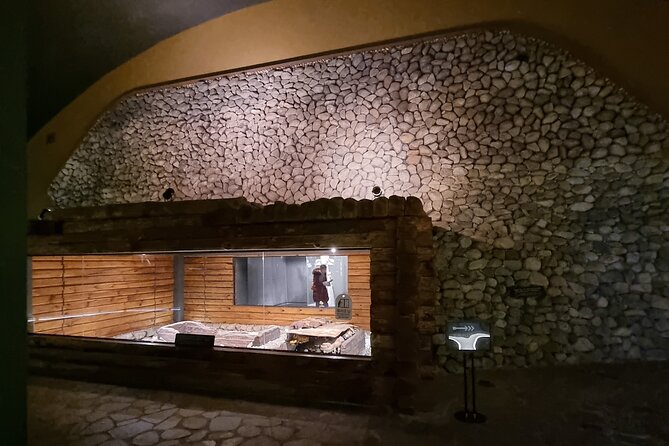
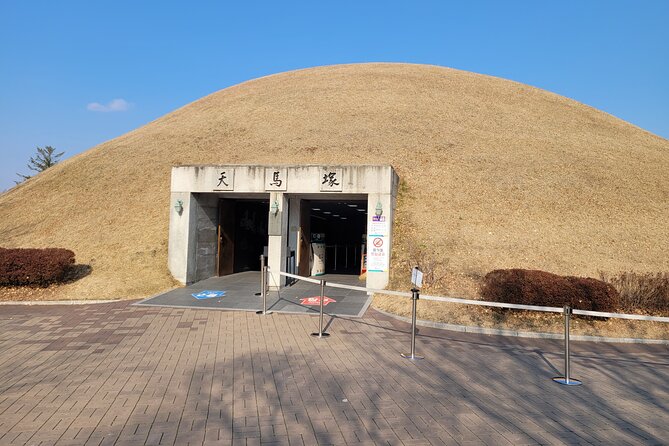
Cheonmachong Tomb is one reason this route is so efficient. Within Daereungwon, it is the only tomb open to the general public, and it is the one that most people want to see up close.
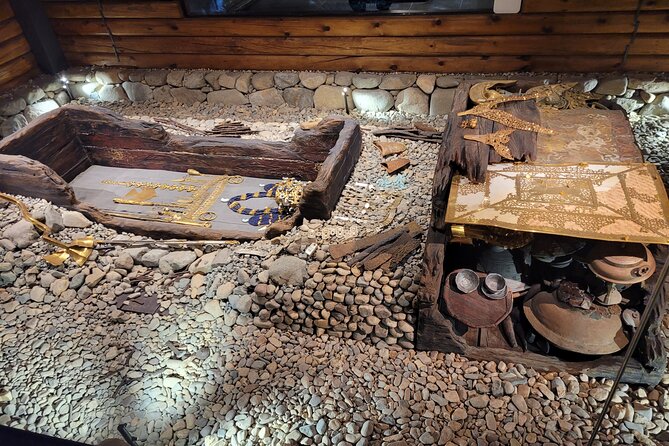
Cheonmachong is estimated to have been built between the 5th and 6th century. The name means heavenly horse tomb, tied to a picture of a flying white horse painted on the saddle flap. During excavation in 1973, gold relics were found, including a gold crown, gold hat, a bird-shaped crown, a gold belt, gold shoes, and more.
The highlight is the Cheonmachong gold crown, described as the biggest and most luxurious gold crown ever excavated. Admission for this stop is listed as not included, so plan for the entry fee and expect it to be the more detailed, special-pay part of the day.
Practical tip: because this is a single opened tomb, it is easy to over-hype it in your mind. Keep your focus simple: look for the symbols and the craftsmanship, then let the scale and wealth of the burial sink in.
Stop 5, Cheomseongdae Observatory: Silla Science in Stone With Real Numbers
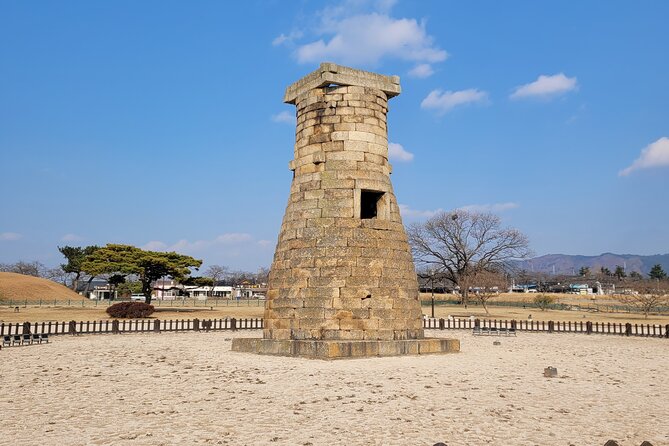
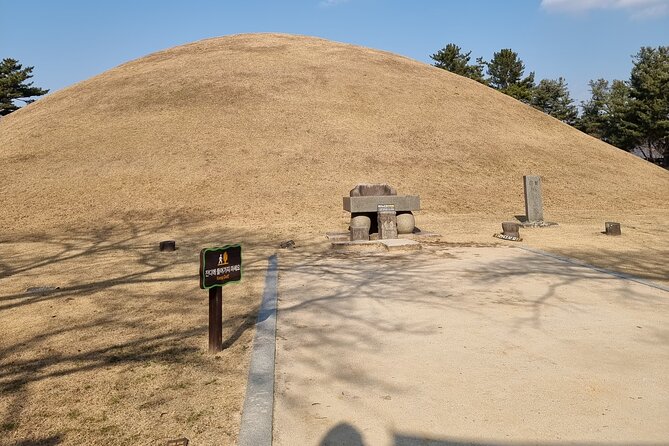
Cheomseongdae Observatory is famous for a reason. Built during the reign of Queen Seondeok, it is often described as the oldest observatory in Asia. You will have about 30 minutes, and admission is listed as free.
The cool part is that it is not just a round tower. The description emphasizes that each piece of stone has symbolic meaning, and that the structure uses shapes to reflect ideas about the sky. The diameter decreases from bottom to top, creating a smooth curve. The circle shapes represent the curvy image of the sky, while square shapes give another impression.
If you like concrete details, Cheomseongdae has them. The upper diameter is listed as 5.17 meters, the base diameter as 5.35 meters, and total height as 9.17 meters. That kind of measurement makes it feel less like a postcard site and more like an artifact you can study.
Practical tip: treat this as a “look and orient” stop. After tombs and temples, Cheomseongdae gives you a new angle, how Silla people thought about the universe and time.
Stop 6, Hwangnidan-gil: 700 Meters of Snacks, Photos, and Quick Breaks
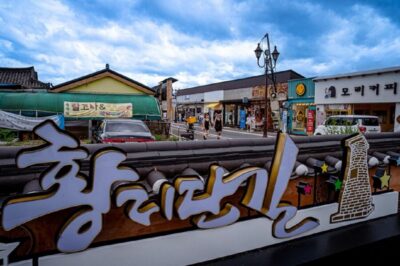
Hwangnidan-gil is the most “modern life” stop on the route, and it is a useful one. It stretches about 700 meters between Naenam Intersection and the former Hwangnam primary school intersection. Admission is listed as free, and you will have about 1 hour.
This street was named after Seoul’s Gyeongridan-gil, and it is known for offbeat attractions like coffee shops, restaurants, photo studios, souvenir shops, murals, and photo zones. If you need a breather, this is a good place to reset your legs and your mood.
I like Hwangnidan-gil because it turns a history day into something you can actually enjoy as a day out. It also helps with food planning since meals are not included on the tour.
If you care about what you eat, here is a practical note based on real guide experience: when guide Changwoo had groups on tough-schedule days, he was praised for steering people toward a Korean veggie diet for lunch and even suggesting things like Hwangnam bread for dessert. So if your group has dietary preferences, ask early and be direct.
Stop 7, Gyeongju National Museum: The Labels That Make the Day Click
After temples and tombs, the museum is where everything starts to connect. You get about 1 hour 30 minutes, and admission is listed as free.
The museum is organized into sections by relic type, including an Archeology Hall and an Art Hall, plus a Donggung and Wolji focus area and a Special Exhibition Hall. There is also a children’s museum, which can help if you are traveling with kids or teens who need variety.
One specific treasure is mentioned: the Sacred Bell of the Great King Seongdeok, listed as National Treasure No. 29. The display count is described as about 3,000 great pieces. That sounds huge, but the time you get here is long enough to see key things without trying to absorb everything.
Why this stop is valuable: it gives context to what you have already seen. When you understand what you are looking at, ancient sites stop being random scenes and start becoming a story.
Practical tip: before you enter, mentally list the two or three objects or sections you most want to see. With limited time, that focus saves you from drifting.
Stop 8, Donggung Palace and Wolji Pond: King Munmu’s Moon Pond and Name Changes
Donggung Palace and Wolji Pond is the final major stop, and it ties together nature and royalty in a way that feels very Silla. You will have about 1 hour, and admission is listed as not included.
The site is described as a representative historic location from the Unified Silla era. King Munmu of Silla had the pond dug in A.D. 674, added plants, and even raised rare birds and animals inside the palace. Later, records note that King Gyeongsun hosted a banquet for the Goryeo Dynasty’s King Wanggeon in 931, suggesting Donggung and Wolji were used for entertaining important guests.
The pond itself was originally called Wolji, meaning pond of the moon. In the Joseon Dynasty, it was renamed Anapji, linked to the geese and ducks that came to the ruined palace. The restored shape of the pond from the Silla era is mentioned as being brought back after dredging, which signals a preservation mindset rather than just a reconstruction for show.
Practical tip: treat this as a reflective finish. By the time you reach Wolji, you have already seen religious art, science in stone, royal tomb symbolism, and museum explanations. This stop is a closing chapter.
Timing in an 8-Hour Run: How to Make It Feel Less Like a Whirlwind
An 8-hour day in Gyeongju is plenty of time for the major sites, but it is still a tight schedule. The biggest factor in comfort is how smoothly your day moves between stops, and that is where a private driver matters.
You can help things go smoothly with a few simple moves:
- Wear shoes you can walk in for at least an hour of park walking.
- Carry a compact umbrella if rain is possible. One guide story specifically praised patience during heavy rain with weather warnings of downpours.
- Keep meals flexible. Foods and drinks are not included, so build in time and budget for a lunch break, and use Hwangnidan-gil as your likely “food zone.”
Also, the tour includes bottled water and uses an air-conditioned vehicle. That is a small comfort, but on a long day it adds up.
Who This Tour Suits Best (And Who Might Want a Different Option)
This one-day private tour is a strong fit if you:
- Want UNESCO Gyeongju sites without dealing with ticket lines, transport, or route planning
- Prefer a private schedule for families or friends
- Like structured cultural stops, but still want a guide who can keep things light and engaging
The tour may feel like too much if you:
- Want a slow, art-by-art deep study of fewer sites
- Expect meals and entrance fees to be handled for you completely (two sites list admissions as not included, and foods are not included)
But for most first-timers, this format is a smart compromise between breadth and sanity.
Should You Book This One-Day Private Gyeongju Tour?
I would book this tour if you want a focused Gyeongju introduction from Busan and you value a guide who manages pacing well. The strongest reason is the combination of major UNESCO stops that are listed as free, plus the tomb and observatory elements that make Silla culture feel concrete. Add in the fact that guide Changwoo has been praised for being fun, informative, patient during rain, and capable of keeping even a teen engaged, and you have a real confidence boost.
Skip it, or plan a different approach, if your priority is a fully self-paced day with zero extra costs, because Cheonmachong and Donggung Palace and Wolji Pond list admission as not included, and meals are on you.
If you want a day where you come home with a clear understanding of how Silla Buddhism, royal power, and science shaped Gyeongju, this private itinerary is a very practical choice.
FAQ
How long is the One Day Private tour to GyeongJu from Busan?
It runs about 8 hours to 8 hours 10 minutes.
What is the price and group size?
It is $499.00 per group, and it is for up to 5 people.
Is pickup from Busan included?
Yes, pickup is offered.
Are entrance tickets included for every stop?
Not all of them. Admission fees are listed as not included for Cheonmachong Tomb and for Donggung Palace and Wolji Pond. Other stops on the route are listed as free.
What does the tour include in the price?
Included items are bottled water, an air-conditioned vehicle, private transportation, parking fees, and toll fees and gas.
Is food included?
No. Foods and drinks are not included.
What happens if weather is bad?
The experience requires good weather. If it is canceled due to poor weather, you will be offered a different date or a full refund.
More of Gyeongju
- From Busan: Echoes of Silla Gyeongju Historical Day Tour
★ 4.8 · 55 reviews - Gyeongju Small Group photo Tour (Max 6 Pax)
★ 5.0 · 38 reviews - Gyeongju Historic Areas Day Tour with Sky Capsule from Busan
★ 5.0 · 18 reviews - From Busan: Gyeongju Historical Day Tour with Sky Capsule
★ 4.7 · 17 reviews
Recently reviewed in Busan
- Gyeongju private tour with an official tour guide (Unesco)★ 4.5 · 4 reviews
- Small Group Discover Busan Tour with hotel pickup and dropoff★ 5.0 · 111 reviews
- A Well-Rounded Small-Group Busan Tour with Hotel Pickup Service★ 5.0 · 157 reviews
- Real Busan Walking Experience★ 5.0 · 27 reviews
- Enchanting Oedo Island Day Tour from Busan with Windy Hill★ 4.5 · 59 reviews
- Suncheon one day tour from Seoul, Busan or Suncheon★ 5.0 · 3 reviews
- Visit Busan night market and enjoy the night view of Busan harbor★ 5.0 · 6 reviews
- Old Korea Thousand History Tour of Gyeongju from Busan★ 5.0 · 518 reviews
Gyeongju, compared.
Gyeongju Guided Day Trip to Three Kingdoms Capital
Read our review →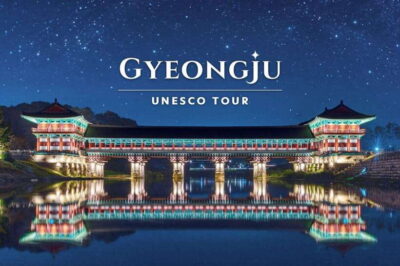
Gyeongju UNESCO World Heritage Guided Day Tour
Read our review →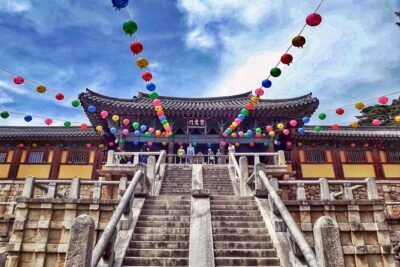
Gyeongju UNESCO World Heritage Guided Day Tour from Busan
Read our review →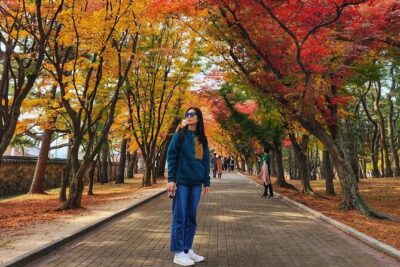
Old Korea Thousand History Tour of Gyeongju from Busan
Read our review →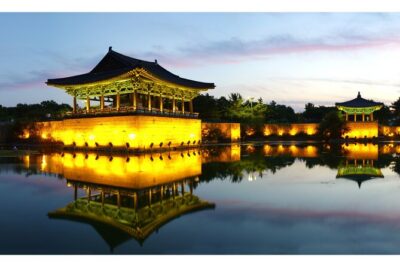
Gyeongju UNESCO sites Private tour with licensed tour guide
Read our review →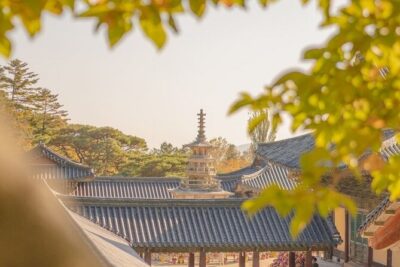
Private Gyeongju Tour – Explore Gyeongju UNESCO Sites
Read our review →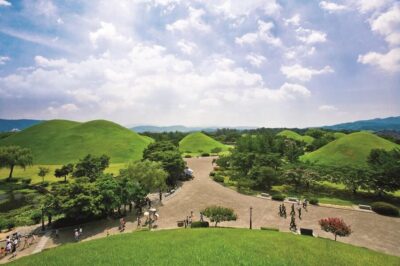
UNESCO Heritage Tour Including Bulguksa Temple
Read our review →Browse the lists this tour appears in