
Reviewed · GYEONGJU
Echoes of Silla Gyeongju Historical Guided Day Tour from Busan
Gyeongju, once the Silla capital, is basically a whole museum you can walk through, and this day tour strings the big sights into one smooth loop. I especially love the UNESCO-listed Bulguksa Temple start and the evening finish at illuminated Woljeonggyo Bridge. The main drawback is simple: it is a long 10 to 11 hour day, and meals are not included, so you will want to budget for lunch on your own.
The vibe of the tour depends a lot on the guide, and the tour team often leans on strong storytellers like Lucy, Bobby Kim, Amy, Sophie, Cindy, and Juna. You also get English or Chinese speaking help, plus air-conditioned group transport, for up to 43 travelers, which helps keep things organized without feeling like you are on a cattle-car field trip.
Key things I’d circle on your planning list
- UNESCO start with Bulguksa, then a classic Silla route all the way to evening lights
- Most stops are free, with Donggung Palace and Wolji Pond admission included
- Time at each place, so you can actually look, not just march for photos
- Guides with great on-the-ground storytelling, including Lucy and Bobby Kim
- Comfortable, air-conditioned van or coach for a full-day ride from Busan
- A dusk finale at Woljeonggyo Bridge that fits the Gyeongju mood perfectly
Why Gyeongju’s Silla Sites Work So Well in One Guided Day
If you like your history readable, visual, and place-based, Gyeongju is one of Korea’s best day-trip themes. The Silla story is not just something you study at a desk. It is in Buddhist architecture at Bulguksa, in lived-in hanok culture at Gyochon, in royal burials at Daereungwon, and in the pond-and-palace setting of Donggung and Wolji.
This tour’s strength is pacing. You are not stuck doing one quick photo stop after another. The schedule builds in substantial time at the big anchors, then supports the experience with shorter blocks where you can wander, snack, and get your bearings.
The other big win is order. Starting with Bulguksa first helps you handle the heavier, meaning-dense sight while your energy is fresh. Then later, you move toward the more human-scale atmosphere of hanok streets and the relaxed evening scene around Wolji and the bridge.
More Historical Tours in Busan
- From Busan: Gyeongju UNESCO World Heritage Guided Day Tour
★ 4.8 · 1,250 reviews - Gyeongju UNESCO World Heritage Guided Day Tour from Busan
★ 5.0 · 660 reviews - Old Korea Thousand History Tour of Gyeongju from Busan
★ 5.0 · 518 reviews
Time, group size, and the “long day” reality check
This is a 10 to 11 hour guided day. That matters. You will be doing a lot of sitting on the way between sites, and your feet will do their own work once you arrive. The good news is that the transfer time between stops is built into the total duration, so you are not constantly guessing how the day will run.
The group size cap is 43 travelers, and that size usually keeps the flow manageable. You can still find space to look around without feeling totally swallowed by the crowd. Also, the tour runs with an air-conditioned van or coach, so you are not baking on transit when the weather turns.
One practical note: the route can shift with traffic and weather, which is normal for a full-day itinerary. If you are sensitive to timing changes, go in with flexibility. If you like a day that is mostly set but not overly rigid, this fits well.
The transport setup: air-conditioned comfort and a mobile ticket
You are picked up and transported by air-conditioned van or coach, and you receive a mobile ticket. That combination is surprisingly useful in a place like Gyeongju, where you may need to check details at the start of the day and then just get moving.
The tour also notes it is near public transportation. In practice, that can help if you decide to arrive a little early on your own. But the main point is that the day is designed around group movement, not DIY wandering.
Because the day includes multiple locations across the city, transport is not just a convenience. It is what lets you pack in Bulguksa, the historic village, royal tombs, and the evening pond and bridge without turning it into a logistics headache.
Bulguksa Temple: your UNESCO anchor with plenty of time to slow down
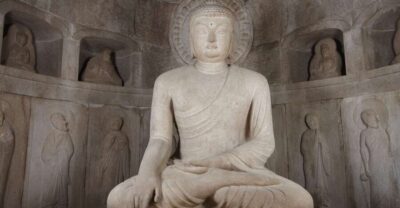
The first stop is Bulguksa Temple, a UNESCO World Cultural Heritage site and one of Korea’s most revered temples. It is tied to the 8th-century Silla period, and you can feel that weight as soon as you start walking through the complex.
What I like about spending 2 hours 20 minutes here is that it is long enough to do more than skim. Even if you only catch the highlights, you can still take in the layout and understand why this temple is considered such an architectural and spiritual landmark.
Because this is a temple visit, think about how you want to experience it:
- You will likely want calm time to look at the structures and grounds.
- Your guide’s explanations can help you notice details you might otherwise miss.
- If you are visiting in warmer or colder weather, plan for light layers, since outdoor walking is part of the experience.
Admission here is listed as free, which is a nice perk. Even better, it means you can put your attention into the site rather than ticket math.
More of Gyeongju:
- Busan: Gyeongju Guided Day Trip to Three Kingdoms Capital
★ 4.8 · 1,925 reviews - From Busan: Echoes of Silla Gyeongju Historical Day Tour
★ 4.8 · 55 reviews - Gyeongju Small Group photo Tour (Max 6 Pax)
★ 5.0 · 38 reviews - Gyeongju Historic Areas Day Tour with Sky Capsule from Busan
★ 5.0 · 18 reviews
Gyeongju Gyochon Traditional Village: hanok life and craft culture
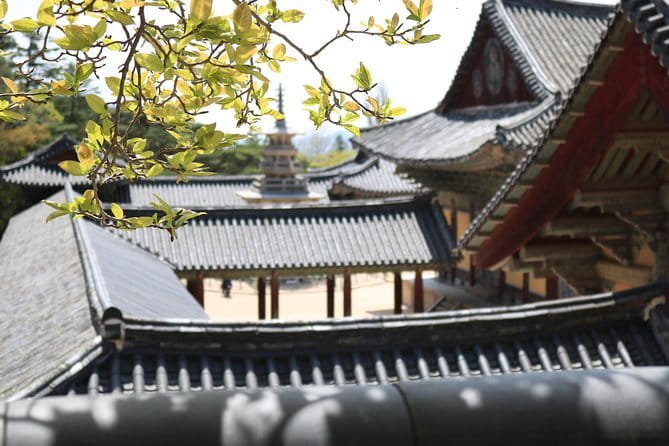
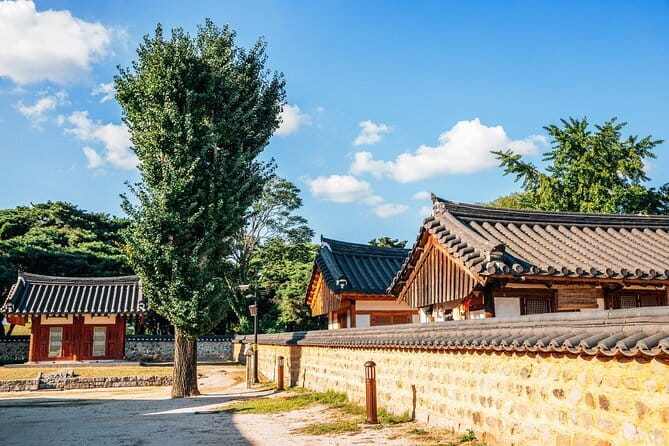
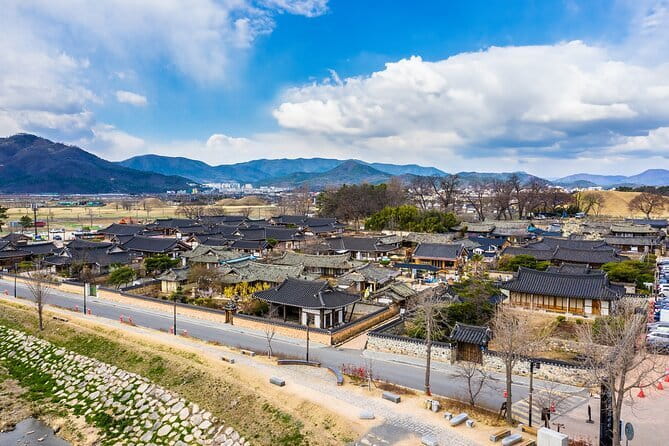
After Bulguksa, you head to Gyeongju Gyochon Traditional Village, with 1 hour 40 minutes on the ground. The village is centered around the Gyeongju Choi Clan, a family known for maintaining influence over many generations.
This stop is less about monuments and more about texture. You get a feel for how hanok houses are lived-in and presented, plus the kinds of traditional craft culture that show up in these heritage areas.
Two things I like here:
- You get a longer block of time, so you can slow down and browse rather than rushing.
- It is an easy contrast after temple architecture, so the day feels varied.
If you like food and small souvenirs, this is where that energy can start to build. If you prefer quiet walking, you can still do that, since the village atmosphere supports a calmer pace.
Admission is listed as free. So again, the day is spending its budget on transportation and guiding, not constant entry fees.
Daereungwon Royal Tomb Complex: what you gain from a guided walkthrough
Next up is Daereungwon Tomb Complex, sometimes described as a royal tomb park, with 23 tombs from the Silla dynasty. You get about 50 minutes, and that is a solid window for a tomb complex, where you are mostly walking, reading, and absorbing.
The big plus of having a guide here is interpretation. Tombs can look similar if you have no context, but a good explanation helps you understand what makes certain tombs significant and why the layout matters.
Even if you only capture the main ideas, you will leave with a clearer picture of how power and legacy were expressed in Silla burial culture. This is also a stop where you can learn without feeling like you are stuck in a classroom.
Since the admission here is listed as free, you are basically paying for time and storytelling, not entry costs.
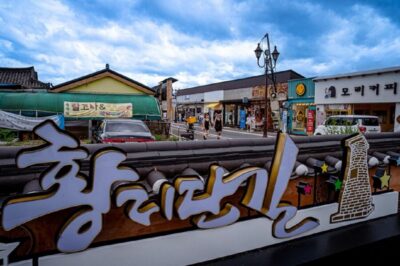
Hwangnidan-gil Street: food, coffee, and a modern edge to ancient town
Right near the tomb area is Hwangnidan-gil Street, with about 1 hour. This is where Gyeongju turns slightly contemporary while keeping a strong connection to its heritage setting.
This is the stop I recommend for a “reset” moment. After temples and tombs, you get a place to walk more casually, snack if you want, and let the day lighten up.
The tour frames Hwangnidan-gil as a trendy hotspot blending ancient charm with modern style. In practical terms, that means you can treat this like your flexible hour:
- If you want a coffee break, this is one of the best times to do it.
- If you want a simple meal option, you will likely find it easier to fit in here.
- If you prefer photos, you can pick angles without feeling rushed.
Admission is listed as free. So you can keep spending focused on what you actually want, like food or drinks.
Donggung Palace and Wolji Pond: the Silla pond story you will remember
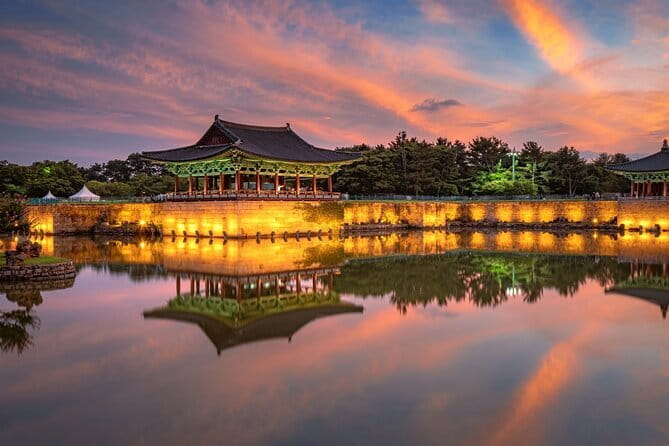
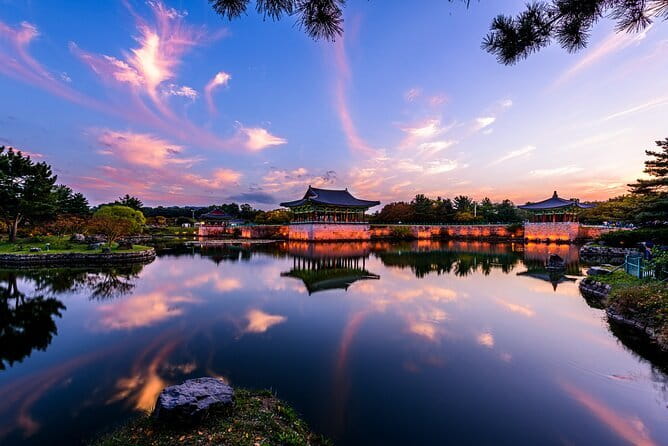
Evening starts with Donggung Palace and Wolji Pond, which is listed as 40 minutes and includes admission fees. This pond-and-palace setting traces back to 674, during Silla times, and it is especially interesting because of what happened later.
The tour information explains that the pond was temporarily drained in 1972, revealing thousands of artifacts that had fallen into the lake. That detail matters because it adds a layer of detective-story energy to what could otherwise feel like just a pretty pond. The place has both aesthetic and archaeological weight.
A guided visit helps you connect the setting to the Silla worldview of the palace grounds and the cultural life that surrounded it. And even if you are not a hardcore archaeology person, the story gives you something to look for as the light changes.
Because you do not have to pay separately for this admission, it also improves value. You are spending your day with less “extra fee” friction.
Woljeonggyo Bridge lights: the perfect visual ending
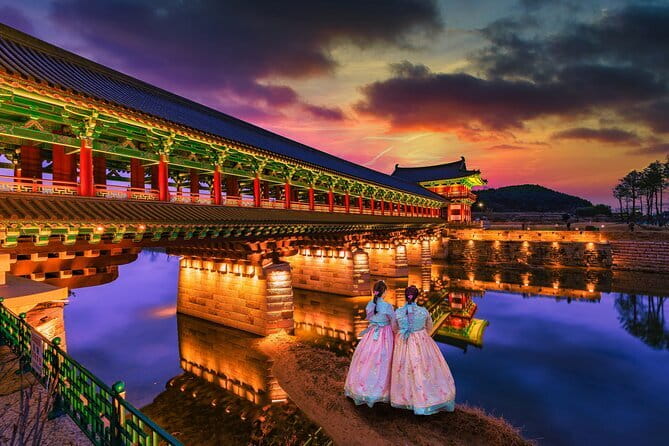
The final stop is Woljeonggyo Bridge, with about 20 minutes. The bridge has a long history and is built with sturdy stone arches, crossing the Woljeongcheon Stream.
This is a shorter time slot, but it works because the tour ends with atmosphere. The bridge is described as illuminated in the evening, so you get that classic Gyeongju mood, where history is not only preserved but presented through light.
For photos, this is where you might want to be ready. When the group arrives, you can choose a spot, watch the reflections, and then enjoy a slow walk without feeling like you must chase the next “must-see.”
Admission is listed as free. The cost is in getting you here comfortably and on time.
Price and value: what you get for $64 from Busan
At $64 per person, this tour sits in the “easy yes” category for a full-day guided history route, especially from Busan where you do not want to build your own transit puzzle.
Here is the value logic that makes sense:
- Transport is included via air-conditioned van or coach.
- A staff guide supports you in English or Chinese.
- You get admission to Donggung Palace and Wolji Pond.
- Most other key stops are listed as free, including Bulguksa, the traditional village, royal tombs, Hwangnidan-gil, and Woljeonggyo Bridge.
So you are not paying a stack of separate tickets all day. You are paying mainly for the route design, the guide explanations, and the logistics that save you time and stress.
Is it a bargain? For a history-focused day with multi-site entry and guided time, it is fairly priced. You will just want to budget for meals since they are not included.
What you should do before you go to make it feel effortless
This is a full-day plan, so preparation is where you get comfort.
I would do these practical things:
- Wear shoes you can walk in for temple and tomb grounds.
- Bring a light layer for evening by the pond area.
- Plan money for lunch and snacks, since meals are not included.
- If you care about photos, arrive with some patience, since timing can shift with traffic and weather.
Also, because this is a guided experience, the best way to get value is to ask questions early. The guide names you might encounter, like Lucy, Bobby Kim, Sophie, Cindy, Amy, or Juna, show that the tour team varies, but the goal stays the same: connect Silla-era details to what you are looking at right now.
Who this tour fits best, and who might not love it
This tour is ideal if:
- You want a history-heavy day without reading a guidebook for hours.
- You like structured sightseeing with enough time to wander at each stop.
- You prefer having someone explain what you are seeing, from UNESCO temple design to Silla tomb meaning and the pond artifact story.
You might not love it if:
- You hate long days on your feet plus transit. It is 10 to 11 hours.
- You want total freedom to choose your own pace at every stop. This one is guided with an itinerary that can shift with traffic and weather.
It also helps if you are comfortable joining a group. With up to 43 people, it is not tiny, but it is not huge either.
Should you book Echoes of Silla Gyeongju from Busan?
Book it if you want the smartest way to hit Gyeongju’s top Silla-era highlights in one day with guided explanations and a dusk finale. The mix of UNESCO Bulguksa, hanok village atmosphere, royal tomb context, and the Wolji Pond and Woljeonggyo Bridge ending gives you a complete feel for the city, not just a checklist.
Skip it if you only want one or two sites, or if you would rather take your time without a fixed route. In that case, you might be happier doing Gyeongju as a more open, self-paced day.
If you do book, keep your expectations aligned: it is a full-day route with time built in, not a half-day sprint. That is exactly why it works.
FAQ
How long is the Echoes of Silla Gyeongju day tour from Busan?
The tour runs about 10 to 11 hours, including travel time between stops.
What is included in the tour price?
You get English/Chinese speaking staff, transport by air-conditioned van or coach, and admission fees for Donggung and Wolji. Meals and other personal expenses are not included.
Which admissions are included or not included?
Donggung Palace and Wolji Pond admission fees are included. The other listed stops have admission listed as free.
Are meals provided during the tour?
No. Meals are not included, so you will need to plan on paying for lunch and any snacks yourself.
Do I need a physical ticket?
No. The tour uses a mobile ticket.
What language will the guide speak?
The tour includes English/Chinese speaking staff.
How many people are in each group?
The tour has a maximum of 43 travelers.
Is the tour cancellable?
Yes, free cancellation is available. You can cancel up to 24 hours in advance for a full refund. If you cancel less than 24 hours before the experience starts, the amount paid is not refunded.
Recently reviewed in Busan
- Gyeongju private tour with an official tour guide (Unesco)★ 4.5 · 4 reviews
- Small Group Discover Busan Tour with hotel pickup and dropoff★ 5.0 · 111 reviews
- A Well-Rounded Small-Group Busan Tour with Hotel Pickup Service★ 5.0 · 157 reviews
- Real Busan Walking Experience★ 5.0 · 27 reviews
- Enchanting Oedo Island Day Tour from Busan with Windy Hill★ 4.5 · 59 reviews
- Suncheon one day tour from Seoul, Busan or Suncheon★ 5.0 · 3 reviews
- Visit Busan night market and enjoy the night view of Busan harbor★ 5.0 · 6 reviews
- Old Korea Thousand History Tour of Gyeongju from Busan★ 5.0 · 518 reviews
Gyeongju, compared.
Gyeongju Guided Day Trip to Three Kingdoms Capital
Read our review →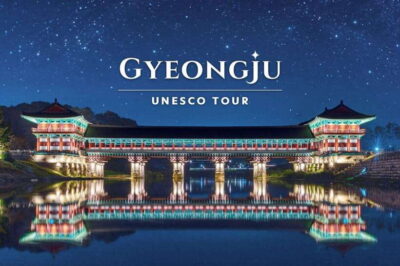
Gyeongju UNESCO World Heritage Guided Day Tour
Read our review →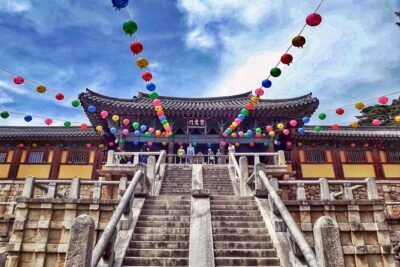
Gyeongju UNESCO World Heritage Guided Day Tour from Busan
Read our review →
Old Korea Thousand History Tour of Gyeongju from Busan
Read our review →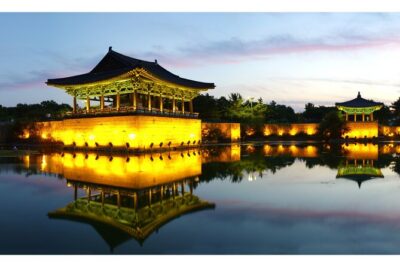
Gyeongju UNESCO sites Private tour with licensed tour guide
Read our review →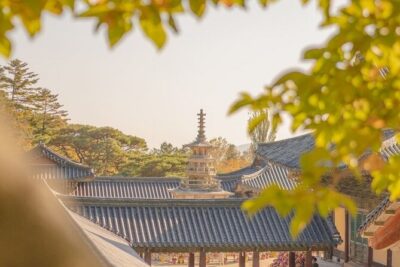
Private Gyeongju Tour – Explore Gyeongju UNESCO Sites
Read our review →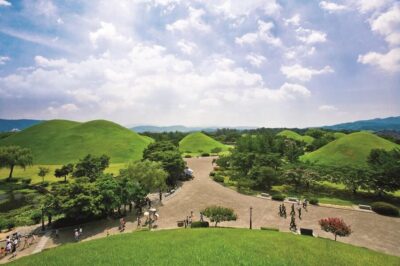
UNESCO Heritage Tour Including Bulguksa Temple
Read our review →Browse the lists this tour appears in