
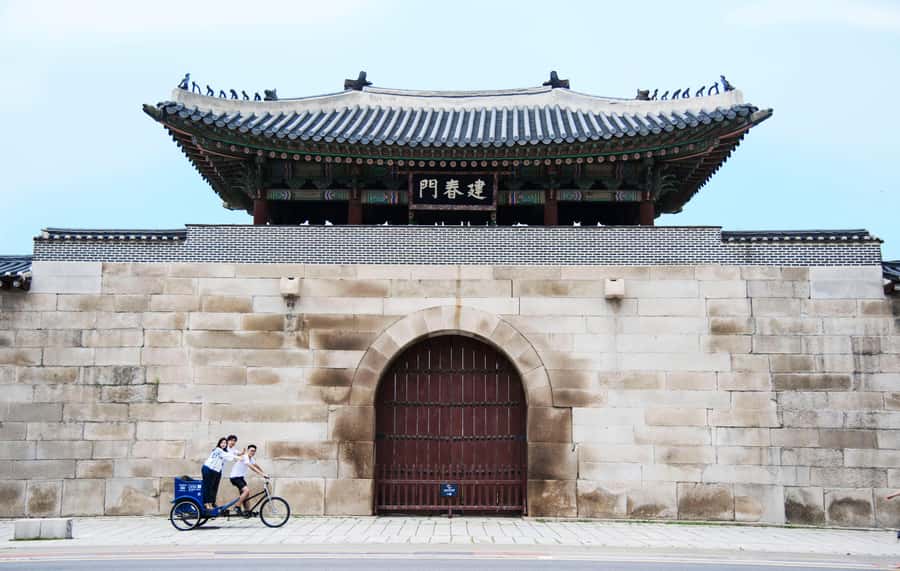
Reviewed · BUKCHON HANOK VILLAGE
Seoul: Bukchon Hanok Village Pedicab Tour
Riding a pedicab through Bukchon is an interesting way to see Seoul because you move slowly enough to notice details, but fast enough to avoid turning your day into a stair workout. I like the live historical storytelling and the chance to chat with the rider, and I also like that the plan is set up for comfortable exploration, with options for guests with limited mobility. One possible drawback: if there is crowding or bad weather, some stops may be skipped.
This is a private, 2 hour experience with an English, Chinese, or Japanese speaking guide, provided by Artee Pedicab. You will glide past major palace-area landmarks and spend real time in the old neighborhood streets, with a mix of guided stops and easy self exploration. If you need a route tweak for mobility needs, make sure you tell them ahead of time, since the walk to Hanok Village can be adjusted.
Key things to know
- Private guide plus pedicab ride so you get context, not just transportation
- Conversation time with the rider for small, practical answers about Seoul life
- Wheelchair accessible and adjustable walking time if you have mobility challenges
- A route built around old streets and palace walls plus quick scenic passes
- A small “guided then free” rhythm that helps you enjoy Bukchon at your own pace
Price and Logistics, the real value question
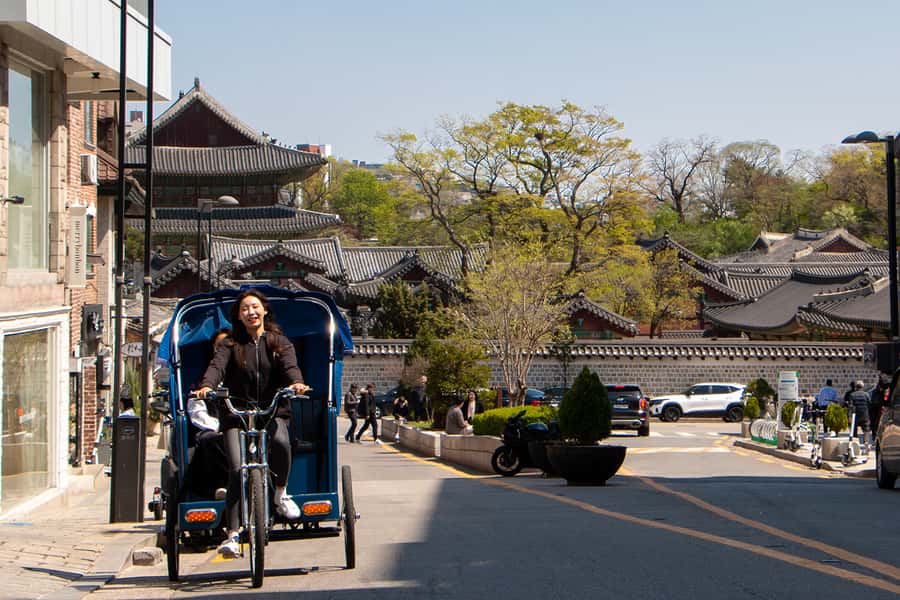
At $94 per person for a 2 hour pedicab tour, this is not the cheapest way to see Bukchon. But it is also not trying to be. You are paying for three things that add up fast in Seoul: a live guide, a private pedicab experience, and time-saving access through the neighborhood.
If you have ever tried to “see Bukchon in an afternoon” using public transit and walking, you know the problem. It is scenic, but it is also easy to lose your bearings and hard to cover all the right angles without doubling back. This tour trades that stress for a guided route, including passes by palace-area sights like Gyeongbokgung and the historic stone walls around the palace zone (Changdeokgung and Gyeongbokgung are specifically part of the experience). That is where the money starts to make sense.
You also get a safety net: insurance is provided by the operator. And in case you are planning your schedule tightly, it helps that the operator offers free cancellation up to 24 hours in advance and a reserve now, pay later option.
More of Bukchon Hanok Village:
- Seoul: Gyeongbok Palace, Bukchon Village, and Gwangjang Tour
★ 4.9 · 2,321 reviews - Seoul: Gyeongbok Palace, Bukchon Village, and Gwangjang Tour
★ 5.0 · 1,044 reviews - Seoul: Gyeongbok Palace and Bukchon Hanok Walking Tour
★ 4.8 · 157 reviews
Where you start matters, especially in a big city
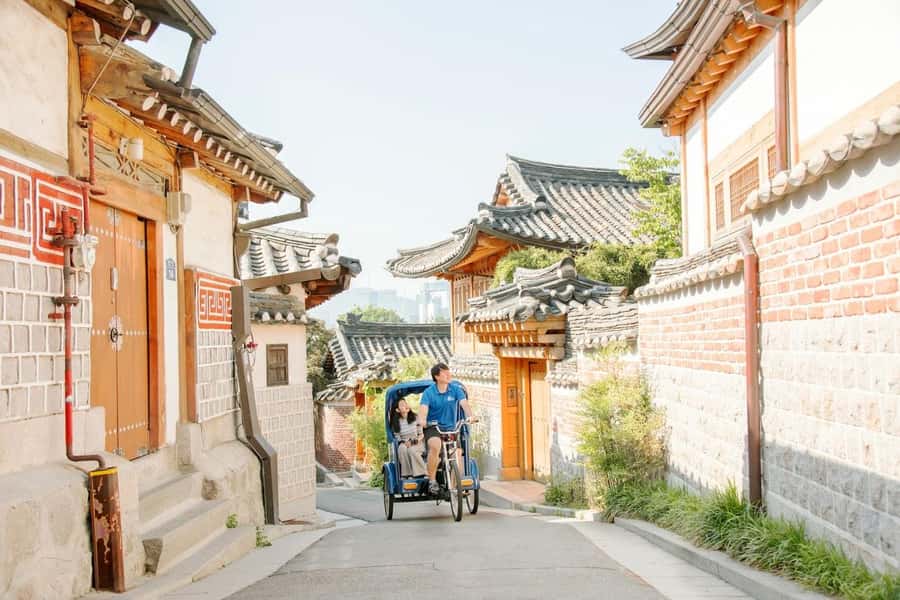
The tour can start and end at different locations, but there are three common starting points people use. The most convenient choice depends on how you are getting into the area that day.
- Anguk Station Exit 1 (recommended for public transit): the pedicab is waiting next to Artist Bakery on the left.
- National Museum of Modern and Contemporary Art courtyard (recommended for private vehicles): the pedicab waits in the courtyard with a view toward the entrance of the National Folk Museum of Korea.
- Custom start or end if reachable: if the pedicab can travel within the distance, you can specify a different meeting point. The rider will call about 15 minutes before to confirm the exact location.
Practical tip: before you finalize your day plan, check what else you want to do nearby after the tour. One of the nicest touches here is that you are not only handed a generic ending. If you are headed to your next stop, your guide may be able to line up the finish point with where you are going next, so you lose less time.
The pedicab experience, built for tight streets and slow sightseeing
A pedicab is basically the perfect Seoul tool for neighborhoods like Bukchon and parts of Seochon. Cars and even buses struggle with narrow lanes. Straight walking can be exhausting. A pedicab splits the difference.
What you get here is not just a ride. You get comfortable maneuvering designed to work through the corners and turns, plus a guide who keeps the story moving. There is also intentional time for communication with the rider. That matters because in a place like Seoul, small questions can improve your whole visit: what to look for in a hanok courtyard, which lane feels most photogenic at a certain time of day, or how locals think about the modern and traditional mix.
If you are worried about mobility, there is a clear benefit. The tour is wheelchair accessible, and you should be able to request adjustments. The experience includes walking tours into Hanok Village that are about 10 minutes, but the operator says they can adjust the course for elderly guests or anyone who has difficulty moving. You should bring that up early, not at the last minute, so your guide has time to plan a realistic route.
Stop by stop: from Gamgodang-gil to the Geonchunmun Gate
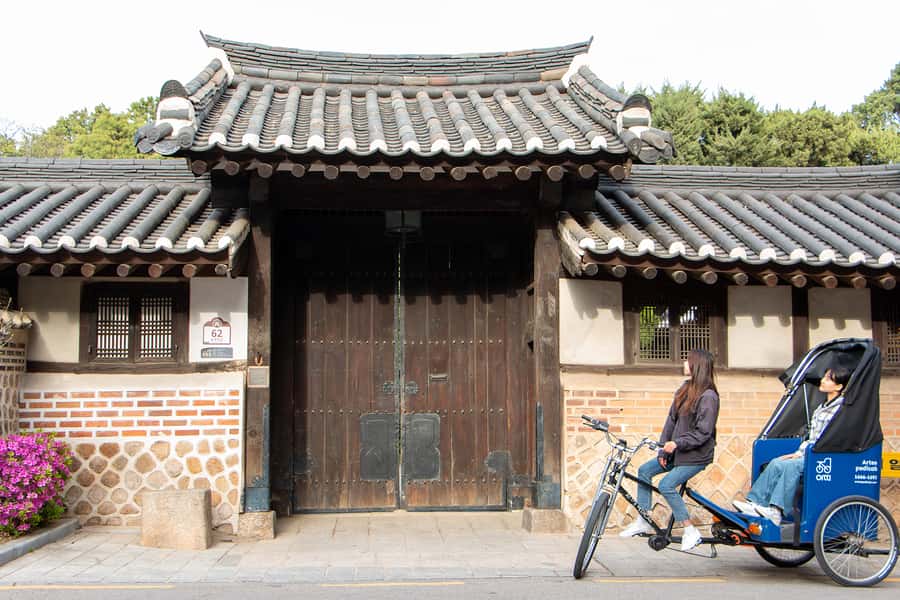
You start from MARIE, then hop into the pedicab and begin moving through the older street fabric of the area. The first named street stop is Gamgodang-gil. This is the kind of lane where you notice Seoul’s “between eras” vibe. You are not just looking at a single landmark. You are seeing the everyday edges of tradition, shops, and small streets that feel alive in a way that big road sightseeing never does.
At Gamgodang-gil, you get a guided tour plus time to pass through and take in the atmosphere. Think of it as your warm-up. Your guide sets the context so that when you reach gates and palaces, you understand what you are seeing instead of just collecting photos.
Next is Geonchunmun Gate. This is where the tour shifts from neighborhood feel to historic structure. You will get guided viewing and sightseeing, then continue onward. Gates like this help you read the area like a map. You start seeing lines of movement, how fortification and palace planning shaped what came next, and why the Bukchon zone became the distinct place it is today.
A possible consideration here: because this is a private experience but still in a high-demand area, the guide may adjust your exact path at times. Capacity and weather can affect what you spend time on. That is normal in Seoul, and it is one reason private guided tours can feel smoother, even when conditions change.
A few more Seoul days side by side
- Best DMZ Tour Korea from Seoul (Red Suspension Bridge Optional)
★ 5.0 · 41,422 reviews - DMZ Tour: 3rd Tunnel, Option(Suspension Bridge, Boat) from Seoul
★ 5.0 · 21,373 reviews - DMZ tour south Korea from Seoul (NK experience hall, defector)
★ 5.0 · 20,599 reviews - Seoul: The Best DMZ Tour with Optional Suspension Bridge
★ 4.7 · 4,978 reviews
Gyeongbokgung and Changdeokgung areas, seeing palace walls without the hassle
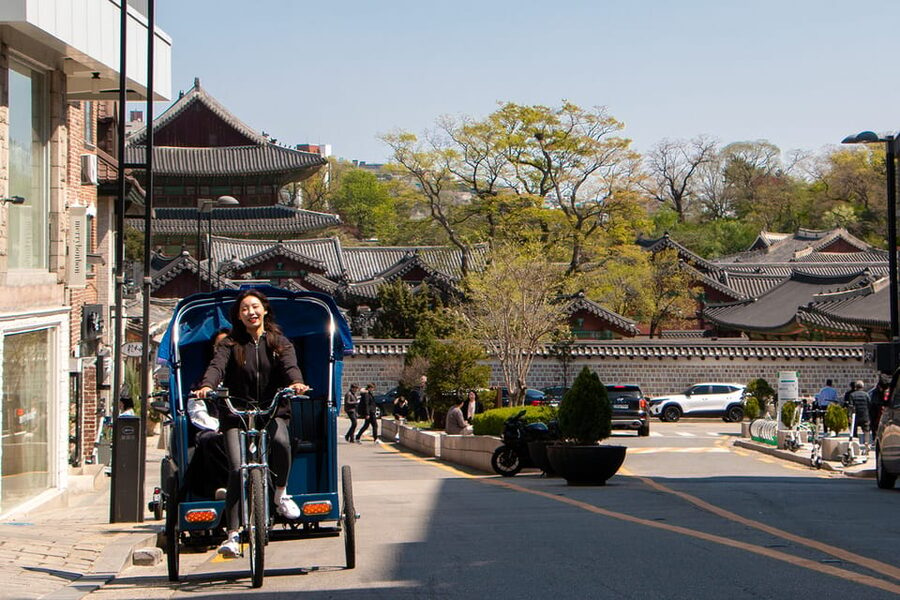
One of the best parts of this tour is that it brings you near the palaces without making you fight the logistics. You will pass by Gyeongbokgung and also experience the palace walls context, including the historic stone walls tied to both Changdeokgung and Gyeongbokgung.
If you have been to palace grounds before, you know the layout can be mentally tiring. You see a lot, but you might not connect the why. Here, your guide’s explanations make the palace-zone feel like part of a bigger story rather than a checklist.
What I like about this approach is that it gives you the emotional payoff of palace architecture while keeping your day from turning into one long museum sprint. You get to keep your energy for the neighborhood streets where the visual details are more intimate.
Drawback to plan around: palace-area sightseeing can mean more walking than you expect, especially if you want to stop for pictures. The pedicab helps with travel between viewpoints, but when you are near major sights, you might still encounter crowded pathways. Keep some flexibility in your schedule so you do not feel rushed.
Anguk-dong and President Yun Po-sun’s House, a quieter kind of “important”
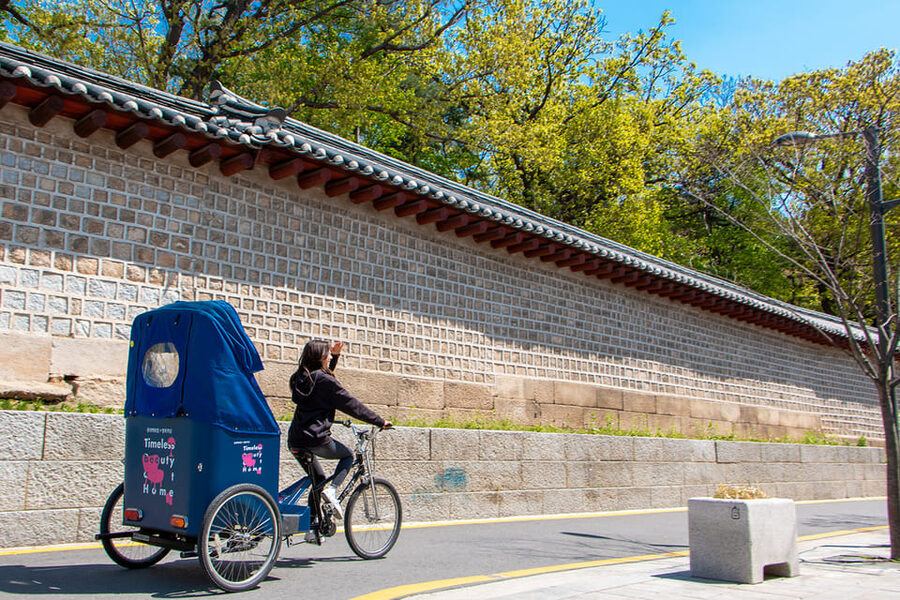
Then the tour heads toward President Yun Po-sun’s House in Anguk-dong. This is a change of pace from the gate and wall area. It is more residential-feeling and more human-scale, which helps you understand how history in Seoul is not only about palaces and royal spaces, but also about modern political life and the people who shaped the country more recently.
You get a visit plus guided touring and sightseeing here. The guide will point out what to notice, so you do not just see a building from the outside. You start to understand how a neighborhood like Anguk-dong fits into the larger Bukchon story.
This stop is especially good if you like architecture and you enjoy when a guide connects places to the way society has changed. It also helps you break up the day so you are not only standing around looking at the most famous structures.
Bukchon Hanok Village, when the tour turns into you time
Now comes the heart of it: Bukchon Hanok Village. You get a guided component, plus time for sightseeing with walking, and then a portion that is set up for self exploration.
This is the point where the pedicab matters most. Without it, you would likely spend most of your time transferring and trying to figure out the best lanes to walk. With it, you arrive with your bearings. Your guide’s prior stops, like Geonchunmun Gate and the surrounding palace walls, make the “between palaces” location feel clear instead of random.
During the Hanok Village portion, you will experience the blend that makes Bukchon special: traditional hanok architecture, small alleys, courtyards, and storefronts that give you a modern Seoul pulse. The self-guided time is important. It lets you linger where you want, stop for a snack, and focus on the visual details that speak to you, not to a strict timeline.
If you are mobility limited, remember the tour notes: there is walking involved, about 10 minutes to reach the Hanok area, and the operator can adjust the course if you reach out beforehand. Do not be shy about that. This kind of neighborhood is where a “good plan” can make the difference between enjoying it and feeling stressed.
One fun detail you might appreciate: a guide with a great personality can make this part feel like a conversation, not a lecture. In one standout experience, a guide named Ryan was praised for matching the tour’s vibe and making the history feel personal, not robotic. You can feel the difference when a guide enjoys what they are sharing.
Constitutional Court of Korea area, finishing with a strong sense of place
The tour includes a visit and sightseeing near the Constitutional Court of Korea, then you head back toward the meeting point. This is a smart finishing move because it changes the visual storyline. You go from traditional streets to a landmark associated with Korea’s modern governance.
It also helps you end with a “Seoul now” feeling. By the time you are near the Constitutional Court area, you have already seen how the city balances layers, and it is easier to keep thinking about how Seoul grew into what it is today.
You will then take a short pedicab ride back, only a few minutes, to return to MARIE (or your agreed endpoint).
Guide style and language, what you should look for
This experience is a live guided tour in English, Japanese, or Chinese. That is not just a comfort detail. It affects how much you get out of Bukchon.
When the guide can explain the street layout, the meaning behind gate and palace structures, and why certain buildings matter, you start seeing the neighborhood in layers. You notice the line of sight, the way a wall or gate shapes movement, and the way hanok spaces reflect both tradition and daily life.
I also like that you are not forced into one style of learning. You get guided storytelling at key points, and then you get time to look and wander. This balance makes it easier to enjoy the neighborhood even if you are not the type who loves long historical speeches.
Because it is private, it is easier for you to ask simple questions. You can ask what to photograph, what to skip, or where to go next. That back-and-forth is where a good guide earns their keep.
Who this tour is best for
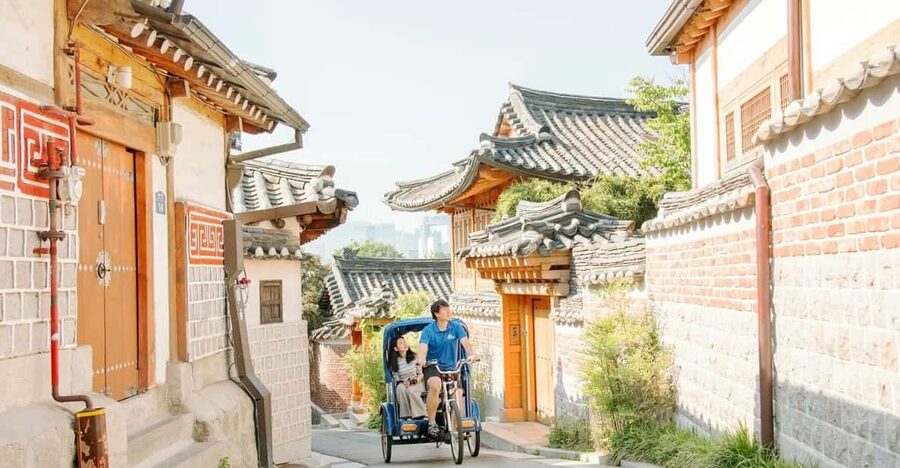
This Bukchon pedicab tour is a strong match if:
- You want a guided, not self-guided, way to understand the Bukchon and Seochon areas
- You like walking but want to control the walking load
- You want an easier day if you are mobility challenged or traveling with someone who needs flexibility
- You are on your first day in Seoul and want a route that gives you an overall sense of how the city is organized
It can also work if you are traveling with friends or family and want a private group. That privacy is a real quality-of-life upgrade in a place that gets busy fast.
Should you book the Seoul Bukchon Hanok Village pedicab tour?
I would book this if you want the best parts of Bukchon without the planning headache. For $94, you are paying for a guide who can connect the dots, a pedicab that helps you move through tight streets, and a route that balances palace-zone context with intimate neighborhood time.
Skip it only if you want a totally independent, wander-anywhere day, and you do not care about guided history. Also keep in mind that some attractions may be skipped due to capacity or weather, so plan to enjoy the flow rather than treating every stop like a guaranteed checklist item.
If you do book it, do one thing that boosts your odds: tell them in advance about any mobility needs or preferences, so your walk time into Bukchon Hanok Village is comfortable for you. That one detail can turn a good tour into a great one.
FAQ
How long is the pedicab tour?
The tour is listed as a 2 hour pedicab experience (120 minutes).
What is the price per person?
The price is $94 per person.
Where does the tour start and where does it end?
You start at MARIE, and the tour ends back at the meeting point. For convenience, there are also main default starting or dropoff options at Anguk Station Exit 1 and at the National Museum of Modern and Contemporary Art courtyard.
Can I choose a different starting or dropoff location?
Yes, if the pedicab can travel within a certain distance, you can specify a different starting or dropoff point. The rider will confirm the exact location by phone about 15 minutes prior.
What languages are available for the guide?
The live guide offers English, Japanese, or Chinese.
Is the tour wheelchair accessible?
Yes, the tour is wheelchair accessible, and the course can be adjusted if you have difficulty with moving.
What is included in the tour price?
Included are the expert tour guide, the pedicab ride, stories about Seoul, the guide language options (English/Japanese/Chinese), insurance provided by the operator, and the 120 minute pedicab tour.
Are all attractions guaranteed to be included?
Not always. Some attractions might be skipped due to capacity or weather conditions.
Recently reviewed in Seoul
- Seoul City Private Tour (Optional layover)★ 5.0 · 3 reviews
- Korean Folk Village & Suwon Hwaseong Fortress Private Tour★ 5.0 · 3 reviews
- 5D4N Korea Cultural Heritage immersion Private Tour★ 5.0 · 3 reviews
- War Memorial, Jogyesa Temple & Tapgol Park Tour in Seoul★ 4.5 · 3 reviews
- Full Day Private Seoul Tour for foodies★ 5.0 · 3 reviews
- Private Tour : Royal Palace & Traditional Villages wearing Hanbok★ 5.0 · 3 reviews
- Nami Island & Nearby Attractions : Charter Van Tour With Driver★ 4.0 · 3 reviews
- K-Pop Tour★ 3.5 · 3 reviews
Bukchon Hanok Village, compared.

Gyeongbok Palace, Bukchon Village, and Gwangjang Tour
Read our review →Gyeongbok Palace, Bukchon Village, and Gwangjang Tour
Read our review →
Gyeongbok Palace and Bukchon Hanok Walking Tour
Read our review →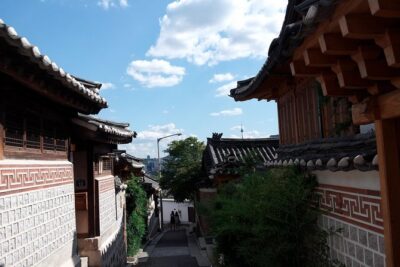
Best Walking Tour to Gyeongbok Palace Bukchon Hanok Village
Read our review →
Tour Seoul’s oldest district with a storyteller from Bukchon
Read our review →
Layover tour to Gyeongbokgung-Folk Museum-Bukchon-Insadong
Read our review →
Walking Tour with Gyeongbokgung Palace, Bukchon, Insadong
Read our review →
Seoul Private Tour: Palace, Bukchon, Insadong & Han River Cruise
Read our review →Browse the lists this tour appears in