Reviewed · SEOUL TOURS
Savoring Authentic Korean Liquor and Cuisine
What makes this experience interesting is that you do not just sample drinks. You learn how Korean traditional liquor is built from rice, mountain mineral water, and naturally fermented yeast, then you pair it with An-ju foods you actually want to eat. I like that it is led by owner-chef Chef Hyesun, a world traveler focused on small-brewery spirits, and I like the hands-on feel with multiple tastings and pairing. One drawback to plan for: this is an alcohol-focused tasting, so if you do not drink, or you want a strictly non-alcohol experience, it may not fit.
You start in Seoul at LodgeMagok, in Gangseo-gu, and you keep things friendly with a small group, max 6. Expect a clear story about Korean liquor history and then a guided tasting through three styles. If you are a first-timer who only knows the common stuff, Chef Hyesun’s approach is eye-opening, especially with the reminder that Korean traditional liquor is not the same as the green bottle soju people often picture.
Key highlights you should know before you go
- You taste three categories: Takju, Cheongju, and a distilled liquor, not just one beer-style pour
- Chef Hyesun teaches the why, tying flavor to rice, mountain water, and naturally fermented yeast
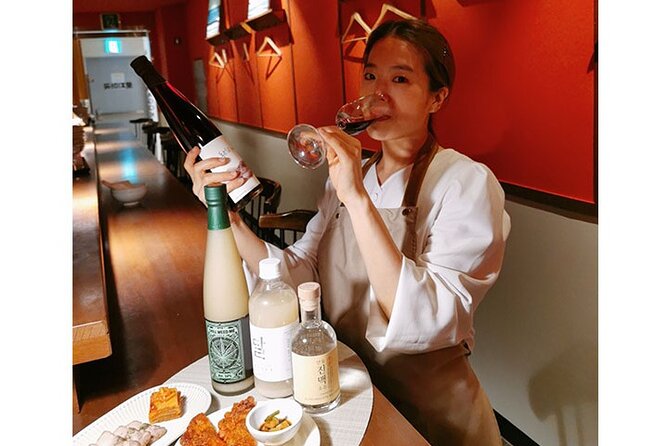
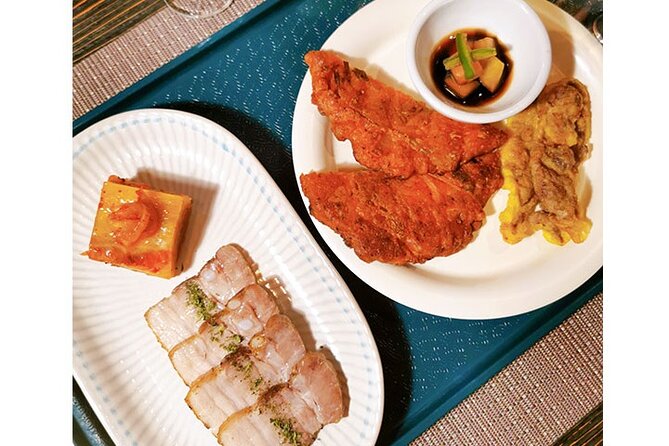
- An-ju pairing is built into the experience, with foods like veg pancake, meat pancake, and kimchi bibim noodles
- Small group size, max 6, so questions and pace stay human
- A local-brewery angle, because the lineup is described as special selections from breweries around Korea
- 90-ish minutes of focused sampling, with enough time to compare flavors across styles
Where the magic starts: LodgeMagok and meeting Chef Hyesun
You meet at 로찌마곡 (LodgeMagok), 207호, 중앙로 171 나루역프라이빗타워Ⅱ, Magok-dong, Gangseo-gu. It is a simple plan for your day because the tour ends back at the same meeting point, so you are not left figuring out transit after you taste alcohol.
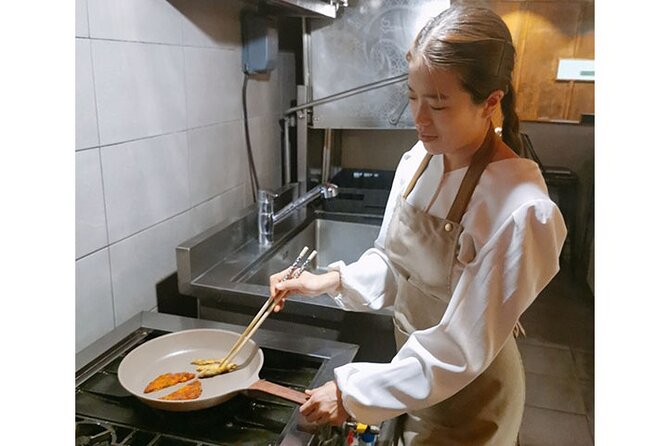
What you will feel right away is that this is a restaurant-led experience. Chef Hyesun runs a place that focuses on traditional liquor, so you are not getting a generic “tour bus” approach. The vibe is more like, I’ll show you what real Korean liquor tastes like and how to eat it, with a clear guide who cares about the details.
The small group size, up to 6, matters more than it sounds. Korean food and alcohol can bring questions fast, like what you are tasting right now, why it changes from one style to the next, and how to pair it without guessing. A larger group can turn that into one-way talking. Here, the setup is built for conversation.
A few more Seoul days side by side
- Best DMZ Tour Korea from Seoul (Red Suspension Bridge Optional)
★ 5.0 · 41,422 reviews - DMZ Tour: 3rd Tunnel, Option(Suspension Bridge, Boat) from Seoul
★ 5.0 · 21,373 reviews - DMZ tour south Korea from Seoul (NK experience hall, defector)
★ 5.0 · 20,599 reviews
What makes Korean traditional liquor different from the bottles you know
This tour leans hard into the idea that Korean traditional liquor is not a factory product. Chef Hyesun explains that Korean traditional liquor is made from only three ingredients: Korean rice, mineral water from a mountain, and naturally fermented yeast. That is the core lesson. When you understand the ingredients, tasting makes more sense.
You will also hear about the breadth of Korean liquor culture. The info given notes that there are over 1,400 small traditional liquor breweries in Korea. That number is useful because it explains why “Korean alcohol” is not one flavor. It is many styles shaped by local methods and ingredients.
If you know Korean drinks only through the common tourist picture of soju, the experience is designed to reset that. It specifically points out traditional makgeolli and soju, while steering you away from the green-bottle association. In other words, you are being guided toward the flavor world behind the labels people recognize overseas.
The tasting lineup: Takju, Cheongju, and distilled liquor
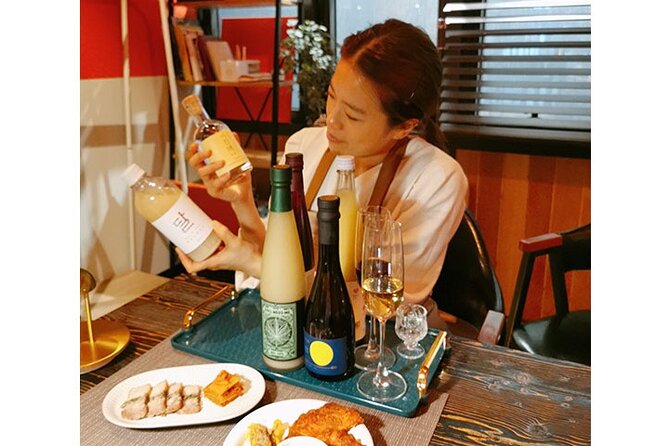
The heart of the tour is that you taste three traditional liquors. The categories are Takju, Cheongju, and a distilled liquor. You also learn the history behind Korean traditional liquor while you sample, so you are not just eating with your eyes closed.
Here is how I think about it as you plan your tongue for comparison:
Takju style
Takju is often the “first impression” kind of tasting, the one that gives you a base understanding of how Korean fermentation can taste. Since you are learning while tasting, you should use this moment to notice texture, sweetness impressions, and how the drink changes when you add food. Even if two drinks both smell yeasty, the balance can land differently.
Different day, same base:
- Seoul: The Best DMZ Tour with Optional Suspension Bridge
★ 4.7 · 4,978 reviews - Signature DMZ Tour: Exclusive Defector Talk & Suspension Bridge
★ 5.0 · 4,459 reviews - Thrilling Korean DMZ 3rd Tunnel Tour from Seoul + Red Bridge Rush
★ 5.0 · 3,097 reviews - Seoul: DMZ Tour & Suspension Bridge (Option English/Spanish)
★ 4.9 · 2,628 reviews
Cheongju style
Cheongju typically feels like the “precision” tasting, where you start to notice refinements. In a guided setting like this, your best move is to pause between sips and let the guide’s explanation land. Cheongju is where you can start thinking less about the drink alone, and more about why it tastes harmonious with An-ju.
Distilled liquor
Distilled liquor can be the one that surprises you most, because distillation often sharpens character. During this part, do not rush. Compare it to the first two categories while your memory is still fresh. If you only drink and do not listen, it becomes a blur. If you drink slowly and pay attention, you start building an internal map for future ordering in Korea.
Tip for your experience: sip, then eat, then sip again. That rhythm helps you catch pairing effects instead of just tasting alcohol straight.
An-ju pairing: what you eat with Korean liquor
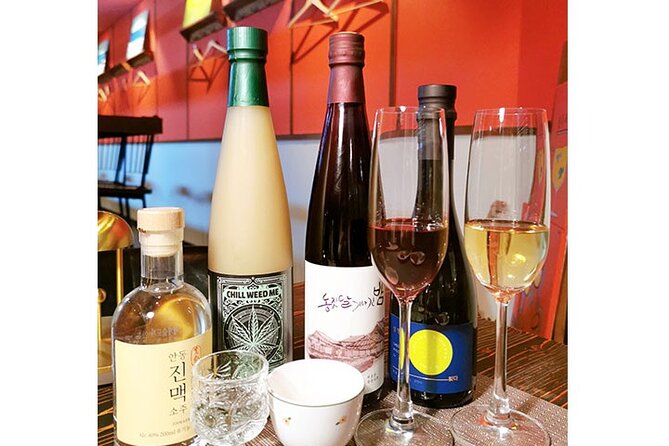
Korean drinking culture is incomplete without An-ju, and this tour treats An-ju as part of the education. You are not stuck with bland snacks. Chef Hyesun’s foods are described as Korean food paired to traditional liquor, with options such as veg pancake, meat pancake, and kimchi bibim noodles.
Two practical things to know:
First, the An-ju items may depend on supply and demand. So if you have your heart set on one dish, I would not assume it is guaranteed. Think of the list as likely options, not a fixed menu.
Second, your pairing experience is the point, not just the food itself. Pancakes and noodles work well in tasting settings because they bring salt, fat, and spice without needing fancy sauces. That matters when you are trying to compare Takju, Cheongju, and distilled liquor.
How An-ju helps you taste better
Pairing is not just about being polite. It changes what you perceive. With Korean liquor, the drink’s fermented character can taste stronger when you eat nothing, and it can taste smoother when you counterbalance with savory, salty, or spicy bites.
So when you get the next pour, take one small bite first. Then sip. You are trying to notice how the flavors “snap into focus” together.
The history lesson you actually use in real life
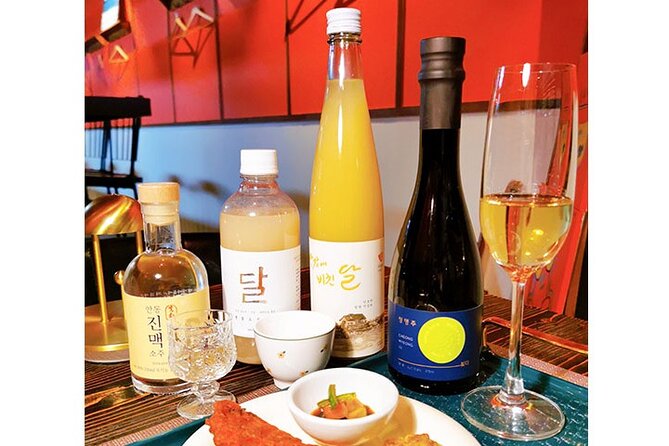
Chef Hyesun is described as an owner-chef and world traveler who runs a restaurant specializing in traditional liquor. That background matters because the tour’s history part is not just dates and facts. It is the story behind what you are tasting.
You learn the history of Korean traditional liquor while tasting three categories, and you learn the harmony idea behind the three ingredients. The tour frames that harmony as the true taste created by rice, mountain mineral water, and naturally fermented yeast.
What you should take away from that for your own trip: you start to realize how Korean traditional alcohol can taste different even when it shares the same broad category. It helps you become a better diner, because you can ask smarter questions later when you see multiple bottles or local varieties on a menu.
Also, the tour is explicitly positioned as learning that is hard to replicate at a normal restaurant. The liquor lineup is described as a special selection from local breweries across Korea that you cannot find in any store or restaurant. Even if you later find traditional liquor, you may not find the exact variety set you tried here.
Value for the price: $59 for 90 minutes of guided tasting
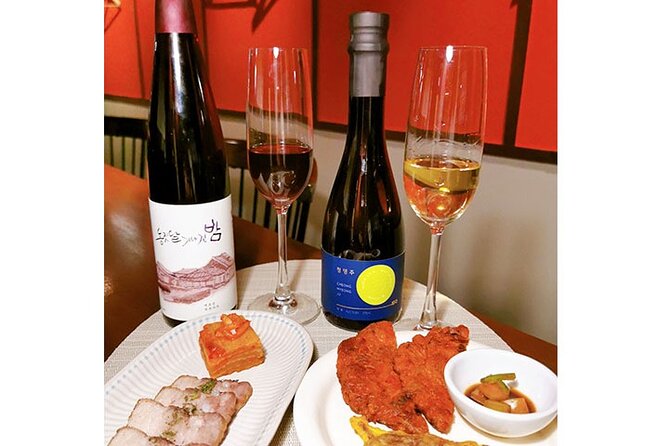
At $59 per person, this experience is not trying to be the cheapest snack with alcohol. It is charging for something you cannot DIY easily: guided tasting, context about what you drink, and pairing An-ju to three liquor styles.
A big part of the value is that you are getting more than one sample. You are tasting three categories, and you are learning as you go, with the focus on authentic traditional methods and local breweries. If you love food and drink education, this kind of structured experience saves you from ordering blindly.
It is also value-driven because of the group limit. With max 6 travelers, you are more likely to get questions answered and to feel like the tour matches your pace. For the same money in a bigger group, you often get a faster, less personal run through.
One more practical point: the tour is about 1 hour 30 minutes. That is a realistic slot for Seoul. It is long enough to compare flavors and short enough that you do not lose your whole evening.
Small group pacing: how to enjoy it without feeling rushed
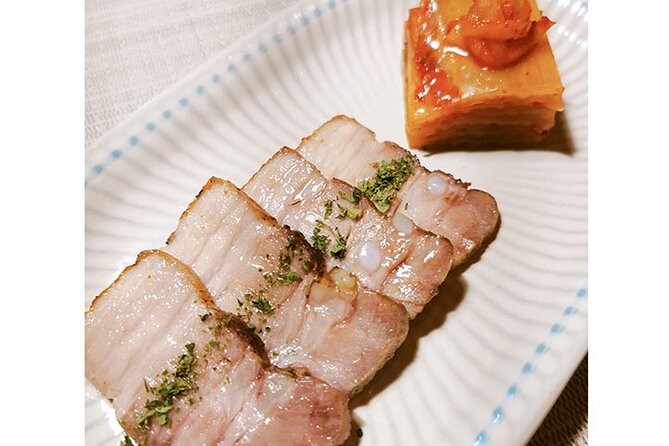
Because this is a tight 90-minute format and the group is capped at 6, you should prepare for a smooth, focused flow. You will likely move through learning and tasting in a deliberate order, ending back at the meeting point.
To get the most out of it:
- Eat dinner lightly beforehand if you want to notice flavors clearly, since An-ju is included but not described as a full meal
- If you are sensitive to alcohol, tell the guide in advance during your WhatsApp confirmation message
- Take your time with each sip, because the comparison is the whole point
Also, remember the age rule. Alcoholic beverages are only provided to guests 18 and older. Plan your group accordingly if you are traveling with younger friends.
Logistics that matter in Seoul: mobile ticket, transit, and WhatsApp check-in
This is set up with a mobile ticket, and it is near public transportation, so you should not need a car to make it happen. You still want to buffer a little time, because arriving calm makes the tasting better.
After booking, you are asked to send a confirmation message through WhatsApp to +82 10 2661 7832. Use that moment to double-check the schedule and to mention food allergies or other details. That is especially important here because An-ju choices can depend on supply and demand.
It is a good sign that they explicitly invite this communication. Food pairing is personal. If you have restrictions, you need an early heads-up.
Who this tour is for, and who should skip it
This is a great fit if you:
- Want real Korean traditional liquor culture, not just the mass-market version of Korean drinks
- Enjoy guided food and drink pairings, and you like learning while you eat
- Are curious about how Takju, Cheongju, and distilled liquor differ in flavor and character
- Like small-group experiences where you can ask questions
You might want to skip it if you:
- Do not drink alcohol, or you are not comfortable tasting multiple alcoholic styles
- Have very complicated dietary needs and cannot communicate them ahead of time
The alcohol is the center of the experience, but the food is not an afterthought. If you like An-ju culture, you are in the right place.
Should you book Savoring Authentic Korean Liquor and Cuisine?
I would book this if your Seoul trip includes food, drink, and a little curiosity. The strongest reasons are straightforward: you taste three traditional liquor styles, you learn the ingredient story behind them, and you get An-ju pairings like veg pancake, meat pancake, and kimchi bibim noodles. The focus on traditional methods and local breweries is exactly the kind of value you cannot easily recreate on your own.
If you are on the fence, here is the decision shortcut. If you want a guided education plus real tastings in a small group for about $59, this is a smart use of time. If you only want casual drinks or you prefer to eat first and drink later with zero alcohol focus, look for a different type of food tour.
Either way, do the WhatsApp message right after booking, especially if you have allergies. Then show up ready to sip slowly and eat with purpose. That is when this kind of Korean liquor experience actually clicks.
FAQ
How long is the Korean liquor and An-ju tasting?
It lasts about 1 hour 30 minutes.
Where does the tour start and end?
It starts at LodgeMagok, 로찌마곡(LodgeMagok), and ends back at the same meeting point.
How many people are in the group?
The tour has a maximum of 6 travelers.
What types of Korean traditional liquor will I taste?
You’ll taste three types: Takju, Cheongju, and a distilled liquor.
What food is included as An-ju?
An-ju is included, with options such as veg pancake, meat pancake, and kimchi bibim noodles, depending on ingredient supply and demand.
Is this tour only for adults?
Yes. Alcoholic beverages are provided only to guests aged 18 and older.
What if I have food allergies?
After booking, you should send a WhatsApp confirmation message to +82 10 2661 7832 to discuss schedule details, food allergies, and other needs.
Do I get a mobile ticket?
Yes, the activity uses a mobile ticket.
Can I cancel for a full refund?
Yes. You can cancel up to 24 hours in advance for a full refund.
Recently reviewed in Seoul
- Seoul City Private Tour (Optional layover)★ 5.0 · 3 reviews
- Korean Folk Village & Suwon Hwaseong Fortress Private Tour★ 5.0 · 3 reviews
- 5D4N Korea Cultural Heritage immersion Private Tour★ 5.0 · 3 reviews
- War Memorial, Jogyesa Temple & Tapgol Park Tour in Seoul★ 4.5 · 3 reviews
- Full Day Private Seoul Tour for foodies★ 5.0 · 3 reviews
- Private Tour : Royal Palace & Traditional Villages wearing Hanbok★ 5.0 · 3 reviews
- Nami Island & Nearby Attractions : Charter Van Tour With Driver★ 4.0 · 3 reviews
- K-Pop Tour★ 3.5 · 3 reviews
Seoul Tours, compared.
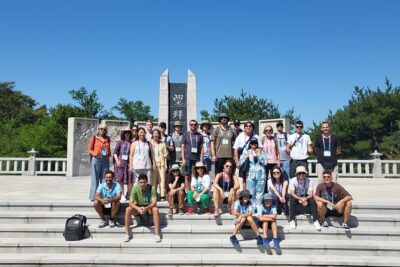
Best DMZ Tour Korea from Seoul (Red Suspension Bridge Optional)
Read our review →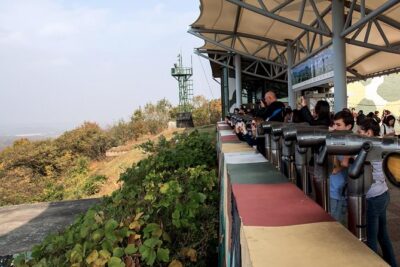
DMZ Tour: 3rd Tunnel, Option(Suspension Bridge, Boat) from Seoul
Read our review →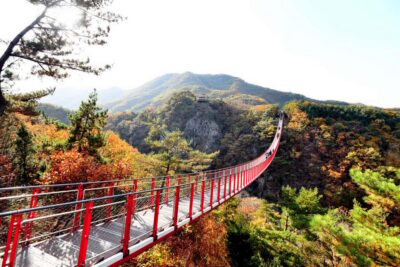
The Best DMZ Tour with Optional Suspension Bridge
Read our review →
Thrilling Korean DMZ 3rd Tunnel Tour from Seoul + Red Bridge Rush
Read our review →
DMZ Tour & Suspension Bridge (Option English/Spanish)
Read our review →
DMZ Past and Present: Korean Demilitarized Zone Tour from Seoul
Read our review →