
Reviewed · KIMCHI MAKING
Kimchi Making Class (+ Korean BBQ) in Traditional Hanok Courtyard
Korean food can be loud and fast on the streets, but this experience is different. You do hands-on cooking in a Bukchon hanok courtyard, in a centuries-old home setting that makes the whole class feel special. It’s a great way to taste Korean culture through real process, not just watching.
I especially like two things here. First, you learn Sam Lee’s Mother’s legendary kimchi recipe, so you’re building something with a real family method behind it. Second, you get to cook with aged, sour kimchi, then finish with Korean BBQ and a vegan option if you plan ahead.
One key consideration: kimchi ferments quickly and doesn’t travel well, and the class does not provide containers. If you want to take your kimchi home, bring a plan for a jar or container before you leave.
Key highlights you should care about
- Small group (max 10 travelers) means you get hands-on attention while you cook.
- Traditional hanok courtyard in Bukchon gives you a real sense of place near Anguk and Gyeongbokgung.
- Mother’s kimchi recipe taught by Sam Lee adds credibility and warmth to the class.
- Aged, sour kimchi cooking turns fermentation into something you can actually taste and cook with.
- Kimchi pancakes plus Korean BBQ gives you two different flavors and textures in one session.
- Vegan option available when you notify in advance, plus tofu at BBQ time.
Kimchi class in Bukchon: why the hanok courtyard matters
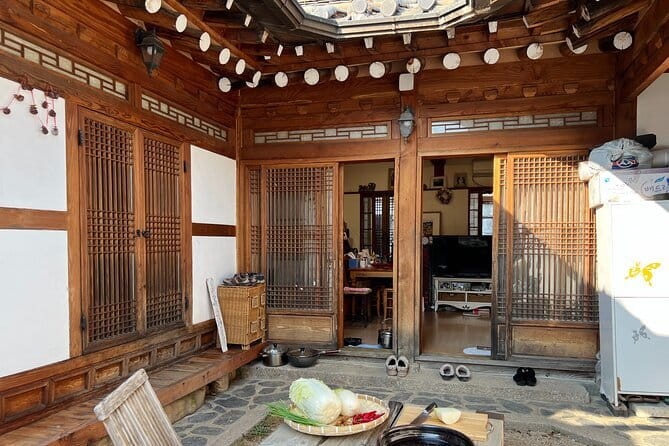
This is the kind of class that makes you slow down. Instead of standing over a counter in a busy kitchen, you cook in a traditional hanok courtyard in Bukchon Hanok Village, not far from Gyeongbokgung Palace. That setting matters because kimchi is not just food. It’s tied to seasons, fermentation, and the way Korean homes use courtyards and shared kitchens for daily life.
The location also helps your day plan. If you’re already doing palace area sightseeing, this fits neatly into a classic Seoul morning. You start at 11:00 am, and you’re in a walkable zone near Anguk station, so you can pair this with a morning cultural stop without fighting the city.
Most of all, the courtyard changes your mood. You’re not just learning a recipe, you’re making it in an atmosphere where the food feels grounded.
More Workshops in Seoul
- Local Home Korean Cooking Class & Market Adventure in Seoul
★ 5.0 · 1,024 reviews - Seoul: Korean Cooking Class at a Local Home and Market Tour
★ 5.0 · 348 reviews - Yongpyong Ski Resort from Seoul with Optional Lesson and Packages
★ 5.0 · 217 reviews
Your 2-hour flow: kimchi, pancakes, and Korean BBQ
The session runs about 2 hours and follows a simple cooking arc: story, hands-on kimchi making, then a meal built around what you made.
1) Welcome, story, and how kimchi actually fits Korean life
You begin with context. You’ll hear the kimchi story first, which helps you understand why the class focuses on aged, sour kimchi instead of only fresh, mild flavors. Kimchi fermentation is fast and active, so the “why” matters as much as the “how.” Once you understand that, you’ll taste differences more clearly as you cook.
This is also where you get your basic directions for the rest of the class: how the process works, what ingredients you’ll handle, and what outcome you’re aiming for.
2) Making kimchi with Sam Lee’s Mother’s recipe
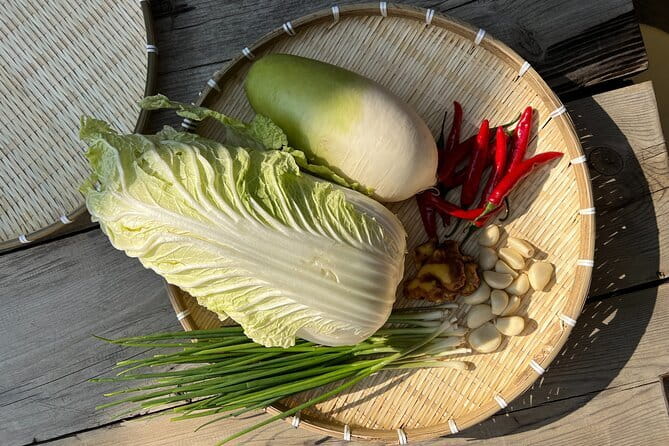
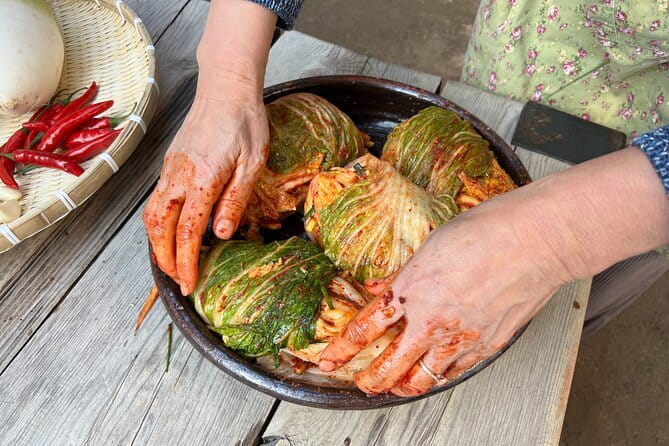
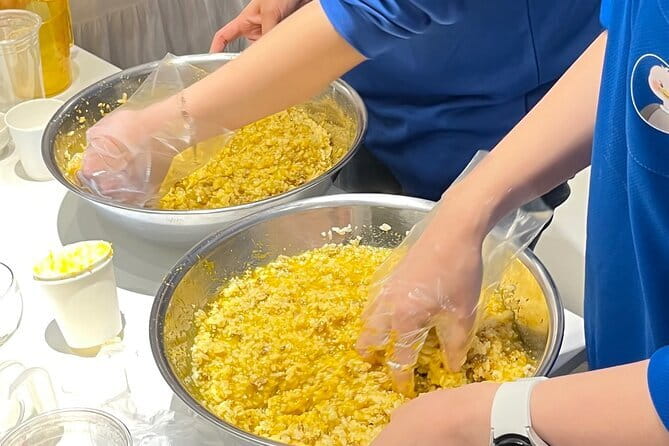
Next comes the main hands-on part: you learn Sam Lee’s Mother’s kimchi recipe and then make your own batch. The class is built for people who want to do it, not just observe. The small group size helps here, because you can ask questions as you go and adjust as needed.
I like that the recipe is taught as a family method. In a good class, you learn technique, but you also learn decision-making. Family recipes tend to include small judgment calls, like how to balance seasoning with the right feel and taste as you work.
More Kimchi Making in Seoul
- Master Korean traditional cooking with a Kimchi chef
★ 5.0 · 385 reviews - Korean Kimchi Making Day Experience with a Local Market Tour
★ 5.0 · 99 reviews - Seoul Cultural Tour – Kimchi Making, Gyeongbok palace with Hanbok
★ 5.0 · 25 reviews - Private Trip to Seongmo Island(Temple) and North Korea Observatory+Kimchi Lesson
★ 5.0 · 5 reviews
3) Using aged, sour kimchi for crispy kimchi pancakes
After the kimchi step, you move into cooking with aged, sour kimchi. This is smart for your first class. Instead of only making something you’ll store for later, you get to eat the flavor right away. Kimchi pancakes are also a practical skill because they translate well to home cooking. The sourness, the aroma, and the acidity all shift the batter and make it more interesting than a plain pancake.
From a value standpoint, this is what turns the class into a full experience. You don’t spend two hours preparing food you never taste on the spot. You prepare, learn, then enjoy.
4) Korean BBQ to finish: pork or tofu
Then you wrap up with Korean BBQ. The class includes grilled options of pork or tofu, with the tofu option supporting vegan needs if you told the organizer ahead of time.
BBQ is a perfect companion to kimchi because the flavors pull in opposite directions in a good way. You get smoky grilled notes paired with fermented tang. Even if you’ve eaten Korean BBQ before, doing it in this class format makes you pay attention to how kimchi acts like a flavor bridge.
5) Laughs, tasting, and taking home what you made
By the end, you share laughs and taste your creations. You also take home recipes and memories. One practical reminder: kimchi ferments quickly and doesn’t travel well, so treat “taking it home” as something you do with the right container and handling plan.
Price and value: why $42 can feel like a deal
The cost is $42 for about 2 hours, which might sound like “just a cooking class” until you map out what’s included. You’re not only making kimchi. You’re also learning how to cook with aged, sour kimchi, then getting a meal that includes kimchi pancakes and Korean BBQ.
Here’s the value logic I use when deciding on classes like this:
- If a class only teaches, you’re paying for time.
- If it teaches and feeds you, you’re paying for time plus ingredients plus a meal you’d otherwise buy.
- If it’s in a traditional hanok courtyard and kept small, you’re also paying for atmosphere and instructor attention.
This fits the second and third categories. The reviews also highlight that everything you need is provided, which reduces the risk that you’ll show up and feel unprepared. And because the group is limited to 10 travelers, it’s less like a show and more like you actually participate.
One more practical value point: your schedule. Starting at 11:00 am means you’re not locked into an evening food tour plan. You can still eat lunch after, or you can simply keep it light if the BBQ and pancakes are generous.
What to expect from Sam Lee and the teaching style
The class is led by Sam Lee, which matters for two reasons. First, the recipe is taught as a personal family method, not a generic “this is how kimchi is made” script. Second, you get an instructor who can explain why the process works, especially when working with aged, sour kimchi.
I’d expect the teaching style to be practical and step-by-step, since the class is designed for beginners and mixed skill levels. Also, with a max group size of 10, you’re more likely to get quick help when you’re chopping, mixing, or adjusting seasoning.
If you like classes where you ask questions and get real answers, this setup fits.
Taking kimchi home: plan for containers and quick fermentation
This is the one part I want you to treat seriously. The class notes that kimchi ferments quickly and doesn’t travel well, and it does not provide containers. That means you should bring your own container or buy one in advance.
If you love the idea of saving your kimchi for later, do two things before you go:
- Decide where you’ll keep it after class.
- Bring a sealed container or jar that can handle a fermenting food.
Also, don’t wait until the last minute after the class ends to figure this out. By then you’re focused on tasting and packing.
If you’ve never handled fermented foods during travel before, think of this like liquids in your bag, but with stronger smell and more active changes. Plan early and you’ll have a smoother end to the experience.
Where it fits in your Seoul day: near Anguk and Gyeongbokgung
The meeting location is 115-14 Gyedong-gil, Jongno District, Seoul. The class is in Bukchon Hanok Village, and it’s described as walking distance from Anguk station and near Gyeongbokgung Palace.
That’s useful because Bukchon is a high-traffic area for photo stops. Cooking here gives you a break from constant walking and gives your taste buds a real role in the day. If your morning is already packed with palaces, temples, and photo walks, this class gives you a reset.
Also, starting at 11:00 am means you’re not competing with the late-afternoon rush. Still, the area is hilly in spots, so wear comfortable shoes, especially if you’re combining this with nearby sightseeing.
Who this class suits best (and who might want a different option)

This is a strong fit if:
- You want hands-on cooking in a small group.
- You enjoy Korean flavors and want more than one dish to eat.
- You like learning through process, not just watching.
- You want an authentic hanok courtyard setting in Seoul.
It may be less ideal if:
- You hate the idea of dealing with fermented food storage and container planning.
- You want only a quick tasting with no cooking involved.
- You have strict dietary needs beyond what you can communicate in advance.
If you’re traveling as a solo foodie, this can be a fun social moment because the activity naturally brings you together while you cook. If you’re with friends, it’s a bonding kind of lesson.
Weather and practical realities
This experience requires good weather. If it’s canceled due to poor weather, you’re offered a different date or a full refund. Since it’s held in a courtyard setting, you don’t want to assume it will always run in rain.
Also note that the class is non-refundable and cannot be changed for any reason. That’s not unique to this activity, but it matters for your planning. If your schedule is flexible, great. If it isn’t, double-check how much you can risk a weather-related change.
Service animals are allowed, and it’s near public transportation, which makes it easier to reach without a big taxi hunt.
Should you book this kimchi class in a Bukchon hanok courtyard?
If you want a Seoul food experience that feels grounded in place, this is a good choice. You get a traditional hanok courtyard, a real teaching voice from Sam Lee, and a meal that includes kimchi pancakes plus Korean BBQ. The small group size keeps it friendly and practical.
I’d book it if you’re excited to make kimchi, cook with aged, sour kimchi, and eat what you create. I would also book it if you’re the type who likes bringing a little skill home, not just a photo.
The only real “think twice” is the take-home part. Because kimchi ferments quickly and you’re told containers are not provided, you need a plan. If you handle that, this class becomes a memorable, low-stress way to connect with Korea through cooking and taste.
If you want, tell me your travel month and dietary needs. I can help you decide what to pair this with around Gyeongbokgung and how to plan your container and timing for the best results.
FAQ
Where is the class meeting point?
The start address is 115-14 Gyedong-gil, Jongno District, Seoul, South Korea. The activity ends back at the meeting point.
What time does the class start?
The class starts at 11:00 am.
How long is the kimchi making class?
It runs for about 2 hours.
What food is included?
You’ll make kimchi, then use aged, sour kimchi to make crispy kimchi pancakes. You’ll also enjoy Korean BBQ, with pork or tofu available (with tofu supporting vegan needs).
Is there a vegan option?
Yes. A vegan option is available if you notify in advance.
Do I need to tell the organizer about allergies or restrictions?
Yes. You should inform the organizer of any food allergies or restrictions in advance.
Does the class provide containers to take kimchi home?
No. The class does not provide containers, so you should plan accordingly and bring your own container.
More Korean BBQ in Seoul
- Small-Group Night Food Tour in Seoul with Korean BBQ
★ 5.0 · 304 reviews - Seoul: Anthony Bourdain-Inspired BBQ and Pub Experience
★ 5.0 · 186 reviews - Seoul Night “Private Tour”(Korean BBQ, N-Tower, Seoul Fortress, Local Market)
★ 4.5 · 86 reviews - Korean bbq place of the month curated by the Host
★ 4.9 · 48 reviews
Recently reviewed in Seoul
- Private Day Trip to Danyang and Chungju Lake from Seoul★ 4.5 · 3 reviews
- 2-Hour Private Kayaking and Paddleboarding Experience in Hanriver★ 5.0 · 3 reviews
- Seoul Private Walking Tour with a Local★ 5.0 · 4 reviews
- Seoul Private Tours by Locals: 100% Personalized, See the City Unscripted★ 5.0 · 4 reviews
- Easy hike in Achasan next to river & Old temple with legend★ 5.0 · 4 reviews
- Seoul: Gyeongbokgung Palace Half day Tour★ 5.0 · 4 reviews
- [KoreaByLocal] Authentic Seoul Night Walk and Chicken & Beer★ 5.0 · 4 reviews
- Private Palace Photo Shoot in Seoul with a Photographer★ 5.0 · 4 reviews
Kimchi Making, compared.
Master Korean traditional cooking with a Kimchi chef
Read our review →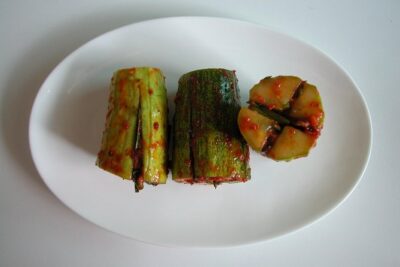
Korean Kimchi Making Day Experience with a Local Market Tour
Read our review →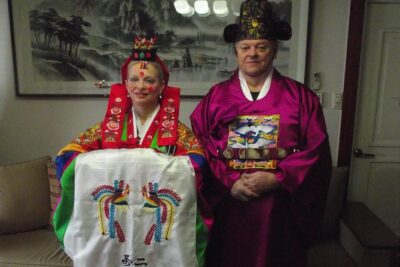
Seoul Cultural Tour – Kimchi Making, Gyeongbok palace with Hanbok
Read our review →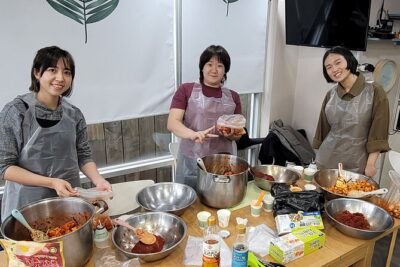
Busan Kkakdugi(Korean radish Kimchi) class with various options
Read our review →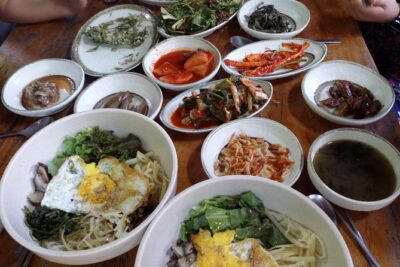
Private Trip to Seongmo Island(Temple) and North Korea Observatory+Kimchi Lesson
Read our review →Browse the lists this tour appears in