
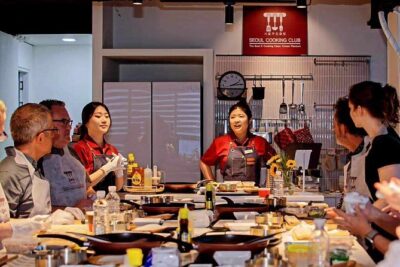
Cooking in a modern kitchen set in Seoul’s Bukchon area is a fun way to learn Korean food without guessing at techniques. I especially like the hands-on format, where you actually chop, mix, and cook, and the fact that the chefs are professional and English-speaking. The biggest tradeoff to plan for is that the building can involve stairs, so it is not the easiest setup if you are mobility limited.
You will start with guidance that makes beginner cooking feel manageable, then you finish by sitting down to eat the dishes you made with a drink included. Most people leave happy, full, and with recipes they can realistically repeat at home. Still, if you are picky about a strict schedule, note that class participation can be affected if you show up late.
Key Things You’ll Enjoy
- Modern tools and a clean, air-conditioned kitchen designed for real cooking, not demo only
- Beginner-friendly instruction that keeps you moving from prep to cooking
- English-speaking professional chefs who can explain both technique and flavor choices
- You eat what you make, with rice plus a beverage at lunch
- Small-group feel when the class size is low, so you get real help at your station
- A short local ingredient shopping moment may happen before cooking, based on your session
Why Bukchon’s Cooking Studio Feels Better Than Just Eating Out
Sure, Seoul is amazing for food. But this class takes you one step further. Instead of tasting Korean flavors and moving on, you learn why the flavors work, then you reproduce them with your own hands.
What makes it especially appealing for beginners is the structure. You get explanations first, then you get cooking. And the setting is practical, with a fully air-conditioned kitchen and modern equipment that helps you focus on learning, not struggling with outdated tools.
It is also a nice change of pace from temple views and museum rooms. Bukchon is known for its historic vibe, and this is a way to experience it that is active and tasty.
More Cooking Classes in Seoul
- Local Home Korean Cooking Class & Market Adventure in Seoul
★ 5.0 · 1,024 reviews - Master Korean traditional cooking with a Kimchi chef
★ 5.0 · 385 reviews - Seoul: Korean Cooking Class at a Local Home and Market Tour
★ 5.0 · 348 reviews
Where You Start: O’ngo Food Communications in Jongno
You meet at O’ngo Food Communications, address 137-11 Bukchon-ro, Jongno District, Seoul. The class starts at 10:30 am, and it is easiest if you arrive about 10 minutes early so you do not miss part of the program.
The spot is near public transportation, which is great because you can handle it on your own without hotel pickup. That said, this is one of those places where mapping can be a little annoying. Build in a few extra minutes, and if you are relying on a taxi, have a screenshot ready.
Also, keep in mind the class environment is in a building with stairs. Some guests note it is on a higher floor with no elevator, so if stairs tire you out, plan accordingly and carry water if you are warming up for the morning.
How the Morning Runs: Safety, Ingredient Tips, Then Cooking Your Meal
The flow is designed for beginners. First, you get an intro to Korean cooking flavors and food culture. Then you get a primer on choosing ingredients and safety basics before you start.
That ingredient guidance matters more than you might expect. Korean cooking often depends on balance, and many of the differences between a good homemade version and a frustrating one come down to ingredient quality and how you prepare it. You learn those small decisions, like how to think about freshness and what different components bring to a dish.
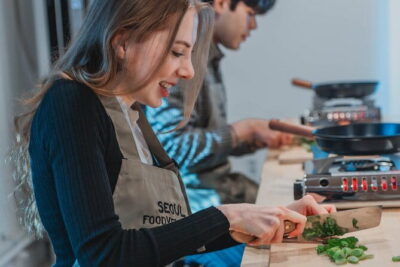
Once cooking starts, you are not stuck watching. The format is hands-on: you chop, mix, grind, and cook steps yourself, while the chefs move around to help. People especially like this because it turns beginner mistakes into teachable moments, not just burnt food.
What Dishes You Might Cook: Popular Korean Favorites for Beginners
The menu can vary by session, but the idea stays the same: you prepare popular, beginner-friendly Korean dishes under chef guidance. In past classes, guests have cooked things like:
- Japchae (glass noodles)
- Bibimbap
- Kimchi-focused lessons
- Bulgogi
- Chicken stew
- Kimchi pancake (in some kimchi sessions)
Even if you arrive hoping for one specific dish, the good news is that you are still learning a set of core skills. Korean cooking is bigger than one recipe. Once you understand how sauce balance, seasoning, and textures work together, other dishes get easier.
Also, you will usually get a rice component with the meal. Rice is not a side detail here. It is part of how you taste Korean dishes, because it lets you adjust flavors in a way that is forgiving for beginners.
A few more Seoul days side by side
- Best DMZ Tour Korea from Seoul (Red Suspension Bridge Optional)
★ 5.0 · 41,422 reviews - DMZ Tour: 3rd Tunnel, Option(Suspension Bridge, Boat) from Seoul
★ 5.0 · 21,373 reviews - DMZ tour south Korea from Seoul (NK experience hall, defector)
★ 5.0 · 20,599 reviews - Seoul: The Best DMZ Tour with Optional Suspension Bridge
★ 4.7 · 4,978 reviews
Tasting What You Make: Lunch, Rice, and a Beverage Included
The best moment is when the class becomes lunch. You sit down to eat what you cooked, and it is served with rice and one beverage.
This is where you get real feedback. Even if you followed steps carefully, your own tasting helps you understand what you might need next time. Guests often mention being able to adjust spice or flavor to their preference during the process, which is huge for beginners who are not sure how Korean seasoning will land on their palate.
And yes, you should come hungry. The portion is enough to feel like a meal, not a snack. When the class ends, you leave full and with a sense that you truly made something, not just participated in a demo.
The Chefs: English-Speaking Pros Who Actually Teach
One of the strongest reasons to book this is the teaching style. Chefs are described as professional, friendly, and fluent in English. That matters because cooking instruction lives or dies on clarity.
In particular, guests mention instructors like Ran and Yibben, praised for taking their time and explaining each step carefully. What I like about that style is that it helps you understand technique, not just memorizing a list of steps.
You also get personal support because class size can be small. Multiple guests mention getting a lot of attention when the group was low, with chefs helping catch mistakes early. In a beginner class, that safety net is worth something.
Another small detail that stands out is the care around cleanliness and preventing cross contamination. Guests specifically appreciated the clean setup and attention to food handling, which makes the whole experience feel more comfortable.
Value and Price: Is $87 Worth It?
At $87 per person for about 2 hours, this is priced like a serious activity, not a cheap knockoff. The value comes from a few clear things: your ingredients and equipment are included, you get lunch, and you are cooking with professional chefs in a proper classroom kitchen.
If you tried to recreate this on your own, you would have to source ingredients, figure out technique, buy basic tools, and hope your first attempt tastes right. Here, you pay for the shortcut: instruction plus the full meal at the end.
Booking tends to fill, with many people reserving about 21 days in advance on average. That is a good sign for demand, but it also means planning helps. If you are traveling at peak times, lock in a spot sooner rather than later.
Practical Tips for a Smooth Class Morning
A few small tips can make the difference between smooth and stressful.
- Arrive 10 minutes early so you do not lose time and instructions. Late arrivals can mean you miss part of the class.
- Wear comfortable shoes. You may be climbing stairs to reach the studio.
- Bring an open mind about spice. Korean flavors can be bold, but chefs guide you step by step.
- If you have dietary needs, ask during booking. Some guests report the chef helped adapt due to allergies.
- If you are navigating on your own, use the address and plan for a couple extra minutes to find the building.
On the food side, the class works best if you treat it like an active learning session. Take the tasting seriously. Smell as you cook. Notice texture changes. That is how the recipes become usable at home.
Who This Class Suits Best (and Who Might Want Something Else)
This cooking experience is a great match if you:
- are a beginner who wants step-by-step guidance
- want an activity that leads to a real meal, not just a photo
- like learning through doing, with chefs correcting technique
- want a food-focused way to experience Seoul beyond restaurant hopping
It may be less ideal if you:
- need an elevator or step-free access
- want a class with very strict, no-flex timing
- are only interested in tasting and have no interest in cooking
Age wise, the minimum age for cooking participation is 11. Children under 11 can be welcome, but they may not participate in the class itself. If you are traveling with a younger kid, check how that works for your specific booking.
Should You Book This Korean Cooking Class in Seoul?
If you want a beginner-friendly, hands-on way to learn Korean flavors, I would book it. The combination of a modern kitchen, professional English-speaking chefs, included ingredients, and the chance to eat what you make is a strong deal for $87.
I especially like the teaching emphasis and the way chefs work with your station. If you enjoy cooking, even a little, you will leave with skills you can repeat at home, not just memories.
Only skip it if stairs are a problem for you, or if you are looking for a pure sightseeing experience. Otherwise, it is one of those Seoul activities that turns the city’s food culture into something you can actually carry forward.
FAQ
How long is the Korean cooking class?
The experience lasts about 2 hours.
Where do I meet for the class?
You meet at O’ngo Food Communications, 137-11 Bukchon-ro, Jongno District, Seoul. The activity ends back at the meeting point.
What is included in the price?
You get a beginner cooking class, all ingredients and equipment, lunch, a professional English-speaking chef team, and 1 beverage.
Do I get hotel pickup and drop-off?
No, hotel pickup and drop-off are not included.
What age is allowed to participate in the cooking class?
The minimum age required to participate in the cooking class is 11. Children younger than 11 are welcome but may not participate.
Is there a minimum number of travelers needed?
Yes. There is a minimum of 5 participants required for Saturdays’ class. If the minimum is not met, the experience may be canceled, with an alternative date or full refund offered.
What is the cancellation policy?
You can cancel for a full refund up to 24 hours before the experience’s start time (local time). If you cancel later than that, the amount paid is not refunded.
Recently reviewed in Seoul
- Seoul City Private Tour (Optional layover)★ 5.0 · 3 reviews
- Korean Folk Village & Suwon Hwaseong Fortress Private Tour★ 5.0 · 3 reviews
- 5D4N Korea Cultural Heritage immersion Private Tour★ 5.0 · 3 reviews
- War Memorial, Jogyesa Temple & Tapgol Park Tour in Seoul★ 4.5 · 3 reviews
- Full Day Private Seoul Tour for foodies★ 5.0 · 3 reviews
- Private Tour : Royal Palace & Traditional Villages wearing Hanbok★ 5.0 · 3 reviews
- Nami Island & Nearby Attractions : Charter Van Tour With Driver★ 4.0 · 3 reviews
- K-Pop Tour★ 3.5 · 3 reviews
Cooking Classes, compared.
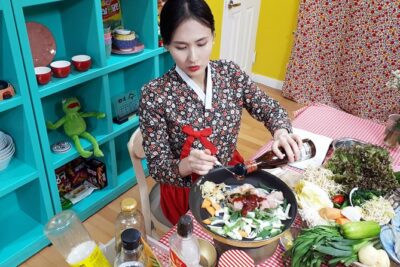
Local Home Korean Cooking Class & Market Adventure in Seoul
Read our review →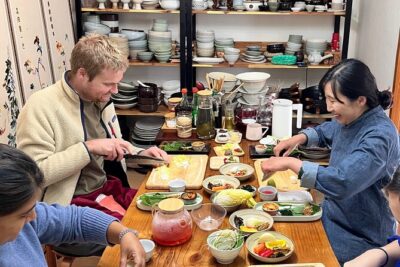
Master Korean traditional cooking with a Kimchi chef
Read our review →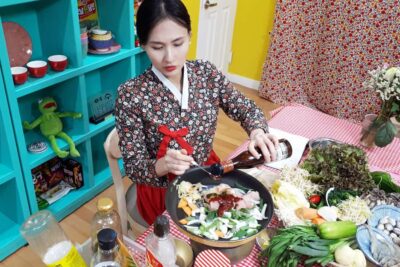
Korean Cooking Class at a Local Home and Market Tour
Read our review →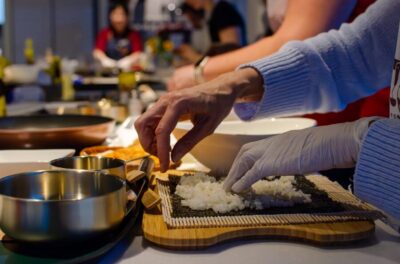
Korean Cooking Class with Grocery Shopping at Seoul Local Market
Read our review →
Taste of Korea, Authentic home style Cooking class
Read our review →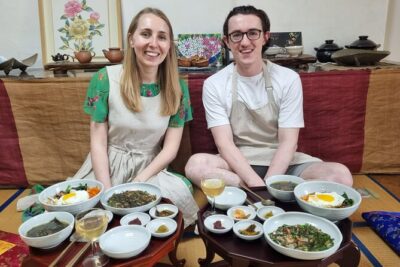
Browse the lists this tour appears in