Reviewed · SEOUL TOURS
9-Days Tasty Journey Around South Korea Tour
A private 9-day loop through South Korea is interesting when it does two things at once: it feeds you well and it keeps moving you toward real, not postcard, places. This trip builds around Korean food culture plus history, temples, island beaches, and a few scenic lifts like cable cars and a suspension bridge walk. It is the kind of route that makes your week feel full without you having to stitch transport and tickets together.
Two things I like a lot. First, the meal plan is straightforward and generous: 17 included meals (8 breakfasts and 9 lunches), so you spend less time hunting and more time tasting. Second, the format is truly private, with pickup in Seoul or at Incheon Airport, which makes the day-to-day pacing smoother for families and groups.
One drawback to consider: dinners are not included, and a few days lean active, meaning more walking on hills, markets, and temple grounds. If you hate planning food beyond lunch, budget time for dinner near where you end the day.
Key highlights to look for on this tasty route
- 17 included meals that cover breakfast and lunch, so you can focus your budget on dinners and snacks
- Private transportation and prearranged hotels (8 nights, 3 or 4 star) to keep logistics calm
- Food hits that feel specific, from a shabu-shabu stop to Korea’s oldest bakery, Lee Sung Dang
- Nature days with lifts and hikes, including mountain cable cars, suspension bridge walking, and Seoraksan views
- UNESCO stops in Andong and Dosan Seowon, plus major Korean temples and heritage sites
- Guide-led storytelling in clear English, often centered around Jay, with a consistently friendly, dependable style
Why a private food-and-heritage route like this works
South Korea can be easy to travel, but a 9-day “greatest hits” can still feel scattered if you self-plan. This style of tour helps because it bundles the hard parts: where you sleep, how you get between regions, and what you eat during the day.
The big practical advantage is that it is private. That means you are not stuck waiting on a big bus schedule or fighting for timing in crowded spots. You can move at a pace that fits your group, and you can ask questions without turning every stop into a speed-run.
Also, this itinerary is not just Seoul and shopping. You get mountains, ports, island beaches, and coastal temples. You also touch several eras of Korean history, from Joseon-era sites in Jeonju to Silla-era heritage in Gyeongju.
A few more Seoul days side by side
- Best DMZ Tour Korea from Seoul (Red Suspension Bridge Optional)
★ 5.0 · 41,422 reviews - DMZ Tour: 3rd Tunnel, Option(Suspension Bridge, Boat) from Seoul
★ 5.0 · 21,373 reviews - DMZ tour south Korea from Seoul (NK experience hall, defector)
★ 5.0 · 20,599 reviews
Price and meals: where the value really comes from
At $4,530 per person for about 9 days, this is not a budget tour. So the key question is value.
Here is what you actually get that most “cheaper” tours cut corners on:
- 8 nights in 3 or 4 star hotels with double, twin, or triple sharing rooms
- Private transportation throughout the route
- 17 included meals: 8 breakfasts and 9 lunches
- A guided plan that pulls together sightseeing, ticketed entries for many stops, and transit timing
That meal count matters. If you have ever tried to cost out Korea day by day, breakfast and lunch add up fast, especially if you are not just grabbing convenience store items. With lunches included, you also spend less time searching for menus you can read.
What is not included is dinner. That is a real factor. You will want to choose a dinner spot each evening, ideally close to your hotel or your last stop. The tour takes pressure off your day, but it does not remove the need for evening decisions.
Admission fees vary by stop. Some sights are listed as included, some are free, and at least one major beach segment shows as not included. The good news is that you are not wandering in blind, because the itinerary already signals what is covered.
Day 1: Geumsan ginseng market, cable car views, and Daedunsan’s suspension bridge
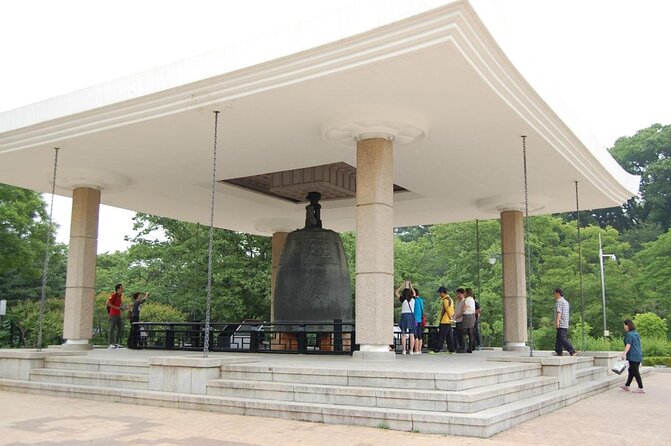
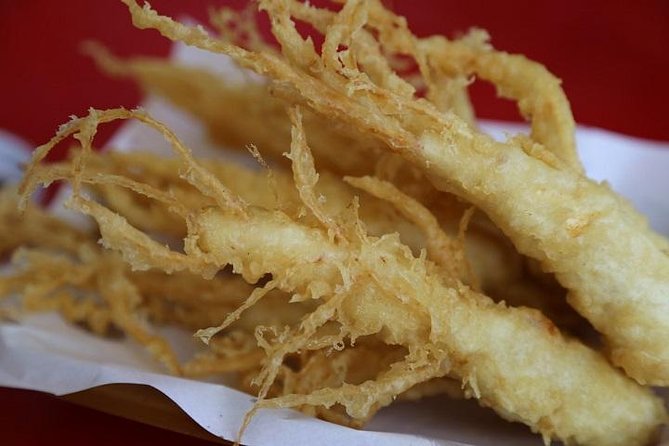
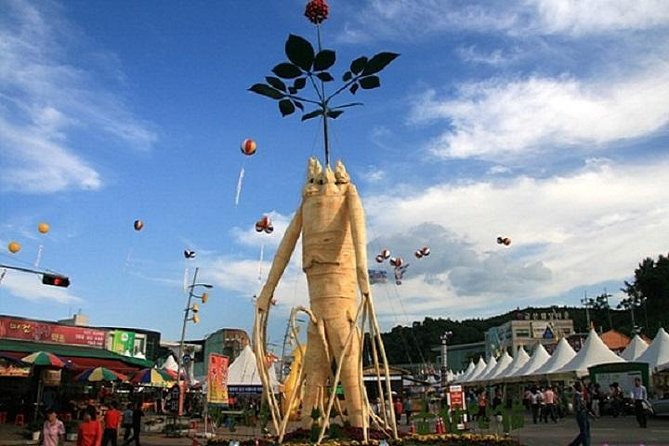
Your day starts with pickup in Seoul or the Incheon area, or meeting at Incheon International Airport. Then you ride south to Geumsan-gun, known for the ginseng market. If you have ever seen ginseng products back home, this is your chance to see how it is part of everyday food culture here. The highlight is tasting fried ginseng from a Ginseng and Herbal Medicine Market.
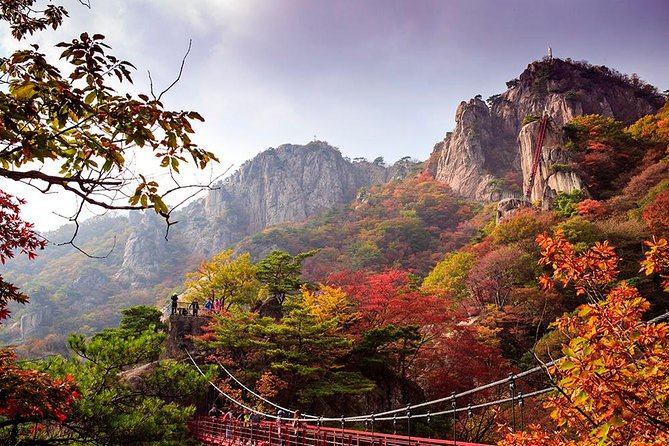
After that, you head to Mt Daedunsan and the Daedunsan Natural Recreation Forest. In fall, the rock peaks surrounded by autumn color are the whole point. The structure of the day helps you enjoy it: you take a cable car, then you walk around and cross a suspension bridge for sweeping mountain views.
Why I like this opener: it sets the tone. Korea is not only temples and cities. It is also food ingredients and mountain scenery in the same day.
Possible consideration: mountain days are great if you are comfortable on outdoor paths. If you prefer flat walking, you will want to take your time on the bridge portion and bring shoes with solid grip.
Day 2: Gunsan modern history, Lee Sung Dang bakery, and islands off Gogunsan
Day 2 is a real mix, and it keeps your brain from getting bored.
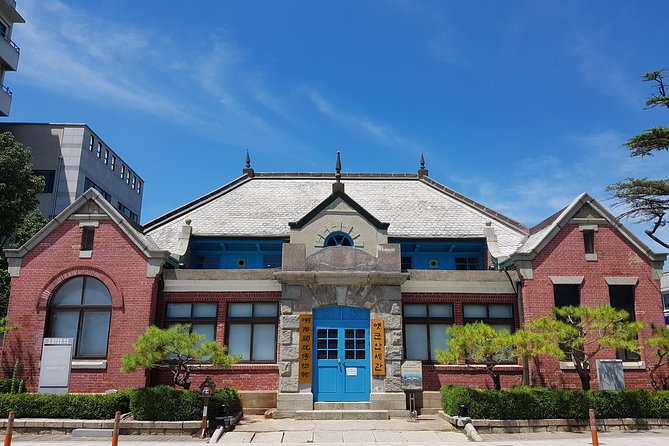
You begin at the Gunsan Modern History Museum, tied to the port’s role in the late 1800s and through the Japanese colonial era. The story is not theoretical. It centers on port activity, capital flows, and how the city’s trajectory changed after liberation in August 1945, when transactions backed by Japanese capital were cut off. Then it moves into the post-1960s industrial shift and how the port history connects to shipping rice to Japan. It is history you can stand inside.
Next you go to the Jinpo Maritime Theme Park, which is more visual and blunt. You see tanks, artillery, combat planes, and warships, including the Wibongham Ship tied to Vietnam War combat use. It is an unusual stop on a food tour, but it explains a lot about how coastal regions remember conflict.
Then comes the “tasty” part in a very Korean way:
- Lee Sung Dang, described as Korea’s oldest bakery
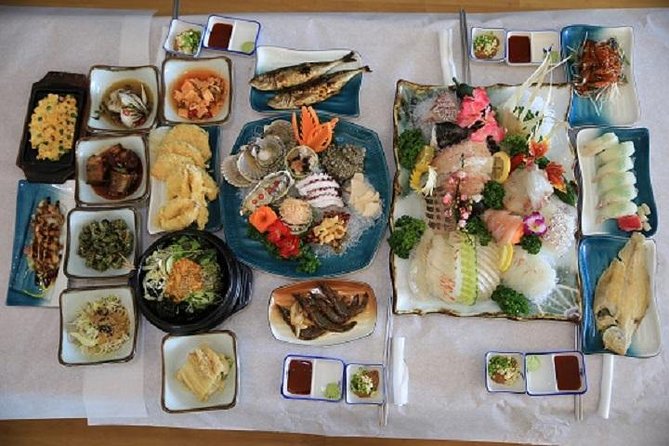
- A shabu-shabu meal where fresh vegetables, meat, and seafood are parboiled, then eaten with chili, soy, or lemon sauce
This matters because it is not just “we ate food.” You learn a Korean flavor logic: hot broth cooking, then sauce choices that change the bite.
The afternoon shifts to the coast with the Gogunsan islands tour, including Sunyudo and Jangjido. Gogunsan is made up of 4 big islands connected by bridges and many smaller islands. At Sunyudo, you get two beach feels: a secluded pebble beach called Okdol Beach and a main sandy beach where you can swim, catch shellfish, and potentially do activities like zipline if you choose. After that, you hike at Jangjido, about 20 minutes to the peak for a vantage over the western coast dotting with islands.
Finally, you visit the Saemangeum Convention Center area, plus the Saemangeum sea wall and exhibition hall. The sea wall is described as the longest in the world, and the route includes an approximately one-hour ride tied to the sea wall connection.
Possible drawback: this is a long day in terms of different environments. You go from museum to park to bakery to meal, then to islands. Wear layers you can adjust quickly.
Different day, same base:
- Seoul: The Best DMZ Tour with Optional Suspension Bridge
★ 4.7 · 4,978 reviews - Signature DMZ Tour: Exclusive Defector Talk & Suspension Bridge
★ 5.0 · 4,459 reviews - Thrilling Korean DMZ 3rd Tunnel Tour from Seoul + Red Bridge Rush
★ 5.0 · 3,097 reviews - Seoul: DMZ Tour & Suspension Bridge (Option English/Spanish)
★ 4.9 · 2,628 reviews
Day 3: Jeondong Catholic Church, Jeonju Hanok Village paper crafts, and Geumsansa’s Maitreya Hall
Day 3 is centered in Jeonju and surrounds, and it has a nice rhythm between religion, education, and crafts.
You start at Jeondong Catholic Church, completed in 1914 and noted as the largest and oldest western-style structure in Jeollanam province. Even if you are not a church person, it is worth the stop because architecture from this era shows Korea’s contact points beyond Confucian halls and palaces.
Then you visit Gyeonggijeon Shrine, built in 1410, where the portrait of Lee Seonggae (founder of the Joseon dynasty) is enshrined. The portrait is identified as National Treasure #317. You also pass by Pungnam Gate, the south gate of Jeonju’s city wall and the only remaining gate after destruction.
After that, you walk Hyanggyo-gil, tied to Jeonju Hyanggyo Confucian school. Hyanggyo served as a provincial public educational institution, from the Goryeo period through Joseon, with a function similar to today’s regional universities.
For temple time, you go to Geumsansa Temple. It was built during the Baekje reign under King Beop and later became a head temple for worship of Maitreya, the future Buddha. The visual standout is the three-story Mireukjeon (Maitreya Hall). From outside it looks like a stacked building, but inside it is open up to a high ceiling.
Then you finish in Jeonju Hanok Village, pairing heritage with hands-on culture at Jeontong Hanjiwon. Hanji is Korean traditional paper, and this stop is not only a shop. It also offers a workshop experience on how to make Hanji, which turns your souvenir into a story you can explain.
Why this day feels special: it connects ideas. Learning, religion, art, and craft all get shown without turning into one museum after another.
Day 4: Tongyeong port chaos, a long cable car, and Busan night views from Hwangnyeongsan
This day takes you to Tongyeong, a city shaped by its port.
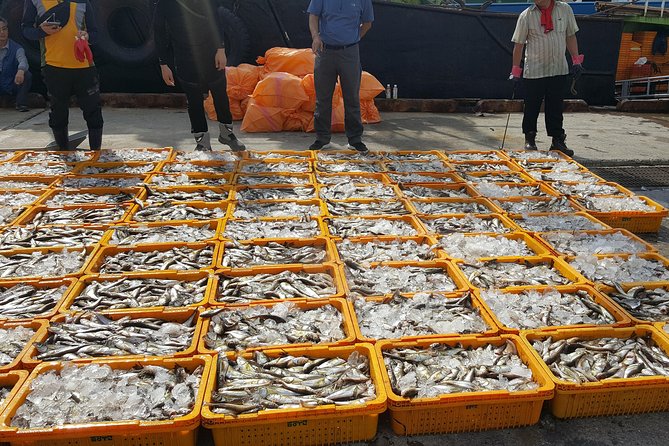
At Tongyeong Jungang Market, you walk a long strip along quay-side kiosks. The described vibe is loud, busy, and seafood-first, with live fish popping in tanks and merchants bargaining with visitors. For food lovers, the practical value is that you can sample without committing to one restaurant. You can try raw fish slices, spicy fish soup, fish cake, and traditional honey bread.
Then you ride the Tongyeong Cable Car to the top of Mt Mireuksan, reaching over the Hallyeo Waterway islands and Tongyeong Harbor area. The cable car is described as the longest in Korea at 1,975 m, so you are not just taking a shortcut. You are getting an actual overhead perspective of the coast.
After Tongyeong, you transfer to Busan and end with Hwangnyeongsan Mountain for a night view of the city. It is said to be the second highest mountain in the Geumnyeon range, which makes the vantage easier.
Possible consideration: markets can be intense on the senses. If you do not love noise and crowds, arrive with a plan, like focusing on a few tastings rather than everything at once.
Day 5: Haeundae Beach, Haedong Yonggungsa by the sea, and Gamcheon’s tombstone stairs
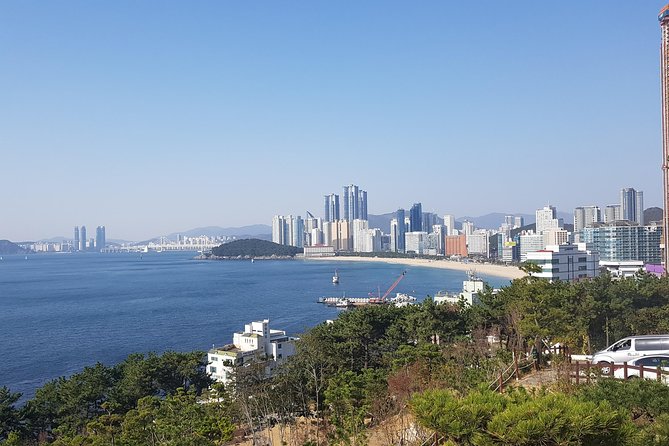
Day 5 is pure coastal Korea.
You begin at Haeundae Beach, described as the most popular beach in South Korea. In peak summer it can hit huge visitor numbers, and even outside that season it is a strong “this is why people come” stop.
Next is Dongbaekseom, also called Camellia Island, known for blossoming around March. You can also see Nurimaru APEC House, a three-story building tied to the Asia-Pacific Economic Cooperation summit in the area.
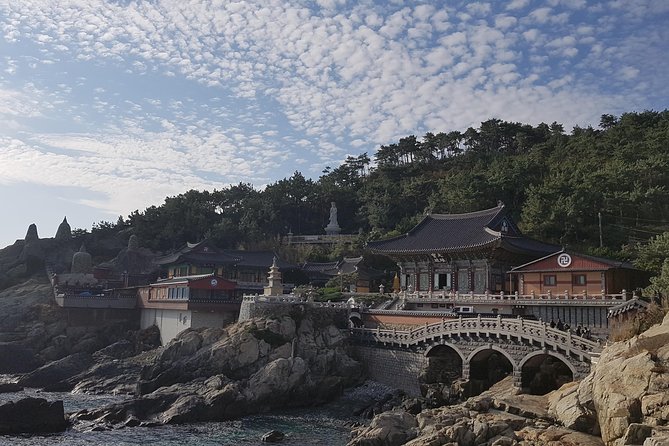
Then you visit Haedong Yonggungsa, a rare temple location right on the coast. Most temples sit deeper in mountains, so being able to see ocean and temple elements in the same frame is part of the appeal.
After temples and beaches, you shift to remembrance at UN Memorial Cemetery, established to honor UN forces who fought in the Korean War. It is a quiet kind of stop, less about scenic photos and more about context.
Finally, you explore Busan Gamcheon Culture Village, known for being tied to refugees in the 1950s who built homes in the area during the Korean War. The village includes the 49 Tombstones area, where the stairs and walls are made of tombstones. The description notes people began living here in tents since 1951, and later structures were built on top of Japanese graves.
Why I like this combo: it forces you to see the coast as lived experience, not just vacation scenery.
Day 6: Bulguksa and Seokguram Silla masterpieces, plus Gyeongju’s museum and tomb fields
If you want Korean history at full scale, Day 6 is your day.
You start at Bulguksa Temple, described as the most famous Buddhist temple in Korea and home to important Silla-period relics, especially the stone pagodas Dabotap and Soekgatap. The temple dates to the 8th century, though it has been rebuilt over time. Either way, the pagodas and temple grounds make it easy to understand why this area matters.
Then you go to Seokguram Grotto, a hermitage part of the Bulguksa complex. It overlooks the East Sea and sits about 750 m above sea level. Inside you see famous Buddhist sculptures, including the main Buddha. Construction is described as lasting from 742 to 774, and there is even a signature smiling Bonjon statue.
After that, you go to Gyeongju National Museum, where you can appreciate the significance of the city’s ancient role in one place. The main archaeological hall includes jewelry, weaponry, and ceremonial items from the Shilla dynasty, including a 5th-century gold crown.
Then you head to Tumuli Park in Gyeongju National Park, with more than 20 tombs from the Shilla period. The tour notes the tombs are presumed to be those of kings and court officials, and it mentions artifacts uncovered during excavations of chenmachong and Hwangnamchong.
You finish at Donggung Palace and Wolji Pond, also called Anapji Pond, built in 674 after unification of the peninsula. The pond area includes pavilions used for festivals and banquets and is tied to state life and court culture.
Possible drawback: this is a heritage-heavy day. If you like nature over museums, you might feel “templed out.” Still, each stop gives you a different angle on the same Shilla world.
Day 7: Andong Hahoe UNESCO village, Dosan Seowon ceremonies, and jjim-dak at Andong Market
Day 7 slows down in the best way: cultural immersion.
You visit Andong Hahoe Folk Village, a UNESCO World Heritage site. The description emphasizes a village life that survived for centuries, with Ryu family members living there for 600 years. You see tile-roofed and thatched-roofed houses preserved over time. There is also a mask show inside the village, which connects food tourism back to Korean performance culture.
Next is Dosan Seowon, another UNESCO site and a Confucian academy. The tour’s angle is clear: it had two purposes, education and commemoration. You also hear that it was home to the Toegye School of Thought for over 400 years. Even though education functions are no longer active, commemorative ceremonies still happen twice a year.
For the practical food part, you go to Andong Old Market and focus on the food alley known as Jjim-dak Golmok, where jjim-dak is a specialty. The description notes the stores offer hearty meals at similar price ranges, which is useful if you want variety without surprise pricing.
Day 8: V-Train through the valley, coal-town history in Taebaek, and Gangneung by Gyeongpo Lake
This day has one of my favorite types of travel moments, the kind where the ride becomes part of the experience.
You travel from Andong to Buncheon-Yeog and take the V-Train in the morning. The “V” stands for valley, and the route goes through Cheoram in Gangwon-do as well as Buncheon in Gyeongsangbuk-do. The windows can be opened for breeze, and the ride is described as slower than regular trains so you can watch the changing mountain and valley views.
After about an hour, you move to Taebaek city, described as famous for coal industry in the past. Even without going deep into industrial museums, this stop is a reminder that Korea’s development story includes places that are less glamorous than Seoul.
Then you finish at Gangneung, visiting Gyeongpo Lake and Beach. The description highlights a sandbank formed between the lake and the ocean, about 6 km long and covered with fine sand. It is presented as a mix of nature and cultural relics, and it is a good day for a slower pace.
Possible consideration: if you want packed stops every hour, this day will feel calmer. That is a feature, not a bug.
Day 9: Seoraksan National Park cable car, Jujeongol valley hike, and Sinheungsa views
Your last day is built around Seoraksan National Park, which is one of Korea’s signature mountain areas.
You start with Jujeongol valley at Mt Seoraksan, trekking through the valley and going up one peak by cable car. Jujeongol’s name comes from a local story about bandits making counterfeit coins. The tour also shares seasonal notes: wildflowers in spring, cooling water in summer, and leaf colors in fall. Along the way, you stop at Yongso waterfall, described as a short, wide waterfall surrounded by greenery.
Then you visit Sinheungsa Temple, a short 10-minute walk away from the entrance to Sogongwon. A local landmark mentioned is a 33-foot-high bronze Buddha statue at Sinheungsa.
Finally, you ride the Seoraksan cable car to Gweongumsung peak at 670 m above sea level. The ride is described as about 10 minutes and gives bird’s eye views of Mt Seorak, Ulsnbawi rock, and the East Sea. You can also see Buddhist temples hidden in the mountain, especially Sinheungsa.
Possible drawback: it is your last day, so energy management matters. Build in a slower pace at the waterfall stop and take breaks if you feel it in your legs.
The guide factor: why people keep praising Jay
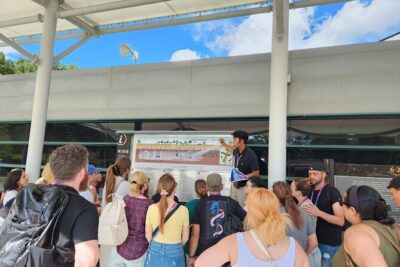
One theme that shows up again and again with this route is the guide. Your guide, often Jay, is described as engaged and funny, and communication in English is said to be clear. More importantly, the tone is practical. He explains what you are seeing and how it fits into Korean culture and history, then keeps things moving without making you feel rushed.
That matters on a trip like this. When you are hopping between ports, temples, and mountains, the guide’s job is not just to point. It is to help you connect the dots fast, so you walk away thinking, not just photographing.
Should you book this 9-Day Tasty Journey?
Book this tour if you want a private, guided route that hits food, history, and nature in one pass, and you like not having to plan breakfasts and lunches. The included 17 meals and the private transportation reduce daily friction, and the mix of markets, temples, UNESCO sites, islands, and mountain cable cars makes the days feel varied.
I would skip or reconsider if:
- you do not want to budget for dinners outside the tour
- you struggle with uneven walking and outdoor paths on temple grounds and mountain areas
- you want a slower, more beach-focused trip with fewer cultural stops
If you fit the first group, this is the kind of itinerary that makes your Korea trip feel like you understood it, not just visited it.
FAQ
How many meals are included on this tour?
You get 8 breakfasts and 9 lunches, for 17 included meals. Dinner is not included.
What kind of hotel is included?
The tour includes 8 nights in 3 or 4 star hotels, with room types based on double, twin, or triple sharing.
Is private transportation included?
Yes. Private transportation is included for the route.
Do you get pickup in Seoul or at Incheon Airport?
Yes. Pickup is offered, and the meeting is either at your place in Seoul or at Incheon International Airport.
What time does the tour start?
The start time is listed as 9:00 am.
Is this a private tour or a group tour?
This is a private tour/activity, with only your group participating.
Are site admission fees included?
Some stops list admission tickets as included, some are free, and at least one is marked as not included. It varies by stop, so expect a mix.
Is travel insurance included?
No, travel insurance is not included.
Can I cancel for a full refund?
Yes. There is free cancellation up to 24 hours in advance for a full refund.
Recently reviewed in Seoul
- Seoul City Private Tour (Optional layover)★ 5.0 · 3 reviews
- Korean Folk Village & Suwon Hwaseong Fortress Private Tour★ 5.0 · 3 reviews
- 5D4N Korea Cultural Heritage immersion Private Tour★ 5.0 · 3 reviews
- War Memorial, Jogyesa Temple & Tapgol Park Tour in Seoul★ 4.5 · 3 reviews
- Full Day Private Seoul Tour for foodies★ 5.0 · 3 reviews
- Private Tour : Royal Palace & Traditional Villages wearing Hanbok★ 5.0 · 3 reviews
- Nami Island & Nearby Attractions : Charter Van Tour With Driver★ 4.0 · 3 reviews
- K-Pop Tour★ 3.5 · 3 reviews
Seoul Tours, compared.
Best DMZ Tour Korea from Seoul (Red Suspension Bridge Optional)
Read our review →
DMZ Tour: 3rd Tunnel, Option(Suspension Bridge, Boat) from Seoul
Read our review →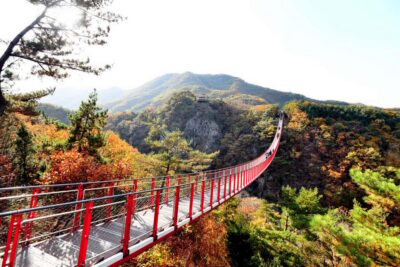
The Best DMZ Tour with Optional Suspension Bridge
Read our review →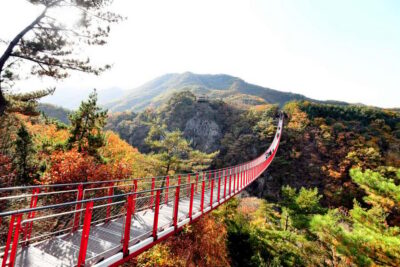
Thrilling Korean DMZ 3rd Tunnel Tour from Seoul + Red Bridge Rush
Read our review →
DMZ Tour & Suspension Bridge (Option English/Spanish)
Read our review →
DMZ Past and Present: Korean Demilitarized Zone Tour from Seoul
Read our review →