
Reviewed · PALACES
Seoul Palace Morning Tour
A morning tour that strings together Zen temple calm, Joseon-era palace drama, and a guard-changing ceremony is a smart way to start Seoul. I like the hotel pickup setup that gets you moving without stress, and I like that entrance fees are included, so the day feels efficiently planned. The one thing to keep in mind is the pace can feel fast, and the tour includes a ginseng stop that some people felt took longer than they wanted.
You are looking at a group tour with a maximum of 30 people, about 3 hours total, starting at 9:00 am. If you want a quick hit of major sights without wrestling tickets or transit, this is built for that. If you’re the type who likes to linger and take notes for an hour per building, you may want to balance this with one slower, self-guided afternoon later.
Key highlights you should actually care about
Hotel pickup and an air-conditioned vehicle make the early start easier than doing it on your own.
Jogyesa Temple details include the 500-year-old trees and a specific look at Daeungjeon (built in 1938).
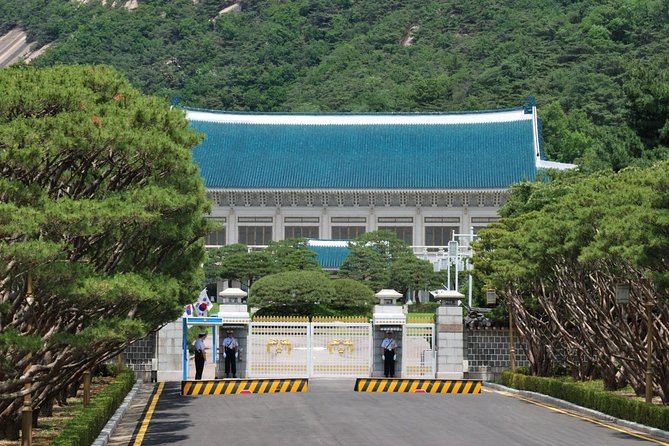
Blue House is pass-by only due to security rules, so plan on seeing it from the route, not touring it.
Gyeongbok Palace includes multiple palace halls and quarters plus a cultural add-on at the Folk Museum.
Gwanghwamun Gate changing of the guard is the emotional payoff at the end.
Ginseng center stop is part of the package, so if shopping annoys you, go in with your eyes open.
Jogyesa Temple: Locust Trees, Seokgamoni, and a Quiet Zen Stop
The morning begins with pick-up and then your first major stop is Jogyesa Temple, a center for Zen Buddhism in Korea. This is a good first swing because it slows your brain down right after you leave the city traffic behind.
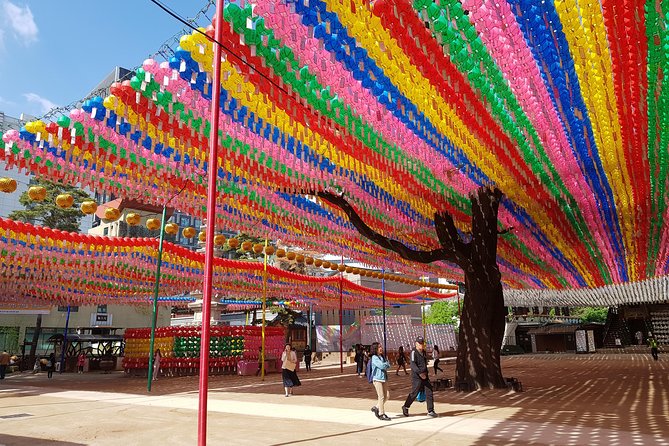
Here’s what makes Jogyesa interesting on this tour. You start with the locust trees and baeksong trees in front of the main hall, Daeungjeon. Those trees are around 500 years old, and the baeksong tree is designated as a Natural Monument. That means you’re not just seeing pretty scenery, you’re seeing living “time markers.”
From there, you look at Daeungjeon itself. The building is described as having been built in 1938, and it’s especially notable for its painted colors. Inside, the statue of Seokgamoni is part of the main focus. You also get a look at a seven-storey stone pagoda in front of the hall, which contains Jinsinsari. If you like being told what you are looking at, this stop gives you enough concrete points to make the temple feel legible, not like a random photo stop.
One practical tip: temples are best enjoyed when you move at a normal pace, not speed-walking. If your group is moving quickly, use that moment to ask questions before you’re rushed onward. A couple of guides on similar tours have been praised for being friendly and story-driven, and when that happens, Jogyesa becomes more than just seeing the signs.
More Palace Visits in Seoul
- Seoul: Gyeongbok Palace, Bukchon Village, and Gwangjang Tour
★ 4.9 · 2,321 reviews - Best Seoul City Tour (Gyeongbokgung Palace,Insadong,Namsan Tower)
★ 5.0 · 1,647 reviews - Small-Group Royal Palace and Seoul City Tour (hotel pick-up)
★ 5.0 · 1,474 reviews
Blue House Pass-By: What you can see and why you should not plan a long stop
After Jogyesa, the route takes you past the Blue House area. Important reality check: because it is a security zone, you cannot stop in front of the Blue House. Instead, you see it while passing on the way to Gyeongbok Palace.
This matters because it changes how you should mentally budget this portion of the tour. Don’t expect a long viewpoint or time for photos like you would at a normal landmark. Think of it as a quick roadside glance within a tightly scheduled morning.
Why include it at all? It’s tied to the same Joseon-to-modern thread that the rest of the tour is working on. You go from Buddhism and ancient courtyards to the seat of modern political power, even if you’re not stepping out for a closer look. It’s a snapshot, not a visit.
If you are the kind of traveler who likes surprises, this is still worth it. You get a visual reference point early in the day, and then the real payoff comes later at Gyeongbok Palace.
Gyeongbok Palace Highlights: Throne Hall, King and Queen Quarters
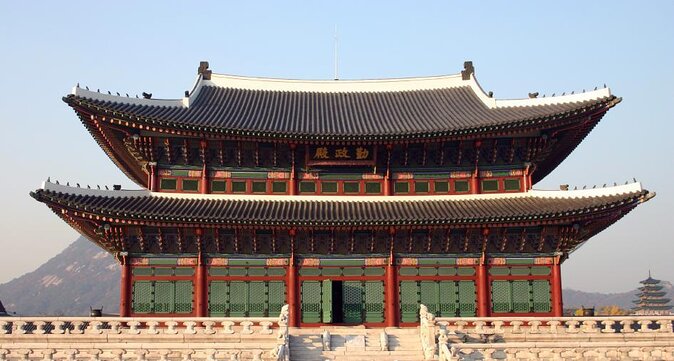
Next comes Gyeongbok Palace, described as the city’s finest royal residence from the Joseon Dynasty. If you want one place in Seoul where the scale and symbolism of Korea’s past really hits, this is it. The palace complex has many buildings, and the tour focuses on several key ones.
You’ll spend time looking around Geunjeongjeon, which is the main throne hall. This is the classic power-center image people want, the place where the monarchy was staged in full formality. From there you also visit Sajeongjeon, described as the king’s office.
Then the tour takes you through the areas tied to daily royal life, not just ceremonies. You can see Gangnyeongjeon, the king’s living quarters, plus Gyotaejeon, the queen’s living quarters. It’s a useful contrast because it frames the palace as a lived-in space, not just a museum of buildings.
Another highlight is Gyeonghoeru, where formal banquets for foreign envoys were held. That detail is more than trivia. It helps you understand why courts mattered internationally, and it connects the palace to relationships and diplomacy, not just domestic rule.
Potential drawback to plan for: the palace is large, and a group tour has to cover it within a morning window. That means you may not get long wandering time in every hall. If you want to slow down, use the guide’s explanations to decide where you want to linger on your own after the tour ends.
Korean National Folk Museum: Daily life context inside the palace grounds
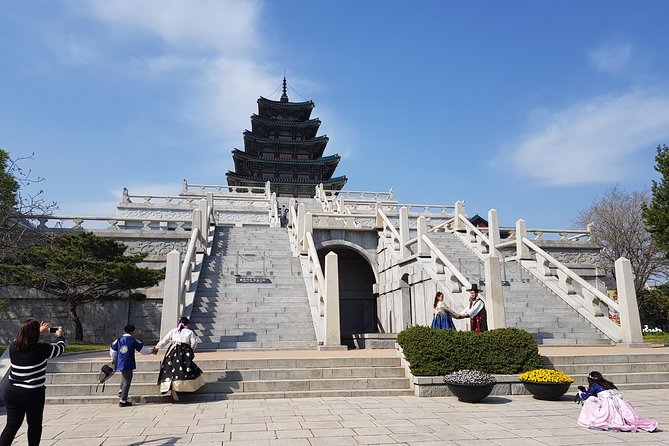
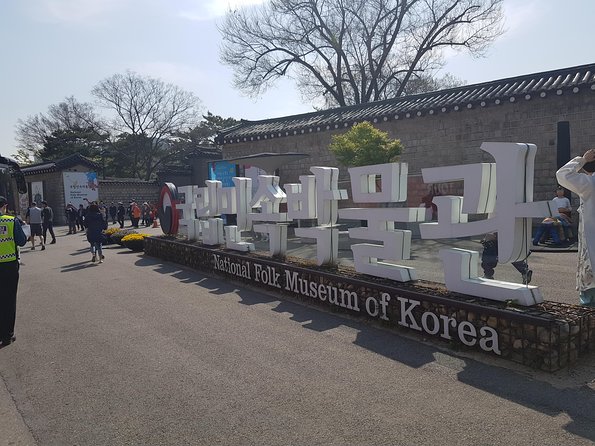
Inside Gyeongbok Palace grounds, the itinerary also includes the Korean National Folk Museum. The description is pretty clear on purpose: it represents daily life and culture, and it aims to help you better understand traditional Korean lifestyle.
This museum stop can be a real mood-setter after the outdoor palace walking. Palaces are dramatic and visual, but the museum helps translate that visual drama into what people actually ate, wore, and used. Even if you only catch the key exhibits, it can turn your palace visit from scenery into something you can explain later.
If you are short on museum patience, focus on the sections that connect to everyday objects, not just names of dynasties. A good guide can also help you link what you just saw outside, like the purpose of a building, to what people used inside their routines.
A few more Seoul days side by side
- Best DMZ Tour Korea from Seoul (Red Suspension Bridge Optional)
★ 5.0 · 41,422 reviews - DMZ Tour: 3rd Tunnel, Option(Suspension Bridge, Boat) from Seoul
★ 5.0 · 21,373 reviews - DMZ tour south Korea from Seoul (NK experience hall, defector)
★ 5.0 · 20,599 reviews - Seoul: The Best DMZ Tour with Optional Suspension Bridge
★ 4.7 · 4,978 reviews
Gwanghwamun Gate changing of the guard: the end payoff
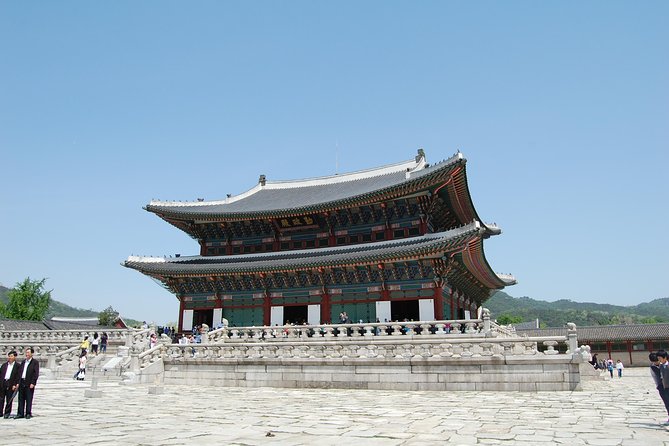
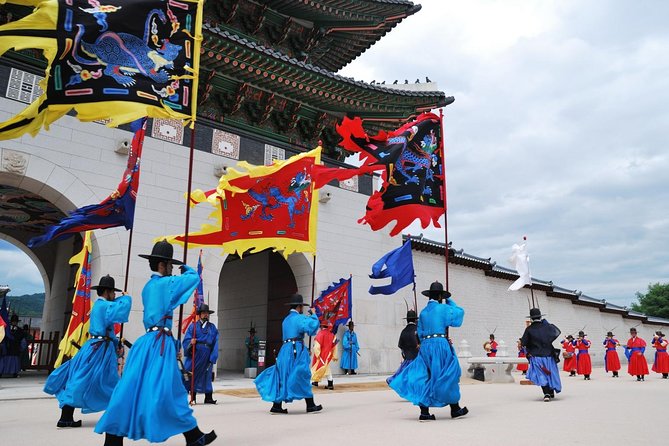
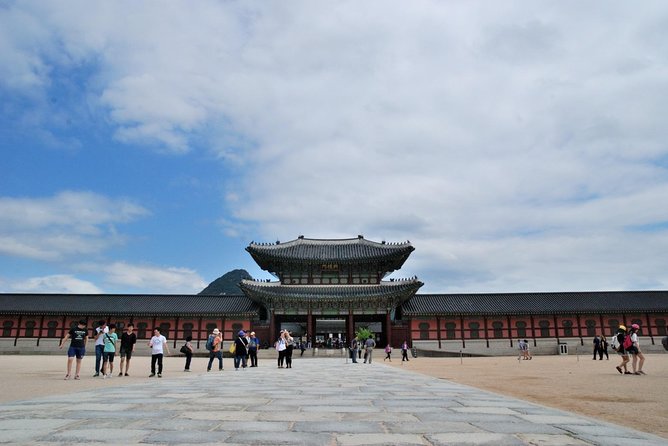
Your tour finishes around Gwanghwamun Gate, the south gate of Gyeongbok Palace, where you’ll see the changing of the guard ceremony. This is the moment that many people remember first because it is visual and structured.
Even if you do not know the details ahead of time, the ceremony gives your morning a satisfying rhythm. You go from temple trees and painted halls, to throne spaces and living quarters, and then you land on a living performance element outside.
If you want better photos, arrive ready with your phone set up before the crowd thickens. Group tours can make timing tight here, so the most useful move is to stay aware of where you are in the group line and keep an eye on what the guide says about when to look.
Price and logistics: is $40 a good value for a 3-hour morning?
At $40 per person for an approximately 3-hour group tour, the value comes from what is included. You get a driver/guide and a professional guide, hotel pickup, an air-conditioned vehicle, and all entrance fees included. You also get free admission to the top local attractions on the itinerary.
That package is where the money makes sense. If you tried to replicate this yourself, you would likely pay for admission tickets, spend time sorting transit, and lose the benefit of a guide connecting the dots between stops.
Group size is capped at 30, which is on the comfortable side for a morning. The tour is designed to move, though, and that shows up in the way people describe their experience. Some felt the pace was too quick and the guide spoke at a speed that left them less time to look independently.
My practical take: this is a great deal if you want orientation and highlights in a single morning. It is less ideal if you want a slow, photo-by-photo experience where every building gets equal attention for a long stretch.
Also note the end point: the tour returns you to Seoul at City Hall and drop-off is listed as City Hall, not your hotel. That can be a feature if you plan to explore on foot or take transit after. It can be annoying if you were hoping to end directly at your lodging.
The Ginseng Center stop: plan for it, and manage your expectations
There is one shopping center included, the ginseng center. The tour description includes this as part of the route, and some reviews have been very direct about how long that stop felt compared with the palace time.
Here is the balanced reality: a shopping center can be quick and harmless, or it can take the emotional spotlight off the palace. If you are not interested in buying supplements or products, set a personal rule before you arrive, like browsing only and not committing to purchases.
A useful mindset is to treat it as a break in the schedule rather than a must-do. If the stop runs long, your best protection is simple: decide ahead of time that you will not let it ruin the rest of the morning, because the main sights are still the real foundation of the tour.
If shopping bothers you a lot, you might consider doing the palace and temple parts yourself later or picking a different tour that skips this type of stop. But if you can tolerate a short detour, this morning tour still earns its keep.
The guide experience: friendly, professional, but pace varies
The guide is often the biggest difference between a forgettable tour and a memorable one. This tour is designed to be informative, friendly, and professional, and that shows up in positive experiences where guides share stories and help you understand what you are seeing.
One guide name that stands out in feedback is Chloe, praised for sharing many stories, being happy to take photos, and offering helpful suggestions for lunch afterward. That kind of guide adds value that you cannot buy with admission tickets.
Still, there are also criticisms around how quickly some guides speak and how little time people felt they had to view what was being explained. That likely comes from the group format and the time needed to move between stops.
Your best strategy: ask one or two questions as early as possible. If you start asking, you often get clearer, more tailored answers. And if your guide is moving fast, you can at least leave with the key context you came for.
Who this Seoul Palace Morning Tour fits best
This tour is a good match if you want a structured morning with major hits: Jogyesa Temple, Gyeongbok Palace, and Gwanghwamun Gate changing of the guard. It is also family-friendly, which suggests the stops are arranged to be workable for a wide range of ages.
It’s especially useful if you are:
- short on time and want a lot of iconic scenery in one half-day
- new to Seoul and prefer someone else handling routing and ticketing
- the type who learns best with a guide tying the places together
It may be a poor fit if you:
- hate shopping stops in your sightseeing schedule
- need lots of independent time at each site
- get easily frustrated by fast group pacing
If you fall in the middle, you’re likely fine. Just go with the mindset that this is a highlights circuit, not a slow museum walk.
Should you book this Seoul Palace Morning Tour?
I think you should book it if your goal is a high-value morning with included admissions, hotel pickup, and a clear route through the palace complex and temple start. At $40 for 3 hours, it’s a practical way to see the big names without turning your day into logistics.
I would hesitate if you know you dislike ginseng shopping stops or you want deep, unhurried time inside each building. Also, because the tour ends at City Hall and not your hotel, make sure you actually like the idea of continuing your day from there.
If you want one clear rule: treat the palace and ceremony as the main event, and treat the ginseng center as a necessary detour, then you will enjoy the tour for what it does best.
FAQ
What time does the Seoul Palace Morning Tour start, and how long does it last?
The tour starts at 9:00 am and runs for approximately 3 hours.
Is hotel pickup included?
Yes. Hotel pickup is included, and the tour uses an air-conditioned vehicle.
Where does the tour end and do I get dropped off at my hotel?
The tour ends back in Seoul at City Hall. Hotel drop-off is not provided, since drop-off is listed as City Hall, Seoul.
Are entrance fees included in the price?
Yes. All entrance fees are included, and free admission to the top local attractions is part of the tour.
Is lunch included?
No, lunch is not included.
Can you stop at the Blue House during the tour?
You cannot stop in front of the Blue House, but you will see it while passing by on the way to Gyeongbok Palace.
Is free cancellation available?
Yes. You can cancel for a full refund by canceling up to 24 hours in advance of the experience start time.
Recently reviewed in Seoul
- Korean Folk Village & Suwon Hwaseong Fortress Private Tour★ 5.0 · 3 reviews
- Seoul City Private Tour (Optional layover)★ 5.0 · 3 reviews
- 5D4N Korea Cultural Heritage immersion Private Tour★ 5.0 · 3 reviews
- War Memorial, Jogyesa Temple & Tapgol Park Tour in Seoul★ 4.5 · 3 reviews
- Private Tour : Royal Palace & Traditional Villages wearing Hanbok★ 5.0 · 3 reviews
- Full Day Private Seoul Tour for foodies★ 5.0 · 3 reviews
- 3D Private Seoul Highlight tours with DMZ & Korean Folk Village★ 5.0 · 3 reviews
- Nami Island & Nearby Attractions : Charter Van Tour With Driver★ 4.0 · 3 reviews
Palaces, compared.
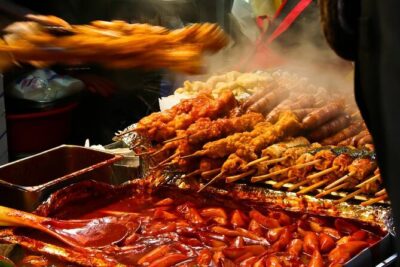
Gyeongbok Palace, Bukchon Village, and Gwangjang Tour
Read our review →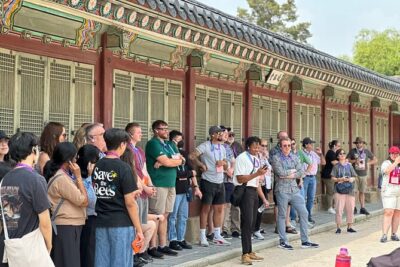
Best Seoul City Tour (Gyeongbokgung Palace,Insadong,Namsan Tower)
Read our review →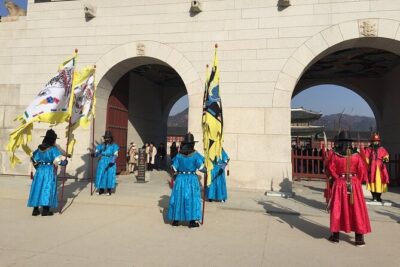
Small-Group Royal Palace and Seoul City Tour (hotel pick-up)
Read our review →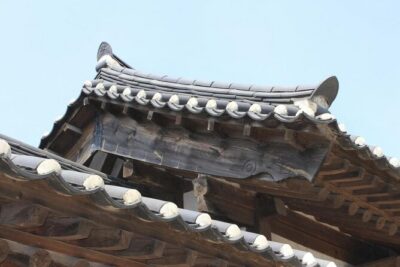
Seoul City Sightseeing Tour Including Gyeongbokgung Palace, N Seoul Tower, and Namsangol Hanok Village
Read our review →Gyeongbok Palace, Bukchon Village, and Gwangjang Tour
Read our review →
Palace, Temple and Market Guided Foodie Tour at Night
Read our review →
Seoul Highlights: Gyeongbok Palace, Insadong & N Seoul Tower
Read our review →
City Hightlights, Palace Tour, and Optional Hanbok
Read our review →Browse the lists this tour appears in