
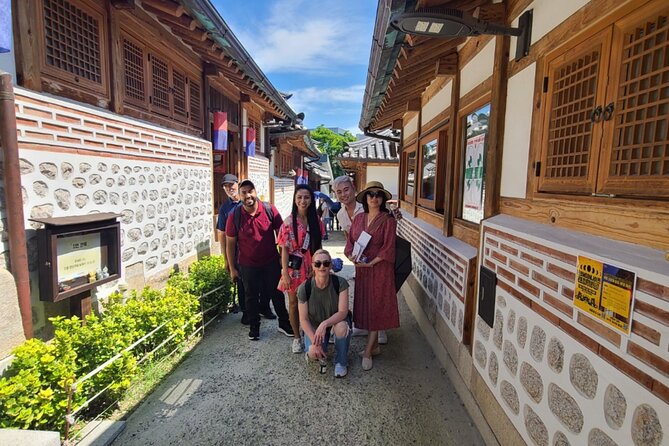
Reviewed · PALACES
Deoksugung & Jeongdong-gil: A Walk in Korea’s Rich Heritage
Seoul can feel big and confusing on day one. This walk is interesting because it guides you through a tight slice of the city where Joseon-era palaces, Korean Empire sites, and modern public space all sit close together. I love how the route mixes palace grounds with an educational museum tied to early missionary schooling. I also like the way it gives you quick context so you’re not just looking at buildings, you’re understanding what changed and when.
One possible drawback: this is a highlights route. You’ll spend about 10 to 25 minutes at each stop, so if you want to linger deep inside every hall, you may feel a little time-pressed.
Key things to know before you go
- Small group size (max 15) makes it easier to ask questions and keep the pace human.
- Free admission at every stop means you can focus on the story, not the ticket math.
- A mix of old and newer Seoul connects palaces, a former missionary school, and a modern square.
- Jeongdong Theater includes a scheduled coffee and restroom break so you’re not stuck rushing.
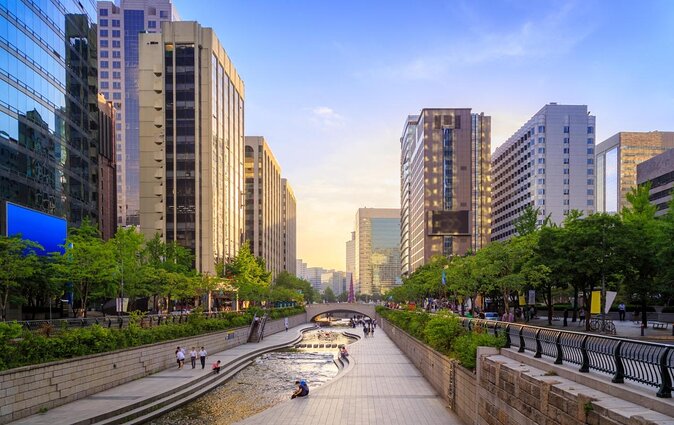
- Ends at Cheonggyecheon Stream, one of the best places to extend your walk afterward.
Why Deoksugung and Jeongdong-gil work so well for first-time Seoul
If you’re new to Seoul, you want two things fast: good orientation and a sense of how the city layers time on top of itself. This route nails both. It starts in the palace area and keeps moving through Jongno, where you can still feel the administrative and cultural gravity of the capital.
The standout here is the jump between eras. Deoksugung and Gyeonghuigung are rooted in Joseon Dynasty palace life. Then you move into spaces connected to the Korean Empire period, including Jungmyeongjeon Hall, built as an imperial library. That timeline shift is what turns a simple walk into a meaningful one.
I also appreciate the practical rhythm. You get enough time at each stop to grasp the basics, but not so much that you burn your morning. And because the group stays small, the guide can steer you through the key views and details without turning it into a race.
More Historical Tours in Seoul
- Seoul: Evening Dark History, Folklore & Ghost Story Walking Tour
★ 5.0 · 593 reviews - Hanbok Photoshoot and History Tour at Gyeongbokgung Palace
★ 5.0 · 276 reviews - Seoul: City Highlights and Historical Experience No Shopping
★ 5.0 · 74 reviews
Your 3-hour route, from Sejong-daero to Cheonggyecheon
This tour runs about 3 hours and starts at 9:30 am. You’ll meet at Deoksugung Palace, 99 Sejong-daero, Jung District and finish by Cheonggyecheon Stream in Jongno District.
The stops are close enough that you’ll mostly be walking within central Seoul, which is ideal if you don’t want to constantly hop on trains. The pace works best if you wear comfortable shoes. You’re moving through palace grounds and sidewalks, plus a couple of short transitions where you’ll want to keep your water handy.
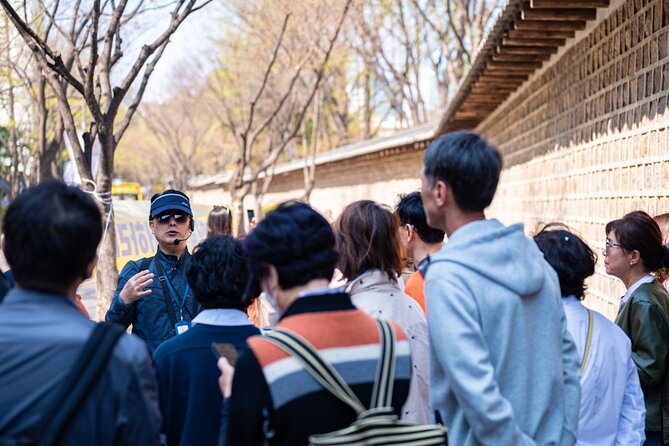
Another practical point: the tour uses a mobile ticket, and it’s operated by S.A. Tour with a professional English guide. The experience is designed for most travelers, and the logistics are intentionally simple. If your goal is to get bearings fast and learn the city at the same time, this format makes sense.
Deoksugung Palace: starting with Joseon power in the middle of the capital
Your first stop is Deoksugung Palace, also known as Gyeongun-gung. It’s located right in central Seoul, so it feels like you step from modern streets into a historical “center” almost instantly.
What makes Deoksugung a strong opener is that it anchors the whole walk in the Joseon Dynasty world. You’re not waiting until the end to hit the palaces. You start there, so everything after it has a clear baseline. The site is also part of why this route feels so compact: it’s a major landmark, easy to recognize, and full of architectural details that help you orient visually.
Plan for about 20 minutes at this first palace stop. That’s just enough time to take in the atmosphere, learn what role this palace played historically, and get your bearings for the area around it. Since it’s free admission on the tour, you won’t have to spend mental energy on ticketing before you’re even learning anything.
One thing to keep in mind: 20 minutes sounds generous until you’re standing in a big palace complex. You’ll want to follow the guide’s lead on where to look first, because that prevents you from drifting around without context.
Gyeonghuigung Palace: the quieter Joseon counterpoint
Next comes Gyeonghuigung Palace, also known as Gyeonghui Palace, in the Jongno-gu area. This is another Joseon-era palace site, originally built in 1623 as a residence. Even without deep museum-style time, the short stop helps you compare how palaces were used, built, and located within the capital.
You’ll spend about 20 minutes here as well, and that timing matters. It keeps the walk moving while still giving you enough time to absorb the basic layout and feel the differences from Deoksugung.
What I like about placing Gyeonghuigung right after Deoksugung is the contrast. Two palaces close together can help you notice repeating themes in royal architecture and palace grounds, while also showing that not every palace served the exact same purpose or lived under the same atmosphere.
If you’re someone who gets palace-fatigue after too long, this pacing will feel like a relief. If you love palaces and want more, it also gives you a great reason to come back later on your own for longer time.
More Palace Visits in Seoul
- Seoul: Gyeongbok Palace, Bukchon Village, and Gwangjang Tour
★ 4.9 · 2,321 reviews - Best Seoul City Tour (Gyeongbokgung Palace,Insadong,Namsan Tower)
★ 5.0 · 1,647 reviews - Small-Group Royal Palace and Seoul City Tour (hotel pick-up)
★ 5.0 · 1,474 reviews - Seoul City Sightseeing Tour Including Gyeongbokgung Palace, N Seoul Tower, and Namsangol Hanok Village
★ 5.0 · 1,423 reviews
Appenzeller Noble Memorial Museum: when education history meets Western influence
Then the route shifts from palace grounds to a story about schooling and cultural contact at the Appenzeller Noble Memorial Museum. This stop is tied to Baekjae Hakdang, a missionary school. Later, the school expanded into a university, now known as Pai Chai University in Daejeon.
Why this stop matters: it adds a different kind of “Korea story” than the palace timeline. If palaces represent government and power, this museum represents how Western-style education and Protestant missionary efforts affected institutions. You’re seeing history through people and ideas, not just through buildings.
The tour schedules about 10 minutes here. That’s short, but it’s enough to understand the connection between a specific historic school and its later identity. It’s a good reminder that Seoul’s heritage is not only royal architecture. It includes places tied to learning and change.
The practical win is that it’s free admission, so you’re not paying extra for a quick but meaningful context stop. It also breaks up the walking mentally, giving you a chance to slow down without losing the momentum of the day.
Jeongdong Theater: a planned pause plus a taste of performance culture
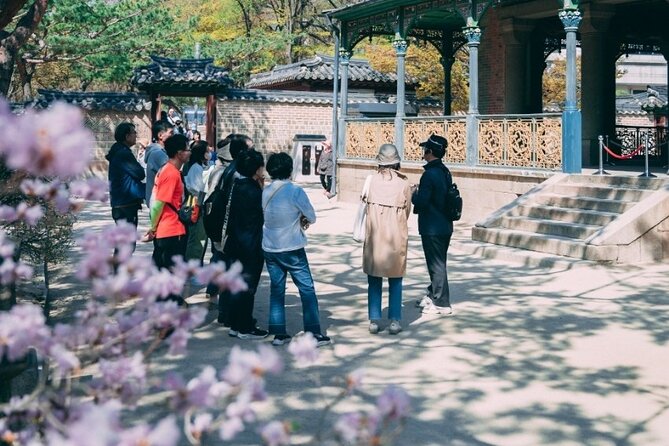
After the museum, you’ll head to Jeongdong Theater. This theater hosts concerts, plays, and musicals that incorporate elements of traditional Korean culture.
Here’s the smart part: the tour gives you about 25 minutes at Jeongdong Theater for a break. The plan is to use the restroom and grab coffee or other drinks. That means you get a real reset during the walk, not just a quick snack from a street stand while trying to keep up.
Why I like this inclusion: it acknowledges what the route needs. Palace areas can be sun-heavy and draining, and a break makes the rest of the tour more enjoyable. Also, the fact that the theater programming works with traditional cultural elements gives you a bridge from historical architecture to living culture happening today.
Even if you don’t attend a performance, you still leave with a clearer picture of how tradition shows up in modern Seoul entertainment.
Jungmyeongjeon Hall: 1899 to 1904, and the Korean Empire story
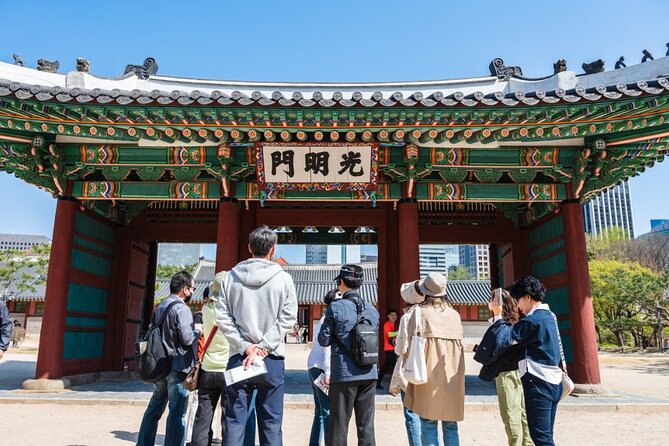
Next is Jungmyeongjeon Hall, built in 1899 as the imperial library of the Korean Empire. That alone is a big deal, because an imperial library connects knowledge, power, and nationhood in a very specific way.
Then the timeline shifts again. After Deoksugung Palace caught on fire in 1904, the place became the temporary residence of Emperor Gojong. Jungmyeongjeon Hall is also associated with the Eulsa Treaty era, which is one of those late-19th-early-20th century moments that shaped Korea’s path in a painful way.
You’ll have about 15 minutes at this stop. That’s enough to anchor the key events and understand why the site is remembered. What I find valuable is that the guide can tie these dates together while you’re standing in front of the structures. You’re less likely to forget the sequence when it’s tied to a physical location.
This is also where the tour’s theme really lands: you’re seeing how Seoul’s built environment witnessed political change, not just ceremonial life.
If you’re history-minded, you’ll probably wish you had more time. If you’re time-limited, this stop gives you the right amount to get oriented without overwhelming you.
Gwanghwamun Square and the King Sejong photo moment
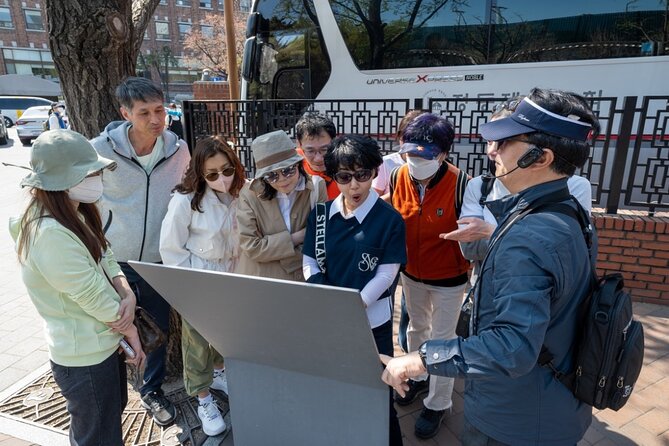
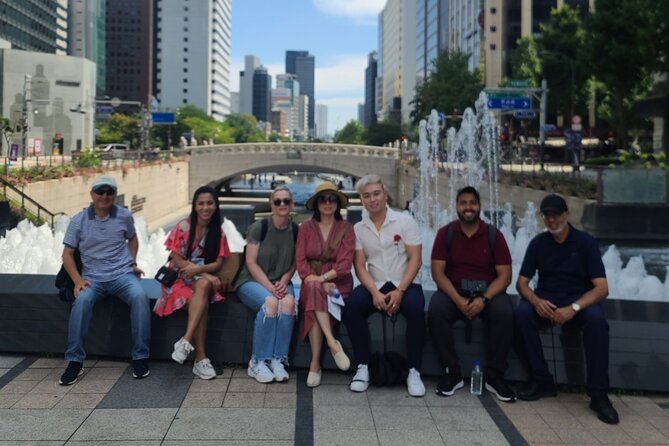
From Jungmyeongjeon Hall, the walk brings you to Gwanghwamun Square. This public square was built in 2009 and functions as a central gathering place. It has a fountain, a statue of King Sejong the Great, and open space that makes it easy to regroup and take pictures.
The 20-minute stop is well chosen. It’s not just about seeing a monument. It’s about understanding modern Seoul’s public space culture. After palaces and imperial-era buildings, the shift to a big open square helps you feel the city’s “now” layer.
If you want a quick, low-effort photo win, this is the place. If you want to keep learning, the guide can point out how the square fits into central Seoul’s identity as a civic space.
And because the tour ends soon after, this stop also works as a mental transition. You’ll leave the structured walk and enter the free-flow part of your day.
Ending at Cheonggyecheon Stream: where your walk can continue
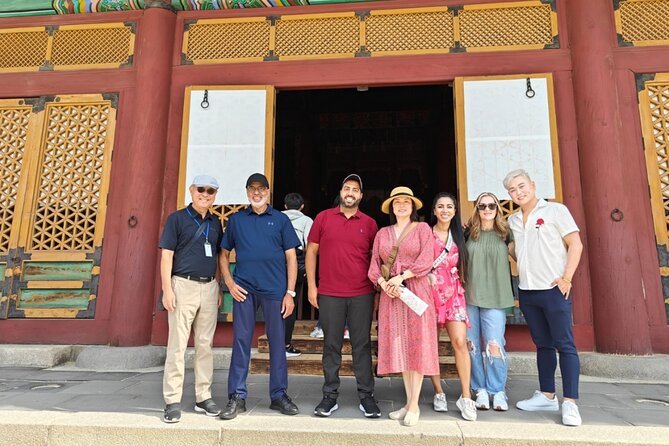
Your tour ends at Cheonggyecheon Stream in Jongno District. That finish point is a practical gift. It’s a convenient place to keep walking without needing to plan your next transport step from scratch.
A stream ending also makes the whole experience feel complete. You begin with royal grounds and end with a public waterway where people gather. It’s a neat emotional rhythm: palace authority to everyday city life.
If you still have energy after the tour, you can turn your ending into an easy self-guided stroll. You don’t have to add more tickets or decide on a major destination. You’re already in the right neighborhood to keep exploring.
Price and value: what $48 gets you in real terms
At $48 per person for about 3 hours, the value comes from the combination, not any single item. You get a professional English tour guide, a small group cap of 15 travelers, and the important detail that admission tickets are free at the listed stops.
So you’re paying mostly for guided time plus interpretation. That matters if you don’t want to spend your limited vacation hours trying to piece together history from signage alone. With an English guide leading the sequence, you get context faster than doing it on your own, especially with Korea’s late-19th to early-20th century turns.
The tour does not include lunch or other personal spending. That’s normal for a walking experience, but it does mean you’ll want to budget for your own meal. The good news is you get that built-in break at Jeongdong Theater for drinks and a restroom stop.
Also factor in weather. The experience requires good weather, and if it’s canceled due to poor conditions you’ll be offered a different date or a full refund. Walking tours feel great in mild weather and harder in rain, so plan your day with flexibility.
Who should book this walk, and who might want a different style
This tour is a strong match if you:
- Are in Seoul for the first time and want a clean, organized introduction to the historic center
- Like your history with a timeline, not just a list of monuments
- Prefer small group learning over large crowds
- Want a morning activity that ends in a practical sightseeing spot
You might want a different option if you:
- Expect long museum time at each stop
- Want to read everything slowly and wander without prompts
- Are traveling with very tight time constraints, since it still takes about 3 hours of movement
If you’re unsure, think of this tour as a framework. You’ll leave knowing what to focus on later, whether you return to a palace for deeper time or branch out into the nearby neighborhoods.
Should you book the Deoksugung to Jeongdong-gil walk?
I’d book it if your goal is to connect the dots quickly. The route is compact, the pacing is friendly, and the guide-led structure helps you understand why these places matter, especially the jump from Joseon palaces to Korean Empire sites linked to Emperor Gojong and the Eulsa Treaty era.
It’s also a good value choice because admissions are free at the stops, and your money goes toward guided interpretation. The small group size keeps it from feeling like a conveyor belt.
Skip it only if you want lots of solo time inside buildings. This is a walk and an orientation experience, built to give you understanding and momentum, then let you explore on your own after.
FAQ
How long is the Deoksugung and Jeongdong-gil walking tour?
The tour is approximately 3 hours.
Where does the tour start and end?
It starts at Deoksugung Palace (99 Sejong-daero, Jung District) and ends at Cheonggyecheon Stream (Jongno District).
What is included in the tour price?
You get a professional English tour guide. Admission tickets at the listed stops are free.
What is not included?
Lunch and other personal consumption are not included.
What time does the tour begin?
The start time is 9:30 am.
What is the group size limit?
The maximum number of travelers is 15.
What if the weather is bad or I need to cancel?
The experience requires good weather. If it is canceled due to poor weather, you will be offered a different date or a full refund. Free cancellation is available if you cancel up to 24 hours in advance for a full refund.
More Walking Tours in Seoul
- Seoul moonlight walking tour with local historian
★ 5.0 · 940 reviews - Seoul: Nighttime Hidden Gems Walking Tour
★ 5.0 · 775 reviews - Seoul: Dark Side of the City and Ghost Stories Walking Tour
★ 4.8 · 484 reviews - Gangnam Walking Tour on Youth and Society in Seoul Korea
★ 5.0 · 401 reviews
Recently reviewed in Seoul
- Korean Folk Village & Suwon Hwaseong Fortress Private Tour★ 5.0 · 3 reviews
- Seoul City Private Tour (Optional layover)★ 5.0 · 3 reviews
- 5D4N Korea Cultural Heritage immersion Private Tour★ 5.0 · 3 reviews
- War Memorial, Jogyesa Temple & Tapgol Park Tour in Seoul★ 4.5 · 3 reviews
- Private Tour : Royal Palace & Traditional Villages wearing Hanbok★ 5.0 · 3 reviews
- Full Day Private Seoul Tour for foodies★ 5.0 · 3 reviews
- Nami Island & Nearby Attractions : Charter Van Tour With Driver★ 4.0 · 3 reviews
- K-Pop Tour★ 3.5 · 3 reviews
Palaces, compared.
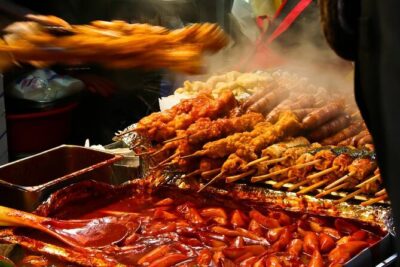
Gyeongbok Palace, Bukchon Village, and Gwangjang Tour
Read our review →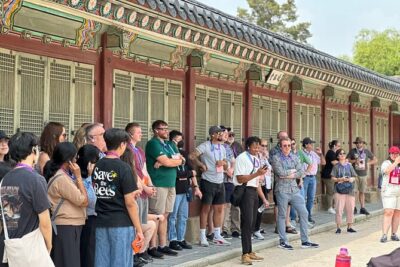
Best Seoul City Tour (Gyeongbokgung Palace,Insadong,Namsan Tower)
Read our review →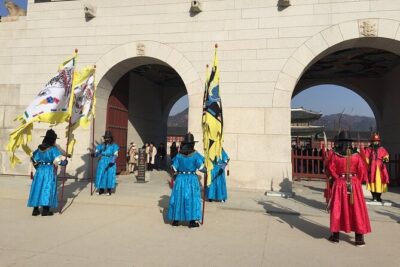
Small-Group Royal Palace and Seoul City Tour (hotel pick-up)
Read our review →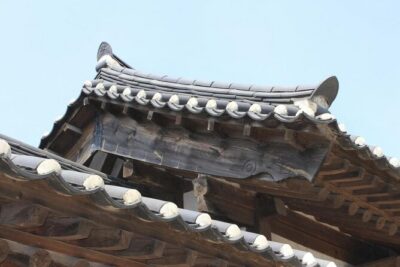
Seoul City Sightseeing Tour Including Gyeongbokgung Palace, N Seoul Tower, and Namsangol Hanok Village
Read our review →Gyeongbok Palace, Bukchon Village, and Gwangjang Tour
Read our review →
Palace, Temple and Market Guided Foodie Tour at Night
Read our review →
Seoul Highlights: Gyeongbok Palace, Insadong & N Seoul Tower
Read our review →
City Hightlights, Palace Tour, and Optional Hanbok
Read our review →Browse the lists this tour appears in