
This tour is interesting because you get some of the best views of North Korea from inside South Korea, without crossing the DMZ border. You walk right up along the Jogang River near Aegibong, then finish at 조강전망대 for an up-close look.
I like two things a lot. First, it is a tight, 5-hour outing with a guided route that keeps you moving. Second, I really like the planned Starbucks Aegibong stop, especially since major media has pointed out how close this branch sits to the border, including the idea that it has become a visible symbol of security.
One consideration: this is not a DMZ entry tour. So your view depends on visibility and your expectations, and you should be ready for a more “stand close and look” style of experience than a deeper border visit.
Key highlights at a glance
- Jogang River border views from Aegibong, staying right at the DMZ edge without entry
- Passport required at the Aegibong ticket office security checkpoint
- A Peace Eco Park route with trails, war relics, and a Sky Forest canopy area
- The 150m swinging bridge for fun border-photo angles
- Marine Corps Memorial connected to 15,000 Marines in the Korean War
- Closest Starbucks near North Korea views, plus a final stop at 조강전망대 with binoculars
DMZ-edge views at Aegibong: what makes this route special
If your goal is North Korea sightlines, this is one of the most direct day trips you can do from Seoul. The big idea is simple: instead of aiming for a border crossing, you get positioned at a point where the line of sight across the area is as clear and close as possible from South Korea.
You will spend time in the Aegibong peace area facing toward North Korea. Along the way, the route mixes quiet reflection stops with very practical viewing moments, so you are not just “watching from a bench.” The park areas are built for a visitor flow, with viewpoints and photo chances, and the timing is arranged so you are not always rushing between distant stops.
The standout part is the final viewing stop at 조강전망대. This is described as the closest observatory to the DMZ from Korea, and the tour includes binocular use during your time there. That detail matters, because it turns the experience from general scenery into actual, focused looking.
Also, you are not waiting around for a big, dramatic moment the whole day. The day is structured as several shorter stops, then a long enough Starbucks break to cool down, and finally the view-focused finale.
More DMZ tours from Seoul:
- Best DMZ Tour Korea from Seoul (Red Suspension Bridge Optional)
★ 5.0 · 41,422 reviews - DMZ Tour: 3rd Tunnel, Option(Suspension Bridge, Boat) from Seoul
★ 5.0 · 21,373 reviews - DMZ tour south Korea from Seoul (NK experience hall, defector)
★ 5.0 · 20,599 reviews
Getting there and the one hard rule: passport at Aegibong
The tour starts at 9:00 am with morning pickup options around central Seoul. You can meet at Myeongdong Subway Station Exit 9, Seoul City Hall Subway Station Exit 6, or Hongdae Subway Station Exit 3. Your day ends with drop-off back in Hongdae, which is useful if you want to keep going after the tour.
Now the rule you cannot skip: you need a passport. The tour includes a security checkpoint at the Aegibong ticket office, and that is where you must show your passport to pass through the security area. If you forget it, you will not be able to enter that sensitive area.
This is also why I like doing this kind of border-adjacent day trip early in your trip. You do not need to fight jet lag through multiple travel changes. You meet, you ride, you handle one clear security moment, then you move through the peace park stops.
Group size is capped at 100 travelers, which is big enough to have flexibility but small enough that you should still hear your guide’s explanations without shouting across the bus.
Tip for a smooth morning: keep your passport accessible. During a checkpoint, you want the handoff process to be fast, not stressful.
Marine Corps Memorial: a serious start before the views
Your first meaningful land stop after the Aegibong ticket office is the Marine Corps Memorial. This is a brief visit, about 20 minutes, but it sets the emotional tone. The memorial is tied to the Korean War and specifically mentions 15,000 Marines battling during that conflict.
Why this matters on a “North Korea view” tour: if you only focus on distant buildings and border lines, you miss the human cost behind why the area is what it is. A short memorial stop gives your viewing context, so when you later look across, you are not just collecting photos. You are connecting the scenery to the reason this dividing line exists.
Also, guides tend to build their explanations around moments like this. In the reviews, guides such as Alex, Judy, Hana, and Gogo are singled out for turning the history into something you can follow, with clear explanations and sometimes even humor. That combination helps if you do not know much about Korea before you arrive.
One practical note: memorial sites are usually best when you can slow down. If your only goal is the fastest photos, you may feel the stop is a bit “quiet” compared with the later park and observatory moments. I still think it is worth it for the perspective it adds.
Aegibong Peace Eco Park: trails, relics, and the Sky Forest canopy
After the memorial, you move into the Aegibong peace park experience. You will spend about 1 hour at the Aegibong Peace Eco Park, which is described as a DMZ-facing park with trails and war relics. Then there is a second park segment for about 30 minutes, where you can explore themed gardens and reach toward the Sky Forest canopy area.
The tour data also mentions 80+ rare bird species being spotted in the area. Even if you are not a bird spotter, it hints that the park is designed for observation, not just walking past signs. In practice, you will likely find yourself stopping more often than you expect, because viewpoints and photo angles keep pulling you in.
What I like about this park block is how it balances emotion and movement. You get a fairly active route across multiple areas, but each segment is still a manageable chunk, so the day does not turn into one long grind.
Potential drawback: it is outdoors. If the weather is hot, humid, or rainy, you may want to plan your energy. Also, keep an eye out for when your guide tells you which direction matters most for the views. Without that guidance, it is easy to walk a loop and miss the best sightlines.
If the day feels a bit “park-heavy” at first, hang in. The real payoff shows up when you combine these park stops with the later bridge and the final observatory.
A few more Seoul days side by side
- Seoul: The Best DMZ Tour with Optional Suspension Bridge
★ 4.7 · 4,978 reviews - Signature DMZ Tour: Exclusive Defector Talk & Suspension Bridge
★ 5.0 · 4,459 reviews - Thrilling Korean DMZ 3rd Tunnel Tour from Seoul + Red Bridge Rush
★ 5.0 · 3,097 reviews - Seoul: DMZ Tour & Suspension Bridge (Option English/Spanish)
★ 4.9 · 2,628 reviews
The 150m swinging bridge and the peace rituals
Next up is the 애기봉 평화생태공원 흔들다리, the 150m swinging bridge. This stop is about 30 minutes. Even if you are not a thrill-seeker, I think this is one of the most entertaining parts of the tour because the bridge naturally forces you into a new angle for photos and a different sense of height.
If weather affects safety, you might need an alternate route for viewpoints. One guide experience mentioned that if the bridge cannot operate, you may have to walk up the hill. Treat that as a possibility rather than a promise, but it is a good reason to wear shoes with grip.
After the bridge, you get a brief pause at the outdoor performance area for about 20 minutes. The tour notes that you may catch modern or traditional cultural performances if your timing matches. Even without a show, the seating area can be a decent reset before the more symbolic moments.
Then comes the peace rituals, including:
- 애기봉 평화의종 (about 15 minutes) where you ring a peace bell cast in 2000, symbolizing reunification hopes
- A short reflection altar stop (about 10 minutes) built in 2018
These moments are brief on purpose. They give your brain something to do besides stare at the border line. You ring the bell, you reflect, then you move back into the viewing mindset.
I find it helps to treat these as “pause points.” You are not there for a ceremony marathon. You are there to absorb the meaning quickly, then turn it into better questions at the observatory.
Starbucks Aegibong: the border stop that people talk about
Let’s talk about the part with the most pop culture energy: Starbucks. You get about 1 hour at the Starbucks near Aegibong. The idea is that you can grab a latte while you look across toward North Korea.
This is not just a random coffee break. Major outlets have described this branch as a powerful symbol of security, and one media account noted that you can even see North Koreans walking around from certain angles. In other words, this is the “coffee with geopolitical context” moment.
Now the practical detail: coffee and/or tea is not included. So you should expect to pay for your drink and any snacks yourself. I recommend treating Starbucks as your chance to refuel and cool down, not as an included perk.
Value-wise, I still think the stop makes sense. For a day trip where you are doing outdoor viewing and a final observatory session, having a guaranteed, sit-down rest period is useful. One hour also gives you flexibility, if you want time for photos, a quick chat with your guide, or just a low-stress break.
In the reviews, people praise this stop when it pairs the coffee with genuinely strong views, while the only big complaint is the feeling that the Starbucks time takes away from other viewing time. My advice is to match your expectations to this format. If you hate scheduled coffee breaks, you might find the day a bit coffee-forward. If you like one real rest period, you will probably appreciate it.
조강전망대 observatory: binoculars, village scale, and photo reality
The final viewing moment is 조강전망대, a stop of about 30 minutes. This is described as Korea’s closest observatory to the DMZ, and the tour notes that binoculars can reveal villages about 1.4 km away.
This is where you get the clearest “I can actually see something” payoff. Binoculars matter because they turn distant shapes into more defined structure. You are not promised a Hollywood-level view, but you are given the tools to look carefully.
Practical tip: arrive ready to stand for a bit. Observatories often have limited spots, and your best photos depend on your angle. If the weather is hazy, your ability to pick out fine details drops fast, so do not waste the first five minutes. Get your bearings early, then switch to slow looking.
Your guide will usually point out what to look for, and the stronger guides named in the reviews, like Crystal, Alice, and Juno, are praised for patiently answering questions and explaining the situation in a way you can actually follow. Ask questions early at this stage, so you are not rushing through the best viewing time while your brain is still catching up.
One more expectation check: this observatory is close, but you still are not inside the DMZ. You are looking across from South Korea. That is still powerful, but it is a different kind of access.
Price, timing, and whether it fits your trip
At $49 per person for a roughly 5-hour day trip, this is priced for value. You are not just paying for a ride. The tour includes a guide, round-trip transportation, and entrance fees for the listed sites. Your own extra spending is mainly food and drinks, since meals and coffee/tea are not included.
This duration also matters. If you only have a limited time window in Seoul, this tour gives you a “border view” experience without burning your whole day in transit. It is long enough for multiple stops and a proper observatory finale, but short enough that you can still return to your hotel afterward and continue sightseeing.
Group size max 100 travelers is another practical factor. Big groups can mean long lines and less personal attention, but this route is mostly checkpoint and viewing, so you should still be able to hear your guide.
Who this is best for:
- You want strong North Korea views with a structured route
- You like history explanations layered into the experience
- You want a manageable half-day option from Seoul
- You are okay with not entering the DMZ
Who might not love it:
- You expected actual DMZ entry, not border-edge viewing
- You dislike scheduled stops that include a set Starbucks time
Should you book this DMZ-edge tour from Seoul?
If your goal is the best North Korea sightlines you can realistically get from Seoul without crossing the DMZ, I think this is a solid booking. The mix of Aegibong park stops, the 150m swinging bridge, a peace-bell moment, a border-adjacent Starbucks break, and then a focused finish at 조강전망대 makes it feel like a complete circuit, not just one viewpoint and done.
I would book if you can show up with a passport, dress for outdoor walking, and treat the observatory time as the main event. And I would skip it if you want DMZ entry itself, because this tour stays on the South Korea side, along the river edge near Aegibong.
One last tip: bring patience. Security at Aegibong takes the passport check seriously, and the rest of the day flows around that. When the day runs on schedule, the payoff is exactly what the title promises, top-tier North Korea views plus one famously close Starbucks stop.
FAQ
How long is the tour from Seoul to the Aegibong area?
The tour lasts about 5 hours.
Does this tour enter the DMZ?
No. It does not technically enter the Korean Demilitarized Zone (DMZ), but it goes to the edge area near Aegibong along the Jogang River.
Do I need a passport?
Yes. You need your passport to pass through the security area at the Aegibong ticket office. Without it, you cannot enter.
What is included in the $49 price, and what is not?
Included items are a tour guide, round-trip transportation, and entrance fees. Not included are meals and coffee and/or tea.
Where do pickups happen, and where do you get dropped off?
You are picked up at Myeongdong Subway Station Exit 9, Seoul City Hall Subway Station Exit 6, and Hongdae Subway Station Exit 3. The tour drops you off in Hongdae.
How large is the group?
The tour has a maximum of 100 travelers.
What is special about the final observatory stop?
The final stop is 조강전망대, described as Korea’s closest observatory to the DMZ. Binoculars are used, and you may be able to see villages about 1.4 km away.
Recently reviewed in Seoul
- Korean Folk Village & Suwon Hwaseong Fortress Private Tour★ 5.0 · 3 reviews
- Seoul City Private Tour (Optional layover)★ 5.0 · 3 reviews
- 5D4N Korea Cultural Heritage immersion Private Tour★ 5.0 · 3 reviews
- War Memorial, Jogyesa Temple & Tapgol Park Tour in Seoul★ 4.5 · 3 reviews
- Private Tour : Royal Palace & Traditional Villages wearing Hanbok★ 5.0 · 3 reviews
- Full Day Private Seoul Tour for foodies★ 5.0 · 3 reviews
- K-Pop Tour★ 3.5 · 3 reviews
- 3D Private Seoul Highlight tours with DMZ & Korean Folk Village★ 5.0 · 3 reviews
DMZ Tours, compared.
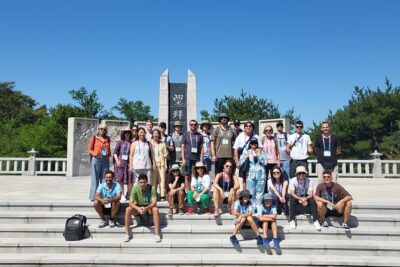
Best DMZ Tour Korea from Seoul (Red Suspension Bridge Optional)
Read our review →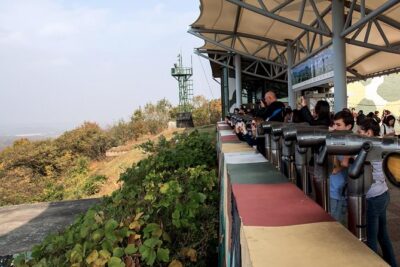
DMZ Tour: 3rd Tunnel, Option(Suspension Bridge, Boat) from Seoul
Read our review →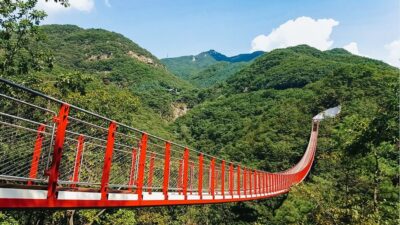
DMZ, 3rd Tunnel and Optional Suspension Bridge Tour
Read our review →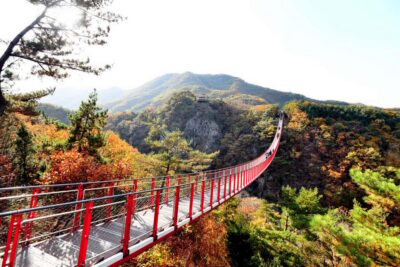
The Best DMZ Tour with Optional Suspension Bridge
Read our review →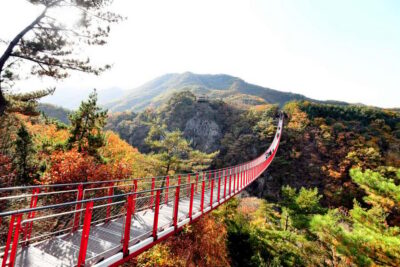

Thrilling Korean DMZ 3rd Tunnel Tour from Seoul + Red Bridge Rush
Read our review →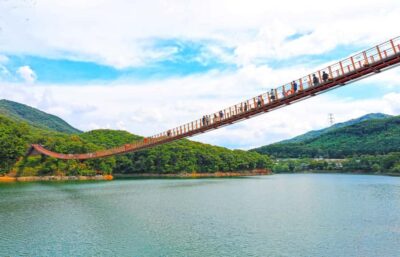
DMZ Tour & Suspension Bridge (Option English/Spanish)
Read our review →
DMZ Past and Present: Korean Demilitarized Zone Tour from Seoul
Read our review →Browse the lists this tour appears in