
Reviewed · WORKSHOPS
Busan Dialect Class with local snack
This Busan dialect class is interesting because you learn Hangul and local expressions, then use them right away at food stops. I like the small-group cap of 15, and I like the clear, teach-you-to-practice setup built around a 1.5 hour lesson with printed materials.
One consideration: the overall plan is about 3 hours, so you will move at a steady pace and spend less time wandering on your own.
Quick highlights
- Small group, up to 15 people, so you actually get time to ask questions
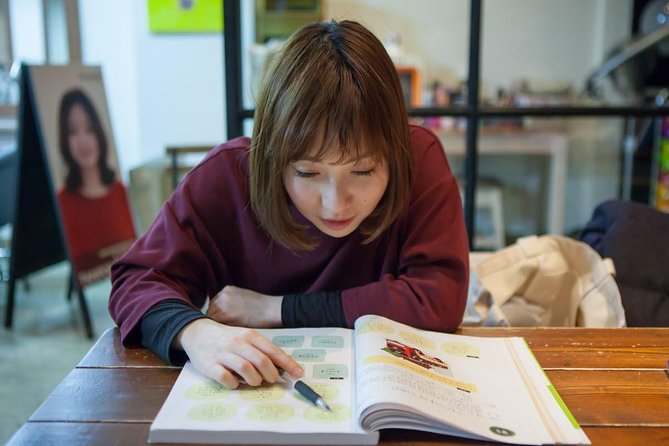
- 1.5 hour Hangul practice focused on consonants and vowels, plus Busan dialect phrases
- Market food practice using the exact expressions you just learned
- Bujeon Market stop at a traditional market many visitors miss
- Samgwangsa Temple visit to see beautiful temple buildings and enjoy a snack in the park
Why This Busan Dialect Lesson Feels Practical, Not Academic
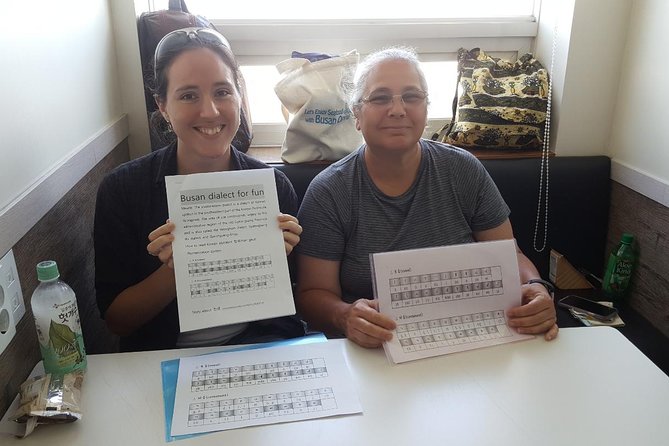
Busan dialect tours work best when the language you learn has a job to do. This one builds that job into the schedule. You start with basic reading skills for Hangul and a handful of Busan dialect expressions, then you immediately test them in a market setting where buying simple food is the goal.
The payoff for me is that you are not just collecting vocabulary. You are learning how to use Korean in bite-sized, low-stress moments. And with the small group size, the teacher can slow down when pronunciation or reading feels tricky.
There is also a social charm to the “Busan Oppa” style teaching. The class is friendly, jokey, and easy to follow, and that matters because dialect work can feel intimidating at first.
More Workshops in Busan
- Korean cooking class in Haeundae, Busan
★ 5.0 · 92 reviews - Busan Tailored Korean cooking class (Vegan OK)with market tour
★ 5.0 · 66 reviews - Busan: Small-Group Traditional Korean Food Cooking Class
★ 4.9 · 58 reviews
The Class: Hangul Consonants and Vowels, Plus Busan Expressions That Actually Work
Expect about 1.5 hours of language instruction. The focus is on helping you understand and read the building blocks of Hangul: consonants and vowels. That sounds basic, but it is the kind of basic that removes friction. Once you can recognize how the sounds fit together, you stop guessing as much.
You also learn useful Busan dialect expressions. The key detail here is that the phrases are designed to be simple and efficient. Even if you know no Korean, you can participate because you are not asked to do complicated grammar on the spot. Instead, you practice short, functional things you can say and recognize while ordering or interacting.
My advice: treat the first part of the class like a warm-up for the market. Sit close enough to see any handouts or printouts clearly. Then keep track of which phrases feel the most natural for you, because that is what you will want to reuse later when you are hungry.
And yes, the teacher energy matters. In real experiences, the instructor (Suyang) has been described as funny, joking, and easy to understand, which is exactly what you want when learning sounds that do not match what you expect.
Bujeon Market Stop: Where Your Phrases Get Tested With Real Food
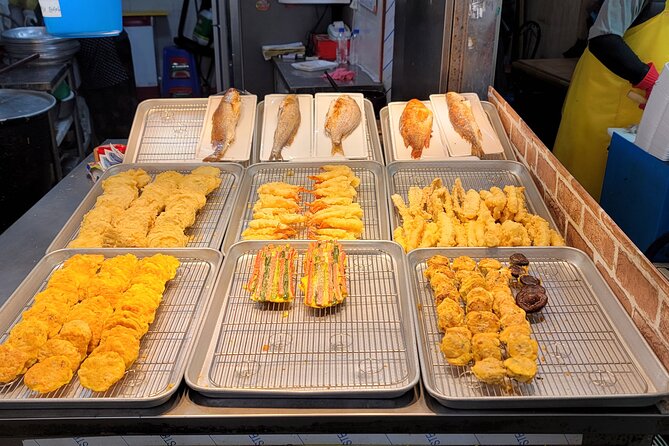
Your language practice turns into something tangible at Bujeon Market. This is a traditional market stop that many visitors overlook, which is part of the fun. Markets reward curiosity, not perfection, and you will have permission to keep it simple.
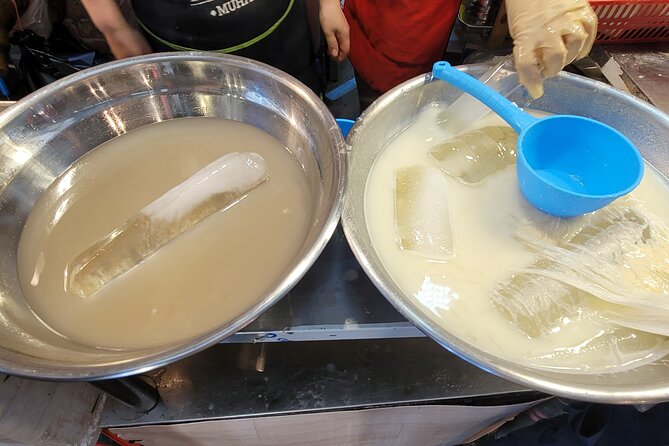
After the lesson, you get time to review what you learned by purchasing basic foods. The tour example mentions easy items like rice cakes. The idea is not to memorize a menu, it is to use a few phrases you just practiced and then enjoy what you can order.
What I like about this setup is that you get immediate feedback. If a phrase does not land the way you intended, you get another try in a normal, everyday environment. And since the tour provides snacks (and coffee and/or tea), you can focus on tasting and practicing rather than hunting for a place to eat.
A small practical note: when you do market food, expect mess. If you are planning to take photos, bring a tissue or wipes. Keep your phone protected in a pocket or small bag. And pace yourself, so you do not rush through the temple later because your snack table turned into a second dinner.
Samgwangsa Temple: Cheontae Order Beauty and a Calm Snack Break
Depending on your chosen option, you may visit Samgwangsa Temple after the market. Samgwangsa belongs to the Cheontae Order, and it is known for beautiful temple buildings. That is the main reason this stop pairs well with a dialect class. After the lively market, the temple gives you a visual and emotional reset.
You are also not just walking through. The plan includes enjoying a snack in the park inside the temple area. That matters because you get a clear moment to slow down. You can look at the buildings, notice details at your own speed, and eat something without squeezing it into a fast street-food sprint.
What you will likely notice at a temple like this is the contrast. Markets are about lots of small transactions. Temples are about space, stillness, and observation. If you have even basic Hangul reading from the class, you might also feel more confident spotting signs and trying to read small bits you would have skipped before.
If you are the type who enjoys photos, this stop is where you get the most reward. Bring a light layer if it is windy. Temple grounds can be cooler than the surrounding streets, especially if you are there later in the day.
Different day, same base:
- Busan: Gyeongju Guided Day Trip to Three Kingdoms Capital
★ 4.8 · 1,925 reviews - Small Group Full Day Busan Tour (Max 6 Pax)
★ 5.0 · 1,464 reviews - From Busan: Gyeongju UNESCO World Heritage Guided Day Tour
★ 4.8 · 1,250 reviews - Busan Private Tour with licensed tour guide + private vehicle
★ 5.0 · 1,143 reviews
Price and Value: What $100 Buys in a 3-Hour Small-Group Format
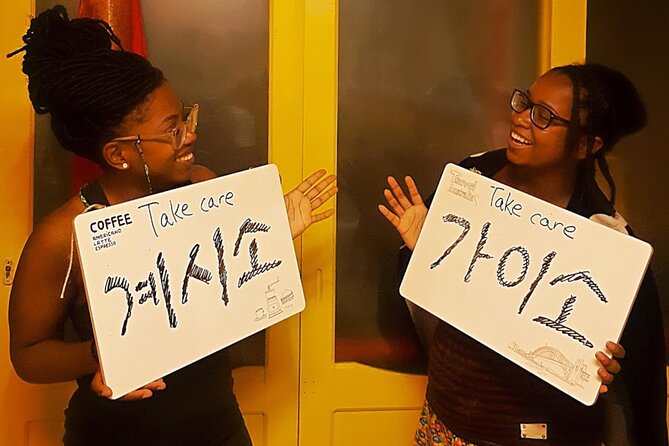
At $100 per person, this tour is not a budget “just walk around” experience. You are paying for three things bundled together: instruction, guidance, and the structure that connects language to real moments.
Here is the value logic that matters:
- You get a small-group setting (maximum 15), which usually means more teacher attention than a larger bus-style tour.
- You get a focused lesson (1.5 hours) with printed materials, plus classroom rental charges.
- You get snacks, coffee and/or tea, and practical market time where you apply phrases.
Could you do a self-guided version by downloading a phrase guide and wandering Bujeon Market on your own? Sure. But you would lose the “learn it then use it” rhythm, and you would likely spend more time figuring out what to say rather than actually saying it.
Also, alcohol is not included, which is a good thing if you want to keep the day clear and comfortable. This format works best when you stay alert enough to practice pronunciation and read what you can see.
If you are comparing value to other language experiences, the standout is that this is not a classroom-only tour. It turns language into a task you complete: buy simple food, interact, then move on.
How to Plan Your Day Around This Tour So It Feels Easy
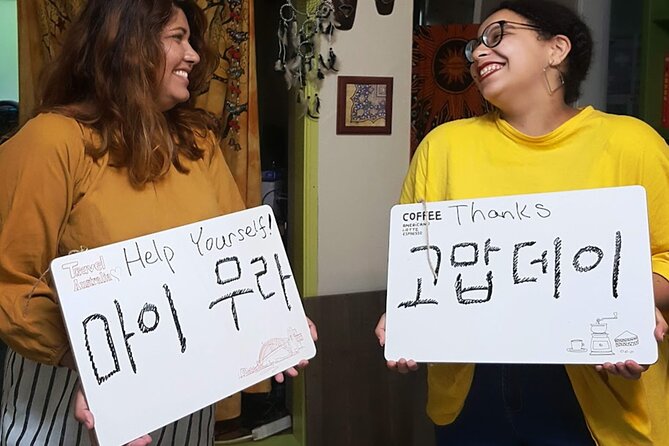
The schedule runs about 3 hours total, and it ends back at the meeting point. That makes it easier to slot into a travel day. Still, it helps to plan your meal timing. If you go in starving, your market snack time can feel like a blur. If you go in too full, you might not want to participate in the food practice the same way.
A good strategy: eat lightly beforehand, then treat the market snacks as a focused tasting session. That keeps your energy up for both the temple viewing and the return.
Also, bring a small notebook or use your phone notes. The tour includes printouts, which is helpful. But when you see the phrases in real context later, you will probably want to jot which ones felt easiest to pronounce.
Who This Tour Suits Best (And Who Might Want Something Different)
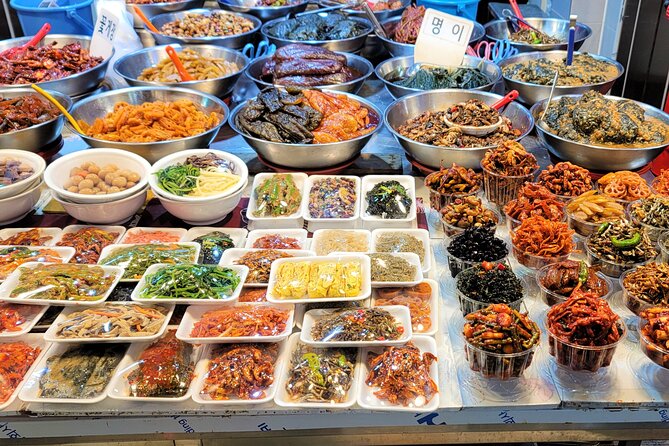
This is a strong fit if you want:
- A short, structured way to start with Hangul reading through consonants and vowels
- Confidence-building Busan dialect phrases, even if you know no Korean
- A market visit that does not feel like a chore, with food as the practice tool
- A small-group setting led by a friendly teacher (Suyang comes through as funny and high-energy)
It might be less ideal if you want long free time. With about 3 hours total, you cannot turn this into a slow wandering day. You need to be okay moving from class to market and then possibly to Samgwangsa.
It also might not be ideal if you want deep academic language study. This is practical, quick instruction. The goal is communication and experience, not mastery.
Booking Advice: Should You Take This Busan Dialect Tour?
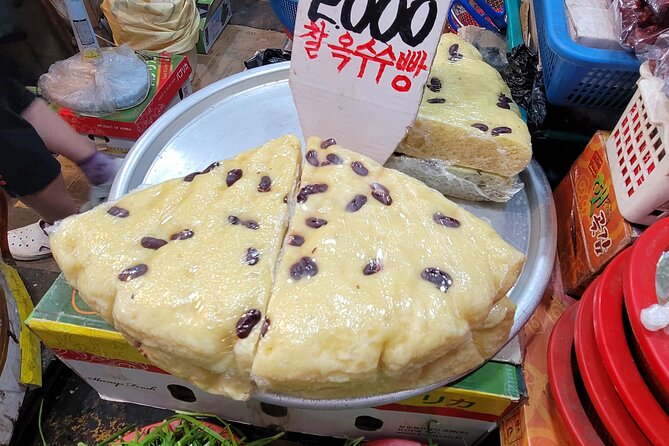
If you like the idea of learning a little language and then using it immediately, I think you should book it. The combination of Hangul basics, Busan dialect expressions, and hands-on market food practice is the whole point, and it is exactly what makes this more than a sightseeing-only tour.
Do consider your pacing. If you prefer unstructured time, this schedule is tighter than a typical roam-and-snack day. If you are excited by food, small talk, and building confidence quickly, this tour is a smart way to get there without feeling lost.
FAQ
FAQ
How long is the Busan dialect class with local snack?
The tour is about 3 hours.
How big is the group?
The group has a maximum of 15 travelers.
Do I need Korean before joining?
No. The class is designed so even if you do not know Korean, you can participate with simple, efficient phrases.
What do I do after the dialect class?
You head to Bujeon Market to review what you learned by purchasing simple food items like rice cakes.
What food and drinks are included?
Coffee and/or tea are included, plus snacks. Alcoholic beverages are not included.
Will I visit Bujeon Market and Samgwangsa Temple?
You can choose an option based on order. One option focuses on the dialect class followed by Bujeon Market, and another includes visiting Samgwangsa Temple after Bujeon Market.
Where does the tour start and end?
It starts at 웰컴저축은행 서면지점, 721 Jungang-daero, Busanjin District, Busan, South Korea, and ends back at the meeting point.
What is the cancellation policy?
You can cancel for a full refund up to 24 hours before the experience starts. Cancellation within 24 hours is not refunded.
Recently reviewed in Busan
- Gyeongju private tour with an official tour guide (Unesco)★ 4.5 · 4 reviews
- Small Group Discover Busan Tour with hotel pickup and dropoff★ 5.0 · 111 reviews
- A Well-Rounded Small-Group Busan Tour with Hotel Pickup Service★ 5.0 · 157 reviews
- Real Busan Walking Experience★ 5.0 · 27 reviews
- Busan Seafood Tour : Oyster village Tour with Oyster cuisines★ 5.0 · 3 reviews
- Enchanting Oedo Island Day Tour from Busan with Windy Hill★ 4.5 · 59 reviews
- Suncheon one day tour from Seoul, Busan or Suncheon★ 5.0 · 3 reviews
- Visit Busan night market and enjoy the night view of Busan harbor★ 5.0 · 6 reviews
Workshops, compared.
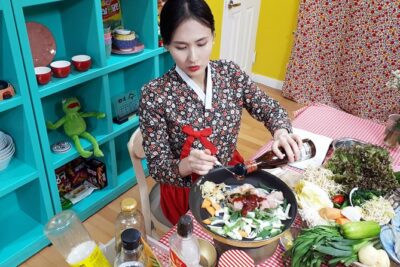
Local Home Korean Cooking Class & Market Adventure in Seoul
Read our review →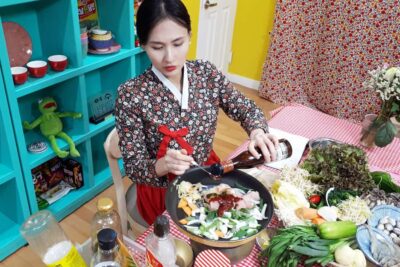
Korean Cooking Class at a Local Home and Market Tour
Read our review →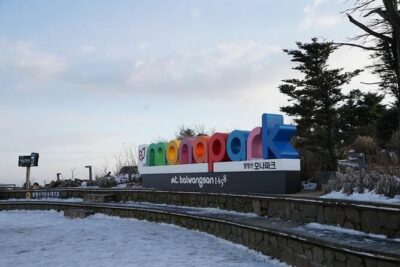
Yongpyong Ski Resort from Seoul with Optional Lesson and Packages
Read our review →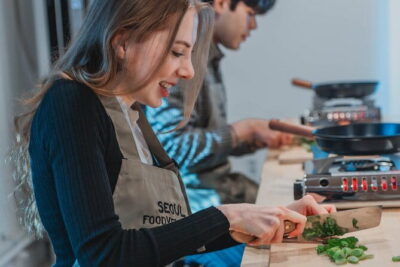
Korean Cooking Class with Grocery Shopping at Seoul Local Market
Read our review →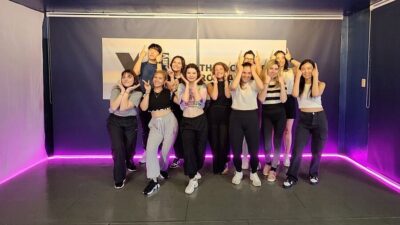
Kpop Dance Class in Seoul (incl. video shooting & editing)
Read our review →
Taste of Korea, Authentic home style Cooking class
Read our review →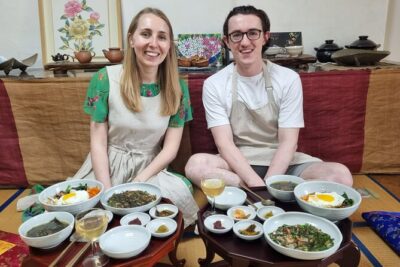
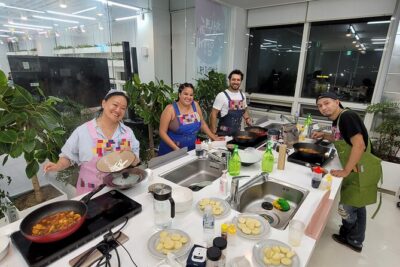
Busan Tailored Korean cooking class (Vegan OK)with market tour
Read our review →Browse the lists this tour appears in