
Reviewed · PALACES
Seoul: Deoksugung Palace Night Tour
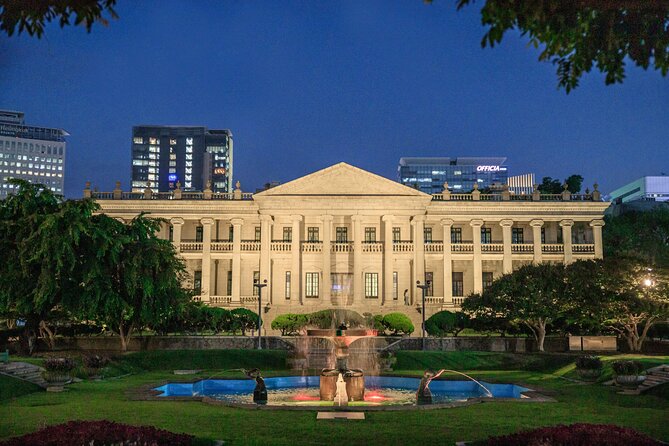
Deoksugung Palace at night is interesting because you are not just sightseeing. You are walking through the royal spaces tied to Emperor Gojong, the first and last emperor of the Daehan era, and the painful fight to regain sovereignty during Japanese Occupation. I love the building-by-building storytelling, and I love that the tour focuses on how history shaped the palace itself. The only drawback is the tour runs about 2 hours, so it is not for people who want a long, slow, self-paced wander.
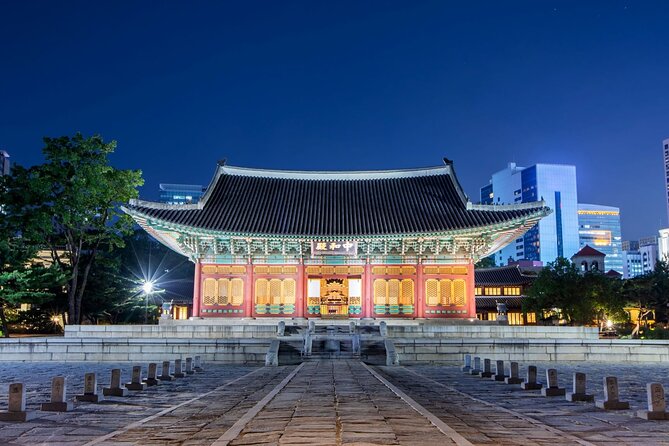
You’ll start outside City Hall Station and step through the Daehanmun Gate, then you’ll move room to room with an English live guide. I particularly like the way stops like Junghwajeon (the throne hall) and Seokeodang (King Gojong’s beloved building) are explained so you can actually picture what life and power looked like.
After the guided portion, you can keep exploring and take photos on your own. If you are comfortable walking in palace grounds and you want context, this format is a smart way to make your palace visit feel personal, not just technical.
Key things I’d circle before you go
- A real narrative through major halls like Junghwajeon and Hamnyeongjeon, not a random walk
- Daehan Empire context tied directly to the architecture you see in front of you
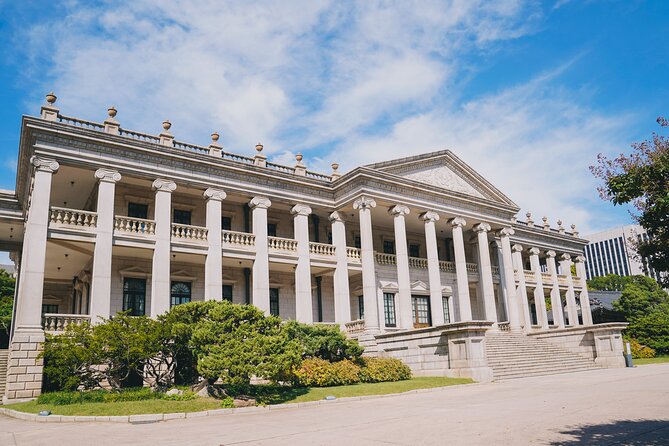
- Korean-style design meeting Western influence, explained in plain terms
- English guides who can be very patient, including examples like Joy and Alan
- Night or evening atmosphere, with a unique view depending on the start time
- Time to stay after the tour, so you can pause for photos without rushing
Why Deoksugung at Night Feels Like More Than a Photo Stop
Deoksugung Palace is one of those Seoul sites where the walls have opinions. The buildings are beautiful, yes, but the tour also asks you to pay attention to what changed when Korea tried to modernize and regain control under massive outside pressure.
The night timing matters because Deoksugung has a calm, ceremonial feel when lights come on and the focus shifts from street energy to palace space. You are still walking outdoors, though, so bring a comfort-first mindset. If you’re expecting a themed show, it is not that. It’s a history-forward guided walk that feels quieter and more reflective than a standard sightseeing circuit.
The big promise here is that you get the story while you are standing in the exact place tied to it. That is why the route through the main halls feels so effective. You do not just hear terms like Daehan Empire and Japanese Occupation as trivia, you connect them to the function of each building.
More Evening Experiences in Seoul
- Seoul: Night Market Food Tour with Local Guide
★ 4.9 · 943 reviews - Seoul: Palace, Temple and Market Guided Foodie Tour at Night
★ 4.9 · 750 reviews - Seoul: Evening Dark History, Folklore & Ghost Story Walking Tour
★ 5.0 · 593 reviews
Meeting at City Hall Exit 1 and What Happens Next
Your start is outside Exit 1 of City Hall Station. The good news is that this is a simple meeting point, and it sets you up well for a Seoul itinerary because City Hall is central and easy to reach.
Once you meet your guide, you go straight to the palace main gate, Daehanmun Gate. From there, the flow is logical: you enter, you orient yourself, and you walk through a sequence of key spaces associated with royal life and imperial authority.
This matters because many palace visits turn into a “see everything quickly” blur. Here, the pacing gives you time to absorb names and roles. Even if you know very little going in, the guide’s job is to connect what you see to what it meant.
The tour is run in English with a live local guide, and it is wheelchair accessible. If your group needs mobility support, it helps to know the tour is designed with that in mind rather than treating access as an afterthought.
Daehanmun Gate and Junghwajeon: Power, Purpose, and Ceremony
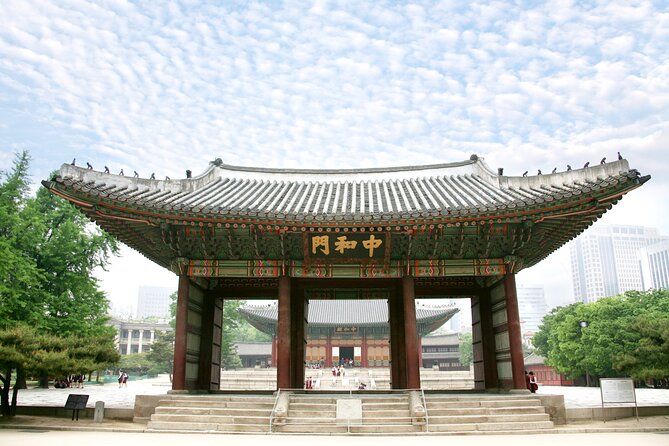
The first big moment is passing through Daehanmun Gate. It is not just an entrance, it is the transition from everyday city movement into palace logic. You feel the shift immediately because the gate frames the palace grounds like a stage entrance.
Next comes Junghwajeon, the main throne hall. This is the kind of place where it helps to have someone explain what you are looking at. You’ll learn what a throne hall was for and why it was central to the idea of authority and rule.
In a palace like this, it is easy to admire the architecture and miss the point. The guide helps you read the building as a political message. That framing is what makes the experience more than decorative sightseeing.
One thing to note: throne halls and formal courts are designed for ceremony, not casual wandering. So wear comfortable shoes, and plan to look up and slow down for details when your guide asks you to.
Seokeodang and Hamnyeongjeon: The King’s Spaces, Not Just the Royal Stage
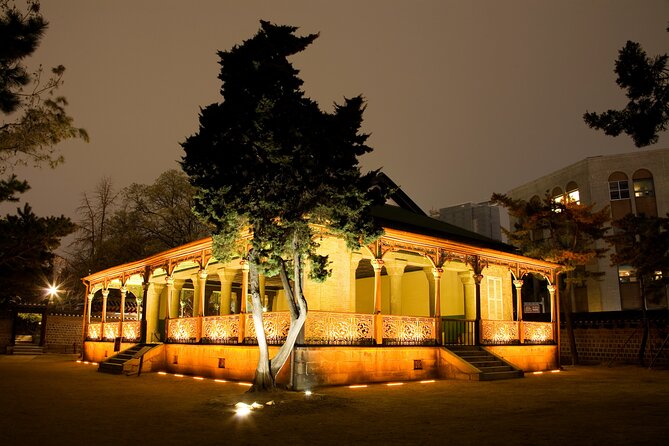
After Junghwajeon, you get a more human perspective with Seokeodang. This is King Gojong’s most beloved building in this palace complex. That detail matters because it shifts the tone away from public power and toward personal preference and daily comfort, at least as much as royal life ever allowed.
Then you move to Hamnyeongjeon, the king’s bed chamber. Again, this is not the kind of stop you rush. Bed chambers can feel abstract if you are not guided, but with a clear explanation you start to understand why these spaces were protected, arranged, and symbolically important.
This is where the tour’s historical theme becomes emotionally grounded. The Daehan era story is heavy, and it would be easy for it to turn into distant history. But being in the king’s private space helps the political narrative feel real. You’re not just hearing that sovereignty was challenged, you’re seeing the palace as the setting for a ruler trying to maintain identity and control.
If you like history that feels personal, these two stops are the reason I’d prioritize this tour over a purely general palace loop.
More Palace Visits in Seoul
- Seoul: Gyeongbok Palace, Bukchon Village, and Gwangjang Tour
★ 4.9 · 2,321 reviews - Best Seoul City Tour (Gyeongbokgung Palace,Insadong,Namsan Tower)
★ 5.0 · 1,647 reviews - Small-Group Royal Palace and Seoul City Tour (hotel pick-up)
★ 5.0 · 1,474 reviews - Seoul City Sightseeing Tour Including Gyeongbokgung Palace, N Seoul Tower, and Namsangol Hanok Village
★ 5.0 · 1,423 reviews
Jungkwanheon Hall: The Cafeteria Where Coffee Fits Royal Life
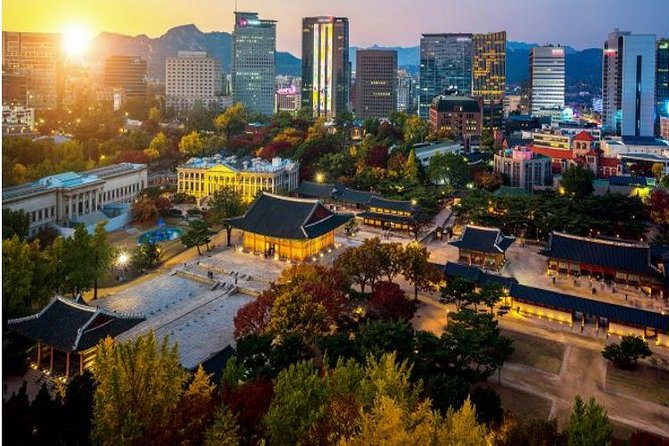
One of the most memorable stops is Jungkwanheon Hall, described as the emperor’s cafeteria where he enjoyed coffees. This is a wonderful example of how the tour connects culture change to everyday habits.
It also helps explain the architectural theme you’ll hear about: Korean-style design meeting Western influence. You can see the palace as a place where Korea was negotiating tradition and modernization at the same time. Coffee, in this storytelling, becomes a small but meaningful clue. It’s not just a drink. It’s a signal that the era’s global connections were finding their way into the palace.
If you have ever wondered why historical sites can feel strangely relevant, this is that moment. The tour gives you permission to think beyond dates and rulers, and to notice how lifestyle and foreign influence showed up in places people lived and used.
Architecture Lessons You Can Actually Use While You Walk
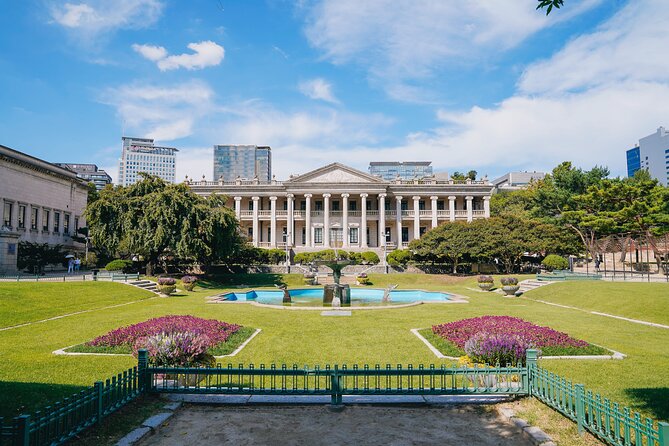
A major theme of the tour is architecture where Korean-style forms meet Western influence. The guide does more than name styles. You get practical context about what the mix represented during the Daehan era, a period when Korea was pushing for modernization and facing intense political pressure.
Here’s the value for you: when you visit the palace on your own later, or even when you walk past other Seoul architecture, you will have a mental framework for what to look for. You’ll notice how buildings communicate ideas of power, comfort, and cultural direction.
Also, the tour routes you through multiple functions of palace life, throne authority, private royal quarters, and social or everyday spaces. That makes the architectural story easier to understand because you’re seeing how style changes with use, not just as a static visual.
The Daehan Empire Story, Explained Through Stops (Not Lectures)
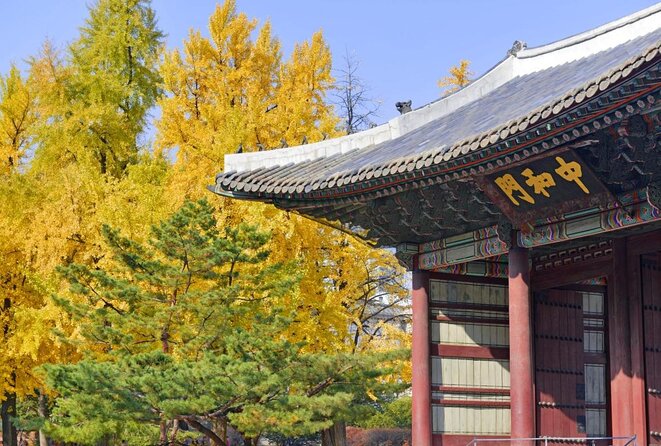
The palace served as royal quarters for 13 years, and the tour ties that time period to the story of Emperor Gojong trying to regain sovereignty over the palace under Japanese Occupation. That is the emotional center of the experience.
What I like about the way the tour handles this theme is that it doesn’t treat the palace like a museum label. It positions the buildings as witnesses. As you move from the formal throne hall to more private royal spaces, you get a sense of what sovereignty loss meant in real life.
This is also why the tour feels balanced rather than one-note. You are seeing sad history, but you are also getting architectural and cultural insight that helps you understand what Koreans were building and preserving during a turbulent time.
If you are sensitive to heavy historical topics, plan to go in with a calm pace. The guides keep the flow clear, and the sequence of named halls helps you follow the story without getting overwhelmed.
Pace, Photos, and How to Get the Most From Your 2 Hours
The tour lasts about 2 hours, with start times depending on availability. That schedule means you should treat it as your anchor experience for Deoksugung. If you try to cram too many stops before or after, you’ll miss the chance to linger when something catches your eye.
You also have time to stay behind after the tour to explore on your own and take photos. I like this approach because the guide gives you a strong baseline, then you can choose what to repeat. Some people want more time near a specific hall. Others just want to wander the grounds with the names now attached.
A practical tip: bring comfortable shoes and plan for an outdoors walking component both in the evening air and on palace surfaces. Even with a guide, your feet do the touring.
Price and Value: What $38 Gets You in Real Terms
At $38 per person for a 2-hour guided visit, you’re paying for two things that add real value.
First, you get a local English-speaking guide. That matters because palaces can be overwhelming if you only have signage. The guide’s role is to translate names and spaces into meaning.
Second, the entrance fee is included. That removes one more planning step and helps make the cost feel straightforward.
For many visitors, a guided palace tour like this is worth it when you care about context. If you just want quick snapshots and no interpretation, you might prefer a self-guided visit. If you like to understand what you’re seeing while you’re still standing there, this price is in the sensible range for what you get.
Who This Tour Is Best For
This tour is a great fit if you:
- want an English guided walk through key palace buildings, not a random circuit
- enjoy modern Korean history connected to physical places
- care about how Korean-style architecture intersects with Western influence
- want a short, focused experience you can pair with the rest of your Seoul day or night
It may feel less ideal if you:
- need a lot of free time to roam without any structure
- prefer very long tours that last half a day or more
- expect a dramatic performance rather than a guided historical walk
Should You Book the Deoksugung Palace Night Tour?
Yes, I think you should book it if you want your palace visit to come with clear meaning. The best part is the route through named spaces, Junghwajeon, Seokeodang, Hamnyeongjeon, and Jungkwanheon, tied to the story of Emperor Gojong and the Daehan era during Japanese Occupation.
It’s also a strong choice for value: a local English guide plus entrance included, in about 2 hours. If you’re the kind of traveler who enjoys hearing why a building exists, not just what it looks like, this will land well.
Just go in knowing it is not an all-day palace marathon. It’s a concentrated walk, with photos allowed afterward, and that makes it ideal for travelers who want depth without spending the whole evening on their feet.
FAQ
How long is the Deoksugung Palace Night Tour?
The tour duration is about 2 hours. Starting times vary, so you’ll want to check availability for the schedule.
Where do I meet the guide?
Meet the guide outside Exit 1 of City Hall Station.
Where does the tour end?
The tour ends back at the meeting point.
What is included in the $38 price?
The price includes a local tour guide and an entrance fee.
Is there an English-speaking guide?
Yes, the tour uses a live English guide.
Is the tour wheelchair accessible?
Yes, the tour is wheelchair accessible.
What should I bring?
Wear comfortable shoes for walking around the palace grounds.
Is free cancellation available?
Yes, you can cancel up to 24 hours in advance for a full refund.
What happens if the group is small?
If the number of participants is under 4, the tour will be canceled, and you’ll be notified via WhatsApp.
Recently reviewed in Seoul
- Seoul City Private Tour (Optional layover)★ 5.0 · 3 reviews
- Korean Folk Village & Suwon Hwaseong Fortress Private Tour★ 5.0 · 3 reviews
- 5D4N Korea Cultural Heritage immersion Private Tour★ 5.0 · 3 reviews
- War Memorial, Jogyesa Temple & Tapgol Park Tour in Seoul★ 4.5 · 3 reviews
- Full Day Private Seoul Tour for foodies★ 5.0 · 3 reviews
- Private Tour : Royal Palace & Traditional Villages wearing Hanbok★ 5.0 · 3 reviews
- Nami Island & Nearby Attractions : Charter Van Tour With Driver★ 4.0 · 3 reviews
- K-Pop Tour★ 3.5 · 3 reviews
Palaces, compared.
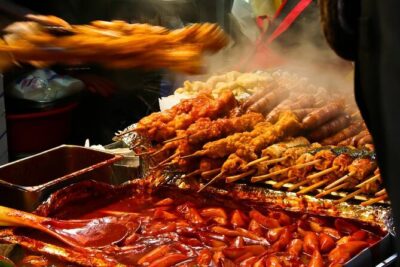
Gyeongbok Palace, Bukchon Village, and Gwangjang Tour
Read our review →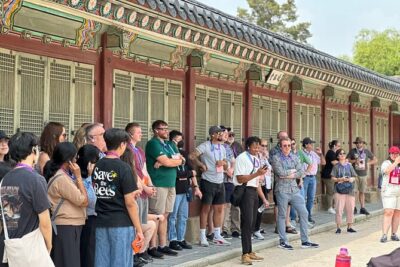
Best Seoul City Tour (Gyeongbokgung Palace,Insadong,Namsan Tower)
Read our review →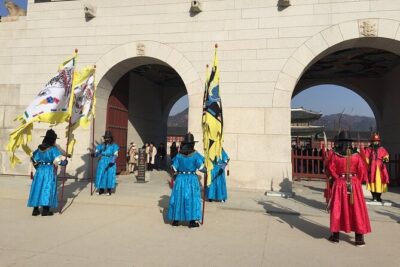
Small-Group Royal Palace and Seoul City Tour (hotel pick-up)
Read our review →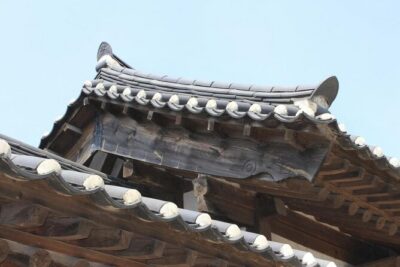
Seoul City Sightseeing Tour Including Gyeongbokgung Palace, N Seoul Tower, and Namsangol Hanok Village
Read our review →Gyeongbok Palace, Bukchon Village, and Gwangjang Tour
Read our review →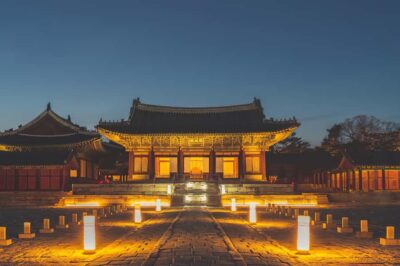
Palace, Temple and Market Guided Foodie Tour at Night
Read our review →
Seoul Highlights: Gyeongbok Palace, Insadong & N Seoul Tower
Read our review →
City Hightlights, Palace Tour, and Optional Hanbok
Read our review →Browse the lists this tour appears in