
Reviewed · PALACES
Korean Heritage Tour: Palaces and Villages of Seoul Including Gyeongbokgung Palace
Seoul can feel huge on Day 1. This tour keeps it focused, walking you through royal Korea at Gyeongbokgung Palace and then handing you a practical look at everyday traditional life at the Korean Folk Village. It is the kind of day that helps you start placing neighborhoods and landmarks in your head fast.
I especially like the guided pace at the palaces, where you get explanations as you stroll the gates, pavilions, and royal halls. I also like the mix of culture stops, including the museum’s replica-based storytelling and a visit to Jogyesa Temple in the afternoon.
One possible drawback: the schedule includes a ginseng center stop. That part has a stronger shopping vibe than the heritage sites, and it can feel out of place depending on how you feel about sales presentations.
Key Things I’d Book This For
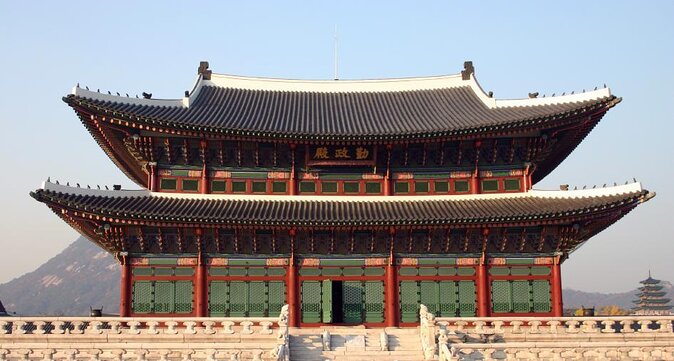
- Gyeongbokgung Palace on foot, with guided context to make the layout and details click
- A sensible Seoul storyline, palace, museum, temple, lunch, then folk culture at a living site
- Small group size (up to 10), which helps with questions and pacing
- Jogyesa Temple visit, including the main hall and a sense of Buddhist temple life
- A backup plan on Tuesdays, swapping in Deoksugung Palace if Gyeongbokgung is closed
- Hands-on craft watching at the Korean Folk Village, not just photo stops
A Full-Day Seoul Heritage Plan That Keeps You Moving
This is a classic “starter Seoul” day. You’ll be on an air-conditioned coach with hotel pickup, then out on foot for the parts that matter most. You get one big palace anchor, plus a museum and temple to broaden the story beyond architecture.
The day is built around “how Korea lived,” not just “what Korea looks like.” That’s why the Korean Folk Village matters. You’re not only seeing historic buildings, you’re watching traditional crafts and trades in action, then connecting that to what you saw earlier in the museum.
The pacing is also practical. It is a full day at about 8.5 hours, with scheduled time at each stop, so you are not burning your vacation day wandering between far-flung sights on your own.
More Historical Tours in Seoul
- Seoul: Evening Dark History, Folklore & Ghost Story Walking Tour
★ 5.0 · 593 reviews - Hanbok Photoshoot and History Tour at Gyeongbokgung Palace
★ 5.0 · 276 reviews - Seoul: City Highlights and Historical Experience No Shopping
★ 5.0 · 74 reviews
Getting From Hotel Pickup to the Blue House Drive-By
You start at 8:30 am with pickup from your Seoul hotel. The coach ride is part of the experience because your guide narrates as you travel. One highlight on the drive is passing by the Blue House, the executive office and official residence of the South Korean president.
This matters because it gives you a modern anchor before you go back in time. It helps you understand that the city you’re walking through today is still shaped by power, ceremony, and politics.
You’ll also want to bring patience for traffic. Seoul traffic can be smooth or not, and a full-day tour lives and dies by timing. When everything lines up, you feel like you are doing a lot. When it doesn’t, you will still get value, but you might feel the day compress.
Gyeongbokgung Palace: Walking the Joseon-Era Heart of Seoul
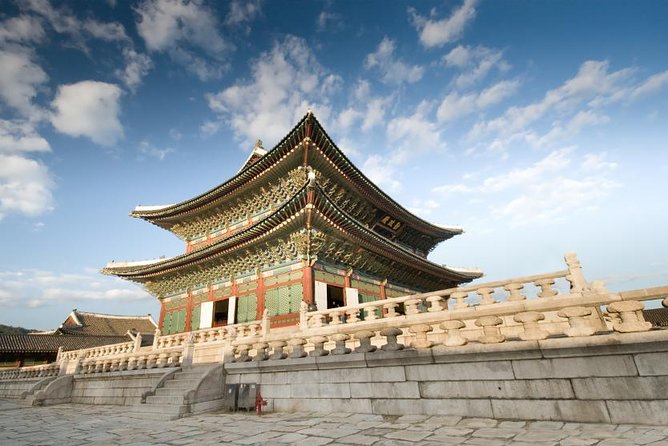
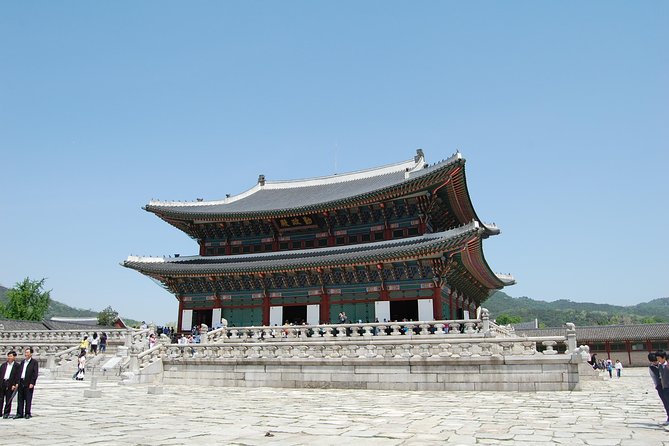
If you care about palaces, Gyeongbokgung Palace is the reason to book this tour. It was built by the Joseon Dynasty in 1395, and a lot of the complex was destroyed during the Japanese occupation. Restoration efforts have worked to bring it closer to the original look.
On this tour you do not just arrive, snap photos, and leave. Your guide shows you around the grounds, pointing out gates, pavilions, and royal halls so you can make sense of what you are looking at. I love that moment when a palace stops being a collection of buildings and becomes a system.
There is also a real chance to catch the changing of the guard, and timing can be helped by the guide’s coordination. Even if you miss a specific moment, the guided approach still gives you a better read on what’s happening around you.
Tuesday Note: Deoksugung Instead
Gyeongbokgung Palace is closed on Tuesdays. If your day falls on Tuesday, you’ll visit Deoksugung Palace instead. That option includes the Seoul Museum of History as part of the stop.
So if your travel dates include a Tuesday, don’t panic. The tour is designed to keep the palace day intact.
More Gyeongbokgung visits:
- Seoul: Gyeongbok Palace, Bukchon Village, and Gwangjang Tour
★ 4.9 · 2,321 reviews - Best Seoul City Tour (Gyeongbokgung Palace,Insadong,Namsan Tower)
★ 5.0 · 1,647 reviews - Seoul City Sightseeing Tour Including Gyeongbokgung Palace, N Seoul Tower, and Namsangol Hanok Village
★ 5.0 · 1,423 reviews - Seoul: Gyeongbok Palace, Bukchon Village, and Gwangjang Tour
★ 5.0 · 1,044 reviews
National Folklore Museum Replicas: Why This Museum Works on a Single Day
After the palace, you head to the National Folklore Museum of Korea. Even though the museum stop is short, it has a smart mission: show how Korean life looked from ancient times through the 20th century.
The museum uses replicas to explain daily life and historical scenes. That approach is helpful when you are on a schedule, because it turns “objects on shelves” into a story you can picture.
You get plenty of time to wander the exhibits, and the stop is listed at about 20 minutes, with admission noted as free. In real life, that means you should focus on the sections that match what you’re interested in most: household life, tools, clothing, or social customs.
The biggest value here is contrast. After you’ve seen formal royal space at Gyeongbokgung, the museum gives you a different kind of “power,” the power of everyday routines and culture.
Jogyesa Temple: A 500-Year-Old Main Hall Moment
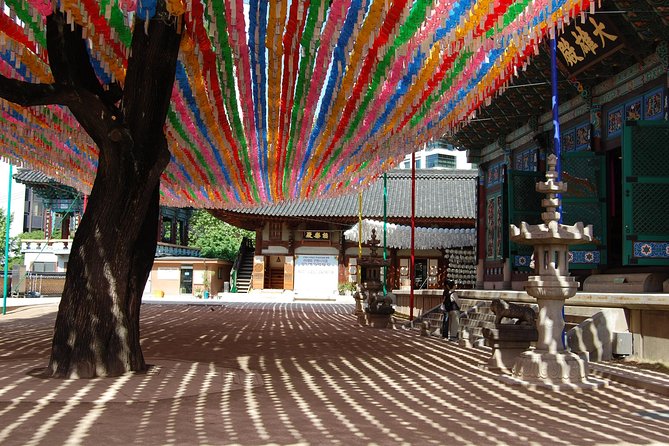
Next comes Jogyesa Buddhist Temple, the chief temple of the Jogye Order of Korean Buddhism. Outside, you can look for the locust and baeksong trees along the entrance, which helps make the approach feel calm even when the day is busy.
Your visit includes entering the main hall, Daeungjeon, which dates back about 500 years and houses an enlightened Buddha image.
One thing I like about this stop is that it gives your day a different rhythm. It’s not another museum room or another big courtyard. It’s a working temple atmosphere, and you can feel that in how people behave in the space.
The temple stop is brief on the schedule. So go in with one goal: watch, listen for your guide’s key points, and notice the main hall rather than trying to “complete” every corner.
Lunch at a Local Restaurant, Then the Ginseng Center Detour
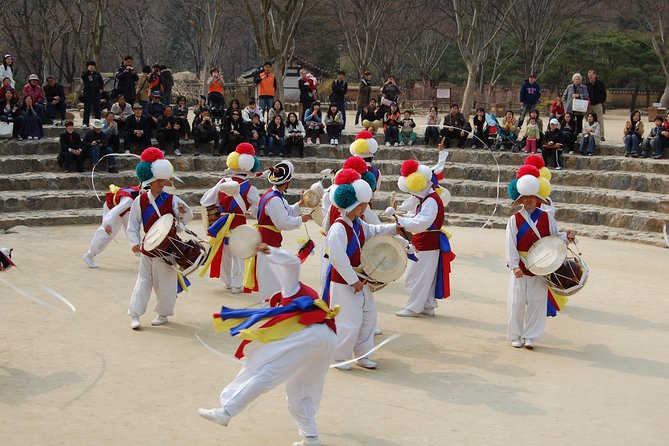
Around midday, you eat lunch at a traditional Korean restaurant. Lunch time is listed at about 1 hour, and meals are included.
In a tour like this, lunch is not only food. It is a reset. After palace walking, it helps to have a real break, sit down, and try something you might not order on your own.
Then comes the part that divides opinions: a stop at a ginseng center. The tour frames it as learning about ginseng and gives you time to purchase.
I’m going to be blunt: this is the weakest link for a lot of people on this itinerary. Some guides handle it gently, and some presentations can feel sales-heavy. One review called out pressure to purchase ginseng, and another called the ginseng stop a waste of time.
Your best move is simple. Treat it like a cultural stop, not a must-buy. If you want ginseng info, ask a question and learn. If not, keep it short, browse without committing, and plan your energy for the afternoon folk-culture portion.
Korean Folk Village: Crafts, Daily Life, and Managing Expectations
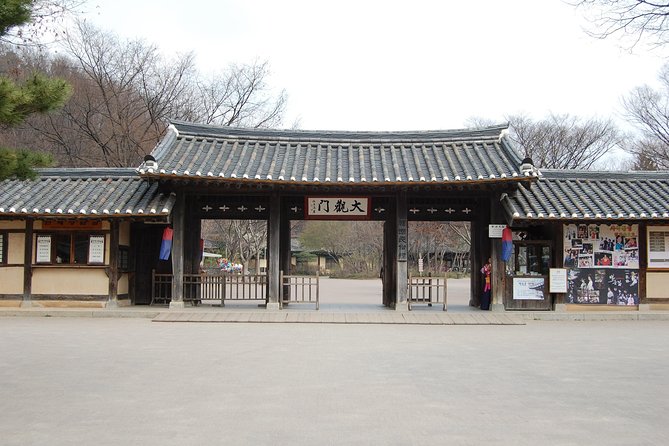
In the afternoon, you head to the Korean Folk Village, described as a living showcase for traditional Korean life and folk culture. This is where the tour turns from “heritage facts” into “heritage in motion.”
You get about 1 hour 20 minutes, with time to walk around and watch demonstrations. The tour includes hands-on style craft watching like pottery making, basket weaving, and the making of winnows. There are also demonstrations related to musical instruments and embroidery, plus items connected to bamboo, wood, and brass ware.
This part tends to land well when you go with the right mindset. Think “see how things are made,” not “step into one perfect real village with zero performance elements.” You are there to observe traditions being explained and displayed.
Some people have found the Folk Village less satisfying when they expected something more purely historical. My advice is to read the tone of the place before you judge it. If you enjoy seeing processes, you’ll get value even if the setting is curated for visitors.
Also, do not over-plan your afternoon. The tour already gives you a full day. If you want to shop, use the time you have here because you might not have a second chance later.
Price and Value: What You’re Really Paying For at $140
At about $140 per person, you are buying three things: time savings, guided interpretation, and transport.
First, the coach pickup and drop-off are real value. Palace hopping and temple-to-village logistics are not hard, but doing it efficiently in a single day is. You also have a maximum group size of 10, which helps keep the experience from feeling like a cattle line.
Second, you are paying for the guide’s “make it make sense” work. The palace and museum stops are where a guide can dramatically improve what you notice. Even among guides, the day can vary a lot. I saw names like Winnie, Sunny, Dora, David, and Michelle praised for English and for keeping things moving, which suggests guide quality can be a major part of your experience.
Third, you get lunch included. When a tour bundles food, it often lowers your stress level in a way that is worth something.
Is it perfect value? The ginseng center is the tradeoff. If that stop feels like a forced sales pitch, your money is still spent, but the “heritage return” can drop. In contrast, if you treat ginseng as optional browsing, the rest of the day can feel like a solid deal.
Who This Tour Suits Best (and Who Might Skip It)
This tour fits you if:
- You want a one-day Seoul orientation that connects palace, temple, museum, and folk culture
- You like walking with explanations, not only reading signs
- You want the convenience of pickup and a small group
- You are okay with a moderate amount of walking
It might be less ideal if:
- You dislike shopping stops or sales presentations
- You want lots of free time at each site to wander at your own pace
- You are expecting long, deep museum time rather than quick guided highlights
If your priority is strictly palace details, you might still enjoy this tour, but you should accept that the palace stop is about guided browsing rather than hours of solo exploration. If your priority is crafts and village life, you’ll likely love the Folk Village portion, but go in with flexible expectations.
Should You Book This Korean Heritage Tour?
I’d book it if you want a structured day that helps you understand Seoul’s layers: royal ceremony at Gyeongbokgung, daily-life context at the National Folklore Museum, spiritual space at Jogyesa Temple, and practical cultural crafts at the Korean Folk Village. The small group size and included lunch add to the feel-good convenience.
Before you go, make peace with one thing: the ginseng center stop exists, and it can be the part you enjoy least. If you can handle that as a quick information and browsing break, the rest of the day can be genuinely worthwhile.
FAQ
What time does the tour start?
The tour starts at 8:30 am, with hotel pickup before you begin visiting sites.
How long is the tour?
The total duration is about 8 hours 30 minutes.
Is hotel pickup and drop-off included?
Yes. Round-trip hotel transport by air-conditioned coach is included.
Does the tour include admission tickets?
Gyeongbokgung Palace admission is included. The National Folklore Museum stop notes free admission, Jogyesa Temple is free, and the Korean Folk Village admission is included.
What happens if Gyeongbokgung Palace is closed?
Gyeongbokgung Palace is closed on Tuesdays. On those days, the tour visits Deoksugung Palace and also tours the Seoul Museum of History.
Is lunch included?
Yes. You stop for a traditional Korean lunch, and it is included in the tour.
How much walking is involved?
The tour involves a moderate amount of walking, so comfortable walking shoes are recommended.
How large is the group?
The tour runs with a minimum of 4 people and a maximum of 10 travelers.
Is free cancellation available?
Yes. You can cancel up to 24 hours in advance for a full refund. If you cancel less than 24 hours before the start time, the amount paid is not refunded.
More Palace Visits in Seoul
- Small-Group Royal Palace and Seoul City Tour (hotel pick-up)
★ 5.0 · 1,474 reviews - Seoul: Palace, Temple and Market Guided Foodie Tour at Night
★ 4.9 · 750 reviews - Seoul Highlights: Gyeongbok Palace, Insadong & N Seoul Tower
★ 4.7 · 726 reviews - Seoul: City Hightlights, Palace Tour, and Optional Hanbok
★ 4.9 · 664 reviews
Recently reviewed in Seoul
- Korean Folk Village & Suwon Hwaseong Fortress Private Tour★ 5.0 · 3 reviews
- Seoul City Private Tour (Optional layover)★ 5.0 · 3 reviews
- 5D4N Korea Cultural Heritage immersion Private Tour★ 5.0 · 3 reviews
- War Memorial, Jogyesa Temple & Tapgol Park Tour in Seoul★ 4.5 · 3 reviews
- Private Tour : Royal Palace & Traditional Villages wearing Hanbok★ 5.0 · 3 reviews
- Full Day Private Seoul Tour for foodies★ 5.0 · 3 reviews
- Nami Island & Nearby Attractions : Charter Van Tour With Driver★ 4.0 · 3 reviews
- K-Pop Tour★ 3.5 · 3 reviews
Palaces, compared.
Gyeongbok Palace, Bukchon Village, and Gwangjang Tour
Read our review →
Best Seoul City Tour (Gyeongbokgung Palace,Insadong,Namsan Tower)
Read our review →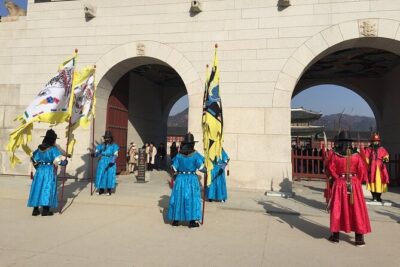
Small-Group Royal Palace and Seoul City Tour (hotel pick-up)
Read our review →
Seoul City Sightseeing Tour Including Gyeongbokgung Palace, N Seoul Tower, and Namsangol Hanok Village
Read our review →Gyeongbok Palace, Bukchon Village, and Gwangjang Tour
Read our review →
Palace, Temple and Market Guided Foodie Tour at Night
Read our review →
Seoul Highlights: Gyeongbok Palace, Insadong & N Seoul Tower
Read our review →
City Hightlights, Palace Tour, and Optional Hanbok
Read our review →Browse the lists this tour appears in