
Reviewed · 3-DAY EXPERIENCES
3-Day Korea Western course by K-shuttle Tour from Seoul to Busan
Korea’s west coast can feel big and complicated, especially if you do not read Korean well and you are trying to connect towns by public transport. This 3-day Seoul-to-Busan course packages the hard parts, so you can focus on the sights, not the schedules. I like the coach comfort that gets you out of Seoul and across the region without daily logistics stress.
I also like that it is built around 4-star accommodation with breakfasts plus a professional guide to connect the dots between sites like Baekje-era tombs, Jeonju’s hanok streets, and Jinju Fortress. One possible drawback: you are on a fixed route with lunch and dinner on your own, so you will want a plan for where and when you eat.
Key highlights that make this trip worth your time
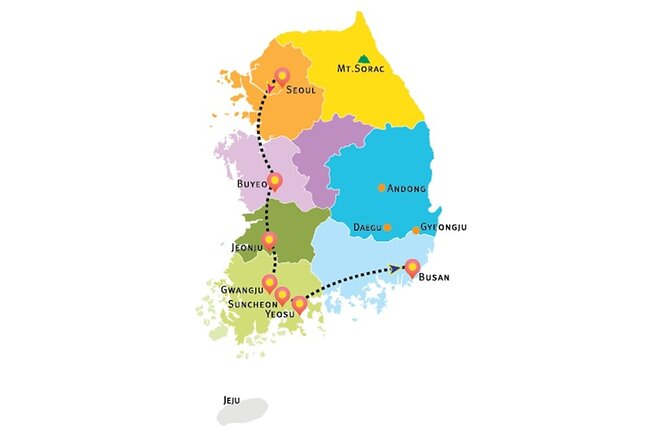
- Seoul-to-Busan west coast route in only 3 days, with coach transport doing the long-distance work
- Historic stops that explain why things matter, from Baekje royalty to Admiral Yi Sun-sin
- Jeonju Hanok Village time to experience traditional life, not just pose for photos
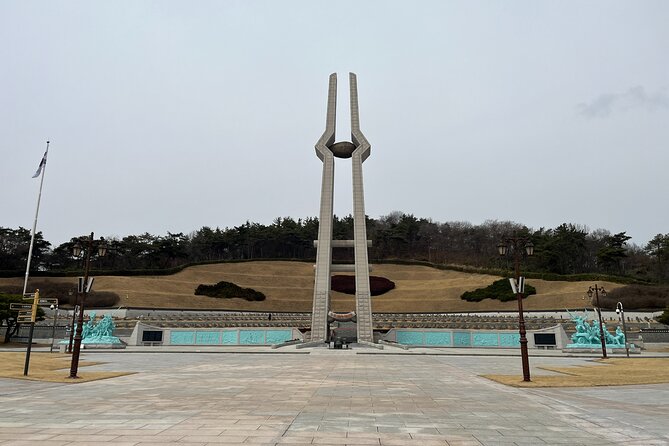
- May 18th National Cemetery for a serious, grounding moment of Korean democracy history
- Suncheon Bay Garden for a carefully planned dose of flowers and shaded walking paths
- Jinjuseong Fortress in Jinju, tied to the 1592 Japanese invasion and full of layered naming history
Start at Dongwha Duty Free, then let the coach handle the hard part
The tour begins with an early meeting at the parking lot next to Dongwha duty free shop at exit 6 of Gwanghwamun subway station, with a start time of 8:00 am. That detail matters because you are not rolling out whenever you feel like it. You should plan to arrive a bit before 8:00, since “finding the right bus” is the kind of problem you want to avoid on day one.
Good news: the meeting point is near public transportation, and you will use a mobile ticket, so you are not hunting for paper vouchers. Another practical point, one luggage per person is best. The vehicle has limited compartment space, and this tour expects one main bag per traveler.
Also note there’s no hotel pickup and drop-off. You will meet at the Seoul spot and later finish at Busan Train Station area, so you need to be comfortable getting yourself to the meeting point and then back out again in Busan.
With a maximum group size of 40, you should have enough structure to move smoothly, but not so many people that every stop becomes chaotic. The tour also runs with a professional guide and may be multi-lingual, which is helpful if you want explanation, not just transportation.
A few more Seoul days side by side
- Best DMZ Tour Korea from Seoul (Red Suspension Bridge Optional)
★ 5.0 · 41,422 reviews - DMZ Tour: 3rd Tunnel, Option(Suspension Bridge, Boat) from Seoul
★ 5.0 · 21,373 reviews - DMZ tour south Korea from Seoul (NK experience hall, defector)
★ 5.0 · 20,599 reviews
Baekje tombs and Gongju mountain views: Day 1’s “big lessons” stops
Day 1 has a clean historical arc, starting with the Songsan-ri Tombs and the Royal Tomb of King Muryeong. This is Baekje-era Korea, and the site’s layout is part of the story. The Songsan-ri Tombs are described as containing representative relics of the Baekje period, including graves from when Baekje’s capital was Gongju. Only seven graves have been discovered so far, so when you stand there, you are seeing a carefully preserved snapshot of royal burial culture.
Then you hit King Muryeong’s tomb, the seventh tomb. What I find compelling here is the origin story: the tomb was discovered accidentally while installing pipes meant to prevent flooding of tombs 5 and 6. That kind of detail turns a “museum stop” into a real moment of discovery, and it helps you understand why archaeologists got more than they expected.
The tomb is also noted for being unusual in how it was built and what it contained. It was built with bricks like the sixth tomb, and many national treasures were found inside. For you, that means this is not just walking around outdoors. It is a stop designed for comprehension, where the guide can connect architecture and artifacts to what scholars study about Baekje culture.
After that, the tour moves to Gongju Gongsanseong Fortress, a mountain castle established during Baekje. Expect a hike up a trail path, but the payoff is the view. You get a look over the Geumgang riverside from the fortress, and the route continues toward Imnyugak Pavilion, described as the largest of its kind within the fortress. If you like getting your bearings by physically climbing to viewpoints, this is a satisfying stop.
A small consideration: it is easy to underestimate how tiring fortress trails can be, especially in warm or humid weather. Wear solid shoes, and bring water. Even if the time looks reasonable on paper, you will spend energy going up and down, and your legs are part of the experience here.
Jeonju Hanok Village: where the traditional rooflines are more than a photo prop
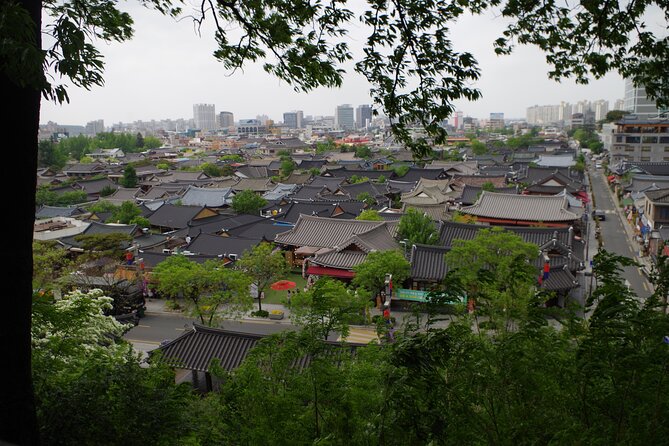
Jeonju Hanok Village is a different vibe from the stone-and-royalty sites. You are in hanok territory, and the description focuses on what makes the buildings feel distinct. Those roof edges are slightly raised toward the sky, and even if you have seen hanoks before, Jeonju’s look is one of the reasons it remains famous.
More importantly for your time, part of the hanok area is set aside for a Hanok Life Experience Hall. This is where you can do more than glance. You can experience traditional Korean life, and the stop also mentions traditional food like bibimbap from the Jeonju region.
The practical win here is simple: Jeonju gives you a chance to slow down and move at human pace. In a 3-day coach tour, that kind of breathing room matters.
That said, be realistic about “free time” behavior inside places like this. You will still be guided through the schedule, so plan to stay flexible and not expect a completely independent wander session. If you want time to browse shops or linger over food, tell yourself to buy time by choosing what you skip, not by trying to do everything.
May 18th National Cemetery and Suncheon Bay Garden: emotion plus color
Day 2 has a powerful pairing: May 18th National Cemetery, then Suncheon Bay Garden, and finally a stop honoring Admiral Yi Sun-sin.
Start with May 18th National Cemetery. This place is described as a symbol of freedom and democracy, and it is also the grave of victims during the May 1980 contention for democracy. The details are specific and heavy: victims were carried and buried by handcarts and garbage trucks. Later, in 1997, the cemetery was exhumed and reburied at this memorial, and May 18th became a national holiday commemorating people’s desire for democracy.
This is the kind of stop that reshapes how you see a country. You might not be thinking about Korean politics when you booked a west coast tour, but the guide’s context turns this from a check-in point into a real understanding moment. I recommend you take your time here. This is not the place to race through to maximize photos.
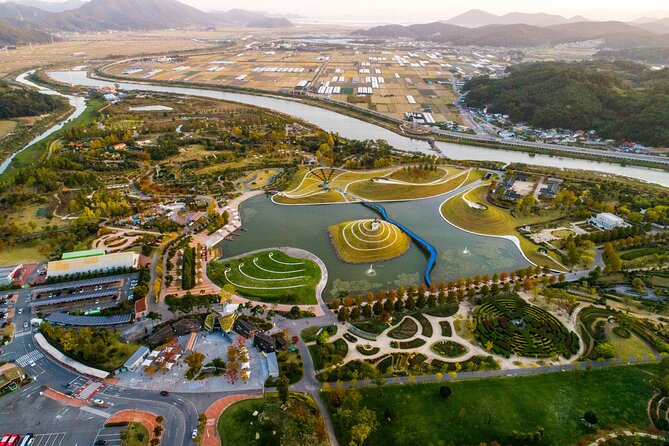
Then, the tour swings to a much lighter tone: Suncheon Bay Garden. The garden is set up as a conservation area covering 1.12 square kilometers of natural habitat. It is also full of named variety, with over 505 species of trees and 113 species of flowers. The stop description calls out tulips and royal azaleas as particularly impressive, plus a nearby canola flower field that can create a yellow wave effect in May.
If your trip dates line up with spring blooms, this stop can be visually stunning. If they do not, you can still enjoy the structure of the garden and the shaded walkways the trees provide. Either way, it is a break from pure architecture and museum-style stops, and it gives your body a change of pace.
Different day, same base:
- Seoul: The Best DMZ Tour with Optional Suspension Bridge
★ 4.7 · 4,978 reviews - Signature DMZ Tour: Exclusive Defector Talk & Suspension Bridge
★ 5.0 · 4,459 reviews - Thrilling Korean DMZ 3rd Tunnel Tour from Seoul + Red Bridge Rush
★ 5.0 · 3,097 reviews - Seoul: DMZ Tour & Suspension Bridge (Option English/Spanish)
★ 4.9 · 2,628 reviews
Admiral Yi Sun-sin stop: a headquarters story you can feel in the artifacts
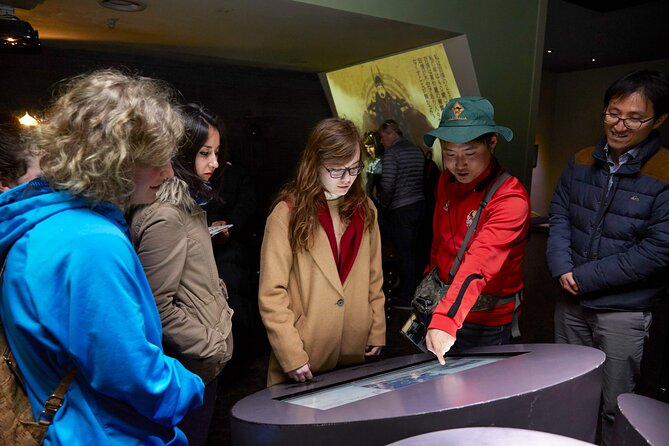
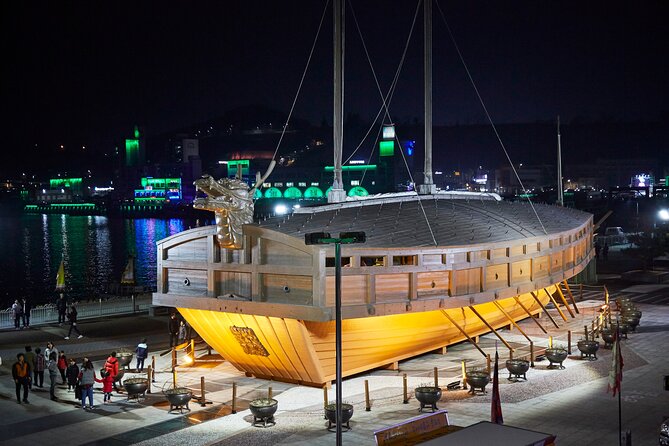
The Statue of Admiral Yi Sun-sin stop connects directly to the Imjin Waeran War from 1592 to 1598. The site is described as a place Admiral Yi Sun-sin used as headquarters during the Japanese invasion. That matters because the stop is not just about a statue. It is also framed around artifacts that honor his efforts protecting the country.
The hall has national treasure status, listed as National Treasure No. 304 in 2011. I like stops like this because they do not require you to be a history expert. The guide can explain why this place was used, and you can walk through and see how the displays reinforce that story.
Also, this is the kind of stop that can work well as a mid-day mental reset. After serious and nature-focused moments, it gives you a clear narrative and a focused indoor or sheltered space.
Jinjuseong Fortress, then Busan Station: a satisfying ending without stress
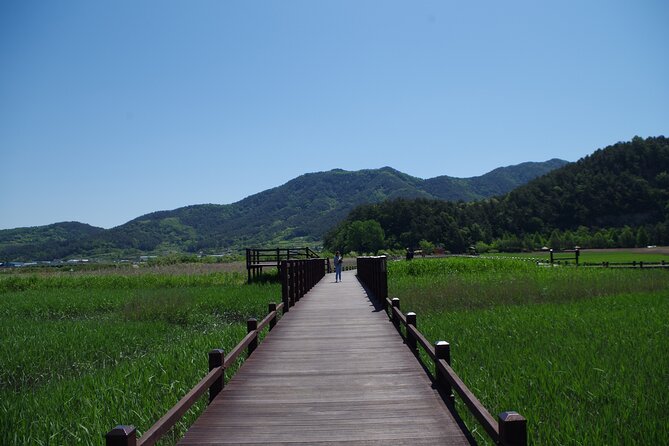
Day 3 is shorter and ends with a practical off-ramp: Busan Train Station drop around 1:00 pm, with the final drop point listed as near Jungang-daero in Busan. That timing is actually helpful. You can plan your next steps in Busan right away instead of being stuck waiting for later transfers.
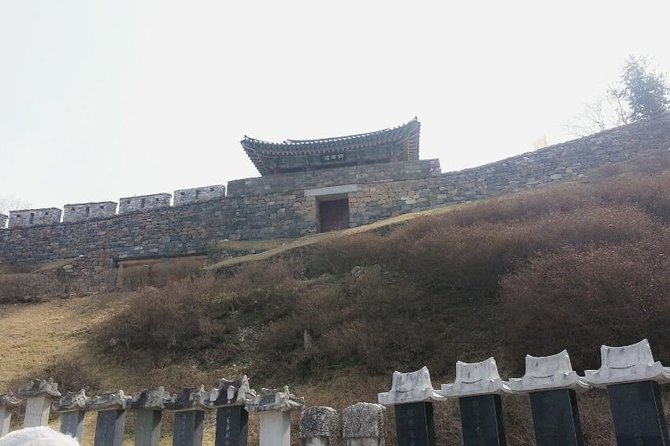
The main first stop is Jinjuseong Fortress. The tour frames this fortress through conflict history, describing its link to the Japanese invasion in 1592. It also gives you a layered identity: the fortress was originally named Geoyeolseong Fortress during the Three Kingdom Period, renamed Chokseokseong Fortress in the Goryeo Dynasty, and finally became Jinjuseong Fortress in the Joseon Dynasty.
For me, those name changes are not trivia. They help you understand that the same mountain fortifications can exist across centuries, shifting control and purpose. When you are standing there, it is easier to see the site as a living part of regional defense history, not just a single-period ruin.
Where Boseong’s green tea plantation fits into this west-coast plan
The tour overview says you will reach far-flung destinations including a green tea plantation in Boseong. Even though the day-by-day list you get in your schedule can emphasize other stops more strongly, the advertisement intent is clear: this is not meant to be only big cities and famous monuments.
If a green tea plantation stop is important to you, I suggest you confirm the exact timing once your confirmation arrives. This is the kind of detail that can change with operations, season, and how the route is grouped.
Also, be ready for a gentle reality check: plantation visits often come with walking and photo angles that depend on the season and weather. Pack accordingly, even if you think “it is just tea farms.”
Price and value: what $749 buys you, and what it does not
At $749.00 per person for a 3-day tour, the value question is the key one. Here’s what you get that reduces your risk and effort:
- 2 nights in 4-star accommodation
- Transfer by coach from Seoul side to the Busan side
- Professional guide for the interpretation piece
- Breakfasts as per itinerary
- Some entrance fees are included (many are marked free, some are ticketed)
Then there are the costs that are clearly not included: lunch and dinner. That is common for multi-day coach tours, but you should treat it as part of budgeting rather than a surprise. You will also want to account for any personal snacks and drinks you buy along the way, especially since outdoor stops like fortresses and garden areas can work up an appetite.
Single travelers are also subject to a single traveler surcharge if you need your own room. The tour notes a room-sharing approach for odd-number group bookings, with pullout bedding available for a third person at no extra charge, unless someone requests a single room. If you are traveling solo, check the room arrangement option you prefer.
One more value signal: the tour is capped at 40 people, and the average booking window is about 34 days in advance. If you want the simplest experience, booking earlier helps you lock in the route and avoids last-minute schedule changes.
Who this tour suits best (and who should consider alternatives)
This tour fits best if you want a structured west coast Korea plan without having to figure out transit between multiple regions. It is especially good for first-timers who need history explained in plain terms and who would rather spend time seeing sites than studying train maps.
It also suits people who like variety packed into a short window: royal tombs and mountain fortresses on day one, then a mix of civic memory and garden walking on day two, then Jinju’s fortress and Busan’s station area to wrap things up.
It may be less ideal if you know you want total freedom. Because lunch and dinner are not included, and because you follow a set route, you will not get the kind of wandering independence you could get from renting a car or using public transport with no guide. But if your priority is reducing stress and getting to remote-ish places with less hassle, this is a strong match.
If you are bringing kids, the tour states children must be accompanied by an adult. It also specifies child pricing depends on age and whether the child shares a bed with an adult, or sleeps in their own bed.
Should you book the Seoul to Busan Western course?
Yes, I would book it if you want a high-comfort way to see a meaningful slice of South Korea’s west coast in only three days. The big appeal is the combination of coach logistics handled for you, interpretation by a professional guide, and stops that range from major historical sites to places like Jeonju Hanok Village and Suncheon Bay Garden.
Book with extra care if you are very sensitive to fixed schedules, long coach time, or you do not enjoy walking on fortress trails and garden paths. Also make sure Boseong’s green tea plantation stop is on your actual schedule for your dates, since the overview mentions it and your day-by-day sequence may emphasize other highlights more strongly.
If you want your Korea trip to feel efficient without feeling rushed, this tour is one of the easier ways to do it.
FAQ
Where is the meeting point in Seoul and what time does the tour start?
The tour meets at the parking lot next to Dongwha duty free shop at exit 6 of Gwanghwamun subway station in Seoul, starting at 8:00 am.
Does the tour include meals?
Breakfast is included as per the itinerary. Lunch and dinner are not included.
What kind of accommodations are included?
The tour includes 2 nights of accommodation in 4-star hotels, plus breakfasts.
What should I do about passports and the booking name details?
You need to provide the passport name, number, expiry, and country for all participants at the time of booking.
How does room sharing work if I book as a group of three?
If groups book with an odd number, the tour states they may share one room, with a pullout bed for the third person at no extra charge. You can request a different room setup if you want.
How does cancellation for a full refund work?
You can cancel up to 6 days in advance for a full refund. The tour specifies that for a full refund, you must cancel at least 6 full days before the experience start time.
Recently reviewed in Seoul
- Korean Folk Village & Suwon Hwaseong Fortress Private Tour★ 5.0 · 3 reviews
- Seoul City Private Tour (Optional layover)★ 5.0 · 3 reviews
- 5D4N Korea Cultural Heritage immersion Private Tour★ 5.0 · 3 reviews
- War Memorial, Jogyesa Temple & Tapgol Park Tour in Seoul★ 4.5 · 3 reviews
- Private Tour : Royal Palace & Traditional Villages wearing Hanbok★ 5.0 · 3 reviews
- Full Day Private Seoul Tour for foodies★ 5.0 · 3 reviews
- Nami Island & Nearby Attractions : Charter Van Tour With Driver★ 4.0 · 3 reviews
- K-Pop Tour★ 3.5 · 3 reviews
3-Day Experiences, compared.
Jeju English Private Taxi Tour(1day, 2days, 3days & 1 to 12pax)
Read our review →
3days Private Free Schedule Tour a lot of Experience Driver
Read our review →
3-Day Private Tour of Jeju Island Including Nanta Show
Read our review →
Browse the lists this tour appears in