
Reviewed · FOOD & DRINK
10day Small Group Discover Korea Tour : History, Food and Culture
Korea is one of those countries where the old and the new share the same street, and this 10-day route uses that idea well, starting on Jeju Island and ending in Seoul. I especially like the mix of natural stops (volcanic caves and beaches) and food stops (markets, street bites, and a real cooking class). One thing to think about first is pace, because you’ll move cities on most days and a day like the DMZ needs an early start.
I also like that this tour is built around an English-speaking guide and an AC vehicle, so you are not hunting down tickets or figuring out timing across multiple regions. The biggest confidence boost for me comes from the way the tour experience is described as great even for an elderly traveler, which hints at solid guidance and a group flow that does not leave people behind.
Key highlights to pay attention to before you book
- Jeju’s volcanic hits in two days, from Manjanggul Cave to Seongsan Ilchulbong
- Temple stay at Golgulsa, plus classic Gyeongju UNESCO-area stops
- Busan by the water, including Haedong Yonggungsa and seafood-heavy markets
- Seoul food and neighborhoods, from Insadong to Kwangjang Market and Bukchon Hanok Village
- DMZ with real access, including the Third Tunnel and Dora Observatory
- Two finale experiences, NANTA in Myeongdong and a hands-on k-cooking class
Why this Jeju to Seoul route feels worth your time
This tour is interesting because it treats South Korea like a series of living scenes, not a checklist. You go from Jeju’s geology to Busan’s coastline energy, then into Gyeongju’s historic Silla-world, and finally land in Seoul where palaces, markets, and city views all sit side-by-side.
What I like best is that the stops are not just “famous,” they’re the kind you can understand in minutes. A volcanic cave is self-explanatory once you walk in. A night pond in Gyeongju clicks the moment you see it. And in Seoul, you can taste your way through neighborhoods without needing a translator.
More Historical Tours in Seoul
- Seoul: Evening Dark History, Folklore & Ghost Story Walking Tour
★ 5.0 · 593 reviews - Hanbok Photoshoot and History Tour at Gyeongbokgung Palace
★ 5.0 · 276 reviews - Seoul: City Highlights and Historical Experience No Shopping
★ 5.0 · 74 reviews
Price and value: what the $3,800 buys you (and what it does not)
At $3,800 per person, you’re paying for coordination. This price includes 3.5 to 4-star lodging for 9 nights, an English-speaking guide, an AC vehicle, entrance fees on the plan, domestic flights between Jeju and Busan plus Gimpo to Jeju, and a set meal schedule (7 breakfasts, 7 lunches, and 2 dinners). It also includes a Golgulsa Temple Stay night, which is not a simple add-on.
That’s the real value: you avoid piecing together a multi-city trip with flights, hotels, timed admissions, and daily route planning. The tradeoff is that the tour controls the framework. If you love long unstructured free time, you might feel slightly “on the clock,” especially on days that start with travel segments.
Also note that meals are only partially included. Day 1 specifically says meals are on your own after your Jeju arrival and check-in, so plan to use the local convenience of markets and cafés when the itinerary leaves space.
Day 1 on Jeju: Goblin Road weirdness plus art museums and sea air
Day 1 starts with a flight from Gimpo to Jeju that takes about an hour. There’s an important practical note here: if weather delays or cancellations happen, the itinerary will be adjusted on the ground, which is the correct way to handle islands.
Once you land, you meet the driver and get to your hotel in Jeju, with check-in done by yourself. Then the tour goes right into visual surprises.
- Dokkaebi Road (Goblin’s Road) is short but memorable. The fun part is the gimmick-yourself experiment: turning off your engine or placing a ball on the road, because the slope and perspective make the road feel like it’s doing the opposite of what you expect.
- ARTE Museum Jeju focuses on video and light art. It is designed for walking, watching, and taking in the space, not for museum stamina.
- Spirited Garden is a bonsai park that people talk about for its scale and polish, with a reputation for awards and celebrity visits.
- Hyeopjae Beach is your reset button. It’s a good place to bring swimwear if you want that option, but you can also just sit, stroll, and use a café with sea views if the sun is too strong.
- Jusangjeollidae brings you to volcanic column formations. This is the kind of geology that makes you stop and look longer than planned.
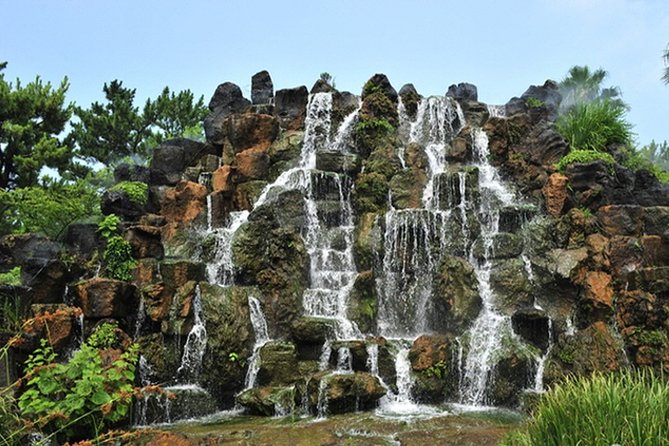
- Cheonjiyeon Falls is smaller than some waterfall stops, but it’s an easy nature capper.
How to use this day well: put comfortable shoes first. You’re stacking sights, and Jeju sidewalks are not always friendly to dress shoes.
Day 2 on Jeju: lava tubes, black-sand beaches, and Seongsan views
Day 2 goes deeper into Jeju’s volcanic story, and it’s a strong second-day combo of nature plus local culture.
You start with Manjanggul Cave, regarded as one of the longest and finest lava tubes in the world. Even without the scientific lecture, the key is simple: walking inside a lava-formed tunnel changes your sense of scale.
Next is Sangumburi Crater, described as a flat crater with impressive width and depth. The shape matters here. The crater feels like a natural bowl you can frame from multiple angles.
Then you get Gwangchigi Beach, known for black sand made from basalt weathering. If you like photos, the contrast is great. If you just want a breather, the shore is an easy place to slow down.
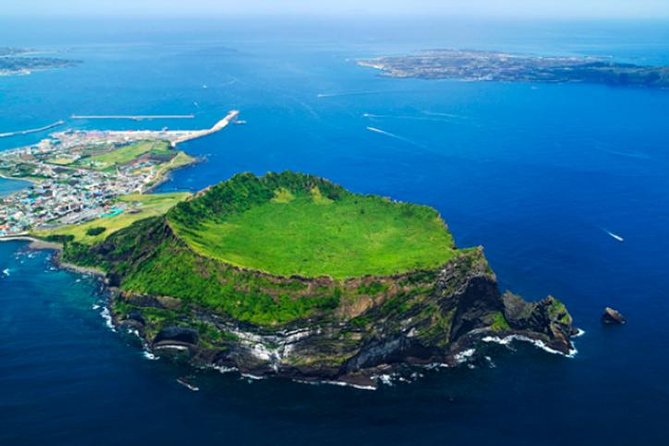
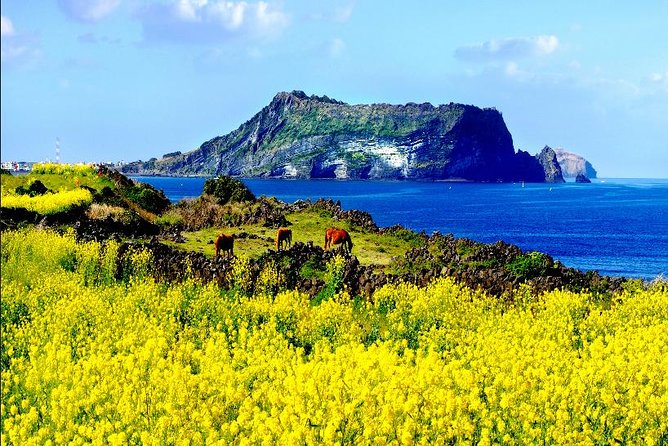
After that is Seongsan Ilchulbong, also called Sunrise Peak, with a crater top you can climb to. The climb is the point, because you’re working for that view.
You then shift into culture with Seongeup Folk Village, set at the foot of Mt. Halla. This stop is about indigenous Jeju life and long-kept traditions, so it plays well if you like learning the “how people lived” version of history.
Finally, Dongmun Market closes the loop with food and shopping. It’s noted as one of Jeju’s most popular traditional markets and has a post-1945 history. The practical win: you can eat casually without planning a whole sit-down meal.
Possible drawback today: it’s a lot of walking in one direction. If you tire easily, pace your cave and crater climbs, then let the market be your final low-effort stop.
Different day, same base:
- Best DMZ Tour Korea from Seoul (Red Suspension Bridge Optional)
★ 5.0 · 41,422 reviews - DMZ Tour: 3rd Tunnel, Option(Suspension Bridge, Boat) from Seoul
★ 5.0 · 21,373 reviews - DMZ tour south Korea from Seoul (NK experience hall, defector)
★ 5.0 · 20,599 reviews - Seoul: The Best DMZ Tour with Optional Suspension Bridge
★ 4.7 · 4,978 reviews
Day 3 to Busan: colorful hillside homes, sky views, and fish-market reality
The transition day is flight and logistics. You go back to Jeju Airport, take the flight to Busan, and then start exploring fast.
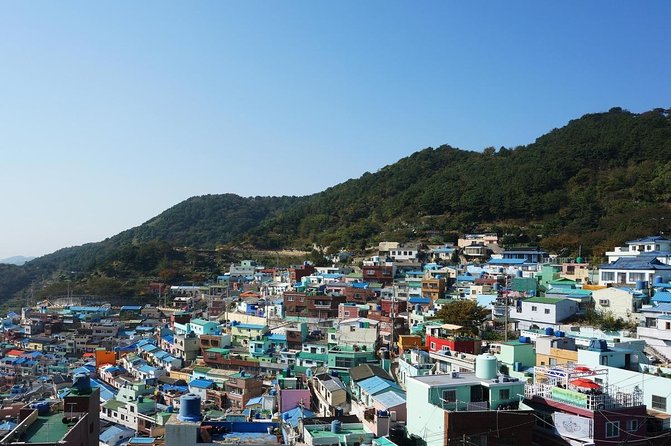
In Busan, Gamcheon Culture Village gives you that staircase hillside vibe. The homes built on the coastal mountain make the views and photos work without feeling staged. It’s a great first impression of Busan’s creativity.
Then you hit Songdo Skywalk, a seaside boardwalk-style stop where the tour notes it’s a popular spot for locals who think the area stays especially clean. There’s also the Ocean Cable Car as an optional add-on. If you like angles, it’s worth considering, but you don’t have to feel “behind” if you skip it.
BIFF Square is the food street side of Busan, with a filming-festival reputation and plenty of vendors. Sweet pancakes are called out here, so treat that as your “test bite” and keep moving.
For seafood intensity, you go to Jagalchi Market, Busan’s biggest fish market stop on this route. It’s lively and a little intense visually, because you see what’s fresh and what’s prepared. The good news is it’s short, around 20 minutes, which keeps it from turning into a sensory overload.
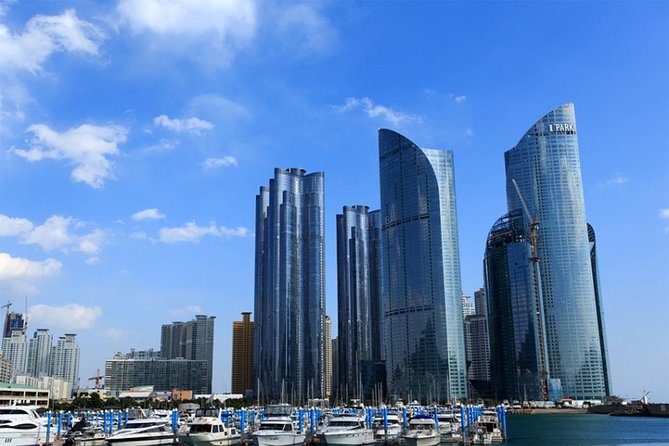
You then get a stop at Busan’s longest double-decker bridge, highlighted for its design and sea views. At night the area can be tied to light festivals, fireworks, and drone events, though those depend on timing.
Finally, Haedong Yonggungsa is the sea-temple payoff, described as the most beautiful temple in Korea and famous for being right by the shore. When you get here, the day’s earlier market energy makes sense, because you end with calm.
How to make this day enjoyable: if you’re not used to heat, do your skywalk and cable car earlier, then save temple time for later when the light softens.
Day 4 in Gyeongju: Golgulsa Temple Stay plus Bulguksa and Seokguram
By Day 4, the trip shifts from “moving fast” to “slower and deeper.” You visit Golgulsa Temple outside historic Gyeongju, set amid Hamwolsan Mountain. This stop is built around Templestay programs that run year-round, and this tour includes the temple stay night.
Even if you don’t know Korean temple etiquette, this kind of stay helps you feel the rhythm of the place. You’re not just sightseeing a building, you’re living inside the daily structure.
After that you see Bulguksa Temple, described as a 1,000-year-old Buddhist temple from the Shilla Kingdom. It’s a classic stop, and the value here is that it connects architecture with the story of power and faith across centuries.
Then comes Seokguram, home to a standout Buddhist statue. The tour description emphasizes its fame and perfect form, and it fits the theme of “craft you only understand when you see it in person.”
Practical tip: temple stays and temple grounds can mean uneven surfaces. Keep your footwear simple, and bring a layer even if it feels warm outside, because temple settings can cool quickly.
Day 5 in Gyeongju: tombs, star science, and a night pond you will remember
Day 5 is pure Silla-era atmosphere.
You start with Daereungwon Tomb Complex, made up of five ancient tombs. This is history you walk through. It feels different from museum history, because you can sense what “a tomb complex” meant as a landscape feature.
Next is Cheomseongdae Observatory, described as the oldest surviving astronomical observatory in Asia. Even if you’re not a science person, the key detail is that it signals advanced observation long before modern tech.
Then you visit the Gyeongju National Museum, including the renovated Silla Art Gallery and Silla History Gallery. This is your chance to connect what you saw in the tombs and temples to artifacts and explanations.
In the evening, you get Donggung Palace and Wolji Pond, the stop famous for its night view. It’s called out as a must-see at night, and that’s exactly the kind of location where timing matters. If you can choose only one night photo spot in Gyeongju, this is the one on this plan.
You also visit Woljeonggyo Bridge, again highlighted for night views. The bridge-and-pond look is the payoff to the day’s earlier architecture focus.
Day 6 to Jeonju: horse-ear mountains, stone pagodas, and a food-first city
Day 6 is long and scenic, with a chain of stops that mix nature, spirituality, and food.
You begin with Maisan Mountain, described as looking like a horse ear. There’s also a stop at an observatory, and the plan notes a long journey to Jinan, which signals that this day includes real driving time.
Next is Tapsa Temple, recommended for its beauty. The big detail here is the over 80 stone pagodas linked to Lee Gapyong, a retired scholar. If you like “visual math” (repetition, scale, and pattern), this stop is satisfying because the pagodas create a rhythm in your mind.
Then you shift to Jeonju Hanok Village, explicitly called a food city. Here you try bibimbab, and the schedule includes time to enjoy Jeonju, plus a mention of a traditional rice wine table at night. This is one of those days where the itinerary keeps a simple promise: you walk hanok streets, then you eat well.
After that you visit:
- Gyeonggijeon Shrine, erected in 1410, holding a portrait of King Tae-jo, founder of the Joseon dynasty
- Jeondong Catholic Church, tied to Joseon-era Catholic martyrs and French priest Baudenet
- Omokdae and Imokdae, observatories for looking down over the village area
Your supper is at 옛촌막걸리 삼천점, described as a Korean style rice wine pub where the table comes with various side dishes as you order. This is a good note for practical travelers: it’s easier than trying to order everything alone from a menu.
Day 7-8 to Seoul: UNESCO fortress, palaces, hanok alleys, and market food
On Day 7, you travel to Seoul after breakfast. The plan says the drive is about 3 hours, and on the way you stop at Suwon Hwaseong Fortress, a UNESCO World Cultural Heritage Site. This stop is a bridge between Joseon-era history and the modern Korean city you’ll soon enter.
Then you go to the Suwon fried chicken street, where the description points out many restaurants lining the area. The highlight is a special flavor tied to Korean BBQ marinade style, so treat this as your “first Seoul taste” that still feels like a local stop.
Day 8 is full Seoul essentials.
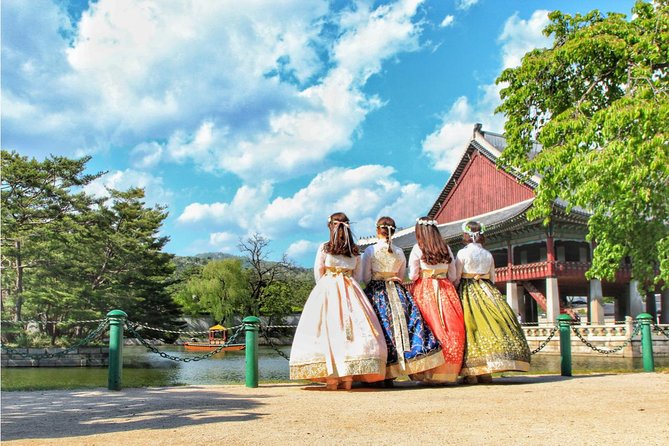
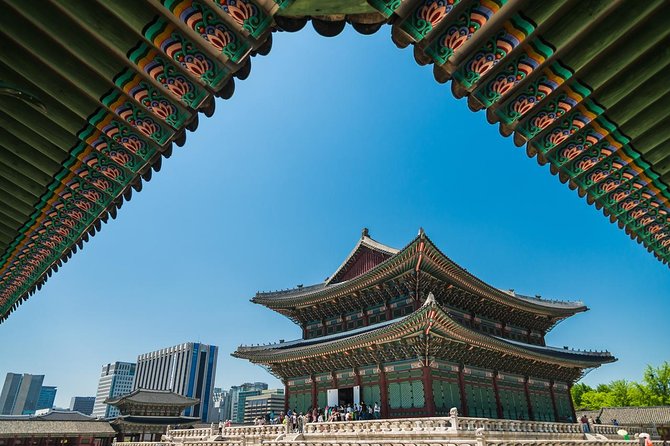
You start with Gyeongbokgung Palace, described as the first and largest Joseon palace built in 1395. You’re given a good time block, around 2 hours, which is important here. Many palace visits feel rushed when you try to squeeze them into 30 to 60 minutes.
Then it’s to Insadong for shopping and art galleries. This is where you can slow down and decide if you want small gifts, prints, or craft items.
You walk through Bukchon Hanok Village, described as hundreds of hanok homes from the Joseon Dynasty era packed together. The layout is labyrinth-like, so the practical point is to wear shoes and accept that you might need to turn around a few times to stay oriented.
Next comes Kwangjang Market, where you can try many foods like mungbean pancakes and Korean donuts, plus street staples such as gimbab and ddeokbbokki. The description says over 100 kinds of food, so come ready to snack like a pro, not like a person trying to eat one meal perfectly.
Then you ride up to N Seoul Tower for 360-degree views from about 480 meters above sea level, including the Namsan Mountain area. This is your visual “I finally get Seoul” moment.
The day ends with Jogyesa Temple, one of Seoul’s central temples, with festivals depending on season.
Possible drawback today: the market and hanok village are both walk-heavy. Balance your day by treating Kwangjang as a snack stop, then doing tower views before you get too tired.
Day 9 DMZ: what to expect from the military-zone rules
Day 9 is the tour’s most high-stakes day.
You go to the DMZ, described as a military zone with procedures. The itinerary is explicit about key rules: there’s no reservation for DMZ tickets, it operates on a first come first served basis, and you need to meet early. The practical implication is simple: eat your breakfast fast, show up on time, and do not count on a late start.
Then you visit the Third Tunnel, dug by North Korea after the Korean War. The stop includes the option to go down into the tunnel. It’s described as shocking and it’s the kind of site where your body reacts to the scale even if your brain tries to explain it.
Next is Dora Observatory, where you can view North Korean areas with binoculars, including mention of Gaeseong and an industrial complex area. The value here is that you’re not just hearing politics, you’re seeing why the geography matters.
You then stop at Tongil Park, described as the only village in the civilian control zone where people live, and it’s a final stop for DMZ shuttles where you can buy DMZ-related items.
Finally, Gamaksan Chulleong Bridge adds a lighter end. It’s tied to the Korean War battlefield history and includes a short hike to reach a view, around 10 minutes to get to what the description calls a suspension bridge view.
Day 10 in Seoul: NANTA, k-cooking, and Myeongdong energy
The last day is a fun shift from historical sites to performance and food.
You start with Cookin’ NANTA in Myeongdong, an English-friendly, non-verbal comic show combining Korean rhythm and slapstick style. It’s one of the most famous tourist shows, and it’s scheduled for 1.5 hours, so it works even if you’re tired from the DMZ day.
Then you do a small group k-cooking class in Seoul for about 3 hours. The menu changes every month, but the provided examples include bulgogi, gimbab, kimchi, and pancakes. This is a smart way to lock in flavor memory. By the time you cook it yourself, Seoul food stops being abstract.
After class, there’s time for Seonyudo, described as a Han river park area with panoramic Seoul views. Then you finish at Myeongdong Shopping Street, a classic spot for street food vendors and shopping, with about an hour on the schedule.
If you’ve been traveling for 10 days, this ending makes sense. It gives you noise, neon, and snacks without needing another long history stop.
Should you book this 10-day small group Korea tour?
I think this tour is a good booking when you want Korea’s big hits in one organized trip and you appreciate a guide who keeps things moving in a way that works for different ages. The strong points for me are the temple stay at Golgulsa, the way the route connects nature and history, and the fact that it ends with both a show and a cooking class so you leave with more than photos.
You might want to think twice if you hate travel days and you need lots of free, unscheduled time. With multiple city changes and early starts like the DMZ, you’ll feel the schedule, even with customization options discussed with your guide.
If you book, book smart: the schedule is popular, and the tour is noted as commonly booked about 53 days in advance. Plan for comfortable shoes, keep your camera battery charged, and be ready to snack at markets, because Seoul and Jeonju both reward curiosity with food.
FAQ
What time does the tour start each day?
The tour start time is listed as 9:00 am.
Are domestic flights included?
Yes. Domestic flights are included for Gimpo to Jeju and Jeju to Busan.
Which meals are included, and which ones are not?
The plan includes 7 breakfasts, 7 lunches, and 2 dinners. Meals not planned are on your own, such as after Jeju arrival on Day 1.
Is the Golgulsa Temple Stay included?
Yes. The itinerary includes 1 night at Golgulsa Temple Stay.
What should I expect during the DMZ visit?
The DMZ day includes rules like no reservations and first come, first served, with an early meeting time. You’ll spend time at the Third Tunnel, Dora Observatory, and Tongil Park as part of the DMZ route.
Does the tour offer pickup and mobile tickets?
Yes. Pickup is offered, and the tour includes mobile ticket support.
Can I customize destinations or change the itinerary?
Yes. The overview says destinations and the itinerary are open for discussion and change with the guide, and you can ask about places you want to visit.
More Food & Drink in Seoul
- Seoul Street Food Market Tour
★ 5.0 · 1,226 reviews - Seoul: Night Market Food Tour with Local Guide
★ 4.9 · 943 reviews - Downtown Seoul Guided Food & Market Tour with 8+ Local Tastings
★ 5.0 · 580 reviews - Small-Group Night Food Tour in Seoul with Korean BBQ
★ 5.0 · 304 reviews
Recently reviewed in Seoul
- Seoul City Private Tour (Optional layover)★ 5.0 · 3 reviews
- Korean Folk Village & Suwon Hwaseong Fortress Private Tour★ 5.0 · 3 reviews
- 5D4N Korea Cultural Heritage immersion Private Tour★ 5.0 · 3 reviews
- War Memorial, Jogyesa Temple & Tapgol Park Tour in Seoul★ 4.5 · 3 reviews
- Full Day Private Seoul Tour for foodies★ 5.0 · 3 reviews
- Private Tour : Royal Palace & Traditional Villages wearing Hanbok★ 5.0 · 3 reviews
- Nami Island & Nearby Attractions : Charter Van Tour With Driver★ 4.0 · 3 reviews
- K-Pop Tour★ 3.5 · 3 reviews
Food & Drink, compared.
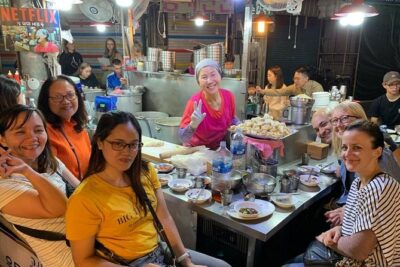
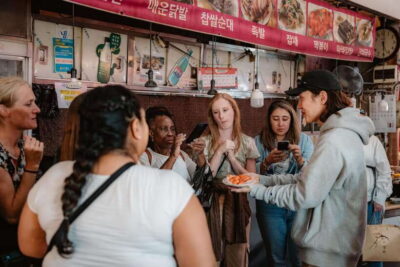
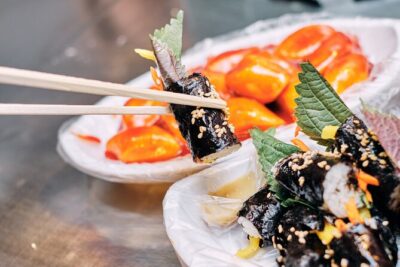
Downtown Seoul Guided Food & Market Tour with 8+ Local Tastings
Read our review →
Seoul Night Palace & Market Food Tour with Vehicle
Read our review →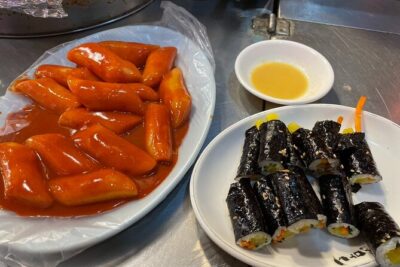
Seoul Fun Food Tour: 12 different food tastings
Read our review →
The Award-Winning PRIVATE Food Tour of Seoul: The 10 Tastings
Read our review →
Jasmil Baseball Stadium Game Ticket with Dinner/Beer
Read our review →Browse the lists this tour appears in