
Reviewed · JEJU TOURS
Jeju Island Taxi Join Tour
Jeju Island Taxi Join Tour is a practical way to see a lot of Jeju in one day without the stress of renting a car or figuring out bus transfers. I like the small-group size (up to 13) because it keeps the day from feeling like a cattle ride, and I also like that your Jeju City pickup and drop-off are built into the experience. You’ll get an air-conditioned vehicle and a guide who shares context as you go.
The main tradeoff is that it’s still a full day with many stops, so your time at each place can feel “just right” rather than slow and lazy. Also, not every attraction has admission included, so you’ll want to keep a little cash aside for separate tickets at certain stops, plus the required gratuity.
Key things to know before you go
- Up to 13 people keeps the pace flexible and makes it easier to ask questions
- Jeju City downtown pickup and drop-off saves you time compared with catching transit
- Admission is included for the stops marked included, but some major-feeling places are not
- Route swapping happens when Manjanggul Lava Tube or Yongmeori Coast close due to schedules or conditions
- West and South can be mixed, so you can tailor your day around what you want most
- Guides can be English friendly, and many drivers are known for being attentive with photo stops
Getting from Jeju City: 9:00 pickup, air-conditioned taxis, and small-group comfort
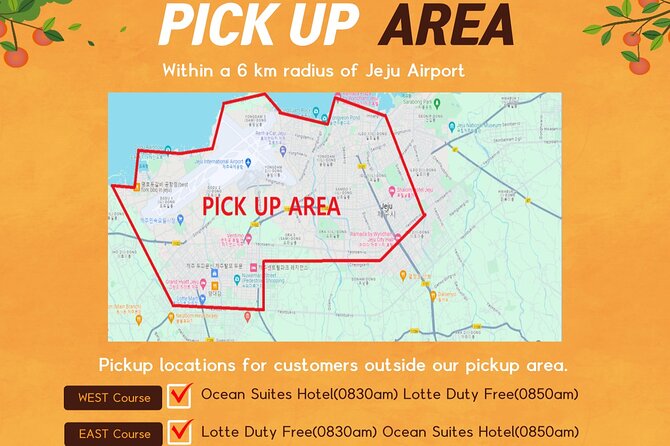
This tour runs like a taxi day, not a big bus day. You start at 9:00 am, and you get round-trip transfers if you’re staying in the Jeju City downtown area. If your hotel is outside that downtown zone, pickup is not available, so plan on meeting within the designated area.
The vehicle is air-conditioned, which matters on Jeju, where the weather can change fast. The group stays small, with a maximum of 13 travelers, and the operator only runs it when there are enough people to combine groups. The result is a day that usually feels organized, but not rushed like a tight group bus tour.
One more practical detail: you’ll have a mobile ticket, which cuts down on printed paperwork chaos. And yes, there is a required gratuity collected in cash, so budget for that early so it doesn’t become a last-minute surprise.
A few more Jeju days side by side
- Jeju: Eastern Jeju UNESCO Spots Day Tour
★ 4.9 · 1,148 reviews - Jeju: Western and Southern Sightseeing Day Tour
★ 4.8 · 972 reviews - East Jeju Essentials – Seongsan Ilchulbong (UNESCO) & Haenyeo
★ 5.0 · 939 reviews
Choosing East, West, or South, plus smart swap rules for closures
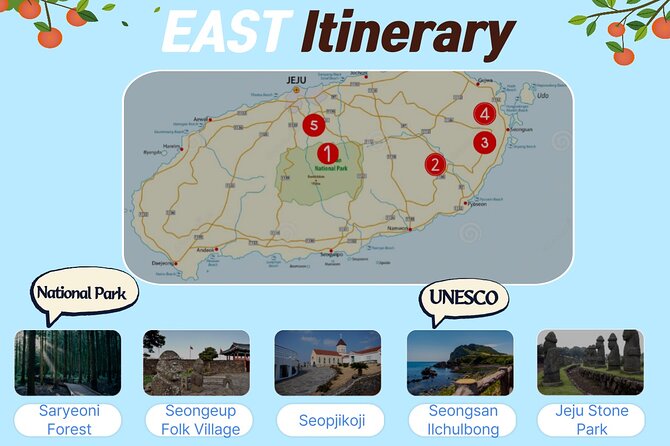
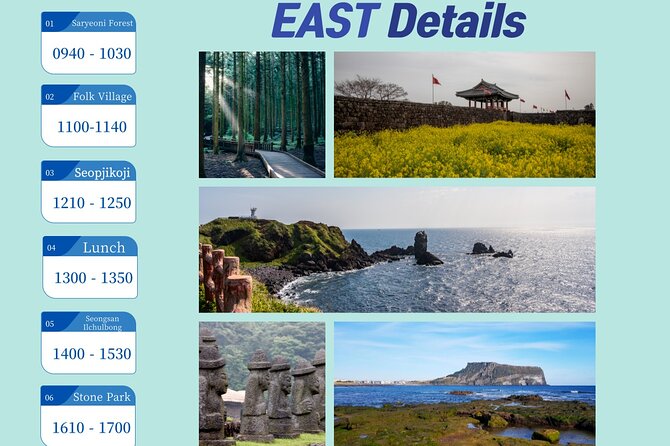
You pick one of three routes: East, West, or South. You can also mix the west and south course, which is great if you want more variety but still want someone else to handle the driving and routing.
Jeju days can be weather-dependent, and this tour has a few built-in swaps:
- Manjanggul Lava Tube has a scheduled closure on the first Wednesday of every month. If that happens, you visit the Jeju Haenyeo Museum instead.
- Yongmeori Coast may close during rising tides or bad weather. When it’s closed, the tour substitutes Mt. Songaksan.
There’s also seasonal timing baked into the day. For example, Sangumburi Crater is a preferred stop in October and November, and it may replace Seopjikoji in that season. So if you’re traveling in fall, you’ll likely get an especially good match for the timing.
My advice: pick the route based on your “must-sees.” If you want volcanic caves and the dramatic east-coast vibe, East is the obvious choice. If you’re drawn to flowers, beaches, and tea culture, West can make more sense. If you’re chasing waterfalls and coastal cliffs around Seogwipo, South is your best bet.
Manjanggul Cave: the lava-tube world under Jeju
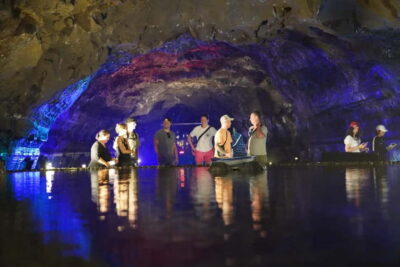
Manjanggul Cave is one of those places that makes you lower your voice. It’s a lava tube UNESCO-grade geological feature, created by volcanic activity, and it’s described as the world’s largest known lava tube. The walk-through feeling is the point: you’re underground in a space that looks almost otherworldly, with natural shapes formed by old flows.
A highlight people often latch onto is the Stone Turtle formation, said to resemble Jeju Island. It’s the kind of detail that gives you something to look for beyond just “wow, it’s underground.”
Duration is about 1 hour, and the admission ticket is included for this stop.
Important practical note: if you’re traveling on the first Wednesday of the month, Manjanggul Lava Tube can close, and your plan pivots to the Haenyeo Museum. That swap is actually useful, not annoying, because it gives you an important cultural stop when the cave isn’t available.
Seongsan Ilchulbong: Sunrise Peak and the crater bowl views
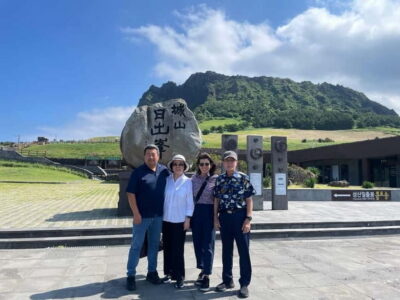
Next up, you’ll head to Seongsan Ilchulbong, also known as Sunrise Peak. This tuff cone was formed by hydrovolcanic eruptions on a shallow seabed, about 5,000 years ago. If you like geology, this is the kind of stop where you can feel the island’s volcanic story in a clear shape.
The height is given as 182 meters, and there’s a preserved crater bowl. It sits on the eastern seaboard, and the shape is compared to a gigantic ancient castle. The “why it’s worth it” here is simple: you get both scale and structure in one place.
You’ll spend about 1 hour 30 minutes, and admission is included.
Different day, same base:
- Jeju: Southern Top UNESCO Spots Bus Tour
★ 4.9 · 648 reviews - South-West Jeju Essentials: Hallasan & Signature Highlights
★ 5.0 · 620 reviews - Jeju Island English Private & Flexible Tour any number anywhere
★ 5.0 · 561 reviews - Jeju: West & South Full-Day Authentic Tour
★ 5.0 · 359 reviews
Seongeup Folk Village and stone wind protection: old Jeju that still holds up
Seongeup Folk Village is a traditional village preserved in the way it was built and lived in the past. The standout detail is the stone stacks designed to help protect roofs from wind. It’s a practical design, not decorative fantasy, which is why it feels so authentic.
The buildings are described as designated folk relics because they remain intact from the Joseon Dynasty period and were built as protective structures during a period of threat.
This stop is optional. If you choose it, you’ll be looking at the village itself for around 30 minutes. The entry is listed as 30 minutes with admission ticket free for a related museum option, and the village selection has that “this is your call” flexibility.
My take on this kind of stop: it’s not just scenery. It’s how Jeju people adapted to local conditions, which is a different kind of travel reward than another viewpoint.
Woljeongri Beach: easy coastal time with cafes nearby
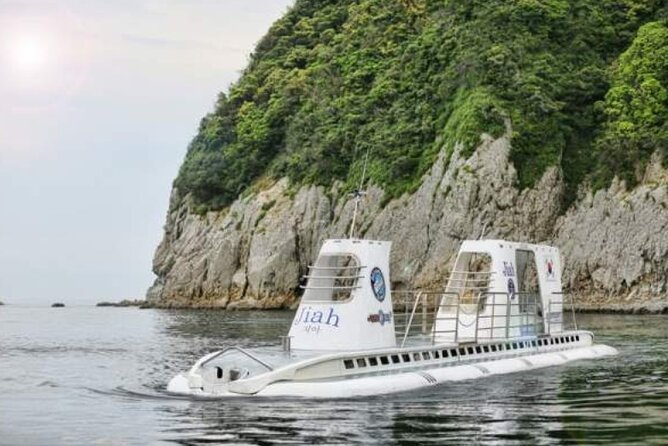
Woljeongri Beach is for when you want a breather. You’ll get tranquil white sand and emerald ocean scenery, plus easy wandering time. The tour gives you about 30 minutes, and admission is listed as free.
There’s also a stretch of cafes near the beach. That means you can turn this stop into a reset moment, not just a photo stop.
Bijarim Forest: Torrey pine sky-blockers, plus a note on tickets
Bijarim Forest, also known as the Forest of Torreyas, is described as the world’s largest single-species forest. The numbers are what make it feel real: around 2,800 Torreyas, and they’re estimated at 500 to 800 years old, which means you’re walking among trees with serious time behind them.
You get about 1 hour here. The big caution: admission is not included for this stop, and the Haenyeo Museum and Maze Land are also not included, so this is one of the places where you’ll want cash or card ready on the day.
If you’re the type who likes “less famous but very Jeju” stops, this is a good fit. If you only want must-see iconic monuments, treat it as a paced break between the heavier sites.
Haenyeo Museum and Maze Land: culture plus playful geology
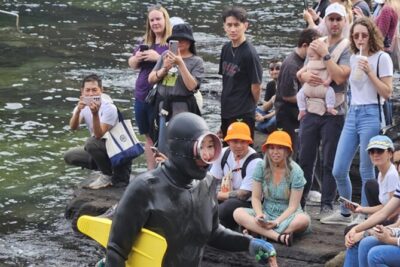
The Jeju Haenyeo Museum focuses on haenyeo, the diving women of Jeju who were major breadwinners through sea-based work and farming. The museum is built to re-evaluate haenyeo culture and record, preserve, and educate visitors about their social, economic, and historical contributions.
You’ll typically spend about 40 minutes. Admission is listed as not included, but it’s a meaningful stop because it shifts the story from volcanic rock to people. Jeju isn’t only geology, and this is one of the clearest ways to see that.
Then you may move to Maze Land, also called Miro Park. The concept is built around three things said to be plentiful on Jeju: stones, wind, and women. It’s not just a walking path. There are puzzle elements, a maze gallery, and a 3D video about the history of mazes.
Time is about 1 hour, and admission is also listed as not included.
My practical advice here: if you’re traveling with kids or you want something lighter after long sightseeing blocks, Maze Land is the fun-energy switch.
Sangumburi Crater and Hallim Park tulip season: when timing matters
Sangumburi Crater is listed as an October and November highlight. When it’s on the plan, it may replace Seopjikoji during those months. The included time is around 1 hour, and admission is listed as not included.
Hallim Park is the other “season-aware” stop. It’s described as having monthly flower-related events, with a well-known tulip festival in spring. You can also taste bibimbap decorated with tulips during that festival period, though the food part is naturally not included.
Hallim Park is about 1 hour 30 minutes, and admission is listed as not included.
If you’re visiting outside the exact tulip window, you’ll still get a flower park feel, but the big “why now” value is the seasonal timing.
Hyeopjae Beach and O’sulloc Tea Museum: downtime plus a caffeine-friendly stop
Hyeopjae Beach is another easy coastal break. You’ll hear the detail that the shoreline includes broken shells, and there’s a view toward Biyangdo Island. The tour gives about 30 minutes, and admission is free.
Then there’s a different vibe at O’sulloc Tea Museum, Korea’s first tea museum, opened in 2001. The tour notes that in 2013, the Osulloc Tea Stone was built nearby for tea experience and cultural activity programs. Admission for this stop is listed as free, and your time is about 1 hour.
This pairing works well: beach reset, then tea pause, then back to viewpoints and cliffs.
Sanbangsan Mountain and Cheonjeyeon Falls: temple views and waterfall structure
Sanbangsan Mountain is a dome-shaped volcanic crater with a notable feature: a natural stone cave in the middle called Sanbanggulsa Temple, where there’s a Buddha statue. There’s also a legend about water drops from the cave ceiling being “tears of love.”
You spend about 30 minutes and admission is included.
From there, Cheonjeyeon Falls gives you three waterfall sections, named as the Pond of God. You’ll see plants around the falls, including a rare reed mentioned as solimnan. The tour describes the physical structure clearly: a cave pours water to create the first waterfall, then water gathers and drops again for the second and third waterfalls, before flowing to the sea.
Time is about 1 hour, and admission is included.
Stops like this are worth it because they mix sight and motion. You’re not just staring at rock. You’re following the water’s path, which makes the geology and nature feel connected.
Jusangjeollidae and the practical reality of cliff photos
Jusangjeollidae is famous for cliffs formed when lava erupted into the sea. The visible result is columns of black rock in different sizes. If you like photo spots, this is a “be patient” stop.
The tour specifically notes that taking good photos takes time because the platform is very crowded. That’s an honest heads-up, and it matters. If you arrive when it’s crowded, you’ll spend more time waiting than photographing.
You’ll get about 40 minutes, and admission is included.
If you want your best shot, go at a steady pace, take a quick first set of photos, then circle back when you have a small opening in the crowd.
Yongmeori Coast, Jeongbang Falls, and Cheonjiyeon Falls: ocean cliffs and direct ocean water
Yongmeori Coast is a volcanic beach described as ash emitted during violent explosions when hot magma met cold seawater. The shape is compared to a dragon’s head, and there’s a narrow path down to the beach plus a sandstone cliff view.
Admission is included, time is about 1 hour, but the big caution is access. Entry may be restricted during rising tides or bad weather. If that happens, your day replaces it with Mt. Songaksan.
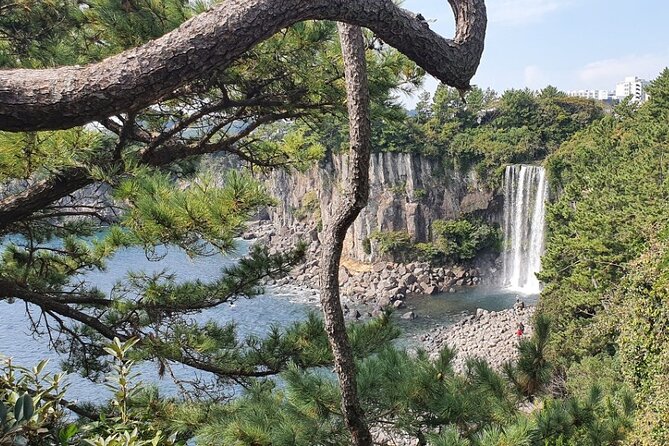
Jeongbang Falls is another highlight. The tour notes it’s the only waterfall in Asia that falls directly into the ocean. You’ll spend about 40 minutes, and admission is included. This is one of those stops where you can see the water’s endpoint, which makes it feel more immediate than waterfall viewpoints that stop at a river.
Then Cheonjiyeon Falls gives you a different waterfall sound and scale. It’s described as 22 meters high and 12 meters wide, with a name meaning sky connected with land. Admission is listed as not included, and time is about 1 hour.
These are great stops if you like water, but keep your expectations realistic. Waterfalls are often tied to weather, and ocean-side viewpoints can be crowded.
Oedolgae, Yakchunsa Temple, and Saebyeol Oreum: smaller pauses with big views
Oedolgae is a sea stack described as a strong rock carved by wave erosion. It’s about 20 meters in height, and you’ll also hear about a nearby volcanic formation mentioned as Sammaebong and the Haegeumgang River area. Time is about 40 minutes, and admission is free.
Then there’s Yakchunsa Temple, one of the biggest Buddhist temples in Asia. The stop includes a scenic climb area where you can look down toward the beach. You’ll get about 40 minutes, and admission is free.
Saebyeol Oreum is a volcanic cone with ridges described like a straw basket shape from the north side. You’ll see grass-covered slopes with scrubs on some sides, and it even ties into the naming idea connected to the morning star. Time is about 40 minutes, and admission is free.
This trio works well when you want variety. After cliffs and falls, oreums and temples feel calmer, and they give you a chance to look over the island rather than only toward the ocean.
Jeju Stone Park, Camellia Hill, and Hueree Natural Life Park: if you want more Jeju after the classics
Jeju Stone Park is a museum and ecological park focused on Jeju’s stone culture. It’s described as big and good for a relaxed schedule, with time about 1 hour. Admission is not included.
Camellia Hill is a 20-hectare park with around 6,000 camellia trees and over 500 species of other plants like hydrangeas. Time is about 1 hour, and admission is not included.
Then Hueree Natural Life Park is described as a more local-feeling park, near the end of Hallasan Mountain skirt paths. You can take a walk along an Olle trail and there’s also a cute black pig performance mentioned. Time is about 1 hour, and admission is not included.
These are optional-feeling add-ons in terms of your own energy. If you’re already thrilled by the volcanic and coastal hits, these stops can be a nice “slow finish.” If you’re trying to maximize classic landmarks only, you might treat these as bonus time.
Your guide experience: what small-group attention looks like in practice
The experience really depends on the driver-guide. In this tour setup, you’re not just sitting in a vehicle and watching a route from a distance. You get context about each sight and bits about Korean culture along the way.
From the way guides are described, a few patterns show up:
- English-friendly guidance has been a strong point, with examples like Lucas and Mr. Koh (listed as Ayaan) who speaks some English.
- Guides can help with photo stops and are attentive, so you spend less time trying to organize strangers for your camera.
- The ride feels safe and comfortable, largely because the group is small and the driver keeps things orderly.
Also, the day is not built around frantic schedule gymnastics. A common theme is enough time to explore at your own pace at each stop, even with a packed day.
That said, remember you’re sharing the vehicle and time windows with others. If you’re the type who wants to sprint between viewpoints, you might find the pace still feels structured.
Price and value: what $108 covers, what you pay for, and how to budget your day
At $108 per person for an 8 hours 30 minutes day, this isn’t a bargain if you’re only doing one or two paid sites. But it becomes good value fast when you factor in the included pieces:
- Pickup and drop-off within Jeju City downtown area
- An air-conditioned vehicle
- Admission fees included for the stops marked included in the day plan
- Compulsory attraction entry admission fees are included for the baseline experience
- Group discounts and a small-group setup (up to 13)
What’s not included:
- Lunch and personal expenses
- Pickup and drop-off outside downtown Jeju City
- A required gratuity of 10,000 KRW per person paid by cash
- Certain stops are explicitly marked with admission not included, like Bijarim Forest, Haenyeo Museum, Maze Land, and several others depending on the route
My budgeting tip: treat this as a “transport plus many entry fees” package, not an all-inclusive everything package. If you set aside extra money for the stops marked not included, the surprise factor goes away.
Should you book Jeju Island Taxi Join Tour?
Book it if you want the convenience of hotel-area pickup, you like guided context, and you’d rather pay for a smart route than manage transfers yourself. It’s a strong fit for solo travelers too, because a small group still lets you move around without feeling lost.
Skip it or consider another option if you need total control over timing, or if you hate the idea of extra site admissions and the required cash gratuity. Also, if you’re staying outside the Jeju City downtown pickup zone, this exact format won’t work for you.
If you want one clear decision rule: choose the route that matches your “must-see” theme, then show up ready for a full day with a little extra budgeting for the stops that are not included.
FAQ
What time does the tour start?
The tour start time is 9:00 am.
How long is the Jeju Island Taxi Join Tour?
The duration is about 8 hours 30 minutes.
Where do you get picked up and dropped off?
Pickup and drop-off are offered within the Jeju City downtown area. Pickup outside that area is not available for this tour.
Is the tour only for small groups?
Yes. The tour has a maximum of 13 travelers, and it operates when two groups or more are joined, with a total of more than 4 people.
Are admission fees included?
Admission fees are included for the baseline experience and for the attractions marked as included. Some stops are listed as free, and others are listed as not included, so you may need to pay separately at certain places.
Do I have to pay a gratuity?
Yes. A compulsory gratuity of 10,000 KRW per person is required, paid by cash.
What happens if Manjanggul Lava Tube is closed?
If Manjanggul Lava Tube is closed on the first Wednesday of every month, the alternative course is the Jeju Haenyeo Museum.
What happens if Yongmeori Coast is closed due to tides or weather?
If Yongmeori Coast is closed due to rising tides or bad weather, Mt. Songaksan is used as the alternative tour course.
Can you mix routes?
Yes. The west tour and south tour course can be mixed.
Do kids need tickets too?
Children must be accompanied by a paying adult.
Is free cancellation available?
Yes. You can cancel for a full refund if you cancel at least 24 hours in advance of the experience start time. If you cancel less than 24 hours before, the amount paid will not be refunded.
Recently reviewed in Jeju
- 9 Hour Private Day Tour Taxi in Jeju island (High recommend)★ 5.0 · 3 reviews
- Jeju UNESCO Natural Heritage Private Tour by Certified Guide★ 5.0 · 5 reviews
- Western Jeju Healing UNESCO Small Group Day Tour★ 5.0 · 5 reviews
- Jeju island Sunrise Tour Early Morning with Hotel Pickup★ 5.0 · 7 reviews
- West of Jeju island Bus Tour from Seogwipo city, Jeju island★ 5.0 · 13 reviews
- Jeju Island Popular Sightseeing Private Car Charter Tour★ 5.0 · 145 reviews
- West & South Jeju: Hallasan Trail, Waterfall, Tea Field Tour★ 4.8 · 180 reviews
- Jeju Customize Private VAN Tour of East or West or South (~8pax)★ 5.0 · 67 reviews
Jeju Tours, compared.
East Jeju Essentials – Seongsan Ilchulbong (UNESCO) & Haenyeo
Read our review →

South-West Jeju Essentials: Hallasan & Signature Highlights
Read our review →
Jeju Island English Private & Flexible Tour any number anywhere
Read our review →
Browse the lists this tour appears in