
Reviewed · UNESCO SITES
Jeju Eastern Must visit Unesco Bus Tour
Jeju East is a smart day plan because it mixes big scenery with cultural stops, all in one long but manageable route. If you like your Jeju days organized, this one is built for that, with a licensed guide and comfortable transport on a fixed schedule. Seongsan Ilchulbong also makes the day feel like a real highlight, not just a string of viewpoints.
I love two things most: you get all entrance fees covered (so you can keep track of costs), and you’re not stuck figuring out logistics on your own. I also like that the stops cover more than one side of Jeju, from coast and geology to the Haenyeo diving tradition and old village life.
One thing to consider is weather. The tour needs good conditions, and that can affect outdoor views and cave access, so it helps to stay flexible if plans get interrupted.
Key Points You Should Know Before You Go
- UNESCO-friendly day structure: Seongsan Ilchulbong plus culture stops that explain what you’re seeing.
- Easy cost control: admission fees, parking, and the air-conditioned vehicle are included in the price.
- Haenyeo Museum first, outdoor diving second: even if conditions change, you still get the culture context.
- Ilchul Land connects plants to underground geology through the Micheon Cave system.
- Small-group feel: capped at a maximum of 99 people, with a licensed guide.
A Day That Hits Jeju East’s Best Mix of Nature and Culture
This Jeju Eastern must-visit bus tour is built around a very Jeju idea: you can’t understand the island if you only do beaches, or only do temples, or only do museums. You need a full day that shows how the coast shaped life, and how geology shaped the land.
The route is also practical. It’s about 9 hours starting at 9:00 am, and it uses an air-conditioned vehicle, so you’re not burning your day on transit stress. And because it includes admission fees and parking, it’s a clearer value than the “pay as you go” style of tours.
More UNESCO sites around Jeju:
- Jeju: Eastern Jeju UNESCO Spots Day Tour
★ 4.9 · 1,148 reviews - East Jeju Essentials – Seongsan Ilchulbong (UNESCO) & Haenyeo
★ 5.0 · 939 reviews - Jeju: Southern Top UNESCO Spots Bus Tour
★ 4.9 · 648 reviews
Price and Logistics: What You’re Really Paying for
At $61.88 per person, the value comes from what is included, not just the sticker price. You’re getting:
- an air-conditioned vehicle
- parking fees
- admission fees for the stops
- a licensed guide
- a mobile ticket (so you can keep it simple on your phone)
What’s not included is just as important. Lunch and personal travel insurance are not part of the package. That means you should plan your own meal break strategy and budget for it.
A small but real detail: the tour ends in a different location than where it starts. That’s normal for this kind of route, but it affects your plans for later in the day. If you have dinner reservations or a ferry to catch, check your timing.
Also note the physical requirement. It says moderate physical fitness is recommended. That usually means some walking and stairs, especially around viewpoints and village areas. If you want a fully low-mobility day, you might want to compare with a shorter or more accessible option.
Hamdeok Beach and Seoubong Volcanic Cone: The Coastal Start You’ll Remember
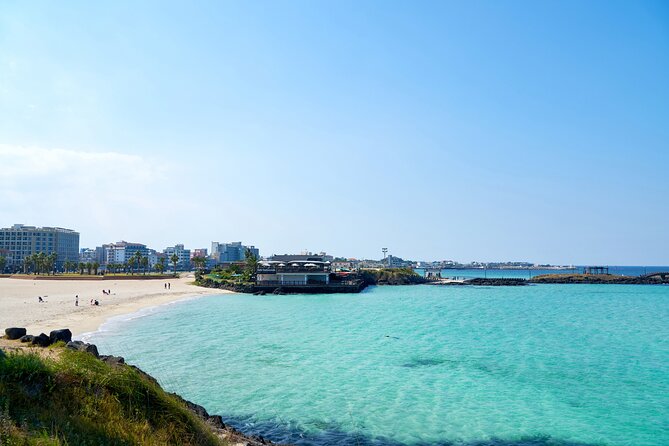
The day kicks off at Hamdeok Beach, also known as Hamdeok Seoubong Beach because of the nearby volcanic cone area. This is one of those Jeju beaches people talk about for a reason: the mix of emerald-blue water, white sand, and tall palm trees is the kind of scenery that looks good even before you take your first photo.
You also get a few nice “hang out” features. There’s a coastal walking trail, and there’s a grassy area that works well for a relaxed pause, like a short picnic moment. On the western side, there’s a bridge built over the water, and it’s the kind of detail that makes a beach stop feel more like an experience than a quick photo break.
Time check: it’s about 1 hour 30 minutes, and admission is free. This is enough time to walk a bit, look from different angles, and enjoy the beach vibe. If you’re going in warmer months, Hamdeok is especially popular for late-day views, including that idea of a night sea atmosphere.
Haenyeo Museum: Understanding the Women Divers Before You See Their World
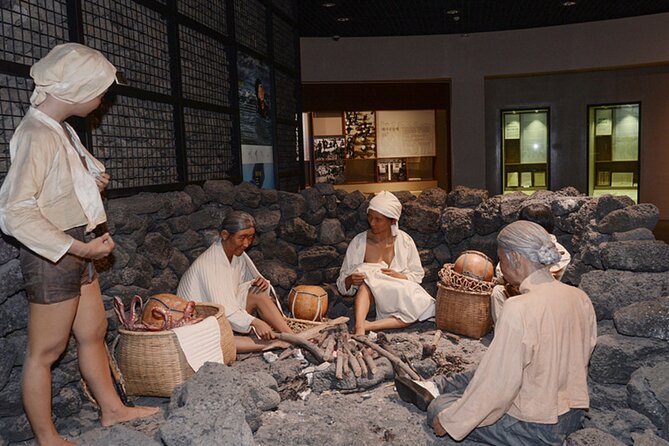
Next comes the Haenyeo Museum, and it’s a culture stop that’s unusually useful for first-time Jeju visitors. The haenyeo diving tradition is recognized as a UNESCO Intangible Cultural Heritage of Humanity, and the museum is built to explain what that means in everyday life.
This is not just a “look at artifacts” kind of museum. The exhibits focus on how the haenyeo culture developed over time and include material donated by the divers themselves. That personal connection matters, because it helps you see the tradition as lived knowledge, not just a display.
You’ll also see:
- a replica of a haenyeo house
- explanation of food culture
- details about upbringing and the half-agriculture, half-fishing rhythm of life
- coverage of yeongdeunggut (a local cultural practice connected to the sea)
Time check: another 1 hour 30 minutes, with admission included.
Here’s why I like this stop for the tour format. Even if the day’s weather changes your outdoor plans, the museum gives you the meaning behind the coastline and the community. It turns Jeju East from scenery into story.
A few more Jeju days side by side
- Jeju: Western and Southern Sightseeing Day Tour
★ 4.8 · 972 reviews - South-West Jeju Essentials: Hallasan & Signature Highlights
★ 5.0 · 620 reviews - Jeju Island English Private & Flexible Tour any number anywhere
★ 5.0 · 561 reviews - Jeju: West & South Full-Day Authentic Tour
★ 5.0 · 359 reviews
Seongsan Ilchulbong UNESCO Tuff Cone: How to Get More Than a Quick View
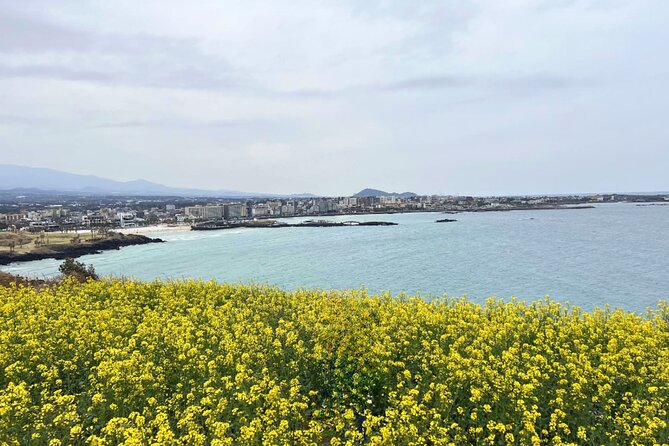
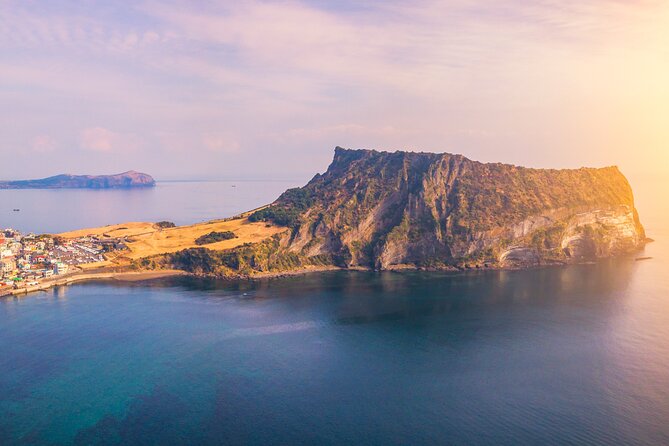
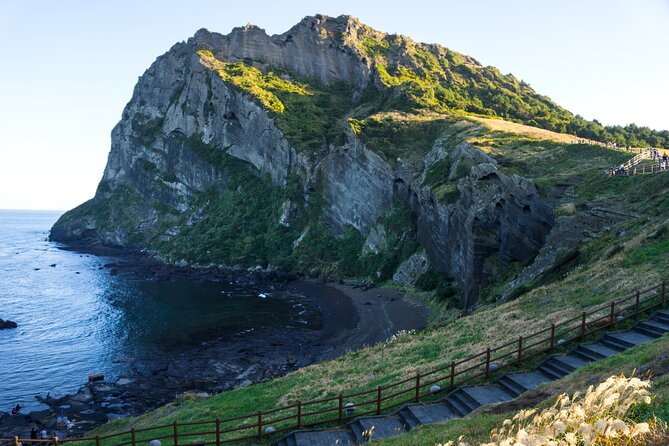
The big UNESCO moment is Seongsan Ilchulbong, often called a tuff cone. It rises about 180 meters above sea level, formed by magma activity under the sea thousands of years ago. The crater at the top is huge for a visitor point of view: roughly 600 meters across and around 90 meters deep.
This stop is about 2 hours with admission included, and that time is valuable because you don’t want to sprint up and down. The summit area is where you get the scale, plus views toward Udo Island.
One classic reason people connect Seongsan Ilchulbong with early mornings is sunrise. Even if you’re not here at dawn, you’ll still feel why films and photos keep using this place. The tuff cone area was designated a natural reserve, and it’s now known for a field of silver grass, which changes the look of the crater and makes it feel seasonal.
Potential drawback: you do need to handle some walking and uneven ground. The tour rates it for moderate physical fitness, so if you’re unsure, keep a steady pace and take short breaks.
Ilchul Land and the Micheon Cave System: Plants Above, Geology Below
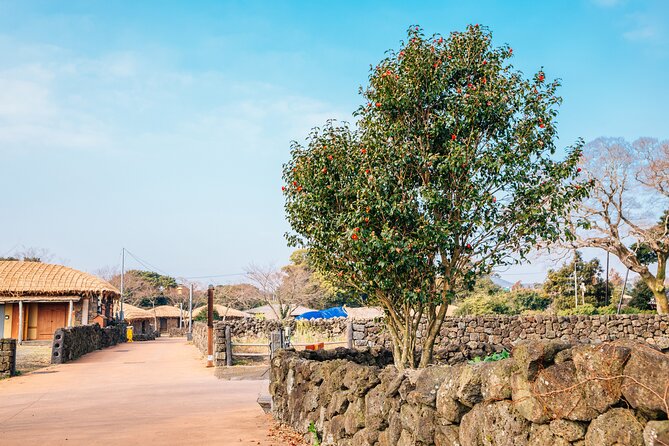
After the UNESCO cone, the tour shifts from dramatic volcanic shapes to something more reflective at Ilchul Land. This is a botanical garden, but it’s not just about plants for plants’ sake. It’s tied to the Micheon Cave and the underground lava tube system, which is part of what makes the experience feel like Jeju rather than a generic garden stop.
The idea here is simple and cool: start with what’s underground, then see how the surface life connects to those conditions. The caves preserve the mysterious charm of the underground environment, and the site includes academic and cultural value, not just a stroll.
Time check: about 2 hours, admission included.
One practical note from real-world experience with Jeju East is that cave access can be weather-dependent. If conditions are poor, you might find limited access or closures. Still, Ilchul Land can work as a recovery stop in the day, because it gives you a slower pace compared with the summit-heavy parts of the route.
Seongeup Folk Village: Old Jeju Houses and Everyday Culture That Last
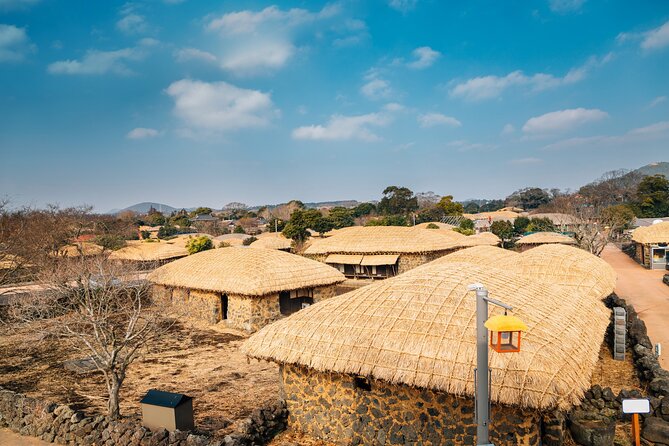
The final major cultural stop is Seongeup Folk Village, a preserved folk village designed to protect Jeju’s older private-house style. This is where the tour gives you a sense of how people actually lived, not just what tourists photograph.
At Seongeup, you’ll find tangible cultural heritage like traditional house structures, plus intangible heritage such as:
- folk songs and games
- local foods and craftmanship
- Jeju dialect
The village also holds cultural events, especially in October and November. If you’re traveling during those months, you might catch something special. If not, the daily atmosphere still helps you connect the dots between what you learned in the haenyeo museum and what you see in traditional village life.
Time check: 2 hours, with admission included.
If you enjoy hands-on cultural context, this is the stop that rounds out the day. It helps you see Jeju East as a place where nature, work, and community traditions are all linked.
The Real Value: Licensed Guides and Clear Communication (Including WhatsApp)
The tour’s quality isn’t only in the places. It’s in how the day flows between them. This experience includes a licensed guide and uses an air-conditioned vehicle, which keeps the whole schedule realistic.
The guide experience is something I take seriously, because Jeju can feel like “pretty places” unless someone explains what you’re seeing. In this tour, English-speaking guides have been praised for being strong, patient, and genuinely into Jeju’s culture and story.
In particular, names that came up include Steven Yamato and Jason. Both are described as having excellent English, strong knowledge of Jeju, and the kind of patience that helps when weather or timing shifts.
There’s also a modern convenience built in. If you use WhatsApp, you can get quick communication about the tour. That’s handy when you’re trying to coordinate pickup points, timing, or last-minute questions.
Group size is capped at a maximum of 99. That’s not tiny, but it can still feel easier than the biggest city-bus crowds, especially when the schedule has a clear guide-led rhythm.
Weather on Jeju East: Plan for Flexibility
This tour explicitly says it needs good weather. If conditions are poor, you’ll be offered a different date or a full refund.
In practice, that means your best move is to stay flexible and pack for changing conditions. When the day is wet or windy, outdoor view time can feel shorter or less rewarding, and some underground sections can be closed.
The nice part is that the tour has built-in backup value. Even if outdoor elements shift, you still have indoor or sheltered culture learning at the Haenyeo Museum, plus the village experience. That makes the day less fragile than a tour that depends entirely on the outdoors.
Who This Tour Fits Best
This Jeju Eastern tour is a good match if you want:
- a one-day plan that covers beach, UNESCO geology, sea-diver culture, caves, and a traditional village
- included entrance fees, so you don’t do constant cash math
- a guided day where you can ask questions instead of guessing what everything means
- a comfortable air-conditioned vehicle for the drive between major stops
It’s also a solid choice if you’re on a tight schedule and you want to see a lot without the stress of renting and navigating.
It might be less ideal if:
- you want total freedom over timing, since the day runs on a set schedule
- you have low mobility needs, because the tour expects moderate physical fitness
- you dislike long sightseeing days, since it’s about 9 hours
Should You Book This Jeju East UNESCO Bus Tour?
I’d book it if you’re coming to Jeju East as a first-timer or a “make this count” visitor. The value is strong because entrance fees, parking, and the vehicle are included, and the day offers multiple UNESCO-linked themes, not just one landmark.
I’d think twice if weather would make you cranky. Because it requires good conditions, your enjoyment can dip if skies are rough, especially for outdoor summit and coastal moments. That said, the tour still has meaningful stops that help you get something out of the day even if conditions change.
If you like a guided, structured, culture-and-nature blend, this is one of the clearer bets on Jeju East for your time and budget.
FAQ
What is the duration of the Jeju Eastern UNESCO bus tour?
The tour is listed at about 9 hours.
What time does the tour start?
The start time is 9:00 am.
How much does the tour cost?
The price is $61.88 per person.
What is included in the price?
Included items are parking fees, an air-conditioned vehicle, and admission fees.
Is lunch included?
No. Lunch or any meal is not included.
Is there an admission ticket for Hamdeok Beach?
Hamdeok Beach has free admission on this tour.
What locations are included in the tour?
The stops are Hamdeok Beach, Haenyeo Museum, Seongsan Ilchulbong, Ilchul Land, and Seongeup Folk Village.
Do I need to print a ticket?
No. The tour uses a mobile ticket.
Is the guide provided?
Yes. The tour includes a licensed guide, and you can communicate quickly via WhatsApp.
What happens if the weather is bad?
The experience requires good weather. If it’s canceled due to poor weather, you’ll be offered a different date or a full refund.
Recently reviewed in Jeju
- 9 Hour Private Day Tour Taxi in Jeju island (High recommend)★ 5.0 · 3 reviews
- Jeju UNESCO Natural Heritage Private Tour by Certified Guide★ 5.0 · 5 reviews
- Western Jeju Healing UNESCO Small Group Day Tour★ 5.0 · 5 reviews
- Jeju island Sunrise Tour Early Morning with Hotel Pickup★ 5.0 · 7 reviews
- West of Jeju island Bus Tour from Seogwipo city, Jeju island★ 5.0 · 13 reviews
- Jeju Island Popular Sightseeing Private Car Charter Tour★ 5.0 · 145 reviews
- West & South Jeju: Hallasan Trail, Waterfall, Tea Field Tour★ 4.8 · 180 reviews
- Jeju Customize Private VAN Tour of East or West or South (~8pax)★ 5.0 · 67 reviews
UNESCO Sites, compared.
Gyeongju UNESCO World Heritage Guided Day Tour
Read our review →
East Jeju Essentials – Seongsan Ilchulbong (UNESCO) & Haenyeo
Read our review →
Gyeongju UNESCO World Heritage Guided Day Tour from Busan
Read our review →
Gyeongju UNESCO sites Private tour with licensed tour guide
Read our review →
Private Gyeongju Tour – Explore Gyeongju UNESCO Sites
Read our review →Browse the lists this tour appears in